Cost of Living in Abha
Where this figure comes from. No cost survey covers Abha, so the $1,100 a month above is our own estimate rather than a measurement. On 416 of our 999 city guides the figure is built from a published Numbeo basket, a one-bedroom rent in the centre plus one person's monthly costs without rent, converted to USD; this city is not one of them. How we source everything.
Budget around $1,100 a month as a solo remote worker in Abha, which makes it one of the cheaper places to sit in Saudi Arabia and a fraction of what the Gulf coast cities cost. A furnished one-bedroom flat runs roughly $400 to $650, with the higher end for something new near the centre or with a view over the escarpment. Food is inexpensive if eaten locally, and the Asir region grows much of its own produce, which shows in the markets. Fuel costs almost nothing and there is no alcohol spend anywhere in the country. This figure is our own estimate rather than a reconciliation against measured data. The rental market has an unusual shape: leases are typically annual and paid in one or two instalments up front rather than monthly, which is the norm across the kingdom and a large sum to produce on arrival. Short-term furnished apartments are the alternative, though their rates are set for the holiday trade and climb steeply in peak weeks. Air conditioning barely runs at this altitude, which removes the utility bill that dominates every other Saudi city, and winter heating is the smaller cost that replaces it.
Where to Work in Abha
Abha has almost no coworking provision, and the cafes around the centre and the newer developments are where remote work happens in practice. Saudi mobile data is fast and inexpensive with strong 5G across the city, which is the reliable option; fixed connections in older buildings vary considerably by address. The city's summer role as the country's domestic hill station means hotels here are used to guests who stay for weeks, and the better ones have connections to match. Power is stable. English is limited outside the university and the tourism sector, so expect Arabic to be the working language of daily errands. The working week runs Sunday to Thursday, so a Friday deadline set by a European client lands on the local weekend and a Sunday one lands on a working Monday. And shops and many offices close briefly for each of the five daily prayers, which fragments the afternoon in a way that takes a fortnight to plan around rather than fight. A mobile hotspot is the sensible primary connection here, with the building's fixed line as the backup rather than the other way round.
Getting Around Abha
Abha sits at around 2,200 metres and is built across ridges and valleys, which makes it hilly rather than walkable in any continuous sense. A car is the normal way to move around, and fuel costs almost nothing by international standards. Ride-hailing works in the city and is the usual answer for anyone without a vehicle. The cable cars down the escarpment are tourist infrastructure rather than transport but are worth taking once. Abha airport has frequent domestic connections to Riyadh and Jeddah and a small number of regional routes. The mountain roads down to the Tihamah plain are spectacular and demand real attention. A foreign licence with an international permit covers a visitor for a limited period, after which a Saudi one is required, and women have been able to drive since 2018 so a rental is straightforward regardless. The escarpment roads carry a hazard of their own, and it is cloud rather than traffic: the mist that makes the summers pleasant sits directly on the road in places, and visibility can collapse inside a single bend. The descent to Rijal Almaa drops the scarp in a long series of switchbacks and is the best road in the region.
Sorting transport? Book an airport transfer, or compare car rental on Auto Europe and QEEQ.
Visas for Abha
Saudi Arabia has no digital nomad visa. Most visitors arrive on the eVisa, which covers around sixty nationalities, runs for a year with multiple entries and allows ninety days per stay to a maximum of a hundred and eighty days in the year. It permits tourism, not employment by a Saudi entity, and remote work for a foreign employer is not addressed in the rules either way. Anyone wanting to stay longer needs employer sponsorship or the Premium Residency scheme and its fee. The country's visa policy has changed repeatedly since it opened to tourism in 2019. The eVisa bundles a mandatory health insurance policy into its fee, so that is one thing not to arrange separately. Women may travel and stay independently, a change from the pre-2019 rules that still surprises people. Non-Muslims may not enter Mecca, which matters for any overland route in the west of the country, and while dress rules have relaxed considerably, Asir is more conservative than Riyadh or Jeddah and modest dress is expected of everyone rather than requested.
Best Time to Visit Abha
Abha's altitude gives it the mildest climate in Saudi Arabia and the reason the rest of the country arrives here in July. Summer highs sit around the high twenties while Riyadh is above forty, and the monsoon fringe brings afternoon cloud and mist that rolls over the escarpment. That makes June to September the busiest and most expensive months, with domestic tourism filling the hotels. Spring and autumn are quieter and just as pleasant. Winter nights get genuinely cold for the region and can approach freezing at this elevation, and heating is not something every building here takes seriously. The greenest weeks follow the summer rains rather than accompanying them, so late August into September shows the terraces at their best. Timing around Eid matters more than timing around weather: both Eid holidays fill every hotel in the region with domestic visitors and prices follow, and because the Islamic calendar shifts each year those dates move backwards through the seasons. The Asir flower festivals in summer, where men of the region wear the herb and blossom crowns the area is known for, are the local events worth arranging a visit around.
Pros and Cons of Abha
Abha has weather no other Saudi city can offer, sitting high in the Asir mountains with green terraced slopes, cool summers and clean air, along with the stone tower houses at Rijal Almaa and the country's highest peaks nearby. Costs are low and the landscape is genuinely unusual. Not one remote worker is here to meet, English is scarce, there is no nightlife and no alcohol at all, and the region is conservative even by Saudi standards. Getting anywhere outside the kingdom means a domestic connection first. It is a place with real character and almost no international infrastructure to support a long stay. The region is also changing quickly, which cuts both ways. Large tourism developments are under construction on the escarpment above the city as part of the national diversification programme, and they will bring infrastructure that does not exist yet along with the crowds and the prices that follow. Set against the thin visitor provision, Asiri hospitality towards foreigners is genuine and often overwhelming, and a traveller with a little Arabic will be fed and directed far more than they expected.
Who Abha Is For
Anyone already working in Saudi Arabia who wants a cooler base than the coast or the capital, or a traveller drawn to mountain landscapes and heritage architecture that almost no outsiders see. It rewards anyone with some Arabic and patience for a place that has not organised itself around foreign visitors. No international community has formed in these mountains, alcohol is illegal so a bar is not a category that exists, and work that depends on face-to-face meetings will find there is almost nobody here to meet with. Summer arrivals should book early against the domestic holiday season. Photographers and hikers get the most out of it, since the escarpment, the terraced villages and the road down to the coast are unlike anywhere else on the peninsula and almost none of it is photographed. For anyone weighing the Saudi hill stations against each other, Taif is easier to reach and busier, while Abha is higher, greener and further from everything. As a base it works best in weeks rather than months unless there is a job attached, because the practical support a long stay needs is simply not here yet.
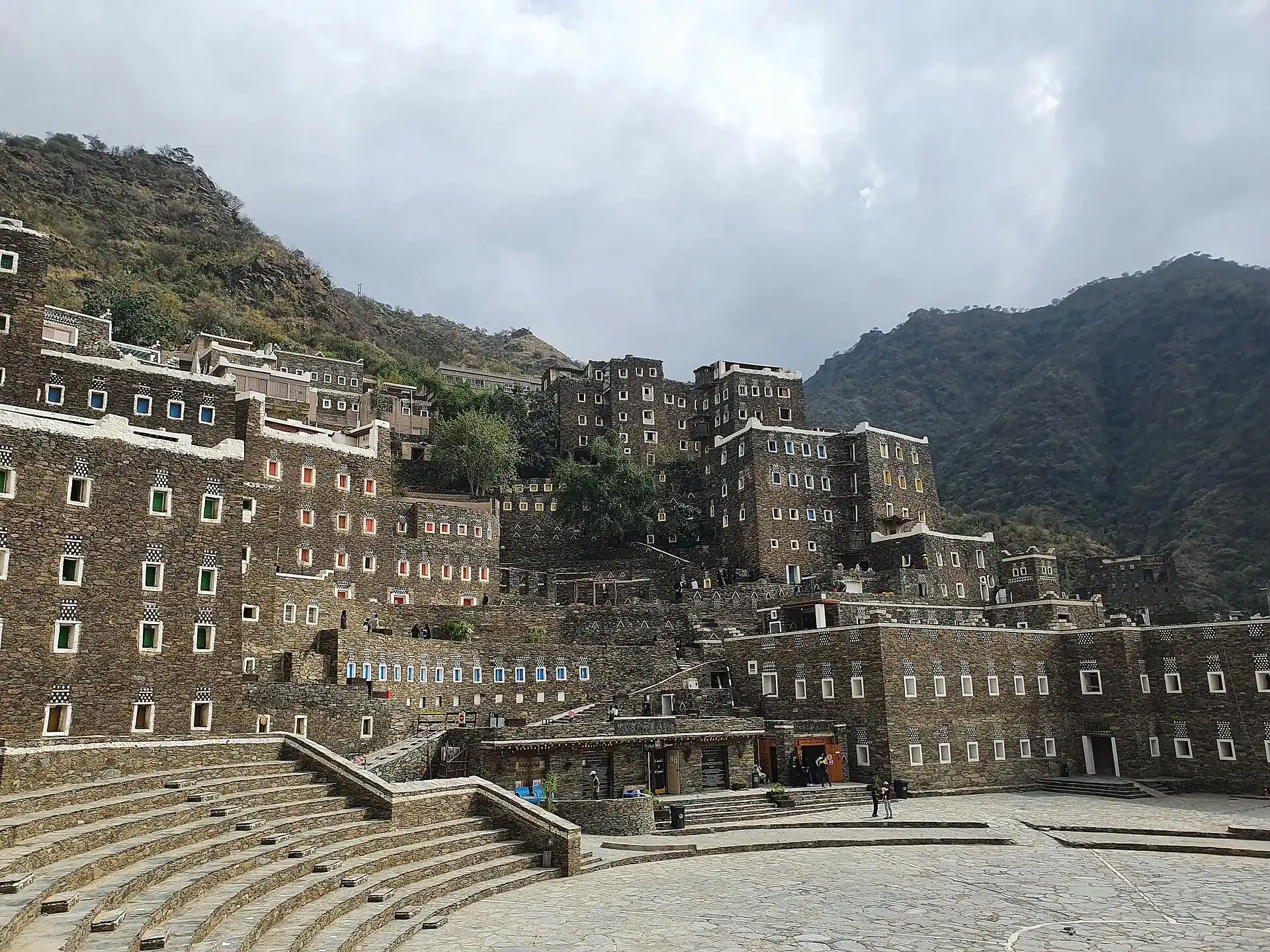 Photo: Richard Mortel / Wikimedia Commons (CC BY 2.0)