Cost of Living in Jeddah
Real market data
Source: Numbeo · September 2026
$1,330/moSolo nomad1-bed centre + living costs
$1,790/moCoupleshared 1-bed + costs
$1,100/moLean / localcheaper area + costs
- 1-bed rent, city centre$770SAR 2,877
- 1-bed rent, outside centre$530SAR 1,991
- Monthly costs excl. rent (1 person)$570SAR 2,127
- Meal, inexpensive restaurant$7SAR 25
- Monthly transit pass$55SAR 205
- Buy price, per m² (centre)$1,750SAR 6,544
Prices are from Numbeo (September 2026), converted to USD at $1 = SAR3.75 (01 Aug 2026). The monthly living-costs figure is our transparent one-person basket, groceries, a few meals out, utilities, phone, internet, transport and essentials, priced from those figures. Solo adds central rent; couple and lean are estimates from the same numbers. The guide below quotes its own monthly range, which is a different measurement rather than a competing one: this table prices a defined basket at the figures above, while that range is a judgement about how somebody actually lives here.
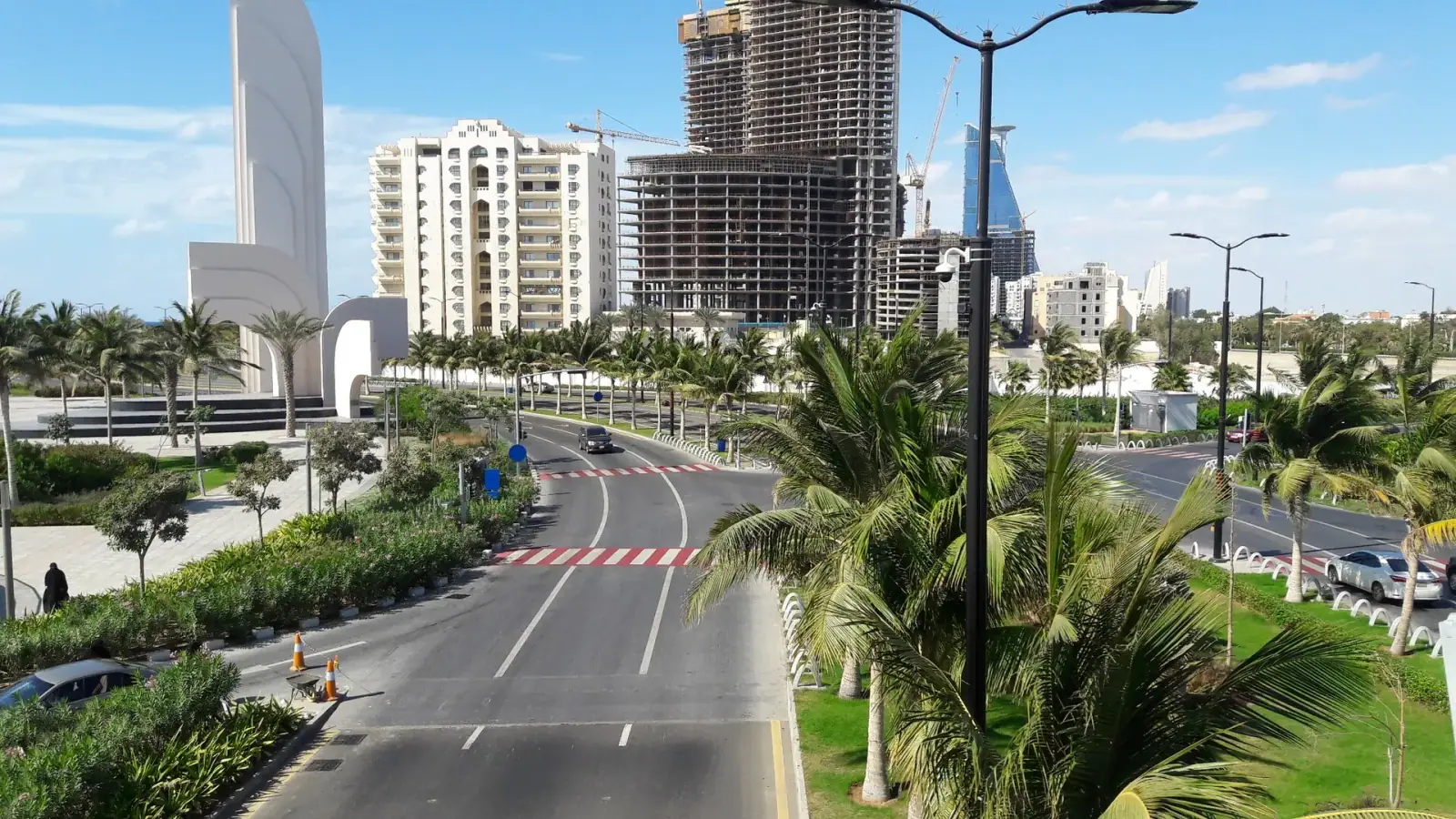
Jeddah sits in a comfortable middle ground for the Gulf region. You can live reasonably here without Saudi Arabia feeling as punishingly expensive as Dubai. Expect to spend $1,730 to $2,930 per month for a realistic nomad setup. The riyal has been pegged at 3.75 to the US dollar since 1986, so anyone earning in dollars can budget here without watching exchange rates. Menu and shop prices already include Saudi Arabia's 15% VAT. Alcohol is not sold anywhere in the country, so the bar tab that swells a nomad budget in Bahrain or Doha simply never appears here, and the money tends to go on eating out and rideshares instead.
- Rent, central areas (Al Shati, Al Khalidiyyah, Al Rawdah): $800 to $1,470/month for a one-bedroom apartment
- Rent, cheaper areas (Al Aziziyah, Al Nahdaa): $480 to $745/month for a one-bedroom
- Groceries (self-catering): $160 to $240/month
- Eating out: $6.50 to $16 per meal at a mid-range restaurant; a good sit-down meal for two runs $21 to $53
- Coworking hot-desk: $320 to $495/month at quality spaces; day passes run $27 to $48
- Local transport (Uber/Careem): $105 to $185/month depending on frequency; most nomads rely almost entirely on rideshare
- Total range: $1,730 to $2,930/month. There is no income tax on foreign-sourced income, which matters if you are billing internationally.
Where to Work
Jeddah has a genuine and growing coworking scene. Basix Coworking Space in the Ahmad Al Attas area is the most talked-about option, offering 24/7 access, skyline views, a recording studio, and hot desks from $495/month. White Space HQ in Al Shati has panoramic Red Sea views. VIBES Offices on Prince Saud Al Faisal in Al Rawdah is popular with local entrepreneurs and has been operating since 2018. PLEXUS at EMAAR Square is quietly professional and well-regarded for reliable service. Regus Zahran on Prince Sultan Street is the most corporate option and suits those who want a polished serviced office environment.
Cafe work is common and socially accepted. Cafes like Boho Cafe on Prince Sultan Branch Road and 115 Neighborhood Cafe (which has nine locations across the city) are regulars for the work-from-cafe crowd. WiFi at good cafes is generally reliable, with most offering fast fiber connections. Fixed broadband in Jeddah is strong, and coworking spaces typically run on dedicated fiber. Mobile LTE and 5G (STC, Mobily, Zain) are strong throughout the city and often the most practical backup. There is no meaningful content blocking affecting work tools.
Getting Around
Jeddah is a car city. Walkability is low outside of a few pockets like the Al Balad historic district and the Corniche promenade. You will need rideshare for almost everything. Uber and Careem both operate here, with good availability and upfront pricing. Rides across the main residential and business districts typically cost $4 to $11. There is no metro system.
King Abdulaziz International Airport (JED) sits about 25 km north of the city center. An Uber from the airport to Al Balad or the Corniche costs roughly $11 to $19 and takes 25 to 45 minutes depending on traffic. Jeddah also connects to Mecca and Medina via the Haramain High-Speed Railway, which is useful for day trips or onward travel rather than daily commuting. The high-speed line also stops at the airport itself, at a station open since December 2019, so a traveller heading north can board close to the arrivals hall instead of crossing the city to the main station in Al Sulaymaniyah.
Sorting transport? Book an airport transfer, or compare car rental on Auto Europe and QEEQ.
Visas and Staying Long-Term
Citizens of approximately 49 countries can obtain a Saudi tourist e-visa online before arrival; the list includes most European, North American, and several Asian passport holders. The tourist visa is valid for one year from issue and allows up to 90 days total stay per entry, with a cap of 180 days within any 12-month period. You cannot extend the tourist e-visa from inside Saudi Arabia: you leave and reapply.
Saudi Arabia does not currently offer a dedicated digital nomad visa to the general public. However, a freelance/remote worker visa pathway exists through the Saudi Premium Residency and certain licensed channels, allowing stays up to 365 days, though eligibility requirements and processing are more involved. For most short-term nomads, the tourist visa with periodic exits is the practical approach.
Saudi entry policy has been evolving quickly under Vision 2030.
Best Time to Visit
Jeddah has a hot desert climate with high humidity along the Red Sea coast. Summers (June through September) are genuinely brutal: temperatures regularly exceed 40°C (104°F) with oppressive humidity, making outdoor movement unpleasant for much of the day.
The best window for remote work is November through March. Temperatures settle into a manageable 21°C to 33°C (70°F to 91°F), humidity drops significantly, and you can actually walk along the Corniche or explore Al Balad without suffering. January and February are the most comfortable months. The shoulder periods of October and April are acceptable, though April can already feel warm. Ramadan timing shifts each year; during Ramadan, cafes and restaurants have restricted daytime hours, which can affect your working-from-cafe options. For the next few years the fasting month lands inside the cool season, expected to begin around 8 February in 2027 and around 28 January in 2028, so a winter stay either works around it or embraces it: daytime cafe work gets harder, while the evenings after iftar become the liveliest hours of the day.
Pros and Cons
- No income tax on foreign earnings, which is a genuine financial advantage
- Fast, reliable internet across coworking spaces and most cafes
- Low violent crime and a high overall sense of physical safety
- Excellent food scene drawing on Saudi, South Asian, Levantine, and East African influences
- Growing infrastructure for remote workers with quality coworking options
- Rich cultural access via Al Balad UNESCO heritage district and the Red Sea coast
- No alcohol: Saudi Arabia has a complete ban on alcohol sales and consumption in Jeddah
- Extreme summer heat makes outdoor life difficult for five months of the year
- Car-dependent city with limited walkability and no metro
- Visa complexity: no straightforward long-stay option for nomads; periodic exit-and-reentry required
- Social conservatism: dating norms, dress codes, and public behaviour expectations differ sharply from Western defaults
- Limited international nomad community compared to Southeast Asian or European hubs
Who Jeddah Is Best For
Jeddah works well for nomads drawn to the Arab world who want a genuinely liveable city rather than a tourist transit point. If you are interested in Islamic culture and history, the Red Sea, or Saudi Arabia's rapid social transformation under Vision 2030, this is a fascinating place to be based for one to three months during the cooler season. The absence of income tax is a concrete perk for those billing in strong currencies. Expats and short-term residents from South Asia and the Arab world have maintained Jeddah's international character for decades, and the city has solid infrastructure for professional work.
Skip Jeddah if sobriety feels like a dealbreaker, if you need a ready-made nomad social scene, or if you plan to arrive between June and September. It is also a harder fit for those who strongly prefer walkable, dense city living where you can do most of your day on foot. Single women should know Jeddah is generally safe and restrictions on women have loosened substantially since 2018, but occasional unwanted attention in quieter areas is a reality to factor in.