Cost of Living in Yangon
Where this figure comes from. No cost survey covers Yangon, so the $800 a month above is our own estimate rather than a measurement. On 416 of our 999 city guides the figure is built from a published Numbeo basket, a one-bedroom rent in the centre plus one person's monthly costs without rent, converted to USD; this city is not one of them. How we source everything.
Yangon is very cheap in dollar terms and $800 a month buys a good standard of living, though the currency situation complicates everything. A furnished one-bedroom apartment on a monthly basis in Bahan, Golden Valley or the Inya Lake area runs $250 to $500; older walk-up flats downtown or in Sanchaung go for $120 to $250. Street food is the great bargain, with mohinga, shan noodles and a tea shop breakfast at $0.50 to $2, while a mid-range restaurant meal is $5 to $12. A Mytel, U9 (formerly Ooredoo) or ATOM SIM with data costs $5 to $12. Formal coworking is thin, roughly $60 to $120 where it operates. Utilities run $40 to $90, with generator fuel a real line item because power cuts are frequent and long. Transport is under $40. The kyat has an official rate and a much weaker parallel rate, so bring clean US dollar notes; costs are low but banking friction is severe. Rent is asked in dollars from a foreigner and in kyat from a neighbour, and the two numbers are not converted from one another, so what the flat next door costs tells you nothing about what you will be quoted. Six months up front is a normal opening request and is negotiable downwards.
Where to Work in Yangon
Base yourself in Bahan, Golden Valley, Sanchaung or around Inya Lake; downtown near Sule Pagoda and Pansodan is atmospheric but noisy and heavily policed. Yangon's tea shop culture is the informal office, and the modern cafe scene around Dhammazedi Road, Yaw Min Gyi Street and Kabar Aye Pagoda Road, including long-running spots like Rangoon Tea House and various independent roasters, tolerates laptop sessions. Formal coworking, once represented by Phandeeyar and a handful of startup hubs, has been badly reduced since 2021. Fibre from U9 (formerly Ooredoo), MPT or 5BB is usable in good buildings, but this is the hardest connectivity environment in the region: the military authorities operate extensive blocking of Facebook, most social platforms and news sites, and have criminalised unauthorised VPN use, while running periodic shutdowns. Assume a VPN is needed and may still be blocked, and verify generator or inverter backup. Foreign currency entering the banking system has been subject to forced conversion at a rate well below the street one, which is the single most consequential financial fact for anybody earning abroad and the reason nobody here receives money into a local account if they can avoid it. Cash brought in and changed informally is the working arrangement.
Getting Around Yangon
Yangon has no metro. The Yangon Circular Railway loops the city on a slow, three-hour, deeply local circuit for about $0.10 and is more of an experience than transport. Day to day, the YBS bus network covers the city at $0.10 to $0.20 a ride but requires some Burmese to navigate confidently. Ride-hailing is the practical answer: Grab operates in Yangon and a typical cross-city car ride costs $2 to $6, with app pricing sparing the haggling. Taxis flagged on the street cost similar but require negotiation upfront. Motorcycles are banned within most of central Yangon, so there are no motorbike taxis and no scooter option, which is unusual for Southeast Asia and means a car is the only fast mode. Walking downtown along the colonial grid is genuinely pleasant, but footpaths elsewhere are broken and the heat is punishing. Yangon International Airport is around 15km north; expect $4 to $10 and 30 to 60 minutes by Grab.
Sorting transport? Book an airport transfer, or compare car rental on Auto Europe and QEEQ.
Visas for Yangon
Myanmar remains under military rule following the 2021 coup, and a civil war continues across much of the country; this dominates any visa discussion. The eVisa system does operate, and tourist eVisas are issued for 28 days, single entry, valid for entry within 90 days of approval, at a fee of around $50; business eVisas run 70 days. There is no digital nomad visa; the official eVisa portal lists only tourist and business visas. Tourist visa extensions are generally not granted; overstaying is instead handled by paying a fine of around $3 per day at the airport on departure, which is common practice but should not be relied on. The serious gotchas are non-bureaucratic. Many Western governments advise against all travel to Myanmar, which can void travel insurance entirely. Large parts of the country including Rakhine, Chin, Kachin, Karen, Sagaing and parts of Shan are effectively off limits, banking and card networks barely function, and there are legitimate ethical questions about spending that reaches the junta.
Best Time to Visit Yangon
The clear window is November to February, the cool dry season, when Yangon sits around 30C to 33C by day with low humidity and comfortable nights near 18C to 20C. That is also when the pagoda festivals and the Buddhist calendar are at their richest, including Tazaungdaing, the festival of lights, in November. March to May is the hot season and it is genuinely severe, with April routinely exceeding 38C and humidity making outdoor movement unpleasant; this is also when Thingyan, the Burmese water festival new year, effectively closes the country for a week in mid-April. The southwest monsoon runs roughly late May to October and Yangon is one of the wettest cities in Southeast Asia, receiving well over 2,500mm, most of it between June and August, with flooded streets and grey skies for weeks. October is transitional and often pleasant late in the month. Cyclone risk in the Bay of Bengal peaks in April, May and October.
Pros and Cons of Yangon
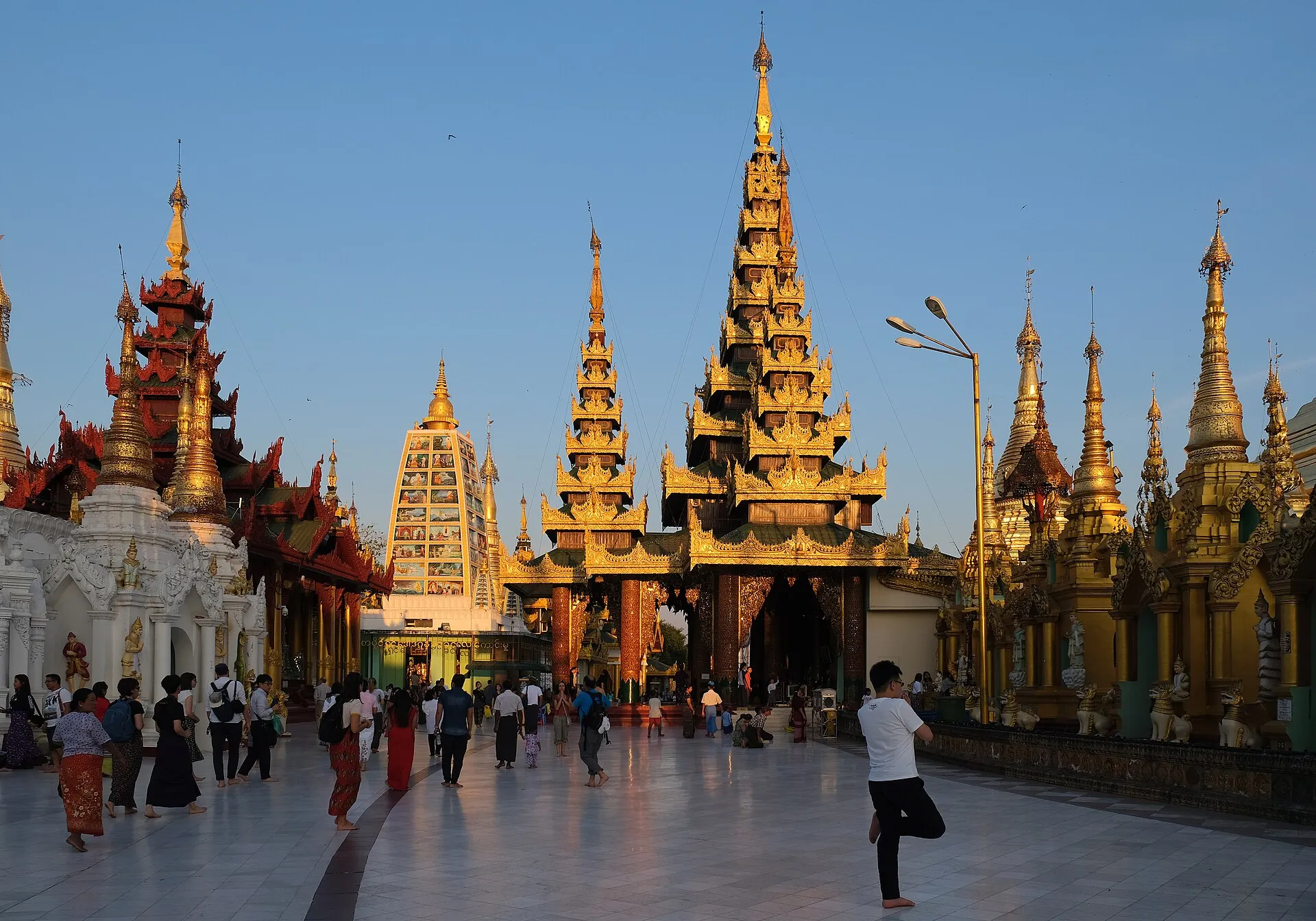
Yangon is extraordinary, and the word is not decoration: a decaying colonial downtown that is architecturally unlike anywhere else in Asia, the Shwedagon Pagoda, an outstanding and largely undiscovered food culture, tea shop life, and warm, curious people. It is genuinely cheap, essentially untouristed since 2021, and offers an experience no other Southeast Asian city can. The drawbacks are severe and honest assessment is required. The country is under military rule with an active civil war, most Western governments advise against travel, and travel insurance is frequently void as a result. Internet censorship is heavy, VPN use has been criminalised, and outages and shutdowns are routine and can stop work entirely. Power cuts are long and daily. The banking system barely functions for foreigners, so cash dollars are essential and ATMs are unreliable. Conscription has been reintroduced, checkpoints are common, and photographing the wrong thing carries real legal risk. Medical care is inadequate for anything serious.
Who Yangon Is For
Yangon is not a general-purpose nomad base and should not be treated as one in 2026. It fits a narrow group: journalists, researchers, humanitarian and development workers, people with family or long business ties to Myanmar, and highly experienced travellers who have already lived through difficult environments and are making an informed, ethically considered choice. Those people will find a fascinating, cheap and moving city with almost no other foreigners in it. Anyone else should skip it. That includes first-time nomads, anyone whose income depends on uninterrupted connectivity or reliable video calls, anyone who needs functioning banking or travel insurance, and anyone uncomfortable with the reality that tourist spending in a junta-controlled economy is politically loaded. Digital nomads seeking cheap Southeast Asia with community and infrastructure are far better served by Chiang Mai, Hanoi, Da Nang or Phnom Penh, all of which deliver similar costs without the political risk or the censorship.