Cost of Living in Bagan
Where this figure comes from. No cost survey covers Bagan, so the $600 a month above is our own estimate rather than a measurement. On 416 of our 999 city guides the figure is built from a published Numbeo basket, a one-bedroom rent in the centre plus one person's monthly costs without rent, converted to USD; this city is not one of them. How we source everything.
Bagan is one of the cheapest places a nomad could imagine living, but "cheap" here comes with heavy caveats. Living simply, a budget of roughly $500 to $1,000 a month covers a modest guesthouse room, local meals, an e-bike rental and the temple-zone fee. The catch is the cash economy: Myanmar runs largely on physical US dollars and Burmese kyat, card payments are rare, and ATMs are unreliable or offline. You must arrive with clean, crisp, unmarked US dollar bills and budget for poor exchange rates. Prices swing with the political and tourism situation, so treat any figure as an editorial estimate rather than a promise. The archaeological-zone ticket deserves its own line in a longer budget: since October 2023 it has been valid for only three days instead of five, and anyone staying longer must buy another, so a month on the plain turns a one-off entrance fee into a recurring cost.
- Guesthouse or budget room: roughly $12 to $35 per night, cheaper monthly
- Local Burmese meals: often $2 to $5; tourist restaurants more
- E-bike (electric scooter) rental: around $4 to $8 per day
- Bring crisp US dollars; do not rely on ATMs or cards
Where to Work in Bagan
Bagan rewards slow days among the temples, and it punishes anyone who arrives with a deadline-driven workload. There is no true coworking space, internet is slow and frequently drops, and power cuts are common enough that guesthouses often run generators for only part of the day. Patchy mobile data from a local SIM, on MPT, ATOM or U9, the network that traded as Ooredoo until its September 2025 rebrand, is usually the most dependable connection you will get, though even that drops out in power cuts and around the more distant temples. Guesthouse cafes and a handful of laptop-friendly restaurants in Nyaung-U offer a table and sometimes usable WiFi. If your income depends on reliable video calls or large uploads, plan buffer days, work offline where possible, and never promise a client a hard deadline from here.
- Buy an MPT or U9 (formerly Ooredoo) SIM at the airport or in Nyaung-U
- Expect daily power cuts; carry a charged power bank
- Guesthouse cafes are your most realistic work spots
- Download and draft offline; sync when the connection returns
Getting Around Bagan
The classic way to explore the temple plain is by e-bike, the electric scooters that guesthouses and shops rent by the day. They are quiet, need no license, and let you weave between pagodas at your own pace, though the sandy tracks take some getting used to. Horse carts offer a slower, atmospheric ride, and taxis or shared pickups connect the three towns: Nyaung-U, with the airport and lively market, upscale Old Bagan inside the archaeological zone, and mid-range New Bagan. Remember the Bagan Archaeological Zone entry fee, paid on arrival and valid for several days. Longer journeys run by bus to Mandalay and Yangon, or the slow, scenic Irrawaddy riverboats.
- E-bikes are the standard temple-plain transport; rent by the day
- Horse carts and taxis link Nyaung-U, Old Bagan and New Bagan
- Pay the Bagan Archaeological Zone fee on arrival
- Buses and slow riverboats connect to Mandalay and Yangon
Sorting transport? Book an airport transfer, or compare car rental on Auto Europe and QEEQ.
Visas for Bagan
Most visitors enter Myanmar on a tourist visa, historically available as an online e-visa, though the system's availability and rules have shifted since the 2021 military coup. Far more important than the paperwork is the security picture: Myanmar has been under military rule with ongoing armed conflict and instability, and many governments advise reconsidering or avoiding travel. Understand the ethical questions around visiting under this regime, and know that travel insurance may not cover destinations under strong government warnings.
- Tourist e-visa has been the common route, but rules shift often
- Read your government's live travel advisory carefully
- Check whether insurance covers a destination under warnings
Best Time to Visit Bagan
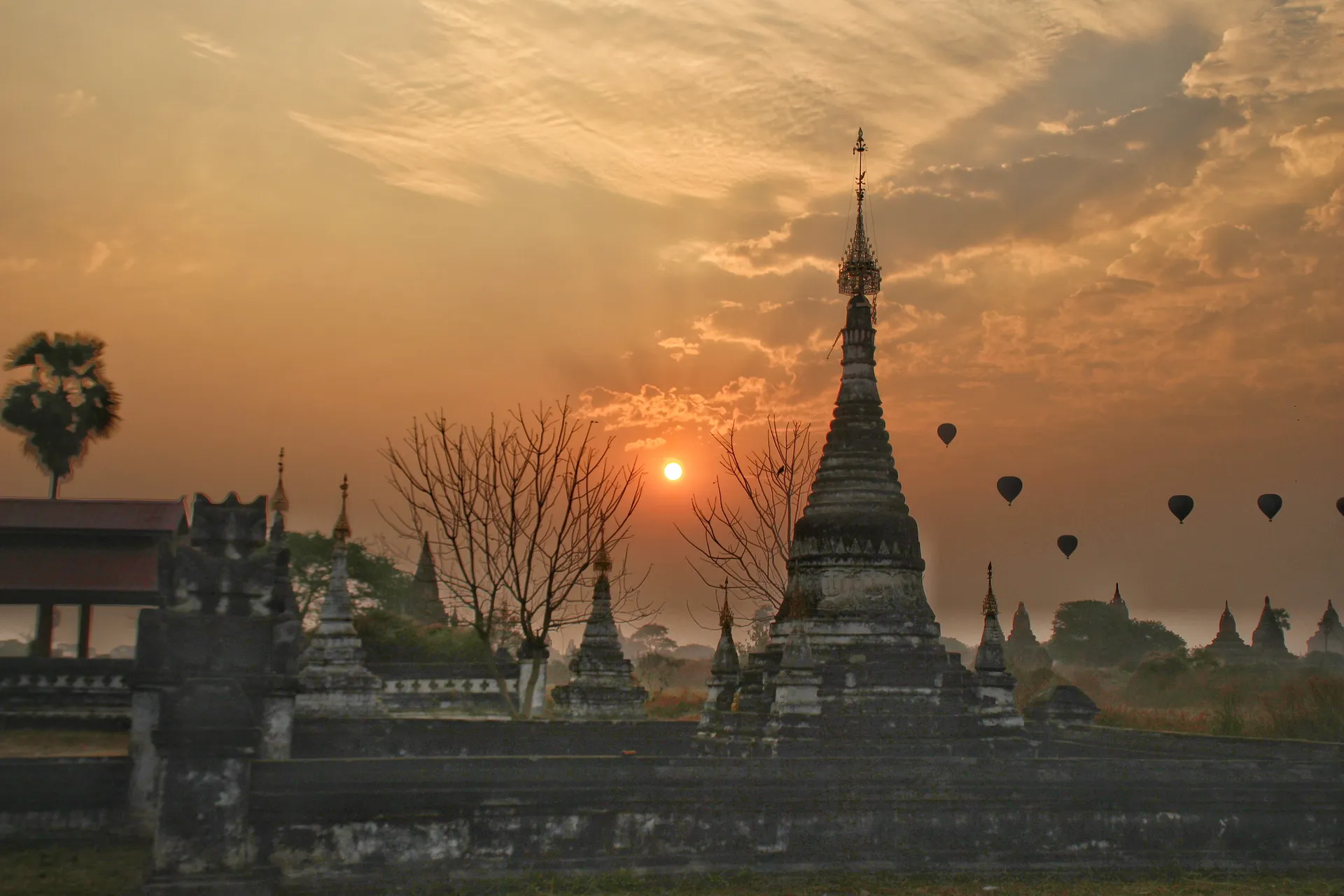
The cooler dry season, roughly November to February, is the clear best time to visit. Days are warm and comfortable, skies are clear, and mornings offer the calm, stable air prized for the hot-air balloon flights that drift over the temples at dawn. This is peak season, so book ahead. The hot season from March to May is genuinely scorching, with temperatures in the dry central plain climbing brutally high and midday temple-hopping becoming punishing. The rainy season from June to October brings a greener, quieter landscape and far fewer visitors, with occasional heavy downpours rather than constant rain. Whenever you go, sunrise and sunset over the pagoda-studded plain remain the unforgettable draw. Balloon flights have returned: for the 2025-26 season three companies flew from mid-October to around March, at roughly $170 to $175 a seat, which makes a dawn flight a planned splurge rather than an impulse.
- November to February: coolest, clearest, best for balloons; peak season
- March to May: extreme heat in the dry zone; hardest for touring
- June to October: green, quiet and cheaper, with heavy showers
Pros and Cons of Bagan
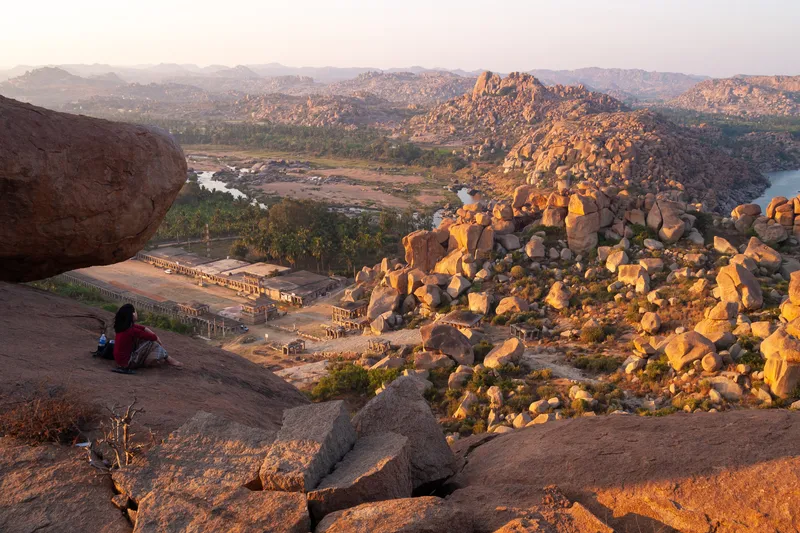
Bagan trades on wonder, not convenience. The reward is one of the planet's great sights: thousands of centuries-old temples spread across a vast plain, best seen from an e-bike at dawn or beneath a balloon. Costs are tiny, the Burmese welcome is warm and genuine, and the sense of history is overwhelming. Against that, the practical friction is severe. Internet and power are unreliable, banking is a cash-only headache, nightlife is essentially nonexistent, English is limited outside tourism, and the wider political situation demands serious caution. This is a place to visit with intention and humility, not a plug-and-play work base you can switch on and coast through. The sunset ritual has changed as well. Climbing the temples has been banned since 2018, and the artificial viewing mounds built in their place are low and partly screened by trees, so the famous panoramas now come from a few sanctioned spots or from a balloon. Some monuments also carry fresh damage from the March 2025 earthquake centred near Sagaing, which toppled or cracked a number of temples on the plain.
- Pro: a genuinely world-class, awe-inspiring temple landscape
- Pro: very low costs and warm, sincere local hospitality
- Con: slow internet, frequent power cuts, cash-only banking
- Con: real safety and ethical concerns under military rule
Who Bagan Is For
Bagan suits the traveller first and the worker a distant second. It rewards adventurous, flexible people with light work commitments, a taste for history and culture, and the patience to accept unreliable infrastructure as part of the deal. If you can work fully offline, take real leave, and treat any connection as a bonus, a short, intentional stay can be one of the most moving stops of a nomad journey. It is wrong for anyone tied to fixed deadlines, video calls, or a steady digital routine, and anyone unwilling to weigh the current political and ethical realities. Come informed, come respectful, keep your expectations of comfort and connectivity low, and let the temples do the rest.
- Great for: culture-driven adventurers with flexible, offline-friendly work
- Great for: short, intentional stays built around the temple plain
- Wrong for: deadline work, heavy uploads or steady video calls
- Wrong for: anyone needing comfort, reliability or easy banking