 Krakow
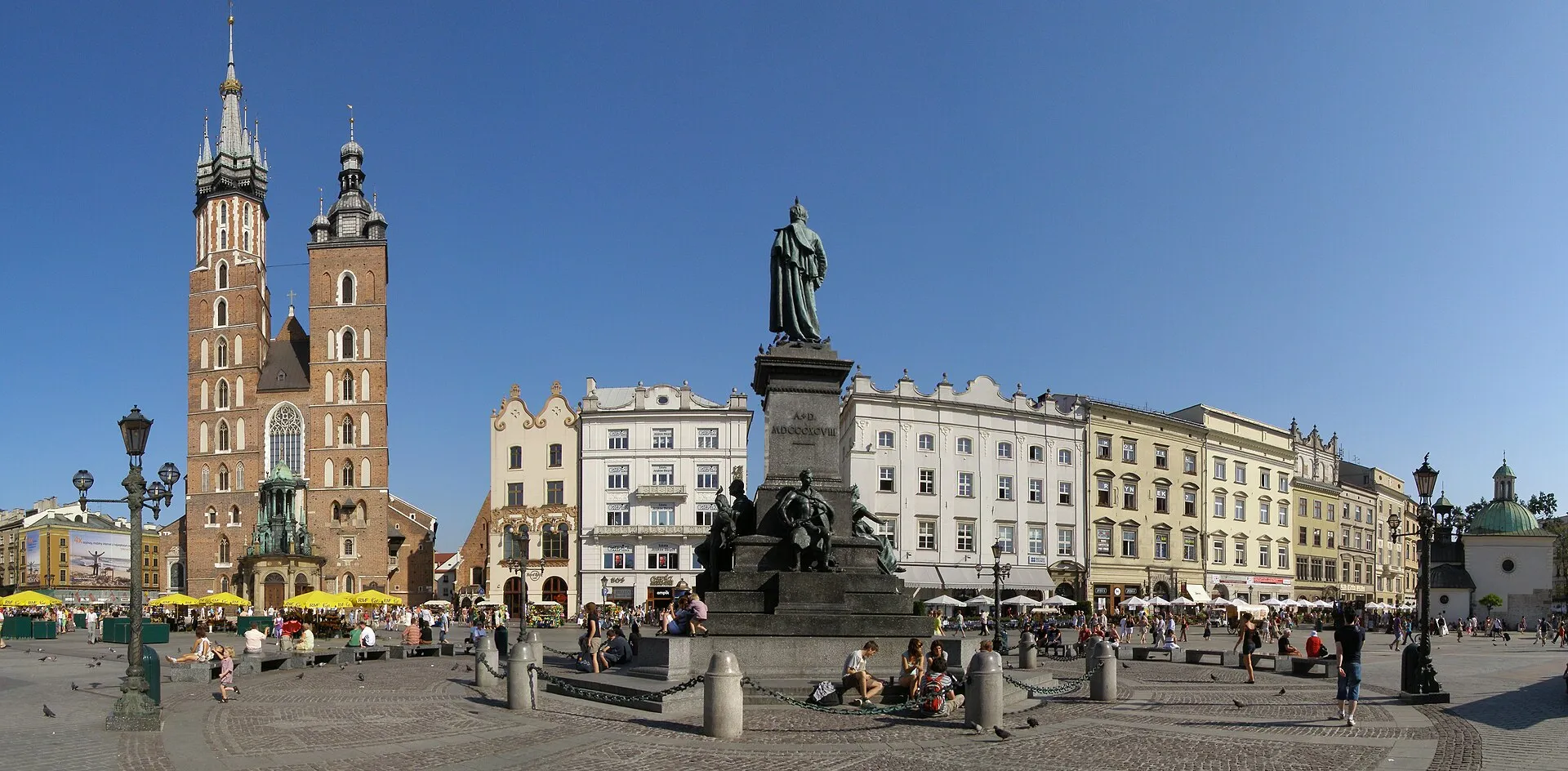
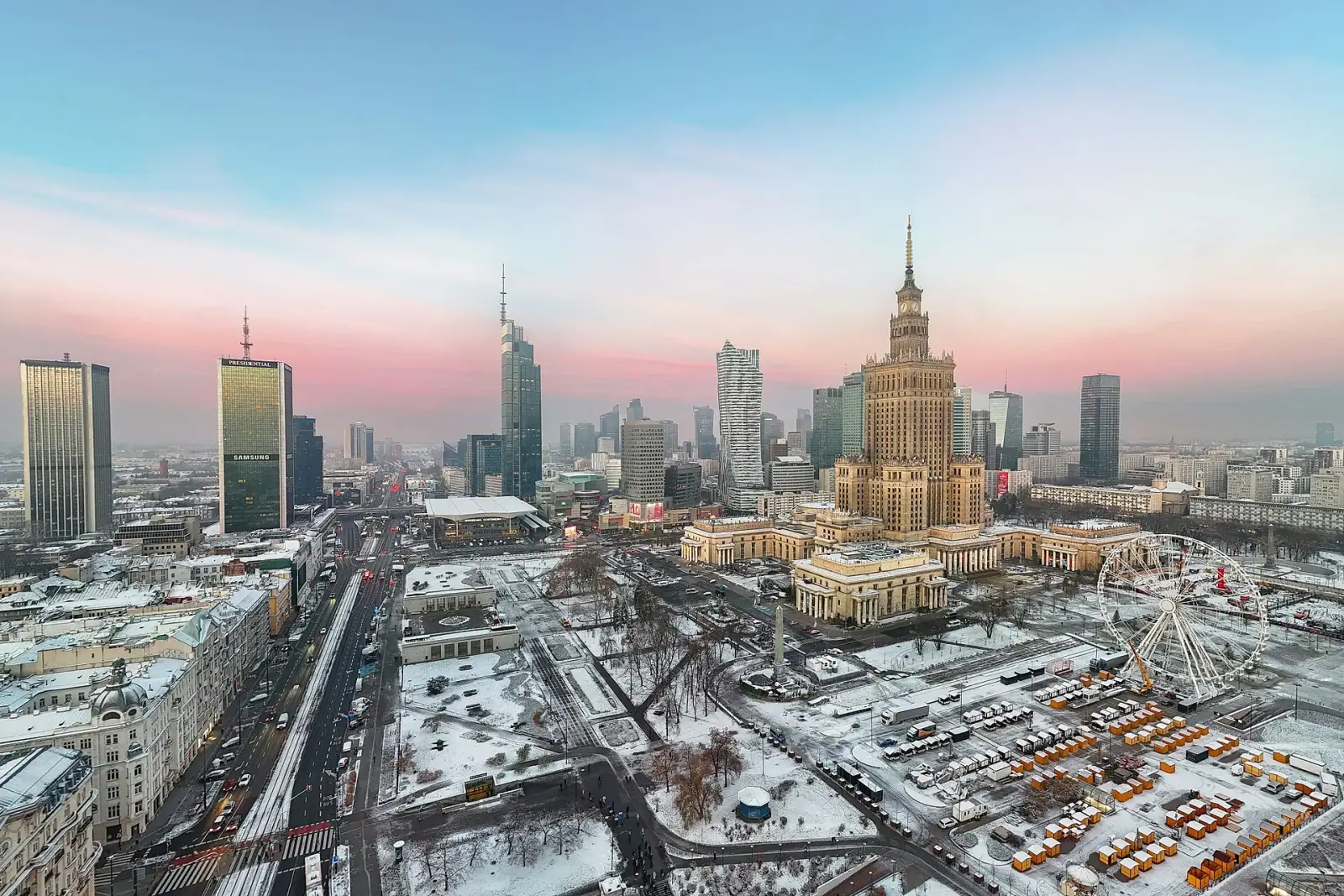
Everyone compares these two cities by their postcards: Krakow's main square against Warsaw's towers. You will not be living on a postcard. The better test is to walk one lived-in neighbourhood in each city, one street at a time, and ask whether you could see yourself carrying groceries down it.
Kazimierz, starting on Szeroka
Begin on Szeroka, which means "wide" and is less a street than a long cobbled square. Casimir the Great founded Kazimierz as a separate town in 1335, and it stayed independent until the early 19th century. The northeastern part became one of Europe's great centres of Jewish learning, and it is all still here on this block: the Old Synagogue at number 24, the oldest synagogue building standing in Poland, the Wolf Popper at 16, and the Remah at 40, which still has a small congregation and a cemetery from 1535.
Turn along Józefa, past the High Synagogue at 38 and the small jewellers and art shops that now share the street. Then head for Plac Nowy, the neighbourhood's true centre. In its middle stands the Okrąglak, a round twelve-sided market hall from 1900, which became a kosher poultry slaughterhouse in 1927. On weekdays vegetables and antiques are sold around it. At night the queues are for zapiekanki, toasted half baguettes with mushrooms and melted cheese, the student food of the 1970s that has become a cult.
You could work at Yolk on Sarego, a few minutes off, and go out without ever taking a tram. Old Town and Podgórze are both on foot. That is the appeal and also the limit: a one-bedroom here costs about $800 to $1,120, and on a Saturday night you share all of it with visitors. Krakow, at about $1,800 a month on our estimate, has an expensive heart.
Praga, starting on Ząbkowska
Now cross the Vistula in Warsaw. About 85 percent of the city was destroyed in the Second World War, including the Old Town that was afterwards rebuilt and listed by UNESCO in 1980. Praga, on the east bank, came through relatively untouched. In 1944 the Red Army halted on this side of the river while the Uprising burned on the other. So, oddly, the pre-war brick you hoped to find in Warsaw is easiest to find here, away from the part that tourists are sent to.
Take the M2 to Dworzec Wileński and walk to the corner of Targowa, where a group of blue angels by Marek Sułek stands near the start of Ząbkowska. The Różycki Bazaar, trading since 1882, is just nearby. The street runs for about a kilometre. Before the war around half its residents were Jewish, and it was nicknamed the Nalewki of Praga. The tenement at number 11 still has remnants of a synagogue. The Museum of Printing is at 23/25, and a short stretch of the old tram track survives in the original cobbles.
Then the brickwork opens out into Koneser, a vodka plant founded in 1897 and now a complex of flats, offices, restaurants and the Polish Vodka Museum, with Google's startup campus in a former spirit warehouse, so your neighbours are founders as often as artists. On summer weekends Ząbkowska closes to cars for its street festival. On a rainy Tuesday in November, some of it remains scruffy and a little raw, and that is what you are signing up for. A one-bedroom in Praga costs about $535 to $800.
What the walk tells you
Warsaw is the dearer city, at around $2,200 a month by our reckoning, and you might pay less for your own front door there than in Kazimierz. It also comes with a metro, a city of 1.87 million against 817,000, and the stock exchange and offices that come with being a capital. Krakow gives you a complete small world on foot.
Air was long the strike against the prettier city. Krakow has had some of Europe's worst winter smog, but it banned coal and wood heating outright in 2019, and in 2024 it recorded no breach of the daily limit for benzo(a)pyrene for the first time. Smog still drifts in from villages outside the city's reach. Warsaw's own coal ban came later and leaves wood alone. We would no longer use this to decide.
Stay in Kazimierz if you are coming for a few months and want a city that is finished and lovely from the first evening. For a year or more we would pick Praga, which is still becoming something, and has the whole of a capital across the bridge. The Pendolino makes it easy to test this: walk Szeroka on a Friday and Ząbkowska on the Sunday, and see which one you would still want to walk in the rain.
 United States
 United Kingdom
 Germany
 Canada
 Australia
 India