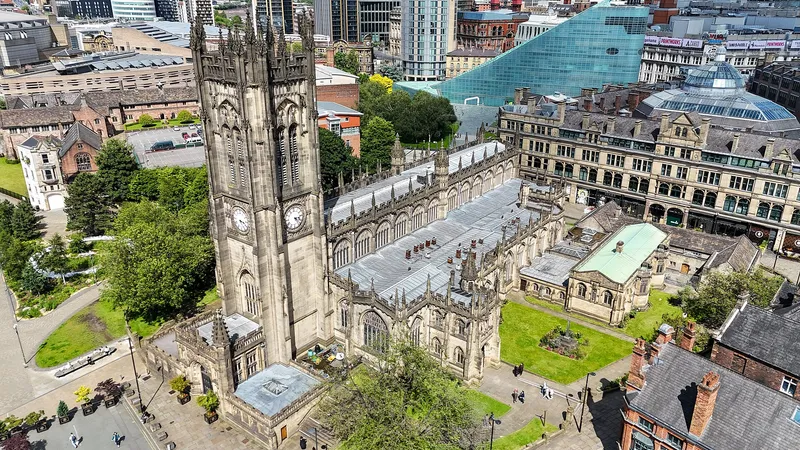
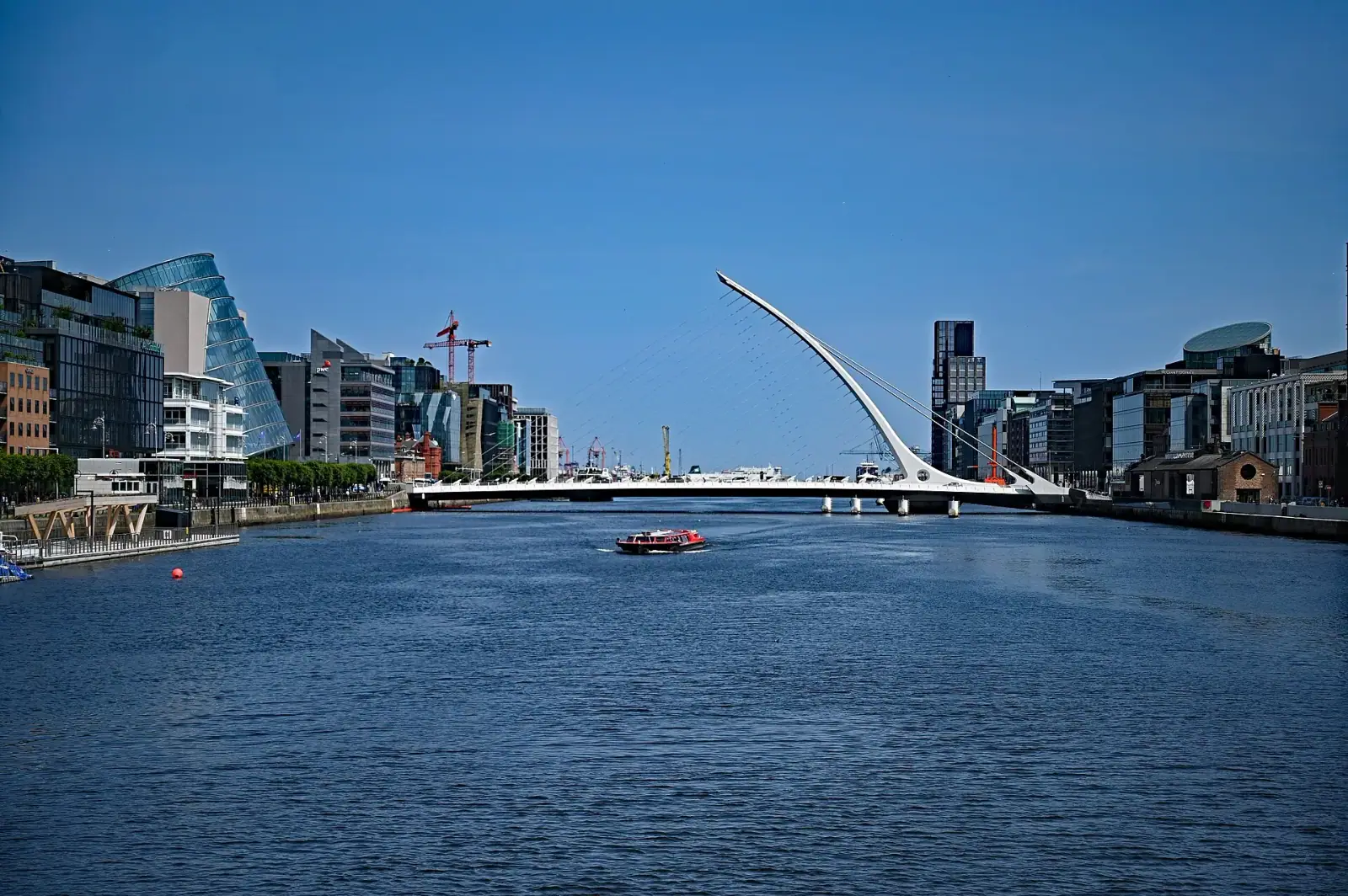
Samuel Beckett Bridge spanning the River Liffey with Dublin Docklands skyline
Photo: P. Hughes / Wikimedia Commons (CC BY 4.0)
Ireland flag

Dublin

Ireland

Experience pubs, tech giants, and legendary Irish craic here.

$4.200
Monthly Budget
--
Current Weather
Oceanic
Climate Type
80 Mbps
Avg. WiFi Speed
6/10
Safety Score
5,000+
Active Nomads
--
Time Difference
Scroll
0
Nomad Score

Why Dublin Works for Remote Work

Experience pubs, tech giants, and legendary Irish craic here. A oceanic climate and strong English make Dublin an easy base, and at about $4,200 a month it fits a range of budgets. Keep cost in mind.

Compare Dublin vs Galway →

Category Breakdown

How Dublin scores across all 13 factors

Weather in Dublin

Monthly averages from 2019-2023 (Open-Meteo), and the best time to visit

Jan
10°
Feb
11°
Mar
12°
Apr
15°
May
17°
12°
Jun
19°
13°
Jul
19°
13°
Aug
18°
12°
Sep
14°
Oct
11°
Nov
Dec
Daily high & low (°C)Rainfall (mm/month)Best months to visit

The best time to visit Dublin for comfortable weather is Jun, Jul, Aug. The warmest month is Jul (around 19°C by day), and the wettest is Oct (about 118mm of rain).

Chasing good weather? See other cities that are warm in Jun, or plan a multi-city route around the seasons. Staying a while in Dublin? Check visa options, your time-zone overlap and how far your budget stretches, or find it on the world map.

Historical monthly averages, not a forecast. Source: Open-Meteo.

Best Neighborhoods in Dublin

Where to base yourself for the perfect nomad experience

Temple Bar

$$$
Tourist & Nightlife

Dublin's famous cultural quarter

Temple Bar is Dublin's cultural heart - cobblestone streets, pubs, galleries, and the famous Temple Bar pub. It's extremely touristy but atmospheric, with Dublin's best nightlife concentration.

Best for: First-time visitors, nightlife seekers, and those wanting iconic Dublin
✓ Pros
  • Best pubs
  • Central location
  • Cultural venues
  • Atmospheric
✗ Cons
  • Very touristy
  • Expensive drinks
  • Noisy nights

Portobello / South Circular

$$
Hipster & Local

Dublin's hipster neighborhood with canal charm

Portobello is Dublin's emerging hipster area - canal walks, independent cafes, and local character. It's where young Dublin professionals live, with great food scene and village atmosphere.

Best for: Young professionals, foodies, and nomads seeking trendy local Dublin
✓ Pros
  • Canal walks
  • Great cafes
  • Local vibe
  • Village feel
✗ Cons
  • Limited nightlife
  • Residential quiet
  • Parking issues

Ranelagh

$$$
Village & Upscale

Dublin's village in the city with great dining

Ranelagh is Dublin's most desirable village neighborhood - tree-lined streets, excellent restaurants, and professional residents. It's where successful Dubliners settle, with village character and city access.

Best for: Professionals, foodies, and nomads seeking quality Dublin living
✓ Pros
  • Best restaurants
  • Village atmosphere
  • Safe and clean
  • Good transport
✗ Cons
  • Expensive
  • Quiet evenings
  • Competitive housing

Rathmines

$
Student & Georgian

Student energy meets Georgian elegance

Rathmines blends Georgian elegance with student energy - the famous clock tower, affordable restaurants, and young population. It's Dublin's best value for quality living near the center.

Best for: Students, budget nomads, and those seeking affordable quality
✓ Pros
  • Good value
  • Georgian architecture
  • Young energy
  • Near center
✗ Cons
  • Student chaos
  • Variable quality
  • Busy streets

Smithfield / Stoneybatter

$$
Creative & Emerging

Dublin's emerging creative quarter

Smithfield and Stoneybatter are Dublin's emerging creative areas - old Dublin character, craft bars, and growing arts scene. It's where Dublin's creative future is developing.

Best for: Creatives, early adopters, and nomads seeking Dublin's next neighborhoods
✓ Pros
  • Growing scene
  • Character
  • Good bars
  • Better value
✗ Cons
  • Still developing
  • Mixed areas
  • Limited cafes

Cost of Living in Dublin

Dublin is one of Western Europe's most expensive cities, and you should budget accordingly. Rent is the biggest hit: a one-bedroom apartment in central Dublin (D2, D4, D6) runs roughly EUR 2,200-3,200/month (USD 2,400-3,500). Push out to cheaper areas like Drumcondra, Glasnevin, or Rathmines and you are looking at EUR 1,400-1,800/month (USD 1,550-2,000).

  • Rent (central 1-bed): EUR 2,200-3,200 / USD 2,400-3,500
  • Rent (outer area 1-bed): EUR 1,400-1,800 / USD 1,550-2,000
  • Groceries (monthly, cooking at home): EUR 300-450 / USD 330-500
  • Eating out (mid-range meal): EUR 18-30 per meal / USD 20-33
  • Coworking hot-desk: EUR 200-320/month / USD 220-350
  • Local transport (Leap Card): EUR 70-100/month / USD 77-110
  • Total monthly range: EUR 2,200-4,200 / USD 2,400-4,600 depending on lifestyle and location

Budget nomads can cut costs by living further from the centre, cooking most meals, and skipping coworking spaces in favour of cafes. Comfortable mid-range living in central Dublin lands around EUR 3,500-4,000/month (USD 3,800-4,400).

Where to Work

Dublin has a solid coworking scene, with roughly 50 spaces city-wide. For startups and tech workers, Dogpatch Labs in the CHQ Building (Docklands) is the most connected hub, hosting 45 companies and regular events. The Tara Building on Tara Street offers a rooftop terrace and a lively community at a mid-range price. Huckletree near Pearse Street caters to a large tech and finance crowd. tCube on Westmoreland Street is widely cited as the best-value 24/7 option with fibre broadband in a central location.

Cafe-working is common in Dublin, and a handful of spots genuinely tolerate long stays. The Fumbally in the Liberties is a beloved creative hub with good tables and plug points. Shoe Lane Coffee near Tara Street DART station is consistently recommended for reliable WiFi and window seating. That said, many chain cafes and busier independent spots will move you on after an hour, especially at peak times.

WiFi quality varies. Most coworking spaces deliver 100+ Mbps with no trouble. In cafes, speeds can swing from excellent to barely functional. City-wide median speeds are around 150-190 Mbps on fixed lines, making Dublin technically well-connected. If you rely on video calls, a coworking desk is worth the cost.

Getting Around

The city centre is genuinely walkable. From Trinity College to St Stephen's Green takes about 10 minutes on foot, and most of the inner city is reachable in under 30 minutes. For longer trips, the three main options are Dublin Bus, the Luas tram (two lines: Red and Green), and the DART coastal rail.

Get a Leap Card for the best fares. The TFI 90-minute fare costs EUR 2 per journey using a Leap Card, covering bus, Luas, and DART within the time window. A monthly commuter pass runs around EUR 70-100 depending on zones. Cycling is increasingly viable with Dublin Bikes, the city's bike-share scheme, available for a EUR 35 annual pass.

Dublin Airport is about 10 km north of the city. The cheapest regular option is the Aircoach or Dublin Bus Route 784, which connects the airport to the city centre for around EUR 7-10 and takes 30-45 minutes outside rush hour. A taxi runs EUR 25-40 depending on traffic. There is no direct rail link to the airport yet, though one is in long-term planning.

Visas and Staying Long-Term

Ireland is not in the Schengen Area, so its entry rules are separate. EU and EEA citizens can live and work in Ireland indefinitely without a visa. US, Canadian, Australian, and UK passport holders can enter visa-free for tourism, typically for up to 90 days, though the exact permitted stay is at border control's discretion.

Ireland does not have a dedicated digital nomad visa. The closest option is Stamp 0, a temporary residence permission for financially self-sufficient individuals working remotely for non-Irish employers. It requires proof of income (generally EUR 50,000+ per year from outside Ireland), private health insurance, and a paper-based application to the Irish Immigration Service Delivery. It is renewable annually but is not a pathway to permanent residency on its own.

Extensions beyond a short tourist stay are not straightforward. Always confirm current requirements directly with the Irish Immigration Service (irishimmigration.ie) before making plans.

Best Time to Visit

Dublin has an oceanic climate: mild, damp, and changeable year-round. Expect rain in every month. Temperatures rarely drop below freezing in winter or climb above 20C (68F) in summer.

May to September is the best window for remote workers. May and June offer the most daylight hours and relatively low rainfall before peak tourist crowds arrive. July and August are warm (15-20C / 59-68F) but also the busiest and most expensive months for accommodation. May and September hit a sweet spot: decent weather, thinner crowds, and lower prices.

Avoid January through March if you are sensitive to grey skies and persistent drizzle. December is festive but has only about 51 sunshine hours for the month. Whenever you visit, pack a waterproof layer regardless of the forecast.

Pros and Cons

  • English is the primary language, removing the friction common in other European capitals
  • Fast, reliable broadband with widespread fibre and 150-190 Mbps city speeds
  • Thriving tech and startup scene through Dogpatch Labs and the Digital Docklands
  • Genuinely friendly locals and an active international expat community
  • Safe overall, ranked near the top of global peace indices
  • Strong pub and cultural scene with live music, literary history, and festivals year-round
  • Very high cost of living, especially rent, which dominates any budget
  • No digital nomad visa, limiting legal long-term stays for non-EU residents
  • Unpredictable, frequently rainy weather throughout the year
  • Some parts of the city centre can feel gritty, with visible homelessness and litter in certain pockets
  • Tight housing market makes finding short-term furnished rentals competitive and pricey
  • No airport rail link, making arrivals slightly more cumbersome than in other capitals

Who Dublin Is Best For

Dublin works well for remote workers with solid budgets (USD 3,500+ per month) who want a fully English-speaking European base with a real tech community around them. It suits people who value pub culture, literary history, and easy access to the rest of Europe via a well-connected airport. EU and EEA passport holders have the easiest time since they can stay indefinitely without visa stress.

If you are on a tight budget, want guaranteed sunshine, or are looking for a long-term visa pathway as a non-EU citizen, Dublin is likely to frustrate you. The city rewards those who lean into its culture rather than those trying to recreate the experience of a cheaper, sunnier destination at a Dublin price point.

Where to Stay in Dublin

Top neighborhoods and accommodations for digital nomads

Staycity Aparthotels Dublin Mark Street

Aparthotel
City Centre

Steps from Trinity College with full kitchens, fast WiFi, and a desk in every apartment for productive medium stays.

Check availability →

Staycity Aparthotels Dublin Christchurch

Aparthotel
Christchurch

Central location a short walk from Temple Bar, with self-catering apartments ideal for longer remote-work stays.

Check availability →

The Wilder Townhouse

Boutique hotel
South City Centre

Michelin Key boutique hotel near St Stephen's Green offering stylish rooms with work desks in a walkable, upscale neighborhood.

Check availability →

The Hendrick Smithfield

Hotel
Smithfield

LEED Gold certified hotel in the creative Smithfield quarter, close to the Luas tram and a short walk from the Jameson Distillery.

Check availability →

Latroupe Jacobs Inn

Hostel
North City Centre

Top-rated hostel near Connolly Station with pod-style dorms, USB charging, secure lockers, and fast WiFi for solo nomads.

Check availability →

Browse apartments, aparthotels and hotels across Dublin. Compare prices and book a base that suits a remote-work stay.

See available stays in Dublin →

Affiliate link. See our disclosure.

Best Coworking Spaces

Where nomads get work done in Dublin

Dogpatch Labs

Startup hub
North Docklands

Startup hub in the historic CHQ Building hosting 45+ companies with hotdesking, events, and mentorship programs.

Visit website →

The Tara Building

Coworking space
City Centre D2

Two-floor collaborative coworking hub on Tara Street with rooftop terrace, 24-hour access, and a tight-knit community.

Visit website →

Huckletree

Tech coworking
Pearse Street D2

30,000 sq ft space popular with tech and finance professionals, featuring themed zones and a Zen Garden for breaks.

Visit website →

tCube Dublin

Budget 24/7 coworking
Temple Bar D2

Best-value 24/7 coworking space in the city centre with fibre broadband, kitchen, and shower facilities since 2013.

Visit website →

The Fumbally

Laptop-friendly cafe
The Liberties D8

Beloved community cafe in a vaulted Liberties space where creatives and remote workers settle in for hours with good food.

Visit website →

Shoe Lane Coffee

Specialty coffee
City Centre D2

Specialty coffee shop beside Tara Street DART station with window seating, plug sockets, and reliable WiFi for remote work.

Visit website →

Where to Eat & Drink

Best food and drink spots in Dublin

Grano

Italian
Stoneybatter D7

Small, Michelin-listed Italian restaurant run by a Calabrian family serving handmade pasta and produce imported from Italy.

Visit website →

Delahunt

Modern Irish
Camden Street D2

Contemporary Irish cooking in a Victorian grocer's building on Camden Street, with a cocktail bar upstairs and Michelin recognition.

Visit website →

Fade Street Social

Irish tapas
Creative Quarter D2

Multi-room restaurant and cocktail bar from Dylan McGrath with woodfired flatbreads, small plates, and a lively rooftop terrace.

Visit website →

Bunsen

Burgers
City Centre D2

No-frills burger joint serving 100% fresh-ground Irish beef with a tight menu and some of the best burgers in the city.

Visit website →

The Long Hall

Victorian pub
South Great George's Street D2

Licensed since 1766, this ornate Victorian pub with original fittings is widely considered one of Dublin's finest traditional bars.

Visit website →

Mulligan's

Traditional Irish pub
Poolbeg Street D2

One of Dublin's oldest pubs, established 1782, celebrated for its perfectly poured Guinness and no-nonsense traditional atmosphere.

Visit website →

What Do Nomads Say?

Vote on how accurate these scores are based on your experience

Cities with a Similar Vibe to Dublin

Different places that score alike across our 13 categories, if you like Dublin, these tend to feel similar.

In the rankings

Where Dublin ranks

Dublin features in 1 of our 32 city rankings.

  1. 14Best for parties
  2. Best cities in Europe

Frequently Asked Questions About Dublin

How much does it cost to live in Dublin as a digital nomad?

A comfortable nomad budget in Dublin is around $4,200 a month: a furnished rental, food, coworking, and getting around. Live a little outside the center or eat local to spend less.

Is the internet fast enough for remote work in Dublin?

With a WiFi score of 8/10, connectivity in Dublin is excellent for calls and focused work. A prepaid local SIM keeps you online when you are away from the apartment.

Is Dublin safe for digital nomads?

Dublin scores 6 out of 10 for safety in our ratings, which is workable for solo travel and long stays. Use normal precautions at night and with valuables, and choose well-reviewed areas.

Is Dublin a good city for digital nomads overall?

For nomads, Dublin is worth a look if you value English and nightlife. Costs sit near $4,200 a month and the community keeps growing, though, like anywhere, it will not match every checklist.