Cost of Living in Tampa
Where this figure comes from. No cost survey covers Tampa, so the $2,300 a month above is our own estimate rather than a measurement. On 416 of our 999 city guides the figure is built from a published Numbeo basket, a one-bedroom rent in the centre plus one person's monthly costs without rent, converted to USD; this city is not one of them. How we source everything.
Tampa at $2,300 a month is workable for a single nomad but tighter than it was five years ago, since Florida rents rose sharply post-2020. A furnished one-bedroom on a monthly lease in Hyde Park, Seminole Heights or downtown runs $1,400 to $2,000; heading to Ybor City or across to St Petersburg's outer neighbourhoods can shave $200 to $300. Groceries for one come to $350 to $480, and a decent restaurant meal costs $16 to $28, with Cuban sandwiches and taquerias far cheaper. A prepaid unlimited SIM costs $25 to $45. Coworking hot desks run $150 to $300 a month. Utilities including summer air conditioning, water and fibre total $130 to $200, with August electricity bills the worst of it. Transport, realistically a car with insurance, runs $400 to $650; Florida car insurance is among the most expensive in the country. Value verdict: fair rather than cheap, saved by no state income tax.
Where to Work in Tampa
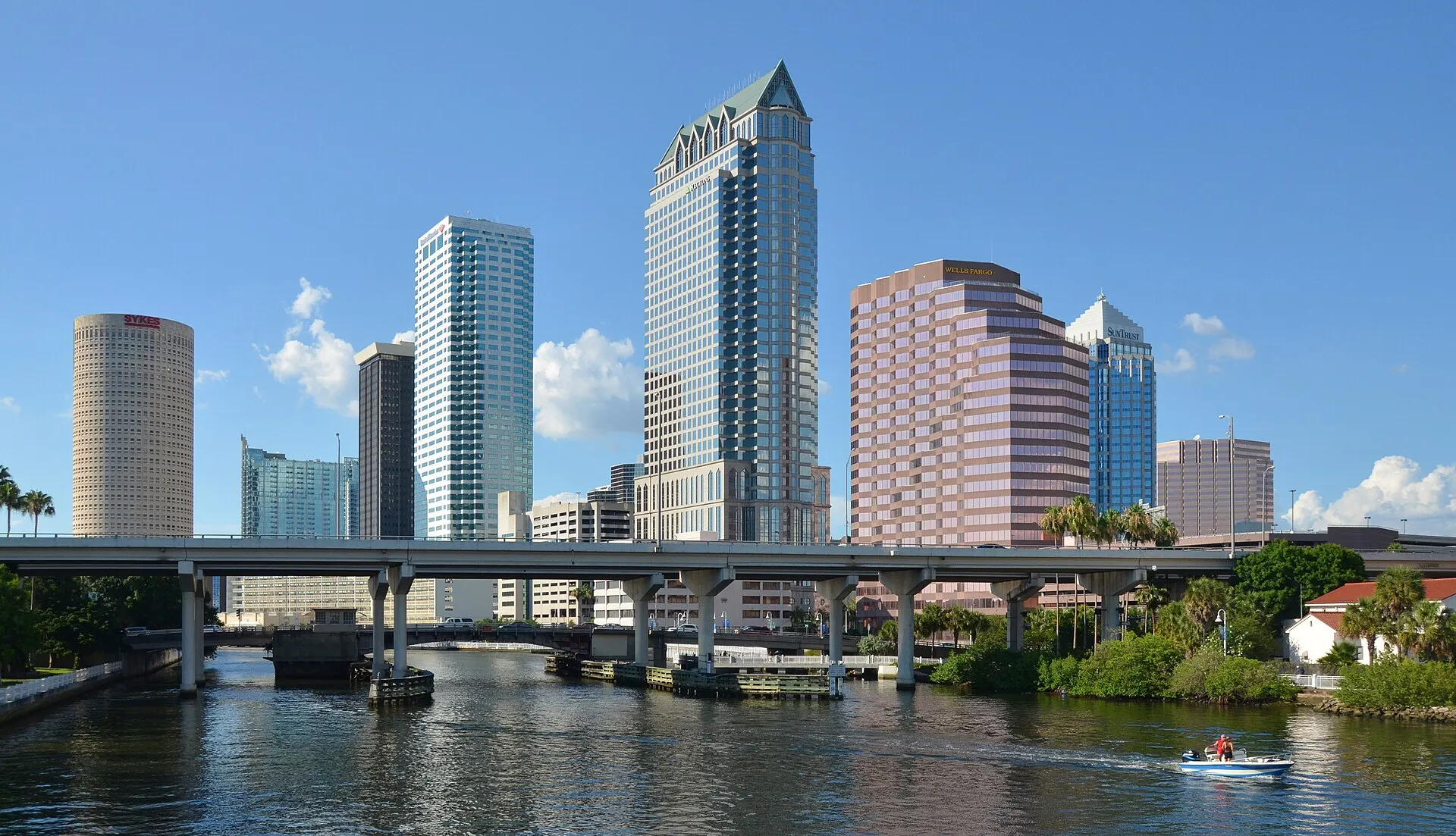
The best bases are Hyde Park and SoHo for walkable, expensive charm; Seminole Heights for a cheaper, creative, bungalow-lined alternative; downtown and Channelside for high-rise convenience next to the Riverwalk; and Ybor City for history and nightlife with rougher edges. St Petersburg across the bay is an equally credible base with a stronger arts scene. Internet is good: Spectrum and Frontier Fiber cover the urban core, and coworking spaces are just as well connected. Options include Industrious and Regus in the downtown towers, plus Tampa's independent operators and the Embarc Collective startup hub near downtown for tech-oriented members. Cafes tolerant of laptops include Buddy Brew Coffee in Hyde Park, Foundation Coffee in Seminole Heights and Kahwa Coffee across the bay in St Petersburg. Caveats: seating is scarce mid-morning, some cafes cap stays at weekends, and summer thunderstorms cut short outdoor patio work most afternoons. Two of the country's major military commands are headquartered at the air base on the peninsula south of downtown, and the defence contracting and intelligence work around them is a large and largely invisible part of the local professional economy.
Getting Around Tampa
Tampa is car-dependent, though slightly less absolutely than Houston or Dallas. HART buses cover the city for $2 a ride and $4 a day, but frequencies are low and routes are slow. The TECO Line Streetcar links downtown, Channelside and Ybor City and is currently free to ride, genuinely useful within that corridor. The Cross-Bay Ferry runs seasonally between downtown Tampa and St Petersburg, around $8 to $12 each way. Uber and Lyft cover the rest: a typical urban trip costs $12 to $22, and Tampa International Airport, only 15 to 20 minutes from downtown and consistently rated one of the best US airports, runs $20 to $30. Walkability is real in Hyde Park, downtown, Ybor and central St Petersburg, and the Riverwalk is a pleasant spine, but anything beyond those pockets requires driving. Cycling is flat and possible, though driver behaviour in Florida makes it riskier than the terrain suggests. Three causeways cross the bay to the western shore and all of them back up at the same hours, which is why anybody commuting that way learns which one fails first. The long bridge over the mouth of the bay to the south is worth driving once for the view alone.
Sorting transport? Book an airport transfer, or compare car rental on Auto Europe and QEEQ.
Visas for Tampa
The United States offers no digital nomad visa, and none is expected in 2026. Nationals of the roughly 40 Visa Waiver Program countries, which include the United Kingdom, most of the European Union, Japan, Australia, South Korea and Taiwan, can enter for up to 90 days with an approved ESTA, $40.27 since January 2026, applied for online before departure. That 90-day limit is firm, cannot be extended, and short hops to the Bahamas, Mexico or Canada do not reset it. Applicants outside the programme need a B-1 or B-2 visitor visa, usually issued for six months per entry and often multi-year in validity, with interview waiting times varying enormously by consulate. Visitor status does not authorize employment in the United States, and no visa category exists for remote work. Border officers retain full discretion over admission and stay length.
Best Time to Visit Tampa
Tampa's season structure is the inverse of most of the United States. The prime window runs from November through April, when highs sit between 70F and 82F, humidity drops, rain is rare and the outdoor life the region is built for actually functions. January and February are the coolest, occasionally dipping to 45F at night. March brings spring training baseball and heavy snowbird crowds, which push prices up and traffic with them. From June through September the city is hot and humid, with highs near 92F, punishing dewpoints and near-daily afternoon thunderstorms; Tampa sits in one of the most lightning-prone areas in the country. Atlantic hurricane season runs June through November, peaking mid-August to early October, and Tampa Bay's shallow shelf makes it unusually exposed to storm surge, as the 2024 season demonstrated. Gasparilla in late January is the city's signature event. Red tide is the seasonal risk the brochures leave out: an algal bloom that reaches the Gulf beaches in some years, kills fish in numbers and catches at the throat and eyes of anybody standing on the sand. It arrives and clears again without much warning.
Pros and Cons of Tampa
Tampa's appeal is straightforward: warmth in winter, water everywhere, no Florida state income tax, an excellent and easily reached airport, and Gulf beaches at Clearwater and St Pete within 40 minutes. The urban core has improved markedly, with the Riverwalk, Armature Works and Water Street adding genuine density and walkable life, and St Petersburg across the bay contributes a real arts and craft-beer culture. Costs undercut Miami substantially. The drawbacks are equally clear. Rents have climbed steeply and no longer feel like a bargain, while Florida home and car insurance costs have risen to punitive levels and are passed through in rents. Summer is oppressively hot and humid for four to five months. Hurricane and storm-surge exposure is real and rising, with evacuation zones covering much of the desirable waterfront. Outside a handful of neighbourhoods the city is sprawling, strip-mall dominated and car-dependent, transit is poor, and the culture skews retiree and transient rather than settled.
Who Tampa Is For
Winter warmth in an English-speaking country with strong infrastructure is the draw, particularly for anyone escaping a northern US or European winter between November and April. It works for water-oriented people: boaters, paddlers, divers and beachgoers, and for anyone building US business presence who benefits from Florida's tax treatment and easy flights. It is a reasonable landing pad for first-time US-based remote workers because everything is familiar and functional. It is a bad fit for anyone determined to live without a car outside the small walkable core, for those sensitive to heat and humidity who would be trapped indoors all summer, and for nomads seeking a dense, culturally deep old city; Tampa is young, sprawling and pragmatic. Anyone unwilling to plan around hurricane season, insurance costs and evacuation logistics should choose a different American base.