Cost of Living in Atlanta
Where this figure comes from. No cost survey covers Atlanta, so the $3,200 a month above is our own estimate rather than a measurement. On 416 of our 999 city guides the figure is built from a published Numbeo basket, a one-bedroom rent in the centre plus one person's monthly costs without rent, converted to USD; this city is not one of them. How we source everything.
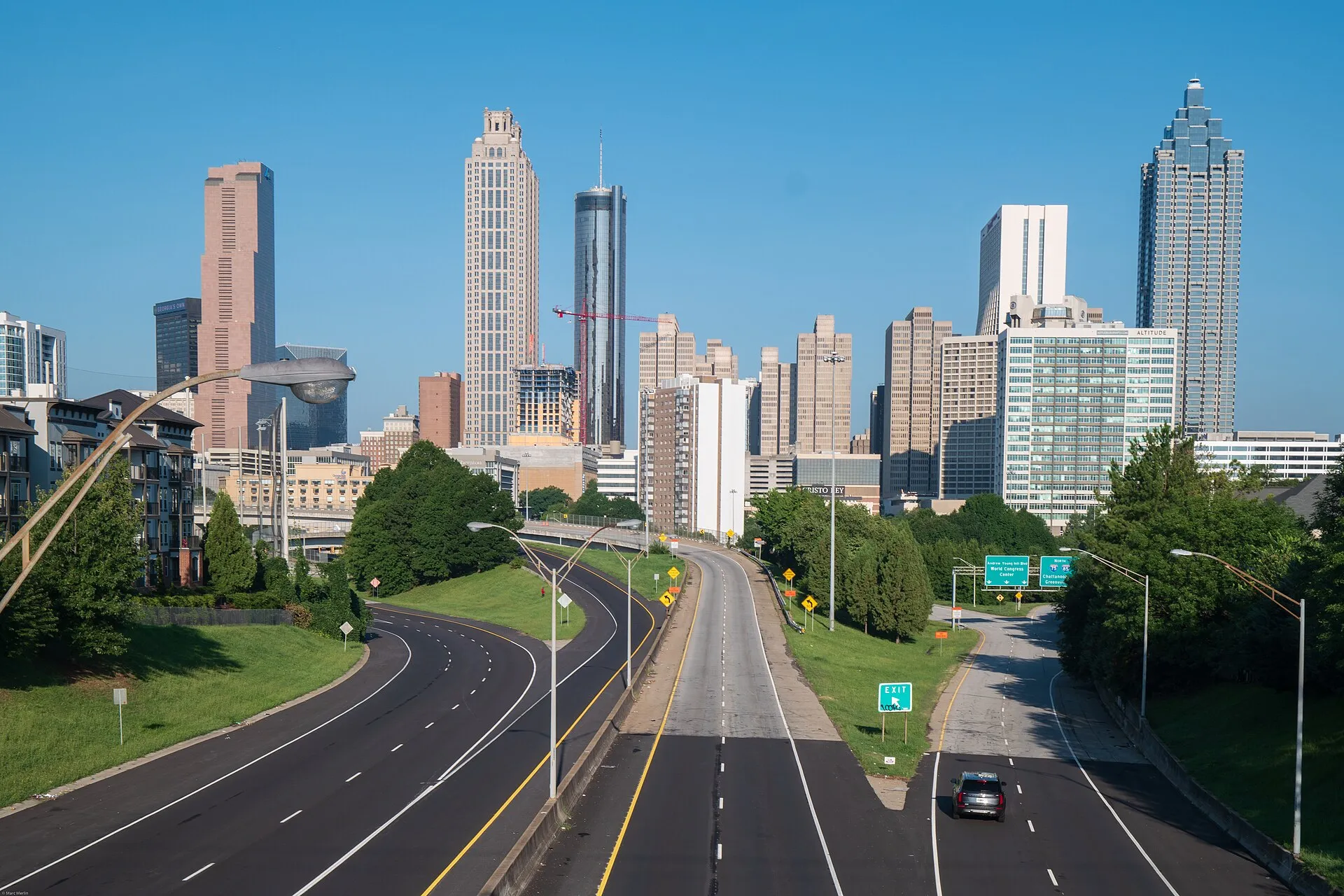
Budget around $3,200/month as a solo remote worker in Atlanta, a sprawling Sunbelt city with moderate costs. A one-bedroom apartment in a walkable in-town neighborhood like Midtown, Old Fourth Ward, or Virginia-Highland runs about $1,600 to $2,100, while suburban or outer areas along the perimeter drop that to $1,200 to $1,600. Groceries land around $350 to $475. Eating out is reasonable and diverse: a casual lunch runs $13 to $18, and a nice dinner sits around $40 to $55. Transit is cheap, with a MARTA monthly pass around $95, though coverage is limited. Coworking hot desks run $200 to $350. Factor in that Atlanta's car-oriented layout often means budgeting for a vehicle, ride-hailing, or both, plus higher summer air-conditioning bills. These are editorial estimates in USD and vary with neighborhood and season, but Atlanta offers solid space and amenities for the money if you accept its spread-out geography.
Where to Work in Atlanta
Atlanta has a strong and growing coworking scene, powered by a major corporate presence, a booming film industry, and a large Black tech and entrepreneurial community. WeWork operates several locations in Midtown and Buckhead, and Industrious, Regus, and local spaces like Atlanta Tech Village serve startups and freelancers. Home internet is excellent: AT&T Fiber and Google Fiber both operate in parts of the metro, alongside widespread Xfinity cable, so gigabit speeds and rock-solid video calls are readily available. Cafe-work culture is relaxed and abundant, with laptop-friendly independent coffee shops across Midtown, the Old Fourth Ward, and along the Beltline. For call-heavy days, a coworking desk provides phone booths and dependable bandwidth. The Atlanta-Fulton public libraries offer free workspace too. Connectivity here is genuinely first-rate, which combined with the deep corporate and creative networks makes Atlanta a comfortable and well-connected base for remote work. The federal disease control agency is headquartered here alongside a cluster of very large companies, and the consortium of historically African American colleges in the west of the city has no equivalent anywhere else in the country. Between them they give the professional population a shape no other southern city has.
Getting Around Atlanta
Atlanta is a car-dependent city, and this is its biggest practical drawback for nomads. The metro area sprawls widely, and while the MARTA rail and bus system exists, its coverage is limited and does not reach many neighborhoods, so most residents drive. Traffic on the highways is notorious. That said, a few in-town areas like Midtown and the neighborhoods along the Beltline, a popular multi-use trail, are increasingly walkable and bikeable, and living near the Beltline can reduce your reliance on a car. Ride-hailing with Uber and Lyft is widely available but adds up quickly given the distances. The main airport is Hartsfield-Jackson Atlanta International (ATL), the world's busiest, which sits on the MARTA line and offers unmatched flight connections almost anywhere. If you stay strictly in-town near the Beltline you can manage car-light, but most people find a car or heavy ride-hailing budget necessary here. Long-distance rail barely touches this city despite its size, with one train a day in each direction, so the airport does everything, which is a good part of why it is the size it is. Inside the terminal a train runs between concourses, and allowing for it is the difference between a tight connection and a missed one.
Sorting transport? Book an airport transfer, or compare car rental on Auto Europe and QEEQ.
Visas for Atlanta
The United States offers no digital nomad visa, so you enter through standard tourist channels. Citizens of Visa Waiver Program countries apply online for ESTA and may stay up to 90 days without a formal visa. Travelers from other countries generally need a B-2 tourist visa obtained through a consular interview, with a standard admission of six months. Employment of any kind is outside what a visitor admission allows, and the US offers no remote-work visa. Be truthful with border officers about the length and purpose of your stay, and never overstay your permitted period, as overstays create serious problems for future entry. Visa Waiver visitors cannot extend their 90 days at all, while a B-2 visitor may apply to USCIS for an extension of up to six months.
Best Time to Visit Atlanta
Atlanta has a humid subtropical climate, and spring and autumn are the standout seasons. Spring, roughly March through May, is beautiful, with blooming dogwoods and azaleas, mild temperatures, and comfortable days, though it can trigger notably high pollen counts that bother allergy sufferers. Autumn, September through November, brings pleasant, cooler weather and attractive foliage, making it arguably the most comfortable time overall. Summer, June through August, is hot and very humid, with temperatures regularly in the 90s Fahrenheit and frequent afternoon thunderstorms, so it is the season to avoid if you dislike sticky heat. Winter, December through February, is mild by US standards, cool but rarely severe, with only occasional light snow or ice that can briefly snarl the car-dependent city. For the best experience walking the Beltline and enjoying the outdoors, target spring or fall, and keep allergy season in mind. Severe storms in spring bring a real tornado risk to this part of the state, and the alerts that come through on every phone are not decoration. The city sits on a ridge at over three hundred metres, higher than anywhere else of its size in this part of the country, which is why the summer nights here cool by several degrees more than they ever do down on the coast.
Pros and Cons of Atlanta
Pros: Atlanta offers first-rate internet with fiber options, a strong and diverse economy, a thriving Black cultural and entrepreneurial scene, a booming film industry, and generally moderate costs with plenty of living space. The world's busiest airport makes it superb for frequent travelers, and the Beltline has made parts of the city genuinely walkable. The food, music, and nightlife are excellent. Cons: car dependency is the defining drawback, with sprawl, limited transit, and heavy traffic making a vehicle or big ride-hailing budget close to essential outside a few in-town pockets. Summers are hot and humid, and spring pollen is intense. The spread-out layout can make the city feel less cohesive than a compact East Coast metro. It is a comfortable, well-connected, and affordable base if you accept driving, but frustrating for anyone committed to a car-free lifestyle.
Who Atlanta Is For
A warm-climate US base with strong infrastructure, moderate costs and a vibrant cultural scene is what this is, and it goes to whoever is comfortable driving or living close to the walkable Beltline corridor. It is an especially compelling base for creatives in film and music, entrepreneurs, and remote workers drawn to its influential Black cultural and tech communities. Frequent flyers benefit enormously from Hartsfield-Jackson's unmatched connections. It fits people who value space, good weather outside summer, and excellent fiber internet over compact walkability. It is a weaker match for anyone determined to live entirely car-free, for those who need extensive public transit, or for anyone highly sensitive to heat, humidity, or pollen. If you accept the car-oriented reality and settle in-town near the Beltline, Atlanta rewards you with culture, connectivity, and value. Come for the scene, the airport, and the space.