Cost of Living in Shiraz
Where this figure comes from. No cost survey covers Shiraz, so the $500 a month above is our own estimate rather than a measurement. On 416 of our 999 city guides the figure is built from a published Numbeo basket, a one-bedroom rent in the centre plus one person's monthly costs without rent, converted to USD; this city is not one of them. How we source everything.
Budget around $500 a month as a solo remote worker in Shiraz, which makes it one of the least expensive cities in this entire dataset for anyone earning in a hard currency. A one-bedroom apartment runs roughly $150 to $300 depending on district. Food, transport and services cost very little: a taxi across town is a couple of dollars and a full meal in an ordinary restaurant well under five. The important caveat is practical rather than financial. International cards do not work in Iran because of sanctions, so you must bring cash and exchange it locally, and the rial's value moves sharply, which makes any figure indicative. There are effectively two exchange rates, the official one and the open-market rate that everyone actually uses, and the gap between them has at times been an order of magnitude, so where you change money matters more than how much you bring. Fixed internet runs a few dollars a month and is cheap precisely because it is poor. Domestic flights and long-distance buses cost very little, which makes the rest of the country unusually accessible once you are inside it.
Where to Work in Shiraz
There is no meaningful coworking infrastructure in Shiraz and remote work happens from apartments and from the city's substantial traditional cafe culture. Fixed broadband is available but slow and unreliable by international standards, and mobile data is cheap but inconsistent. The decisive issue is not speed but access: Iran blocks a great many international platforms and services, internet shutdowns have occurred during periods of unrest, and a reliable VPN is not optional but a basic requirement. Anyone whose income depends on uninterrupted connectivity should treat Iran as a place to visit rather than a place to work from. Iran runs three and a half hours ahead of GMT, one of the few half-hour offsets in the world, which puts a European morning in the Shiraz early afternoon. The country abolished daylight saving in 2022, so that offset now holds year-round rather than shifting twice a year as it used to.
Getting Around Shiraz
Shiraz has a metro line running through the city and an extensive, very cheap bus network, and taxis are inexpensive and easy to find, whether shared or private. The historic core around the Vakil complex, the bazaar and Nasir al-Mulk is walkable, though traffic and crossings take getting used to. Persepolis is about an hour northeast by road and is the reason many people come. The airport has domestic connections and limited international ones. Traffic is heavy and driving standards are poor, which makes walking near main roads more demanding than the distances suggest. Shiraz sits at about 1,500 metres in a valley ringed by the Zagros, which is why the summer nights cool sharply and why the road to Persepolis climbs and drops rather than running flat. Snapp, the local ride-hailing app, works well and removes the fare negotiation, though it needs an Iranian phone number to register. Naqsh-e Rostam, the rock-cut tombs of four Achaemenid kings, sits a few kilometres beyond Persepolis and is usually visited on the same trip, and the two together make a full day rather than a morning.
Sorting transport? Book an airport transfer, or compare car rental on Auto Europe and QEEQ.
Visas for Shiraz
Most Western nationals need a visa in advance, usually obtained through an authorised agency, and citizens of the United States, United Kingdom and Canada must travel on a guided itinerary rather than independently. Visa on arrival exists for some nationalities at major airports but is not dependable. Iran no longer stamps passports for most visitors, issuing a separate document, though an Iranian entry can still complicate later travel to some countries. There is no digital nomad visa. Sanctions mean no international bank card works, so financial planning matters as much as the visa itself. Iranian visa authorisation is issued as a reference number by the foreign ministry before the visa itself is collected, and agencies handle that step for a fee, which is why almost nobody applies entirely alone. Israeli stamps or evidence of travel to Israel will end an application, and that is applied strictly. Travel insurance bought abroad is generally void in Iran because of sanctions, and a local policy is sold at the airport on arrival, which is a small cost and a genuine requirement.
Best Time to Visit Shiraz
March to May is the best season in Shiraz, when the gardens are in flower, the orange blossom scents the older streets and daytime temperatures sit in the pleasant low to mid twenties. Nowruz at the spring equinox fills the city with domestic visitors. Autumn from late September to November is the second window, dry and mild. Summer from June to August is hot and dry, regularly above thirty-five, though the altitude keeps the nights bearable. Winter is short and cold for the latitude, with January nights near freezing and occasional snow, which surprises people who expect desert warmth. Shiraz is known within Iran as the city of poets, gardens and nightingales, and the Eram and Narenjestan gardens are at their best in April when the roses and the bitter orange are out together, which is the specific fortnight most Iranians would tell you to come for. Hafez's tomb is busiest on Thursday evenings, when Shirazis come to read to each other beside it.
Pros and Cons of Shiraz
Shiraz offers a density of Persian cultural heritage that few cities anywhere can match: the Vakil mosque and bazaar, Nasir al-Mulk, the gardens, the tombs of Hafez and Saadi, and Persepolis an hour away. The cost of living is extraordinarily low and Iranian hospitality is genuine rather than a cliche. Internet restriction and unreliability make it a poor place in which to actually work, sanctions make banking impossible for foreigners, alcohol is illegal, and the political situation creates real uncertainty for travellers. Getting in is the hard part: most nationalities need a visa arranged in advance through an agency, Americans, British and Canadians must travel on a guided itinerary, and the process is slow enough to plan a year around. Persepolis was the ceremonial capital of the Achaemenid empire and was burned by Alexander in 330 BC, and the reliefs along the Apadana staircase showing tribute delegations from across the empire are among the most complete surviving records of the ancient world.
Who Shiraz Is For
A deep interest in Persian history and architecture is the qualification, along with work that can be arranged around unreliable connectivity, or a gap between contracts. It rewards anyone willing to prepare properly: cash in advance, a working VPN, a realistic reading of current travel advice. Dependable internet cannot be assumed, foreign cards do not work at all, alcohol is illegal, and no international community exists to fall back on. Beyond all of that sits a political and practical uncertainty that anybody considering this has to accept rather than hope around. Anyone whose work can pause for a few weeks will get far more out of the city than anyone trying to hold down a full remote schedule from it. Family connections change the calculation entirely. Somebody with them will find the practical obstacles considerably lower, and the guided-itinerary requirement often does not apply at all, depending on nationality and on what paperwork already exists. Overland Silk Road travellers have a specific reason to come through: this city sits on the southern approach, and the land borders with Turkey and Armenia both operate, which keeps the route continuous.
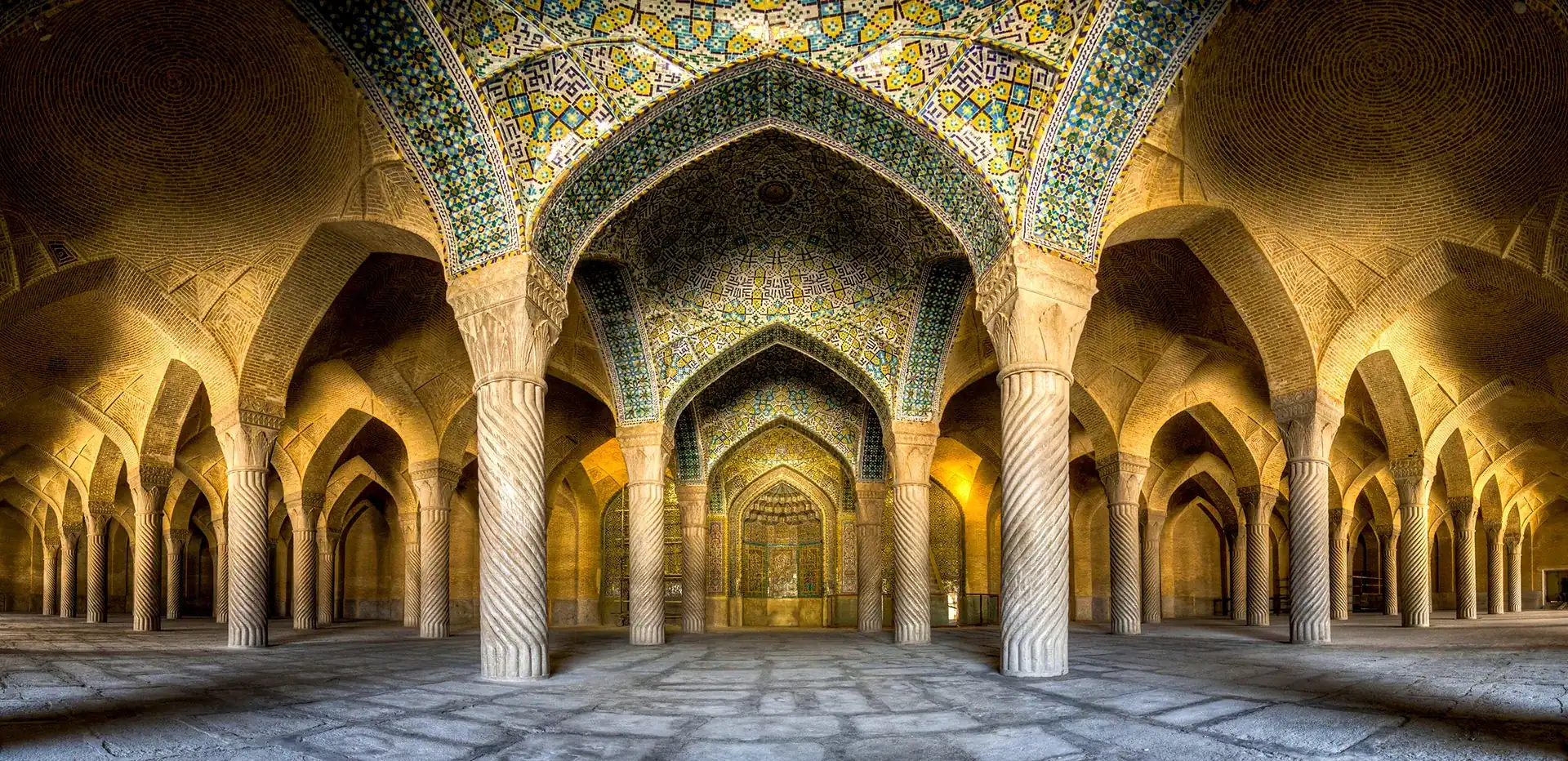 Photo: Mohammad Reza Domiri Ganji / Wikimedia Commons (CC BY-SA 4.0)