Cost of Living in Yazd
Where this figure comes from. No cost survey covers Yazd, so the $700 a month above is our own estimate rather than a measurement. On 416 of our 999 city guides the figure is built from a published Numbeo basket, a one-bedroom rent in the centre plus one person's monthly costs without rent, converted to USD; this city is not one of them. How we source everything.
Yazd is one of the most affordable cities you can base yourself in anywhere in the world. Monthly costs for a solo remote worker run roughly 22,000,000-35,000,000 Iranian Rials (IRR), or about $400-650, all-in.
- Rent, central old city (1-bedroom): ~$14 per month; outside center around $11. Furnished short-term lets through guesthouses cost more but are easier to find without local contacts.
- Groceries (one person): $2.50-4 monthly. Local produce, bread, and dairy are extremely cheap. Rice, chicken, and vegetables cost a fraction of what you pay in Europe.
- Eating out: A sit-down lunch runs under $0.50; dinner for two at a mid-range restaurant is around $1. Coffee at a cafe is about $0.
- Coworking hot-desk: No dedicated coworking spaces operate in Yazd at scale. Budget under $1 for cafe-based work days.
- Local transport: A bus ride costs about $0. A monthly pass runs $1. A Snapp (ride-hailing) trip across town is under $1.
- Mobile data: A SIM with 20-30 GB of 4G data costs around $0.50 monthly through Hamrahe Aval (MCI) or Irancell.
Realistic monthly total: $400-600 covers rent, food, data, transport, and occasional dining out with room to spare. This is exceptional value, though financial access (see Visas section) adds friction.
Where to Work
Dedicated coworking infrastructure in Yazd is minimal. As of 2025, no large-format coworking space with day passes operates reliably in the city. A small shared workspace called Hamkarestan 404 has been referenced but confirmations of current operation are inconsistent, so treat it as a lead to verify on arrival.
In practice, most remote workers use hotel lobbies or cafes. The good news is that Yazd has a growing cafe scene with a handful of spots that work reasonably well as informal offices. Cafe Nardoon in the historic district offers rooftop seating and decent WiFi. Mikhak Cafe is known for quality coffee and a quieter bar-like setting. Emarat Vakil, a seven-story historic mansion in the city center, houses multiple cafes and restaurants across its floors, giving you several options in one building.
WiFi at hotels and guesthouses varies from passable to frustrating, and some older guesthouses throttle daily usage. Your most reliable tool is an Iranian SIM card picked up at the airport on arrival: 4G mobile data is usually faster than guesthouse WiFi and costs very little. Use your phone as a hotspot for critical calls or uploads. Download a VPN before you arrive; Google Workspace, Zoom, Slack, WhatsApp, and most Western platforms are blocked by default and require a VPN to access.
Getting Around
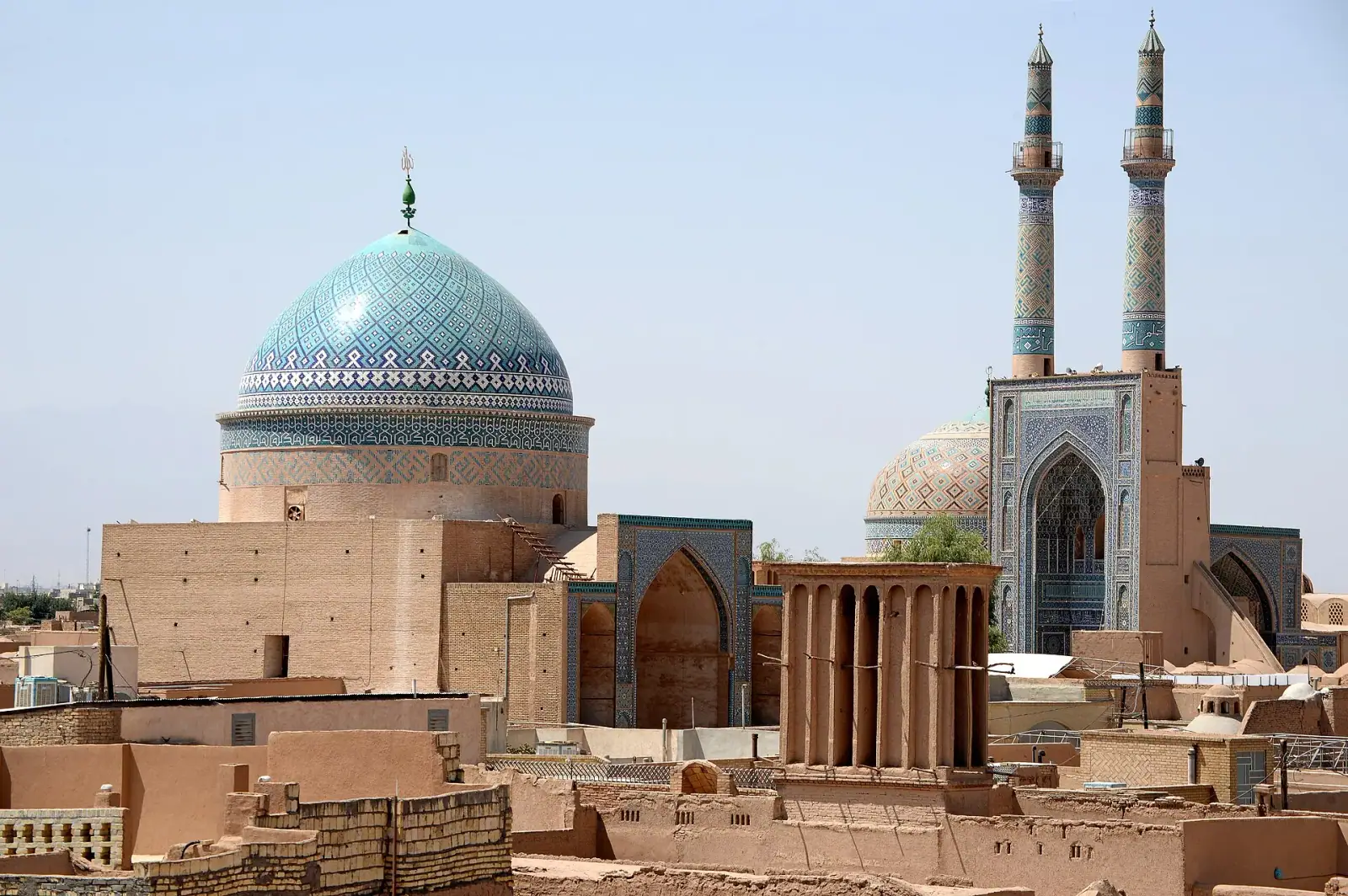
The historic old city of Yazd is genuinely walkable. The narrow earthen lanes between wind-tower houses are inaccessible to cars, so you explore on foot. Most guesthouses, cafes, and sights sit within a 15-20 minute walk of each other in the UNESCO-listed center.
For longer trips across the city, Snapp (Iran's equivalent of Uber) works well and is cheap. Taxis are plentiful. Local buses cover most of the city but route information is in Persian only, making them harder to use without some language help.
Shahid Sadooghi Airport (AZD) sits about 10 km from the city center. A taxi or Snapp costs around $3-5 and takes 15-20 minutes. Domestic flights connect Yazd to Tehran and Mashhad. Overnight trains run to Tehran (around 7 hours) and Mashhad, and VIP buses reach Isfahan in 4 hours, Shiraz in 6 hours, and Tehran in 8 hours. The train station is a practical option for regional travel.
Sorting transport? Book an airport transfer, or compare car rental on Auto Europe and QEEQ.
Visas and Staying Long-Term
Most nationalities can obtain a tourist visa on arrival at major Iranian airports, valid for 30 days, with the option to extend twice for 30 days each, giving a maximum stay of up to 90 days. Extensions are processed at immigration offices in provincial capitals; Yazd itself is popular for visa extensions among travelers.
US, UK, and Canadian citizens face stricter requirements. They must book a pre-arranged guided tour through an authorized Iranian travel agency and carry a confirmed itinerary. Citizens of Afghanistan, Bangladesh, Colombia, Iraq, Jordan, Pakistan, Somalia, and Sri Lanka cannot get a visa on arrival and must arrange a visa through an Iranian embassy or consulate before travel.
Nationals of Armenia, Azerbaijan, Bolivia, Georgia, Malaysia, Syria, Turkey, Venezuela, Egypt, China, and Lebanon can enter visa-free.
There is no digital nomad visa for Iran. No route exists to legally work remotely as a foreign national on a tourist visa, and staying beyond 90 days without a residency basis is not possible through standard tourist channels.
Best Time to Visit
Yazd sits in a high desert at around 1,200 meters elevation with a dry continental climate. Summers are brutal: July and August regularly exceed 40°C (104°F) during the day, making outdoor movement between 10am and 5pm genuinely unpleasant. Air conditioning in your accommodation becomes non-negotiable.
The best windows for remote work and life quality are March to May and September to November. Daytime temperatures sit between 20°C and 28°C (68-82°F), skies are almost always clear, and the city is lively without being overcrowded. Spring also catches Nowruz (Persian New Year) in late March, which brings Iranian domestic tourists in numbers.
Winter (December to February) is mild in the day (12-18°C / 54-64°F) but cold at night. It is pleasant for sightseeing and the city is quiet, though some guesthouses reduce services in the low season.
Pros and Cons
- Extraordinary architectural beauty: UNESCO-listed old city with wind towers, mudbrick lanes, and Zoroastrian fire temples
- Exceptionally low cost of living: One of the cheapest livable cities in the world
- Very safe: Yazd has a reputation as one of Iran's safest and most welcoming cities for foreign visitors
- Rich food and culture: Traditional Yazdi sweets (qottab, baklava), local stews, and a distinct regional identity
- Walkable historic center: Dense, compact, and rewarding to explore slowly
- Quiet pace: Far less hectic than Tehran; easy to settle into a daily rhythm
- No real coworking infrastructure: You will build your own workspace from cafes and hotel lobbies
- Internet censorship: A VPN is essential and must be installed before arrival; reliability varies
- No international banking access: Western credit cards and PayPal do not work in Iran; bring sufficient cash (USD or EUR to exchange locally)
- Summer heat is extreme: 40°C+ days make outdoor life uncomfortable for 3-4 months
- Limited English: Outside tourist venues in the old city, English is sparse
- Political risk: Western governments maintain Do Not Travel advisories for Iran; this is a real consideration, not a formality
Who Yazd Is Best For
Yazd suits experienced travelers who have already navigated complex destinations and want a genuinely off-the-beaten-path base with extraordinary cultural depth and almost no cost of living. If you find Southeast Asia too crowded, Eastern Europe too familiar, and you have a high tolerance for connectivity friction, Yazd can be deeply rewarding. Zoroastrian history, desert architecture, and authentic Iranian hospitality are hard to find anywhere else.
It also works for short-term stays layered into a broader Iran itinerary, especially if you want to slow down and actually absorb a city rather than tick off attractions.
Skip Yazd if you need reliable coworking infrastructure, international banking access, or a safety environment that aligns with standard travel insurance coverage. The US State Department maintains a Level 4 Do Not Travel advisory for Iran, and the political situation can shift. US, UK, and Canadian passport holders face the most constraints and should research requirements carefully before committing to a trip.