Cost of Living in Manama
Real market data
Source: Numbeo · August 2026
$1,580/moSolo nomad1-bed centre + living costs
$2,050/moCoupleshared 1-bed + costs
$1,230/moLean / localcheaper area + costs
- 1-bed rent, city centre$1,000BHD 375
- 1-bed rent, outside centre$650BHD 243
- Monthly costs excl. rent (1 person)$580BHD 219
- Meal, inexpensive restaurant$7BHD 3
- Monthly transit pass$37BHD 14
- Buy price, per m² (centre)$2,630BHD 989
Prices are from Numbeo (August 2026), converted to USD at $1 = 0.38 BHD (01 Aug 2026). The monthly living-costs figure is our transparent one-person basket, groceries, a few meals out, utilities, phone, internet, transport and essentials, priced from those figures. Solo adds central rent; couple and lean are estimates from the same numbers.
Manama sits at the pricier end of the Gulf for nomads, though it is notably cheaper than Dubai. Expect to spend between $2,930 and $4,790 per month as a comfortable solo nomad, depending on your housing choice.
- Rent, 1BR in central areas (Seef, Diplomatic Area, Juffair): $930-1,330/month
- Rent, 1BR in cheaper areas (Zinj, Gudaibiya, Muharraq): $530-745/month
- Groceries: $215-345/month for cooking most meals at home
- Eating out: $6.50 for a cheap local meal; $27-53 per person at a mid-range restaurant
- Coworking hot desk: $135-320/month; day passes start around $13-21
- Local transport (Uber/Careem or bus): $105-185/month; public bus is $0.50 per trip
- Internet (home broadband, 60+ Mbps): $35-40/month
There is no income tax in Bahrain. Alcohol is available in licensed venues, and a beer typically costs $5.50-11. Groceries are reasonably priced because many staples are subsidized. All prices below are in US dollars, converted from Bahraini dinar prices.
Where to Work
Manama has a growing but still modest coworking scene. The major options are concentrated in a few districts.
- Diwan Hub (Adliya, Block 338) is the most talked-about space for freelancers and creatives: stylish interiors, fast WiFi, complimentary coffee and tea, and a community feel. It operates daytime hours and is in the middle of the city's most walkable entertainment district.
- The Collective Hub has three branches (Adliya, Bahrain Bay, Yateem Centre) and positions itself as Bahrain's first large-scale community workspace, suited to startups and freelancers who want a social environment.
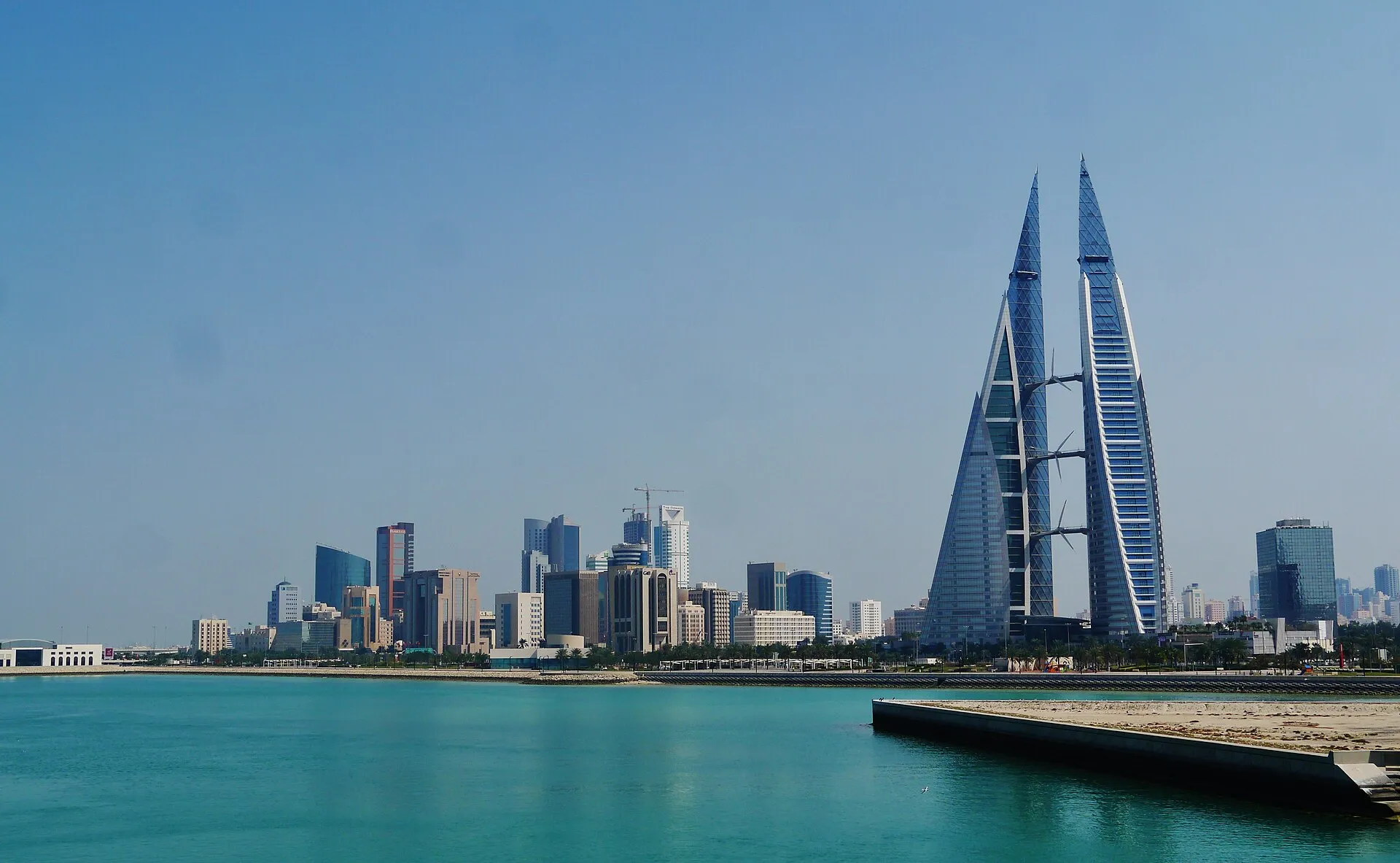
- Servcorp at Bahrain Financial Harbour is a premium option in a prestige tower, better suited if you need to meet clients or want a formal business address.
- Regus at Financial Harbour offers flexible day passes and monthly memberships in a corporate setting.
Cafe-based remote work is widely accepted. Caribou Coffee locations (Diplomatic Area, Al Najma), Starbucks (Zinj, Park Place), and specialty spots like Manual Cafe and Roastery all have reliable free WiFi, plentiful power outlets, and staff who will not push you to keep ordering. Crowds thin out after 10 AM on weekdays, so mornings are ideal.
Fixed broadband is available in central apartments; mobile data on local SIMs (Batelco, Zain, STC) runs on 4G and is inexpensive at roughly $24-32/month for a 10+ GB plan. Connectivity is reliable enough for video calls without issue in most areas.
Getting Around
Manama is a car-centric city and walkability is limited outside of a few compact districts. Adliya (Block 338) and parts of the Diplomatic Area are pleasant on foot, but most of the city requires wheels.
- Uber and Careem are the go-to options for most nomads: affordable, air-conditioned, and widely available. A typical short trip costs $4-8.
- Public buses run on a structured network with air-conditioned vehicles, WiFi on board, and fares of $0.50 per trip using a GO Card ($1 cash). Coverage is decent but frequency can be slow on some routes.
- Taxis are metered and identifiable by orange fenders and yellow plates; stands are at Bab Al Bahrain and near major malls.
- Renting a car makes sense for stays longer than a few weeks if you want to explore the island beyond the capital.
Bahrain International Airport is about 10 km from central Manama, roughly 15-20 minutes by taxi or Uber ($13-21). Bus lines A1, A2, and 11 connect the airport to the city in about 25 minutes for $0.50. A water taxi service also operates between some waterfront points in the city, costing 800 fils per station.
Sorting transport? Book an airport transfer, or compare car rental on Auto Europe and QEEQ.
Visas and Staying Long-Term
Bahrain is relatively open for short stays. Citizens of over 60 countries, including the US, UK, Canada, Australia, and most EU nations, receive a visa on arrival valid for 2 weeks at no cost, with the option to extend. You can also apply in advance via the official Bahrain eVisa portal (evisa.gov.bh) for a 30-day single entry at around $27 or a multiple-entry option.
Extensions are handled through Bahrain's online national portal and typically add 1 to 4 more weeks for $66-135. For longer stays, a Self-Sponsorship Residence Permit allows qualified individuals to sponsor themselves without a local employer, requiring proof of income and financial stability.
Bahrain has introduced a Digital Nomad Residency visa targeting remote workers employed outside Bahrain. It requires evidence of at least $1,500/month income, a processing fee of around $96, and grants up to one year of legal residence.
Bahrain does not levy personal income tax, and the country is free of any employment-based restrictions for nomads working remotely for foreign clients.
Best Time to Visit
November through March is the sweet spot for Manama. Temperatures during this period range from around 18-26°C (64-79°F), outdoor life is genuinely pleasant, and you can sit on a terrace or explore the old souq without being driven indoors by heat.
Avoid May through September if possible. Summer temperatures regularly hit 40-44°C (104-111°F) with high humidity, and dust storms from the surrounding desert periodically push Manama's air quality into unhealthy or hazardous territory (PM2.5 spiked to hazardous levels on multiple days in summer 2025). Working indoors in air-conditioned spaces is fine, but outdoor movement becomes genuinely unpleasant and potentially harmful during peak summer months.
October and April are transitional: warmer than winter but manageable. December to February occasionally sees rain and cooler evenings. If you are a remote worker with flexibility, arriving in mid-November and leaving by mid-March gives you Bahrain at its best for productivity and exploration.
Pros and Cons
Pros
- No income tax and a relaxed attitude toward remote workers earning abroad
- English is widely spoken by residents, service staff, and government offices
- Alcohol is legal and available, unusual in the region
- One of the Gulf's most socially liberal environments with an active expat scene
- Good and affordable broadband; reliable mobile data
- Easy visa on arrival for most Western passports
- Genuinely safe city with low petty crime
- Excellent food scene: Indian, Arabic, Asian fusion, and Western all covered
Cons
- Very hot and humid from May to September; summer dust storms cause serious air quality problems
- Car dependency outside a few walkable districts makes daily life more effortful without a vehicle
- Coworking scene is thin compared to Southeast Asian hubs
- Cost of living is higher than most of Asia and much of Europe
- Limited nature: the island is flat, largely built up, and green space is scarce
- Slow-visa bureaucracy if you want stays beyond 30 days
- Nightlife can feel repetitive after a few weeks for longer-term visitors
Who Manama Is Best For
Manama works well for nomads who are already working in Gulf time zones and want a Middle Eastern base with fewer restrictions than neighboring Saudi Arabia or Kuwait. Finance professionals, consultants doing regional work, and anyone with clients in the GCC will appreciate the business infrastructure and ease of regional travel.
It also suits people curious about Gulf culture who still want the comforts of a liberal, English-friendly expat hub: legal alcohol, diverse dining, and a genuine social scene make Manama softer landing than most of the region.
Skip it if you are watching your budget closely: cheaper options exist across Asia and Europe for the same or better coworking infrastructure. Avoid it if outdoor activity, nature, or walkability matter to you. And if you are sensitive to air quality, plan around summer carefully, as pollution spikes between June and September can be severe.