Cost of Living in Kuwait City
Real market data
Source: Numbeo · August 2026
$1,490/moSolo nomad1-bed centre + living costs
$1,940/moCoupleshared 1-bed + costs
$1,200/moLean / localcheaper area + costs
- 1-bed rent, city centre$930KWD 287
- 1-bed rent, outside centre$640KWD 197
- Monthly costs excl. rent (1 person)$560KWD 174
- Meal, inexpensive restaurant$11KWD 4
- Monthly transit pass$48KWD 15
- Buy price, per m² (centre)$5,280KWD 1,635
Prices are from Numbeo (August 2026), converted to USD at $1 = 0.31 KWD (01 Aug 2026). The monthly living-costs figure is our transparent one-person basket, groceries, a few meals out, utilities, phone, internet, transport and essentials, priced from those figures. Solo adds central rent; couple and lean are estimates from the same numbers. The guide below quotes its own monthly range, which is a different measurement rather than a competing one: this table prices a defined basket at the figures above, while that range is a judgement about how somebody actually lives here.
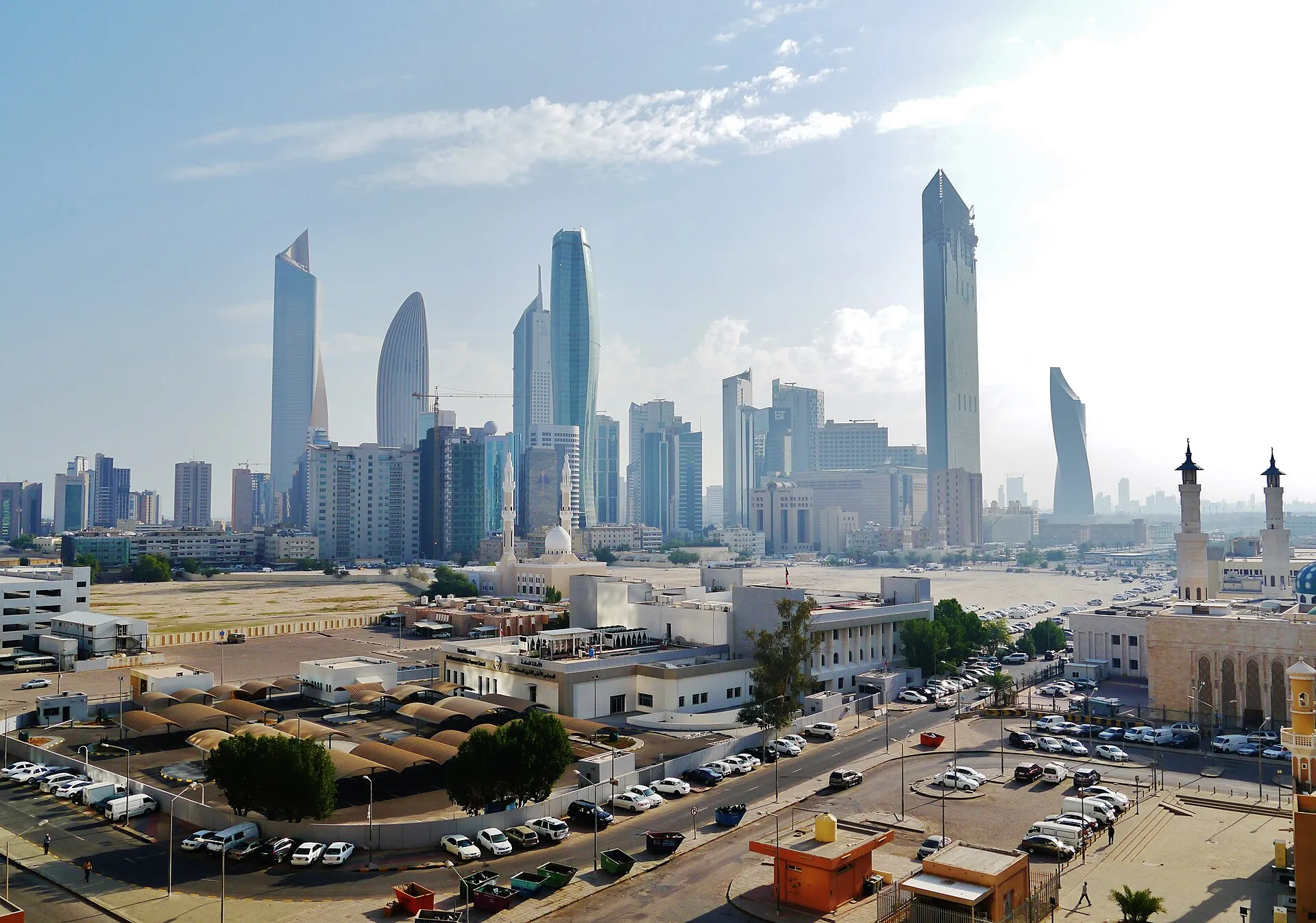
Kuwait City is one of the more expensive cities in the Gulf for renters, though your total spend depends heavily on where you live and how you eat. All prices below are in US dollars, converted from Kuwaiti dinar prices.
- Rent, central areas (Sharq, Mirqab, Salmiya): $905-1,130/month for a one-bedroom
- Rent, cheaper areas (Rumaithiya, Hawalli, Fahaheel): $515-710/month for a one-bedroom
- Groceries: $260-390/month depending on how much you cook at home
- Eating out, cheap local restaurant: $9.50-16/meal
- Mid-range restaurant, two people: $58-81
- Coworking hot desk (monthly membership): $210-325/month
- Local transport (monthly pass): $48/month
- Home internet: $29-39/month
Total monthly range: a budget-conscious nomad living outside the centre, cooking most meals, and using public transport can manage on $1,390-1,620/month. A comfortable lifestyle with a central apartment, coworking, and regular dining out runs $1,870-2,420/month. Note that Kuwait has no income tax, which softens the cost picture for freelancers earning in stronger currencies.
Where to Work
Kuwait City has a small but functional coworking scene concentrated in the central business district. Regus operates from the 35th floor of the iconic Al Hamra Tower in Kuwait City, offering hot desks, meeting rooms, and business-grade internet with panoramic bay views. Tribe, on Ahmad Al Jaber Street, takes a community-first approach with 24/7 access across multiple locations. NIU Collaborative Community has two spots, including one at Business District 1, and is one of the older established hubs with a reputation for reliability. Servcorp runs from Sahab Tower with super-fast secured WiFi and professional support staff. Sirdab Lab skews toward startup founders and hosts regular events. Magnet, on Khalid Ibn Al Waleed Street, doubles as a quality food venue and is kitted out for professional work.
Cafe work is possible but Kuwait City is not Bangkok. Koobs Cafe in Sharq is the most consistently recommended spot for laptop sessions, with a quiet dark-toned interior and 24-hour access. Mikel Coffee on Soor Street is another solid option. Most specialty cafes tolerate laptops during off-peak hours, but do not count on power outlets in every venue. The attitude toward remote workers in cafes is generally welcoming rather than transactional.
WiFi quality is strong across the city. Coworking spaces and most modern cafes deliver reliable connections for video calls and large uploads.
Getting Around
Kuwait City is a car-first city and walkability is low. The distances between neighborhoods are large, pavements are inconsistent, and the heat makes walking impractical for much of the year. You will want to combine public buses with ride-hailing apps.
The public bus network covers most of the metropolitan area with frequent services and cheap fares ($1 per trip). The main bus terminal sits near the Liberation Tower. Taxis are widely available but meters are rarely used, so agree on the fare before you get in. Careem and local equivalents are the more transparent option for on-demand rides.
Kuwait International Airport is roughly 16 km south of the city center. Bus route 501 connects the airport to downtown for $1 and takes about 40 minutes. A taxi or ride-hail takes 20 minutes and costs around $26.
Sorting transport? Book an airport transfer, or compare car rental on Auto Europe and QEEQ.
Visas and Staying Long-Term
Citizens of GCC countries enter with a national ID card and face no set limit on stays. Citizens of approximately 53 countries, including the USA, UK, Canada, and EU member states, can obtain a visa on arrival or an eVisa before travel, valid for 90 days. As of 2025, expatriates holding a valid residency permit in another GCC country for at least six months are also eligible for a tourist visa on arrival for up to 90 days, regardless of nationality.
There is no dedicated digital nomad visa for Kuwait. Overstaying your permitted duration carries fines and potential blacklisting. Extensions are not routinely granted for tourist visas. Nationals of Israel or holders of passports with Israeli entry stamps are refused entry.
Best Time to Visit
The window from mid-November through March is the clear sweet spot. Daytime temperatures sit between 17-24°C (63-75°F), evenings are comfortable, and the city comes alive with outdoor events, markets, and cultural activities during the National Day period in February. This is also when the nomad and expat social calendar is most active.
April and October are shoulder months with rising but tolerable heat, and the city is quieter. Avoid June through September entirely if you can. Daytime temperatures regularly exceed 45°C (113°F) and can spike past 50°C (122°F). Even moving between air-conditioned spaces becomes uncomfortable. Sandstorms are also more common in spring and early summer, which affects air quality noticeably.
Pros and Cons
- Pro: Internet infrastructure is world-class with fast, reliable connections across the city
- Pro: No income tax for individuals
- Pro:
Very low crime rate and high personal safety, day and night
- Pro: English is widely spoken by locals and the majority expat population
- Pro: Food scene is diverse and high quality, with excellent Lebanese and Arabic restaurants
- Pro: Straightforward entry for most Western and many Asian passport holders via visa on arrival
- Con: Alcohol is completely prohibited, and nightlife is essentially nonexistent
- Con: Car dependence makes daily logistics slow and expensive without your own vehicle
- Con: Summers are dangerously hot and make outdoor activity impossible for months
- Con: No nomad visa; the 90-day tourist visa cannot easily be extended
- Con: Socially conservative environment with restrictions on public displays of affection and dress codes in certain areas
- Con: The nomad community is small; this is not a city with an established remote-worker social scene
Who Kuwait City Is Best For
Kuwait City suits you if you are already working with clients or employers in the Gulf and want a stable, safe base with fast internet and no personal income tax. It also works well for nomads who are genuinely curious about Gulf Arab culture and want something less tourist-packaged than Dubai. The cost structure makes sense if you are earning in USD or EUR and can find mid-range accommodation outside the centre.
If you are chasing a social nomad community, outdoor lifestyle options, or affordable coastal living, you will find Kuwait City limiting. The prohibition on alcohol and the near-total absence of nightlife are dealbreakers for many. And anyone arriving during summer will find themselves pinned indoors for most of the day. It is an honest choice for a specific type of remote worker, not a default Gulf stopover.