Cost of Living in Doha
Real market data
Source: Numbeo · August 2026
$2,640/moSolo nomad1-bed centre + living costs
$3,190/moCoupleshared 1-bed + costs
$1,930/moLean / localcheaper area + costs
- 1-bed rent, city centre$1,950QAR 7,113
- 1-bed rent, outside centre$1,240QAR 4,508
- Monthly costs excl. rent (1 person)$690QAR 2,500
- Meal, inexpensive restaurant$14QAR 50
- Monthly transit pass$27QAR 100
- Buy price, per m² (centre)$4,110QAR 14,963
Prices are from Numbeo (August 2026), converted to USD at $1 = QAR3.64 (01 Aug 2026). The monthly living-costs figure is our transparent one-person basket, groceries, a few meals out, utilities, phone, internet, transport and essentials, priced from those figures. Solo adds central rent; couple and lean are estimates from the same numbers. The guide below quotes its own monthly range, which is a different measurement rather than a competing one: this table prices a defined basket at the figures above, while that range is a judgement about how somebody actually lives here.
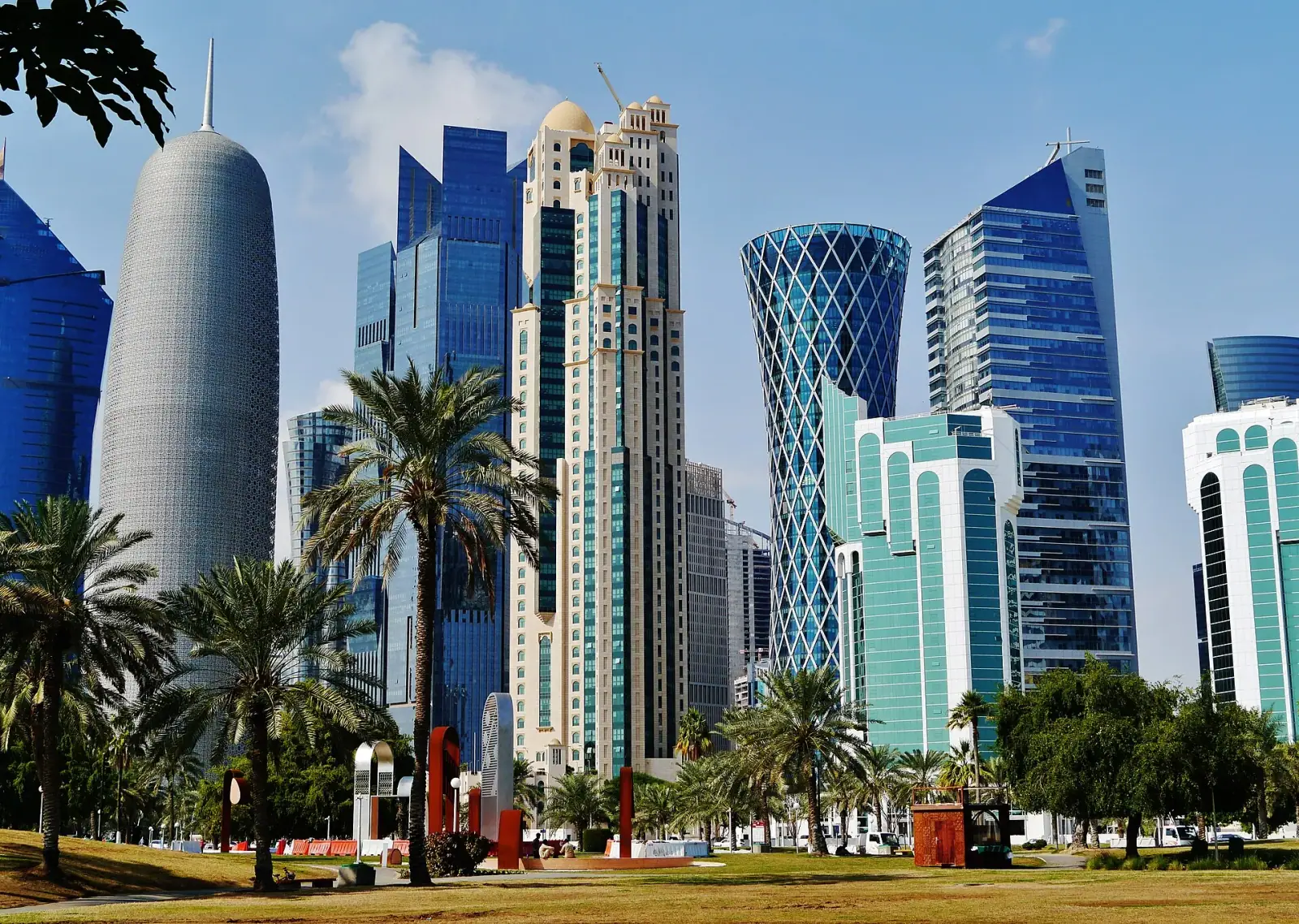
Doha is one of the more expensive cities in the Middle East, though a tax-free income environment softens the blow. Expect to pay significantly more than in Southeast Asian nomad hubs, but less than Zurich or Singapore.
Rent is the biggest variable. A furnished one-bedroom in West Bay or the Pearl-Qatar costs $1,650-2,470 per month. Move to Al Sadd, Al Mansoura, or Old Airport Road and that drops to $825-1,370. Short-term furnished studios for one to three months run $1,240-2,060 in central areas.
Groceries for one person cooking at home: $220-410 per month. Lulu Hypermarket and Al Meera are the practical choices. Imported Western goods and specialty items cost more.
Eating out: a casual meal at a local restaurant is $8-14. A sit-down mid-range dinner for two runs $55-96. Alcohol is served only in licensed hotel bars and restaurants, where a beer runs $11-16.
Coworking hot desk: $19-27 per day, or roughly $165-330 per month on a monthly pass depending on the space.
Local transport: the metro monthly pass is approximately $27. Taxis and Uber run $4-11 per trip within the city.
Total monthly range for a solo nomad: $2,060-4,120 depending on accommodation choice, eating habits, and lifestyle. Budget nomads who take a cheaper apartment and cook most meals can get below $2,200. Those opting for central apartments and regular dining out should plan for $3,500+.
Where to Work
Doha has a growing but still modest coworking scene. The best-established options are concentrated in West Bay and near Souq Waqif.
Workinton Alfardan Centre on Grand Hamad Street offers 24-hour access, hot desks, private offices, and meeting rooms. It is well-reviewed and consistently mentioned as the go-to for flexible workers. Nest Qatar in Al Fardan Tower (West Bay) is another solid option with a good on-site cafe, though it closes Fridays. Servcorp at Doha Tower provides a premium setup at a higher price point. Mavericks365 on C Ring Road in Al Mansoura caters to startups with a community-first environment, though reviews are more mixed.
Cafe working is hit or miss. Volume Cafe at the Pearl-Qatar has a dedicated library-style upstairs area. Caribou Coffee in Al Sadd draws a crowd of laptop workers most mornings. The Qatar National Library has a cafe and actual study spaces that are reliably quiet with strong connectivity. Blackout Coffee in West Bay is another calm option with good light.
WiFi in coworking spaces and most hotel lobbies is fast and reliable. Qatar has strong 5G coverage across Doha if you need a mobile backup. Public cafe WiFi quality varies more, so a local SIM card with Ooredoo or Vodafone Qatar is worth getting for $14-27.
Getting Around
Doha is a car-first city. Distances between neighborhoods are significant, and walking between districts is impractical for most of the year because of heat alone, not just distance.
The Doha Metro is world-class: clean, fast, air-conditioned, and well-maintained. Three lines (Red, Green, Gold) converge at Msheireb Station and connect you to West Bay, the Pearl-Qatar (via Metrolink shuttle), Souq Waqif, Education City, and Hamad International Airport. A single fare is $0.50-1.50 depending on distance; the monthly pass is around $27. This is your most reliable option for the main corridors.
Free Metrolink shuttles extend from several metro stations into surrounding neighborhoods and to the Pearl-Qatar marina, which is walkable internally once you arrive. The Msheireb Tram runs a free loop around the Msheireb Downtown district.
Taxis and Uber are widely available and reasonably priced by Western standards. Most nomads use a combination of metro and ride-hailing to cover the city.
Hamad International Airport is connected to the metro system on the Red Line, making the city transfer straightforward. The airport is modern, efficient, and a common long-haul hub, which is one of Doha's genuine advantages for frequent travelers.
Sorting transport? Book an airport transfer, or compare car rental on Auto Europe and QEEQ.
Visas and Staying Long-Term
Qatar lets citizens of around 102 countries in without a visa, on two tracks. US citizens and passport holders from every EU country except Ireland get stays of up to 90 days. UK, Irish, Canadian, Australian and New Zealand passport holders get 30 days, which can be extended once by another 30. Visit Qatar asks for three months of passport validity on arrival and the UK Foreign Office for six, so six is the figure that clears both.
Qatar still has no dedicated digital nomad or remote-work visa in 2026; Visit Qatar lists none beside its visa-free and Hayya entry. A five-year residence permit exists for entrepreneurs and "talented individuals," but it requires formal sponsorship or meeting specific professional criteria rather than functioning as a standard remote-work visa. Business visas of one to three months can be extended in some circumstances. Doing back-to-back visa runs is not a recognized or officially encouraged practice.
The practical ceiling is 60 days per visit on the 30-day track with its extension, or 90 days on an EU or US passport. If you want to stay longer legally, you will need to look into the business visa route or a sponsored residency arrangement.
Best Time to Visit
The honest answer is: November through March. During this window, temperatures sit between 15-25°C (59-77°F) during the day, evenings are comfortable, and you can actually step outside without suffering. December and January are peak season and the most pleasant months overall.
October and April are shoulder months with temperatures creeping toward 30-35°C (86-95°F), manageable but warm. May through September is brutal: temperatures regularly exceed 40-45°C (104-113°F) with added humidity in July and August. Everything moves indoors. You can absolutely work in Doha in summer, since virtually every building is aggressively air-conditioned, but outdoor time becomes essentially zero, which can feel claustrophobic over a long stay.
For remote work specifically, the winter months (November to March) are the sweet spot: pleasant weather, full coworking availability, and a livelier social scene as residents who left for summer return.
Pros and Cons
- Zero income tax, which meaningfully benefits higher earners
- Exceptional safety, one of the lowest crime rates globally; you can walk at night without concern
- World-class airport and airline (Qatar Airways) with excellent connections to Europe, Asia, and Africa
- Modern infrastructure: fast internet, reliable metro, clean streets, well-maintained facilities
- Rich food scene with dozens of nationalities represented across all price points
- Large international community; English is widely spoken and most services function in it
- High cost of living, especially rent, puts it out of range for budget-conscious nomads
- Summer heat from June to September is extreme and eliminates outdoor life entirely
- No dedicated nomad visa: stays are capped at 30-60 days for most nationalities
- Nightlife is hotel-only: alcohol is only available in licensed hotel venues, and options are limited
- Conservative social norms: public displays of affection are not acceptable, dress codes apply in some areas, and alcohol is restricted; this is not a liberal city by Western standards
- Poor walkability and car dependency outside of specific districts
- Air quality issues: dust storms and urban pollution episodes are regular, particularly in spring
Who Doha Is Best For
Doha works well for nomads on higher incomes who want a safe, ultra-modern base in the Middle East for a month or two during the cooler season. If you travel frequently through Asia, Africa, or Europe and want a well-connected hub with world-class infrastructure and zero tax exposure on income earned abroad, it can be a smart short-term home. Business travelers, consultants, and people with existing ties to Gulf clients will find the city genuinely comfortable.
It also suits nomads who prefer a quiet, low-crime city with strong amenities over a buzzy social scene: Doha delivers excellent restaurants, modern malls, and cultural sites like the Museum of Islamic Art and Katara Cultural Village, but it does not deliver late-night bars, cheap street food neighborhoods, or a free-spirited traveler vibe.
Skip Doha if you are on a tight budget (the cost-to-value ratio is poor compared to alternatives in Southeast Asia or Eastern Europe), if you want to stay more than two months without a sponsored visa arrangement, if you dislike extreme heat and cannot visit in winter, or if an active nightlife scene is important to your lifestyle. It is also a harder fit if strict alcohol restrictions or conservative dress norms would cause you daily friction.