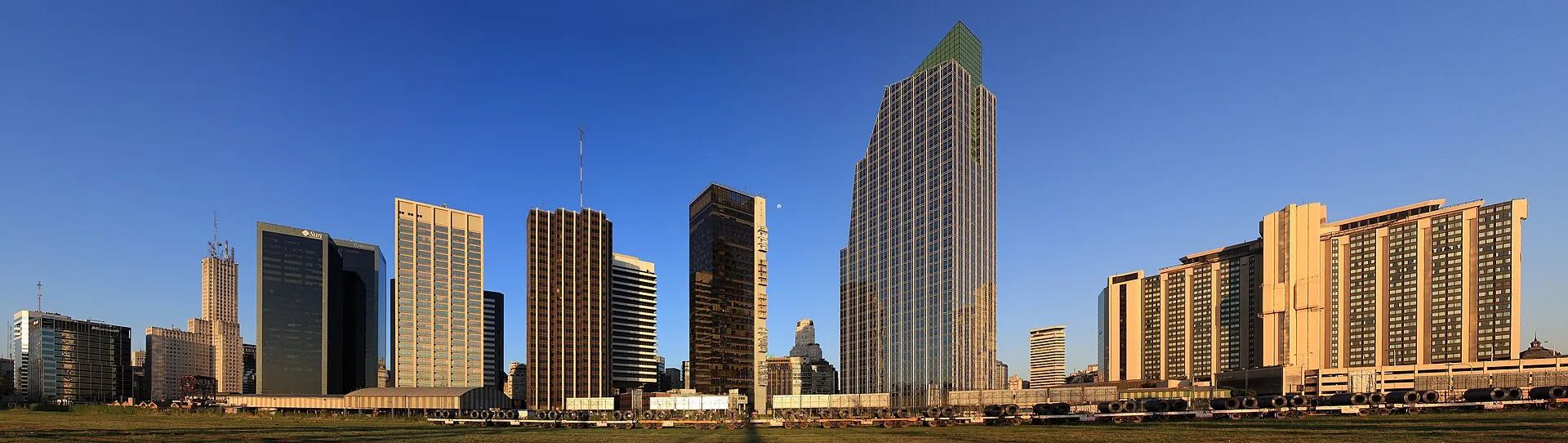
 Buenos Aires
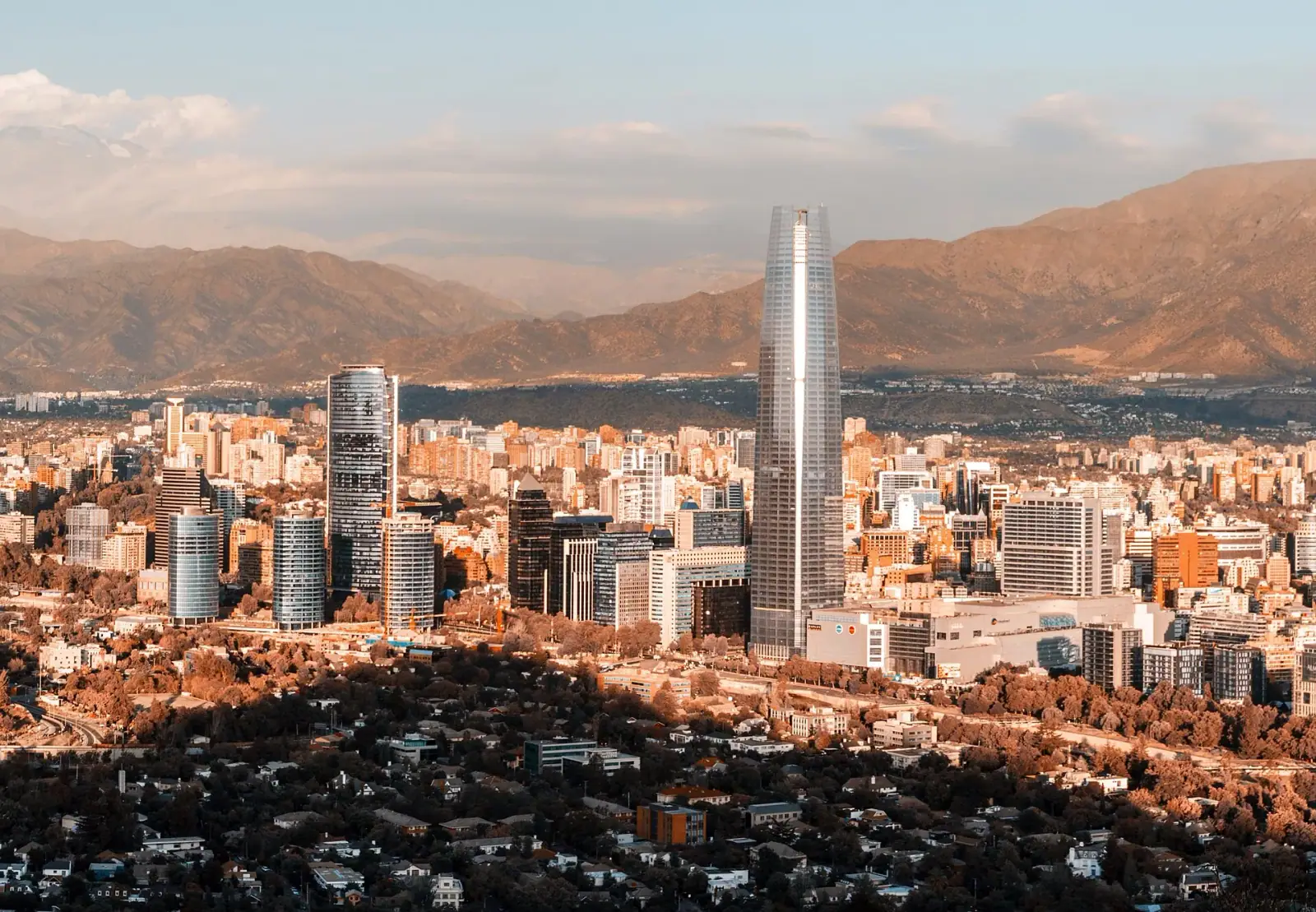
 Santiago
Open a map of the southern cone and the choice is nearly made for you. Santiago lies at about 570 metres in a basin, with the Andes to the east and the Coastal Range to the west. Buenos Aires sits at 25 metres on the flat edge of the pampas, facing a river so wide, up to 220 kilometres at the mouth, and so brown with sediment that it looks like a muddy sea. Almost everything that separates the two as places to live follows from those two positions.
Santiago in its basin
You can see the good part from your window. Valle Nevado, with a base at 3,000 metres, is about 46 kilometres east of the city, and its season runs from June to October. A freelancer could ski on Saturday and be back for dinner in Lastarria. Very few capitals on earth can offer that. The basin also keeps the place dry, at under 300 millimetres of rain a year, with January days around 30°C and nights that fall back to about 14°C. For most of the year, the climate is hard to fault.
Then comes winter, and the same walls turn against you. Cold air settles under a thermal inversion, the smog cannot get out, and on July days you may lose the mountains altogether behind it, with nights near 4°C. If you want Santiago for its Andes, you may find they are easiest to reach and hardest to see in the same months.
The ground is the other thing the map explains. Chile sits on one of the world's great fault lines, and this should not frighten you as much as it might: the magnitude 8.8 earthquake of 2010 killed 525 people nationally, and 13 of them in Santiago, though some modern towers were left uninhabitable. Those are the numbers of a country that takes construction seriously.
Buenos Aires on the plain
Nothing stands in the way here, and the city behaves accordingly. Palermo alone is big enough to be split into Soho, Hollywood, Las Cañitas and Viejo. There are hundreds of bookshops and more than 250 parks, the bars run well past midnight, and the metropolitan area spreads out to about 16 million people. Aeroparque, the domestic and regional airport, is right on the riverbank in Palermo, so a flight home can end very close to your door.
What the flat land cannot give you is a view or a quick way out of the heat. Summer here is humid, with about 1,258 millimetres of rain a year, more than four times Santiago's, and poor drainage means heavy storms can flood the streets. For a weekend away you cross the water instead: fast ferries reach Colonia del Sacramento in Uruguay, with its UNESCO-listed old quarter, in about an hour and a half.
The Subte is smaller than you would expect for that many people, at under 59 kilometres. Santiago's metro runs to 149 kilometres and 143 stations, and if you are going to rely on public transport every day, this is a real point for Chile. Buenos Aires gets by because so much of what you want in Palermo or Villa Crespo is within walking distance.
The mountains between them
You might picture hopping across for a change of scene. In practice, you will fly. The main road over passes through a tunnel at about 3,200 metres, and snow and rockfall can close it in winter. The two economies are just as far apart, and that shows in your budget: on our estimate, Buenos Aires runs to $1,600 a month and Santiago to $2,400.
That Argentine discount has a catch. Annual inflation dropped from 211 percent in 2023 to a little over 30 percent by late 2025, which is a remarkable fall and still fast enough to shift your costs between one lease and the next. Argentina at least makes staying easy: its digital nomad visa, described on our visa page, sets no income figure, and lets you prove the work itself with a contract or fee receipts.
The clock is the last thing the map decides. Buenos Aires stays at UTC minus 3 all year. Santiago matches it during the southern summer and drops an hour behind in winter, so anyone serving Europe gains a little from being on the Atlantic side.
Our lean
We would send most people to Buenos Aires first, for the price and for the sheer amount of city. Santiago is the better buy for one specific person, who is easy to identify. It is a free Saturday in August: would you rather be on snow at 3,000 metres, or in a Palermo bookshop with the whole night ahead of you?
 United States
 United Kingdom
 Germany
 Canada
 Australia
 India