Cost of Living in Brighton
Real market data
Source: Numbeo · August 2026
$2,980/moSolo nomad1-bed centre + living costs
$3,840/moCoupleshared 1-bed + costs
$2,580/moLean / localcheaper area + costs
- 1-bed rent, city centre$1,900£1,414
- 1-bed rent, outside centre$1,500£1,115
- Monthly costs excl. rent (1 person)$1,080£800
- Meal, inexpensive restaurant$25£18
- Monthly transit pass$130£98
- Buy price, per m² (centre)$8,650£6,428
Prices are from Numbeo (August 2026), converted to USD at $1 = £0.74 (01 Aug 2026). The monthly living-costs figure is our transparent one-person basket, groceries, a few meals out, utilities, phone, internet, transport and essentials, priced from those figures. Solo adds central rent; couple and lean are estimates from the same numbers. The guide below quotes its own monthly range, which is a different measurement rather than a competing one: this table prices a defined basket at the figures above, while that range is a judgement about how somebody actually lives here.
Brighton sits firmly in the expensive tier for UK cities outside London. Expect to pay $1,850 to $2,150 per month for a one-bedroom flat in or near the centre. Move east toward Kemptown or north toward Preston Park and rents drop to $1,450 to $1,650 for a similar flat. Hove, just west of the centre, tends to run slightly higher than outer Brighton but offers a quieter atmosphere.
Beyond rent, a realistic monthly budget looks like this:
- Groceries: $370 to $430 shopping at Sainsbury's or Tesco; closer to $290 if you use Aldi or Lidl regularly
- Eating out: $20 to $27 for a casual meal; $47 per head at a mid-range restaurant
- Coworking hot desk: $20 to $33 per day; monthly memberships at PLATF9RM start around $270 to $370 plus VAT
- Local transport: $130 per month for an unlimited bus pass; single fares are capped at $4
- Home broadband: $40 to $53 per month
Total monthly range (excluding rent): approximately $1,050 to $1,350. Add rent and you are looking at $2,550 to $3,450 per month all in. Brighton is not a budget destination; it rewards nomads earning in pounds, euros, or dollars.
Where to Work
Brighton has a well-developed coworking scene relative to its size. PLATF9RM has two locations, one at Tower Point near the station and one at Hove Town Hall; both are polished, community-focused spaces with fast fibre and meeting rooms. Plus X Brighton Innovation Hub is a seven-storey building in the city centre suited to freelancers and startups, with day passes from around $25. Projects runs two sites, including Nile House in the Lanes, a 30,000 sq ft Grade A building with a rooftop terrace and an on-site cafe. Day passes typically cost $27 to $40 across these venues. Freedom Works in Hove, right behind Hove station, is a more relaxed option with a dedicated-desk community feel.
Cafe working is common and generally accepted. Trading Post Coffee Roasters in the Lanes has two floors and plenty of sockets, though it fills up by midday. The Flour Pot Bakery on Sydney Street is a quieter pick with strong WiFi and a calm atmosphere.
WiFi across the city is reliable in cafes and coworking spaces. Public WiFi on the seafront and in parks is available but inconsistent. For video calls you want a proper coworking space or home broadband; cafe connections handle email and browsing fine but can slow under load.
Getting Around
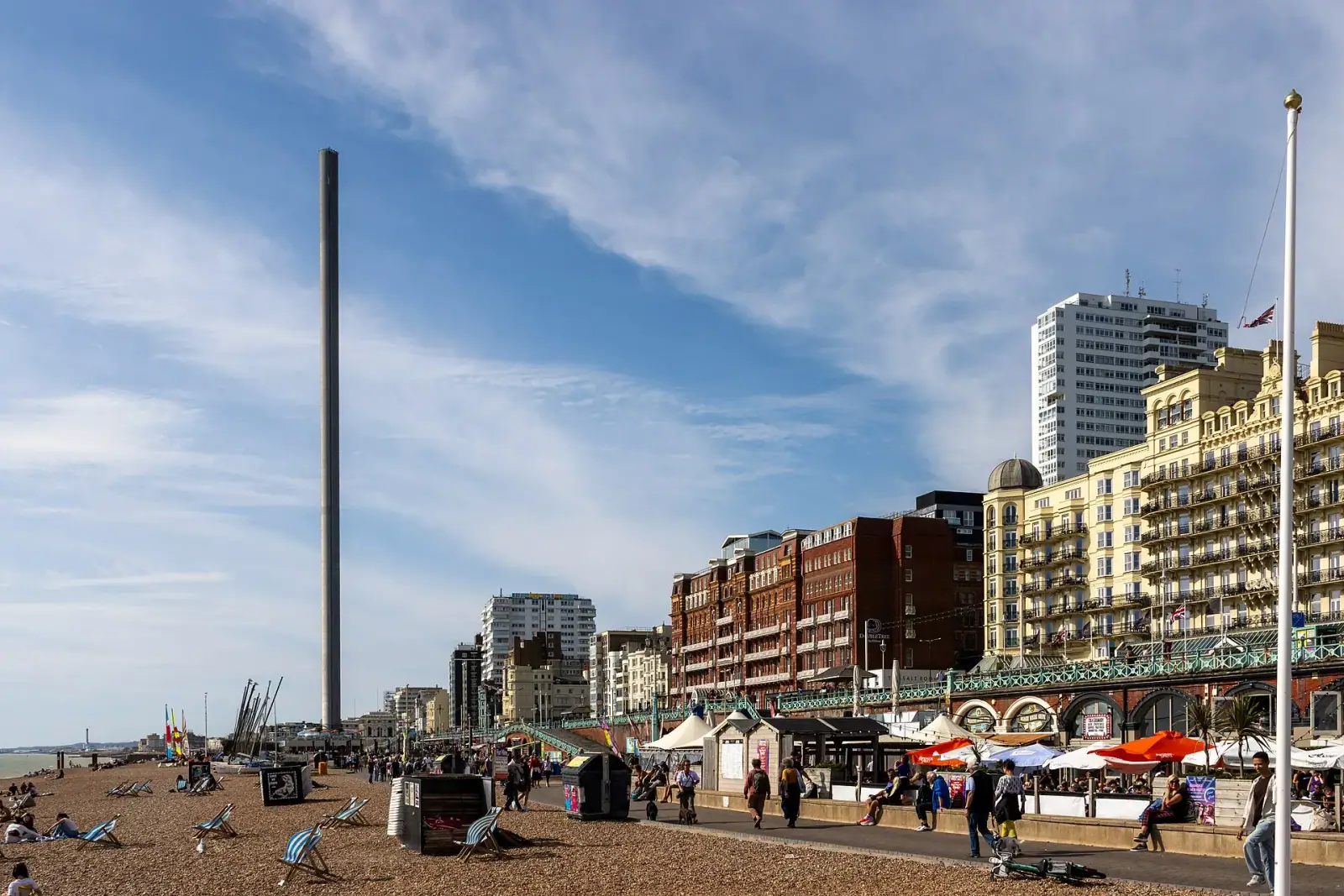
Brighton is one of the UK's most walkable cities. The city centre, North Laine, the Lanes, and the seafront are all within a compact core you can cross on foot in under 20 minutes. A bicycle is genuinely useful here: flat terrain along the seafront and reasonable cycling infrastructure make it a practical option for day-to-day movement.
Brighton and Hove Buses cover the wider city well. A single fare is capped at $4; a monthly unlimited pass costs around $130. Hove and Preston Park are straightforward bus rides from the centre.
For intercity travel, Brighton station connects directly to London Victoria and London Bridge in about 55 to 60 minutes. Trains run frequently throughout the day. Getting to Gatwick Airport is easy: Thameslink runs a direct train every 15 to 20 minutes and the journey takes around 37 minutes, with tickets from $13 to $27 one-way. National Express coaches cover the same route from the seafront coach station for as little as $5.50 to $11. Heathrow requires changing in London and adds considerable time; most Brighton-based nomads use Gatwick as their default airport.
Sorting transport? Book an airport transfer, or compare car rental on Auto Europe and QEEQ.
Visas and Staying Long-Term
Citizens of the US, EU countries, Canada, Australia, and most other wealthy nations can enter the UK visa-free for up to six months as a standard visitor. They need an Electronic Travel Authorisation (ETA) before travelling, which costs $27 and covers multiple visits over two years. You cannot extend this stay from within the UK, and you cannot switch to a different visa type while in the country. Re-entering shortly after a six-month stay may draw scrutiny at the border.
The UK does not currently operate an official dedicated digital nomad visa. Working remotely for an employer or clients based outside the UK while on a visitor entry is a legally grey area under visitor rules; the guidance states that visitors cannot work for UK entities but the rules around overseas remote work are not clearly codified. A small number of nomads use the Global Talent Visa or the Innovator Founder Visa as longer-term routes, but both have significant requirements.
Best Time to Visit
The best window for working and living in Brighton is May through September. Temperatures in summer sit between 18 and 23 degrees Celsius (64 to 73F), coastal breezes keep things comfortable, and daylight runs well into the evening. June to August brings the most sunshine but also the most tourists, higher accommodation prices, and a louder, busier city centre.
May and September offer a strong balance: decent weather, fewer crowds, lower short-term rental prices, and a city that still feels alive. Brighton has an active conference and events calendar in spring and autumn, which can be useful for networking.
Winter (November to February) is the toughest stretch. Grey skies, frequent rain, and short days around 8 hours of daylight make it harder to enjoy what the city does best. The city does not shut down, and coworking spaces and restaurants stay busy year-round, but the seafront and outdoor culture that define Brighton's appeal are largely dormant from November onward.
Pros and Cons
- Direct, fast train to London means you can access big-city clients and events without living there
- Strong coworking infrastructure with well-run spaces at multiple price points
- Highly walkable and compact; a bike covers most needs
- Excellent food and bar scene for a city of its size, including a Michelin-starred restaurant
- Genuinely diverse and LGBTQ+ friendly culture with a creative, independent spirit
- Gatwick Airport 37 minutes away by direct train
- High cost relative to the rest of the UK; rents are close to inner London in some areas
- No dedicated nomad or freelance visa; you are limited to the standard six-month visitor entry
- Visible street homelessness and drug use in the city centre is more pronounced than most UK cities of similar size
- Winter is genuinely grim: rain, wind, and short days make the seafront setting feel like a liability
- Summer crowds inflate prices and can make the centre feel congested
- Crime rate is above the regional average; Hove and outer areas are safer than the city centre core
Who Brighton Is Best For
Brighton suits nomads who earn in a strong currency (pounds, euros, or dollars) and want a genuinely characterful English city with fast London access. It works well for creative freelancers, tech workers, and anyone who values independent culture, good food, and a vibrant bar scene over raw affordability. The short train to London means client meetings or co-working stints in the capital are easy without paying London rent.
It is a particularly good fit for people who value walkability, appreciate a coastal setting, and want a city with enough going on to sustain a social life without depending on a nomad community. Brighton's expat and creative scene is substantial enough that you will meet interesting people without needing to seek them out.
Skip Brighton if you are on a tight budget: a genuine nomad lifestyle here is hard below $2,650 per month all-in. Also skip it if you need more than six months in the UK at a time without a qualifying long-stay visa, or if grey, wet winters would affect your productivity or wellbeing significantly. Budget nomads or those wanting Southeast Asian prices should look elsewhere entirely.