Cost of Living in Alexandria
Real market data
Source: Numbeo · August 2026
$320/moSolo nomad1-bed centre + living costs
$470/moCoupleshared 1-bed + costs
$260/moLean / localcheaper area + costs
- 1-bed rent, city centre$140E£6,909
- 1-bed rent, outside centre$70E£3,591
- Monthly costs excl. rent (1 person)$190E£9,513
- Meal, inexpensive restaurant$4E£200
- Monthly transit pass$13E£650
- Buy price, per m² (centre)$710E£36,429
Prices are from Numbeo (August 2026), converted to USD at $1 = E£51.11 (01 Aug 2026). The monthly living-costs figure is our transparent one-person basket, groceries, a few meals out, utilities, phone, internet, transport and essentials, priced from those figures. Solo adds central rent; couple and lean are estimates from the same numbers.
Alexandria is significantly cheaper than Cairo for equivalent accommodation, and dramatically cheaper than most European or North American cities. The Egyptian pound trades at roughly 49-50 EGP per USD as of mid-2026, so small amounts in local currency go a long way.
Expect to pay $125-175 per month for a furnished one-bedroom in a central area like Sporting, Roushdy, or Sidi Gaber. Head further out toward Smouha or Saba Pasha and you can find similar apartments for $59-88. Groceries from local markets run around $23-39 per month if you cook Egyptian staples. A meal at a local foul and falafel spot costs under $2; a full seafood dinner for two at a mid-range restaurant runs $12-20. A hot-desk at one of the city's coworking spaces costs roughly $88-115 per month. The tram and local buses are very cheap, with a monthly transit pass around $13; taxis and ride-hail apps add perhaps $16-29 per month depending on your habits. Home broadband averages around $12 per month.
A comfortable but modest nomad budget lands around $650-1,100 per month all-in, or $1,100-1,600 with a nicer apartment, regular restaurant meals and a coworking membership. The measured basket at the head of this page is $260 to $320, which is what the city costs on an Egyptian salary rather than a foreign one.
Where to Work
Alexandria has a small but functional coworking scene. Workstation in Smouha is one of the most established options, offering 50-plus seats, fast internet, four private rooms, a printer, lockers, and a full kitchen. Hive Space in Roushdy provides a quieter atmosphere with complimentary drinks, a lounge, yoga studio, and a rooftop terrace, and draws consistent praise for its internet reliability. Flux Coworking Space on El-Horya Street in the Loran district is the largest single space in the city, with capacity for over 100 people, though some users report WiFi inconsistency during peak hours.
Cafe culture has grown considerably, and chains like Zanilli's Coffee (branches in Sporting, Montazah, and near City Center Mall) are popular among remote workers for their hours and seating. That said, many traditional coffeehouses do not have reliable WiFi and are better suited for reading than video calls.
The honest WiFi picture: home and coworking broadband in the better spaces in Alexandria is enough for Zoom and cloud work. Mobile data via Vodafone, Orange, or Etisalat SIM cards fills the gaps reliably. Public cafe WiFi is hit-or-miss, so carry a local SIM as a hotspot backup, especially if you are on calls.
Getting Around
Alexandria runs along a long coastal strip, which means much of the city is linear and navigable. The tram network (Raml Tram and Al-Madina line) is cheap, slow, and often crowded, but covers the central coast. City buses and minibuses serve most districts at very low fares but can be confusing to navigate without some Arabic. Ride-hail apps (Uber and Careem both operate here) are the most practical option for tourists and nomads; fares are low by Western standards.
The Corniche is pleasant to walk in good weather, and central neighborhoods like Raml Station, Roushdy, and Smouha are walkable within themselves. However, the city is not built for pedestrians across long distances, and the heat from June through September makes walking unpleasant for most of the day.
Getting to and from Borg El Arab Airport (Alexandria's main international airport, about 45 km west of center): a taxi takes roughly 50 minutes and costs around $5-8. Bus route 555 runs from the airport to Al-Raml Bus Terminal for around $1. There is no train link to the airport. If you are arriving via Cairo, the train between Cairo Ramses and Alexandria Sidi Gaber takes 2-2.5 hours and is comfortable, with frequent departures.
Sorting transport? Book an airport transfer, or compare car rental on Auto Europe and QEEQ.
Visas and Staying Long-Term
Most Western passport holders (US, UK, EU, Canada, Australia) can obtain a 30-day tourist visa on arrival at Borg El Arab Airport for $25-30 in cash, or apply in advance via the Egyptian e-visa portal. The e-visa is single-entry and also valid for 30 days. A multiple-entry e-visa (valid 6 months) is available but less straightforward to obtain.
Egypt does not have a formal digital nomad visa as of mid-2026. You can extend a tourist visa at the Mogamma building in Cairo or at the Passport and Immigration Office in Alexandria for a further 30 days; extensions beyond that require leaving and re-entering the country or applying for a resident permit, which requires more documentation and is mainly used by long-term expats.
The 2025 five-year multiple-entry visa program allows up to 180 days per visit, but this is primarily marketed at frequent high-spend travelers rather than standard tourist arrivals.
Best Time to Visit
Alexandria has a Mediterranean climate moderated by sea breezes, which makes it meaningfully cooler in summer than Cairo, though still warm. The best windows for remote work comfort are October to November and March to May, when daytime highs run 20-28 degrees C (68-82F), evenings are pleasant, and the Corniche is enjoyable. The city is also at its least crowded outside of July and August.
July and August see Egyptian families flooding the city from the interior, accommodation prices rise, and daytime temperatures regularly hit 32-35 degrees C with humidity. If you arrive in summer, expect a noisier, more crowded city and plan to work during the cooler morning hours. Winter (December to February) is mild, around 15-20 degrees C by day, and quiet, making it a decent budget season, though some days are grey and windy off the sea. Those mild months come with a local twist: Alexandria gets more rain than anywhere else in Egypt, arriving in short, violent storms that Alexandrians call nawwat and track by an old calendar of named dates, and a heavy one floods low-lying streets within hours. On those days, plan errands around the forecast rather than the clock.
Pros and Cons
- Very low cost of living, one of the cheapest Mediterranean-adjacent cities for nomads
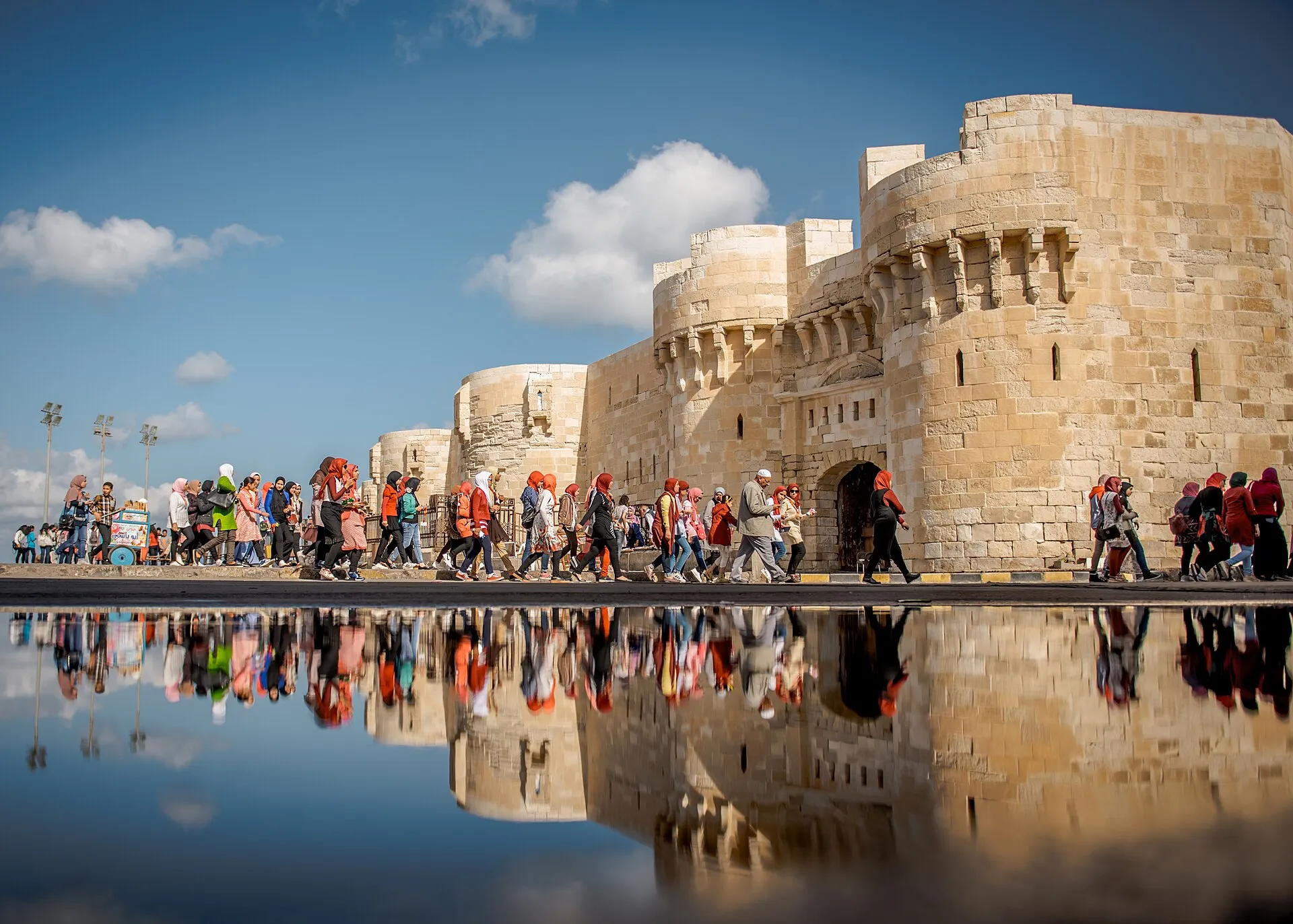
- Rich history and culture: libraries, ancient sites, a genuinely distinct Egyptian coastal identity
- Better air quality and sea access compared to Cairo
- Good food scene with outstanding fresh seafood at local prices
- Growing coworking infrastructure with several reliable options
- Direct train link to Cairo opens up the whole country easily
- Inconsistent internet outside dedicated coworking spaces
- No digital nomad visa: you are limited to tourist extensions and re-entries
- English is limited outside tourist-facing businesses and universities
- Very limited nightlife due to conservative social norms; alcohol is available but not widely visible
- Traffic and pedestrian environment can be chaotic and stressful
- Smaller nomad community than Cairo; finding like-minded remote workers takes more effort
Who Alexandria Is Best For
Alexandria suits nomads who prioritize low costs and cultural depth over infrastructure and convenience. If you are comfortable navigating a large Egyptian city with limited English, want Mediterranean weather without Mediterranean prices, and enjoy seafood and a slower coastal pace, Alexandria delivers well. History enthusiasts, budget-conscious solo travelers, and anyone already spending time in Egypt will find it worth a month or two.
Skip Alexandria if you need rock-solid internet for heavy video production or engineering builds, want a buzzing expat social scene, or rely on nightlife and bars to decompress. Cairo is the better bet for those needing more digital infrastructure, a larger international community, or easier access to the full range of coworking options in Egypt. Readers and writers have an extra reason to come. The city of Cavafy and Durrell still keeps the poet's flat as a museum, the old cafes around Raml Station still serve coffee under high ceilings, and the Bibliotheca Alexandrina on the eastern harbour has reading rooms that make a serious place to spend a working afternoon.