Cost of Living in Semarang
Real market data
Source: Numbeo · August 2026
$490/moSolo nomad1-bed centre + living costs
$690/moCoupleshared 1-bed + costs
$400/moLean / localcheaper area + costs
- 1-bed rent, city centre$230Rp4,080,000
- 1-bed rent, outside centre$140Rp2,500,000
- Monthly costs excl. rent (1 person)$260Rp4,688,842
- Meal, inexpensive restaurant$1Rp25,000
- Monthly transit pass$14Rp257,174
- Buy price, per m² (centre)$1,160Rp21,000,000
Prices are from Numbeo (August 2026), converted to USD at $1 = Rp18040 (01 Aug 2026). The monthly living-costs figure is our transparent one-person basket, groceries, a few meals out, utilities, phone, internet, transport and essentials, priced from those figures. Solo adds central rent; couple and lean are estimates from the same numbers. The guide below quotes its own monthly range, which is a different measurement rather than a competing one: this table prices a defined basket at the figures above, while that range is a judgement about how somebody actually lives here.
Semarang is one of the cheapest provincial capitals in Java for remote workers. Your biggest variable is rent. A furnished one-bedroom apartment in the central Simpang Lima or Candisari district runs roughly $140-250 per month. Move out to residential suburbs like Banyumanik or Tembalang and you can find comfortable rooms for $83-140.
Eating out is very affordable. A full meal at a local warung costs $1-1.50 (under $2), while a sit-down meal for two at a mid-range restaurant runs $8.50-14. Groceries from a traditional pasar market are cheaper still; a week of basics costs around $11-17.
A hot-desk at a dedicated coworking space costs $55-89 per month, with drop-in day rates available from $2-3.50. Local transport is extremely cheap: a Trans Semarang BRT ride costs under $0.25, and a typical Grab/Gojek motorcycle taxi trip across town runs $0.50-1. Before renting near the old town or the port, ask whether the street floods at high tide: parts of the northern coast are sinking by around ten centimetres a year, and the tidal water locals call rob reaches ground floors there without any rain at all.
- Rent (central): $140-250
- Rent (suburbs): $83-140
- Groceries: $33-50 per month
- Eating out (local): $1-1.50 per meal
- Coworking hot-desk: $55-89 per month
- Local transport: $3-8.50 per month
- Total monthly range: USD 500-900 for a comfortable nomad lifestyle
Where to Work
Semarang has a small but functional coworking scene. Collabox Creative Hub in Semarang Tengah is the most established option, offering daily and monthly memberships, fast Wi-Fi, meeting rooms, and a pet-friendly lounge. Hetero Space in Banyumanik caters to freelancers and small teams with flexible desk rentals. DS CoWork near Jenderal Sudirman runs 24 hours, which is useful if your timezone requires odd hours.
Cafe-working is very popular locally. Makabana Space on Jl. Diponegoro doubles as a specialty coffee shop and coworking space with dedicated desks, power outlets at every seat, and refill water. The atmosphere is relaxed and staff are used to remote workers spending hours at a stretch. Dozens of independent coffee shops in the Simpang Lima and Kota Lama areas are similarly laptop-friendly.
The honest Wi-Fi picture is mixed. Fixed-line connections are adequate for video calls and most remote work. Cellular data from Telkomsel or XL on a local SIM is often faster and more reliable than cafe Wi-Fi. Budget $3-5.50 per month for a solid mobile data package as a backup.
Getting Around
Semarang is not a walkable city. The urban area is spread out, heat and humidity make long walks uncomfortable, and footpaths are inconsistent. For day-to-day movement you will rely on Grab or Gojek (app-based motorcycle or car), which are cheap and widely available. A typical cross-city car trip costs $1.50-3.
The Trans Semarang BRT network covers most major corridors with 18 routes at a flat fare of under $0.25 per journey, transfers included. It is reliable but slow in traffic and not designed for the last mile.
Jenderal Ahmad Yani International Airport (SRG) sits about 5 km from the city center. The Trans Semarang Airport Corridor connects the terminal to Simpang Lima for the same flat fare, though you need to walk about 100 m to the bus shelter from the arrivals gate. A Grab car to the center takes 15-20 minutes and costs around $2-3.50. Direct flights connect Semarang to most major Indonesian cities; international connections go through Kuala Lumpur, Singapore, or Jakarta. Trains are the better way to the capital: the Argo Sindoro from Tawang, the Dutch-era station on the edge of Kota Lama, reaches Gambir in a little over five hours.
Sorting transport? Book an airport transfer, or compare car rental on Auto Europe and QEEQ.
Visas and Staying Long-Term
Citizens of most Western countries (US, EU, UK, Australia, Canada) are not on Indonesia's visa-free list, which covers ASEAN citizens and a short list of others for 30 days that cannot be extended or converted inside the country.
Western visitors use the Visa on Arrival (VoA), available to roughly 90 nationalities, which costs about $28 and is valid for 30 days with one 30-day extension, giving you up to 60 days total.
For remote workers planning to stay longer, Indonesia launched the E33G Remote Worker Visa (also called the digital nomad visa) in 2024. It is valid for one year and allows you to live anywhere in Indonesia. Requirements include proof of foreign employment, an annual income of at least $60,000, and minimum savings of $2,000. The official fee is $390, with total first-year costs including KITAS processing often reaching $600-1,000.
Best Time to Visit
Semarang has a tropical climate with two seasons. Temperatures stay consistently around 30-33 degrees Celsius (86-91 F) year-round, so heat is always a factor. The main variable is rain.
The dry season runs from May through September, with July and August being the driest months. This is the best window for visiting: lower humidity, fewer power outages during storms, and more reliable transport around the city. Air quality also tends to improve in the dry season.
The wet season (October through April) brings heavy afternoon downpours, occasional flooding in low-lying parts of the city (Semarang has a longstanding flood management problem in its northern coastal areas), and higher humidity. December is the wettest month. Remote work is still perfectly possible in the wet season, but flooding disruptions and poor road conditions are real inconveniences.
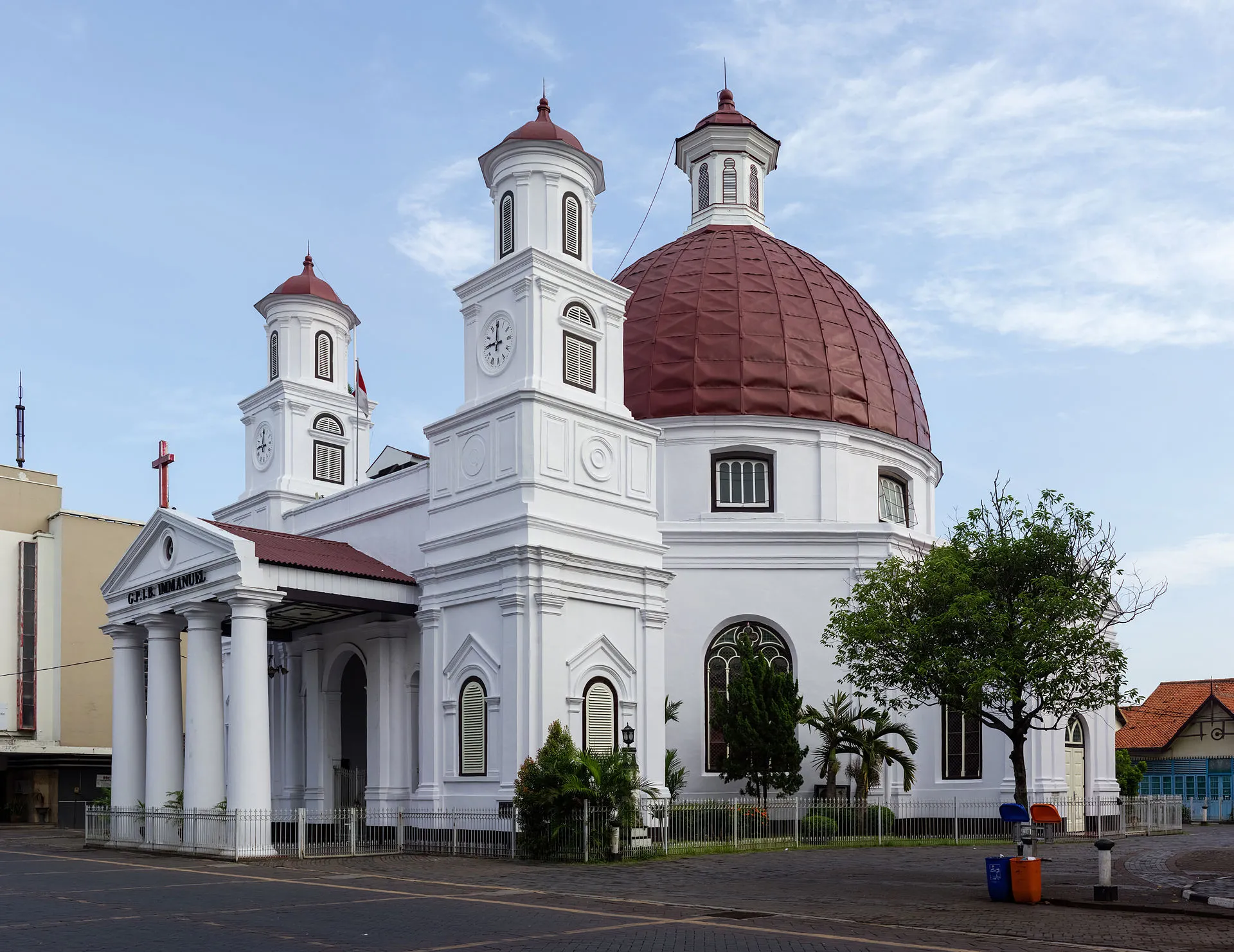
If you have flexibility, aim for June through September for the most comfortable experience. Dugderan, the week-long fair and carnival that announces the start of Ramadan, is the city's own festival, with the warak ngendog, a mythical beast of goat, dragon and buraq, paraded through the streets on the eve of the fast; because it follows the lunar Islamic calendar, its date slides back by roughly eleven days from one year to the next.
Pros and Cons
- Very low cost of living compared to Bali, Jakarta, or Yogyakarta
- Authentic Indonesian city with minimal tourist crowds or foreigner pricing
- Excellent local food scene, from street warungs to Dutch colonial-era restaurants
- Historic Kota Lama (Old Town) provides a genuinely beautiful working environment
- Good flight connections within Indonesia and to regional hubs
- Relaxed pace with far less congestion than Jakarta
- Limited English outside hotels and tourist venues; basic Bahasa Indonesia helps a lot
- Not walkable; you need apps or a motorbike for daily errands
- Small expat and nomad community; networking opportunities are fewer than in Bali or Yogyakarta
- Flooding risk in the wet season, particularly in the northern parts of the city
- Air quality is moderate on most days, with peak-hour pollution from heavy traffic
- Women traveling solo should be aware that safety can feel less consistent than in more tourist-oriented cities
Who Semarang Is Best For
Semarang suits remote workers who want a genuinely local Indonesian experience at a fraction of Bali's price. If you are comfortable navigating without much English infrastructure, enjoy exploring history and street food over beach clubs and yoga studios, and can handle a city that was not designed with nomads in mind, you will find Semarang rewarding and extremely affordable.
It works particularly well for people on extended Indonesia stays who want to experience Java beyond Yogyakarta, solo workers who do not depend on a large nomad community, and anyone doing a slow-travel loop through Indonesian cities.
Skip Semarang if you need fast and reliable coworking infrastructure as a baseline, if a thriving English-speaking social scene is important to you, or if you are looking for the kind of outdoor recreation and beach access that draws people to Bali or Lombok. Its Chinese heritage runs deeper than most Javanese cities': Sam Poo Kong, the temple complex on the western side of the city, honours the Ming admiral Zheng He, said to have landed here in the fifteenth century.