Cost of Living in Durban
Where this figure comes from. No cost survey covers Durban, so the $1,050 a month above is our own estimate rather than a measurement. On 416 of our 999 city guides the figure is built from a published Numbeo basket, a one-bedroom rent in the centre plus one person's monthly costs without rent, converted to USD; this city is not one of them. How we source everything.
Budget roughly $1,050 a month as a solo remote worker in Durban, which makes it the cheapest of South Africa's three main cities by some distance. A one-bedroom apartment in Morningside, Glenwood or Umhlanga runs about $350 to $550, with secure complexes at the upper end and older buildings in the city centre far cheaper, though location matters here more than price. Groceries land around $250 to $320. A bunny chow, Durban's own dish, is $4 to $6, a good curry $8 to $12, and a restaurant dinner with wine $18 to $28. South African wine is excellent and cheap. Utilities add $90 to $170, and many residents budget for backup power given the country's load-shedding history. Electricity is usually prepaid on a meter topped up by app or at a shop, which makes the cost visible in a way a monthly bill never is and turns a cold snap into an immediate decision. A flat in a secure complex carries a monthly levy on top of the rent covering the guards, the grounds and often the water, and that levy is the figure to ask for rather than the headline. Municipal rates fall on the owner but are frequently passed through in the rent.
Where to Work in Durban
Durban has a growing coworking scene, concentrated in Umhlanga Ridge to the north and in the Station Drive precinct and Glenwood closer to the centre, with desks at roughly $130 to $220 a month. Umhlanga in particular has become the business centre of the region and has the newer buildings and the more reliable infrastructure. Cafe working is normal in Glenwood, Morningside and Florida Road. Fixed-line fibre is widely available and fast in the better suburbs. Electricity was the critical local consideration for a decade and has stopped being one: South Africa's load-shedding ended in May 2025 and the grid carried the 2026 winter without a stage. The inverters the better buildings fitted are still worth asking about, because this coast loses power to summer storms on its own account. Local time is two hours ahead of London for half the year and one for the other half, so a European working day lands almost entirely inside the afternoon here, which is why the outsourcing industry set up in this country in the first place. That sector employs tens of thousands locally and is the most visible white-collar employer outside the port. Water interruptions are the other recurring risk alongside the electricity, and a building with a tank of its own is worth asking about.
Getting Around Durban
Durban is spread along the coast and a car is close to essential for most residents, which is the honest position for all of South Africa's cities. The Golden Mile beachfront promenade is excellent for walking and cycling and runs for several kilometres. Public transport exists in the form of the People Mover bus along the beachfront and minibus taxis covering everything else, though the latter are not generally recommended to newcomers. Ride-hailing apps are widely used, reliable and inexpensive, and many residents rely on them entirely rather than owning a car. King Shaka international airport is about 35 minutes north and connects to Johannesburg, Cape Town and a growing list of international destinations. The commuter rail network that once served this city was stripped and vandalised during the pandemic years and has only partially returned, which is why nobody plans a journey around it. The container port below the bluff is the busiest on the continent, and the trucks feeding it fill the inland highway for the first hour of any drive out. That highway climbs steeply towards the interior and carries most of the freight in this half of the country, which shows in the state of the surface.
Sorting transport? Book an airport transfer, or compare car rental on Auto Europe and QEEQ.
Visas for Durban
South Africa grants most Western passports, including EU, UK, US, Canadian and Australian, 90 days visa-free on arrival. In 2024 South Africa introduced a remote work visitor visa, its digital nomad visa, for foreign remote workers earning above a substantial annual threshold, which was a significant change after years of having no such route. Details and thresholds have been adjusted since introduction. Extensions of the visitor visa are possible but the process is slow. Longer-term routes include the critical skills work visa, which covers a defined list of occupations, and business or spousal visas. Long-term applications ask for a medical report and a chest radiograph alongside everything else, and both have to be recent enough that obtaining them too early simply wastes the fee. A points-based work route was introduced recently to sit beside the occupation list, which widened the field a little for people whose job title never appeared on it. Renewals go through a contracted centre rather than an office, and the appointment has to be booked before the current permit expires or the whole thing is treated as a fresh application.
Best Time to Visit Durban
Durban is subtropical and warm all year, which is its main draw within South Africa. April to September is the best window: dry, sunny, daytime highs in the low to mid twenties, and sea temperatures that stay swimmable through the winter, which is not true anywhere else in the country. This is also when Johannesburg residents come down for the school holidays, so July is busy. Summer, November to March, is hot and humid, into the low thirties with high humidity and afternoon thunderstorms, and the sea is very warm. The Sardine Run, when huge shoals move up the coast, usually falls between June and July. Cyclone risk is low but heavy rain events have caused serious flooding in recent years.
Pros and Cons of Durban
Durban gives you warm ocean twelve months a year, the best Indian food outside India, a long beachfront promenade, the Drakensberg mountains three hours inland and game reserves within reach, all at prices well below Cape Town. The city has a distinctive Zulu and Indian character that neither of the other big South African cities shares. Crime is a genuine and serious consideration that shapes daily decisions about where to live and walk, and this should be researched honestly rather than waved away or ignored. The city centre has declined and most middle-class life happens in the northern suburbs. Water interruptions occur, and load-shedding, which ended nationally in 2025, is no longer the drag on a working week that it was here for a decade. Public transport is inadequate and a car or ride-hailing budget is necessary.
Who Durban Is For
Warm sea and low costs, on the condition that you take South African security seriously and organise your life accordingly. Surfers and divers are well served, the food alone justifies a longer stay, and the Drakensberg and the KwaZulu-Natal game reserves are both close enough to make this a base rather than a destination. It works for those on the new remote work visa or the critical skills route. It is a reasonable family option in the northern suburbs, which have good schools. Planning around crime is not optional here, living car-free is not realistic, and the international remote-work community that exists elsewhere in the country has not formed in this city. Cape Town has that community and the scenery, at roughly double the rent.
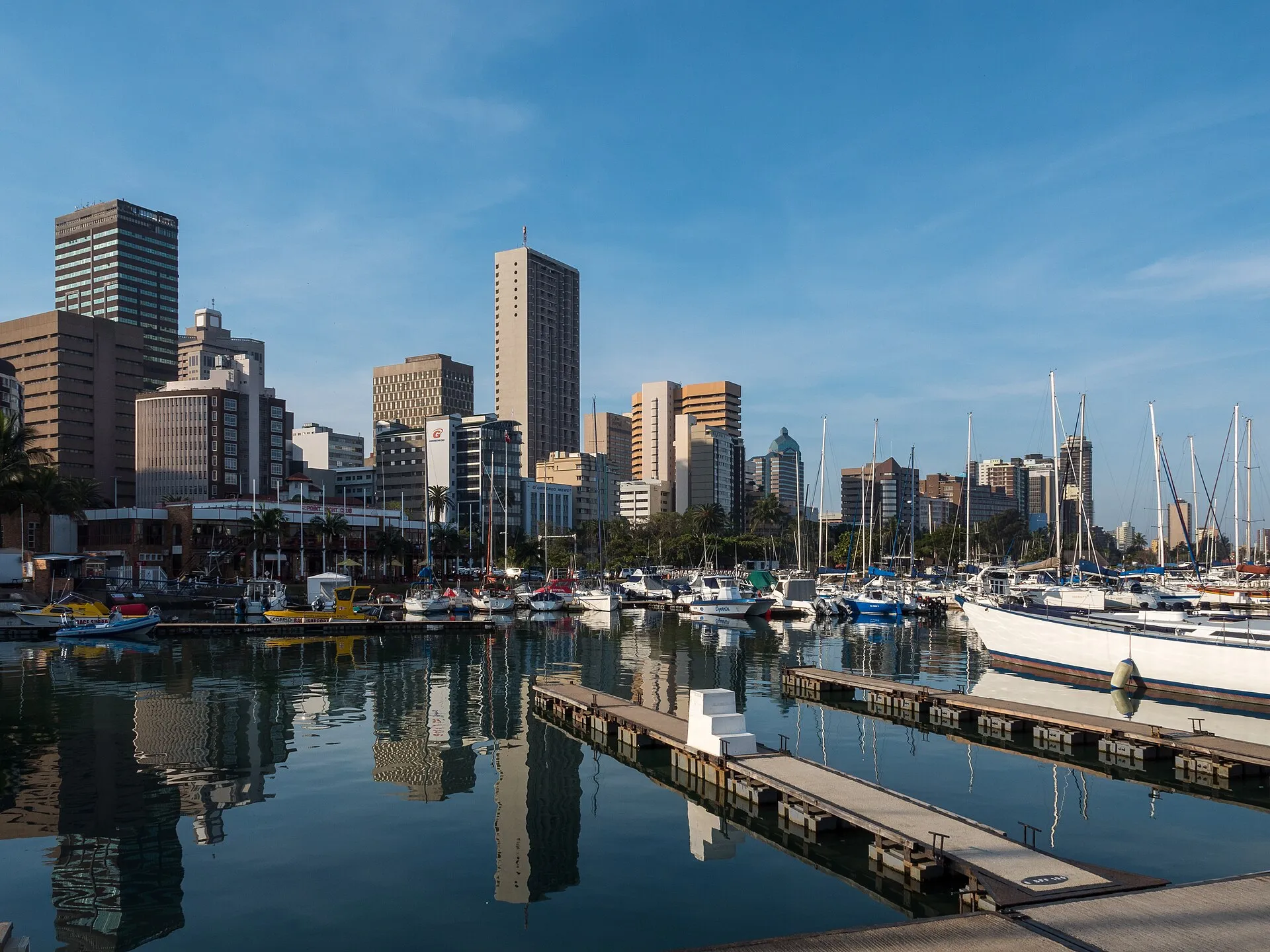 Photo: South African Tourism from South Africa / Wikimedia Commons (CC BY 2.0)