Cost of Living in Newcastle
Where this figure comes from. No cost survey covers Newcastle, so the $2,100 a month above is our own estimate rather than a measurement. On 416 of our 999 city guides the figure is built from a published Numbeo basket, a one-bedroom rent in the centre plus one person's monthly costs without rent, converted to USD; this city is not one of them. How we source everything.
Budget roughly $2,100 a month as a solo remote worker in Newcastle, which buys a standard of coastal living that would cost half as much again in Sydney. A one-bedroom apartment in Cooks Hill or Newcastle East runs about $1,100 to $1,500, and the further you move from the beach towards Hamilton or Mayfield the more that falls. Groceries are ordinary Australian prices, which are high by European or Asian standards, and a flat white costs around $4. Eating out is where the budget goes: a pub meal is about $22 and a restaurant dinner considerably more. Public transport is cheap and the city is small enough that most people walk or cycle. The gap with Sydney is the whole financial argument and repays stating precisely: a two-bedroom here costs roughly what a studio does in inner Sydney, down the line, and that difference is why the population has grown the way it has. Within the city the gradient runs from the beach inland rather than from a centre outward, so the same money stretches noticeably further in Hamilton or Mayfield than in Newcastle East. Strata levies apply to most apartments and fall on owners rather than tenants.
Where to Work in Newcastle
Newcastle has a small but genuine coworking scene, concentrated in the East End and around Honeysuckle on the redeveloped harbour, with hot desks from about $250 a month. The city's university and a growing cluster of startups and creative agencies mean the infrastructure exists and is properly equipped rather than nominal. NBN fibre reaches most of the inner suburbs at reliable speeds, and mobile coverage across the city is comprehensive. Cafes along Darby Street and Beaumont Street are used to people working from them for hours. The practical caution is that Australian home internet is expensive relative to what it delivers, so check what a specific lease includes. The local economy is in the middle of a deliberate turn, from coal export towards renewables, defence manufacturing and medical research, with the university at the centre of it. Its medical school and engineering faculty give the city a professional base that a beach town would not otherwise have, and the startup cluster grew out of both rather than arriving from elsewhere. What no connection can fix is the distance: clients in Europe and North America sit most of a day away, and it is the calendar rather than the bandwidth that a stay here has to be built around.
Getting Around Newcastle
Newcastle is compact and flat along the coast, which makes it one of the more walkable Australian cities. A light rail line runs from the interchange through the centre to the beach, and buses cover the rest of the city and out to Lake Macquarie. A ferry crosses the harbour to Stockton in five minutes. Cycling works well, with a shared path along the coastline and through Honeysuckle. Sydney is two and a half hours away by train from Broadmeadows, and the airport at Williamtown has domestic connections. A car is useful for the Hunter Valley vineyards and the beaches north but is not necessary for daily life in the inner city. Transport runs on the Opal card, the same one used across Sydney, and the fare cap makes a week of local travel cheap. The train south is slow, though the section along the Hawkesbury is among the better rail journeys in the state, which takes some of the sting out of two and a half hours. Williamtown airport is a half-hour drive north rather than on the edge of town, and it flies to too few places for most international journeys to begin anywhere but Sydney.
Sorting transport? Book an airport transfer, or compare car rental on Auto Europe and QEEQ.
Visas for Newcastle
Australia has no dedicated digital nomad visa. Most Western nationals get an eVisitor or Electronic Travel Authority allowing three months per entry within a twelve-month period, and it does not permit work for Australian employers, though remote work for a foreign employer sits in a grey area the government has not clarified. Working Holiday visas are available to under-thirties or under-thirty-fives depending on nationality and allow up to a year with work rights. Longer stays run through employer sponsorship or the skilled migration points system, both of which are substantial processes requiring skills assessment and are not undertaken casually. The city's regional classification for migration purposes is the detail that matters most to anyone actually pursuing residence, since it unlocks streams closed to the largest capitals. Working holiday makers can also earn a second and a third year by completing specified work, and the Hunter's vineyards and farms are among the more accessible places in the state to find it. Whatever the electronic authority says, entry is decided at the border itself, and an open-ended plan with no return ticket invites more questions than an itinerary does.
Best Time to Visit Newcastle
October to April is the comfortable half of the year, with warm days, ocean water that stays swimmable and long light evenings. Summer, from December to February, runs into the high twenties and occasionally past thirty-five during a heatwave, with humidity that the sea breeze usually takes the edge off. Autumn in March and April is the best combination of warm water and smaller crowds. Winter from June to August is mild by any northern standard, with daytime highs around eighteen and cold nights, and the surf is at its most consistent. Rain is spread across the year with a slight autumn peak. Ultraviolet levels here are severe even in winter and on overcast days, which visitors from higher latitudes consistently underestimate. Bushfire smoke can settle over the city for days in a bad summer, as it did in 2019 and 2020, and air quality warnings are published when it does. Humpbacks pass the headland between May and November on their way north and back again, close enough to watch from the cliff walk, and the ocean baths at Newcastle and Merewether are usable in every month.
Pros and Cons of Newcastle
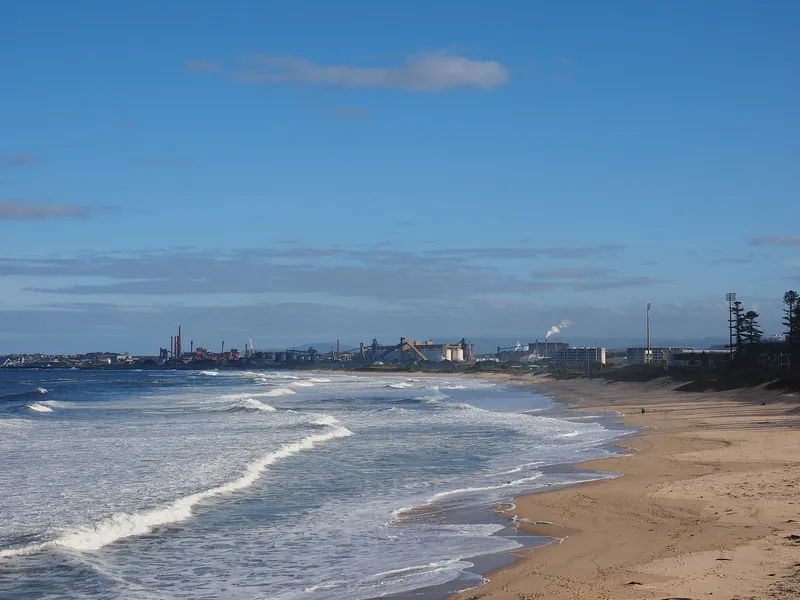
Newcastle gives you a genuine surf coast, a walkable flat city centre, a working harbour with the redevelopment mostly finished, and rents that are a fraction of Sydney's for a similar life. The beaches are excellent and largely uncrowded outside summer weekends. Australia is expensive right across the board, and nothing about this particular city offsets that. The city is quiet compared with a capital, the international community is thin, and the visa position for a non-Australian is the real obstacle rather than anything about the place itself. Distance from anywhere else in the world is a permanent condition. The harbour is still one of the largest coal export ports in the world, which sits awkwardly beside the renewables ambition and is argued about locally in a way outsiders do not expect. The city was also hit by an earthquake in 1989 that killed thirteen people and destroyed a good deal of the centre, and the rebuilding shaped what stands today. Healthcare, in return, is genuinely good, with a major teaching hospital and the university's medical school, which is not something every coastal town this size offers.
Who Newcastle Is For
An existing right to be in Australia is the entry condition, and the takers are mostly Australians leaving Sydney, or working holiday arrivals after a coastal base rather than a capital. Surfers come for the obvious reason. Everybody else comes for a city compact enough to get around without a car, and for ocean access that matters to them more than a night out does. Arriving without a visa pathway makes everything else academic, and there is no large international community waiting to absorb somebody who lands with none. Budget travellers should note that the ordinary cost of Australian living swamps every other line in the calculation, particularly one drawn up in a cheaper region. Among the coastal alternatives to Sydney, Wollongong is closer to the city and has the escarpment, the Gold Coast is bigger and brasher, and Byron has been priced beyond most of the people who made it what it is. This one keeps a working city underneath the beaches, which is what residents tend to value about it. A family gets short commutes, good schools and surf at the end of the street. Anybody who needs Sydney occasionally rather than every day of the week gets the train and the better half of the arrangement.
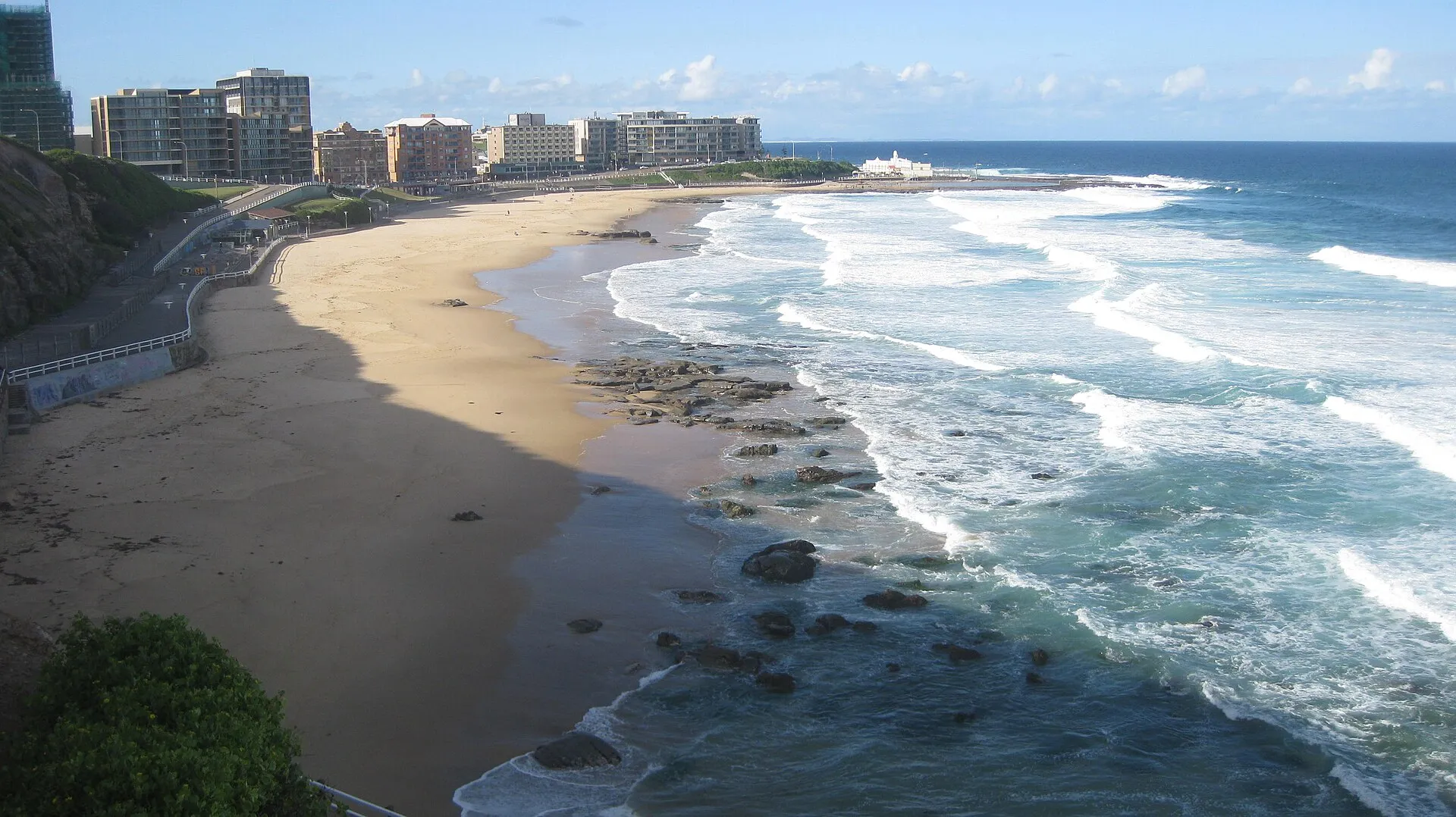 Photo: Mathew Toll / Wikimedia Commons (CC0)