Cost of Living in Narva
Real market data
Source: Numbeo · September 2026
$1,050/moSolo nomad1-bed centre + living costs
$1,660/moCoupleshared 1-bed + costs
$1,010/moLean / localcheaper area + costs
- 1-bed rent, city centre$290€250
- 1-bed rent, outside centre$240€210
- Monthly costs excl. rent (1 person)$760€664
- Meal, inexpensive restaurant$16€14
- Monthly transit pass$23€20
- Buy price, per m² (centre)$1,100€958
Prices are from Numbeo (September 2026), converted to USD at $1 = €0.87 (01 Aug 2026). The monthly living-costs figure is our transparent one-person basket, groceries, a few meals out, utilities, phone, internet, transport and essentials, priced from those figures. Solo adds central rent; couple and lean are estimates from the same numbers.
Budget around $1,050 a month, which makes Narva the cheapest city in Estonia by a wide margin. A one-bedroom runs roughly $180 to $350, and the housing is almost entirely Soviet-era blocks, since the old town was destroyed in 1944 and rebuilt as a planned town. Market produce is cheap. Eating out is inexpensive and the food leans Russian rather than Estonian. Utilities are the main cost, with district heating running through a long winter. Estonia uses the euro. Narva's low prices reflect a local economy that has struggled since the oil shale industry contracted. Fibre runs about $15 to $25 a month at Estonian speeds, which is among the best value in the European Union. District heating through the winter is the substantial seasonal cost, adding $80 to $150 a month between October and April in a Soviet block, and those blocks are most of the housing stock. Rents this low inside the European Union are rare enough to be the main financial argument for the city. Groceries and services cost noticeably less than in Tallinn, and the gap between the two cities is the largest of any pair in a country this small.
Where to Work in Narva
Connectivity is very good, as everywhere in Estonia: fibre is widespread, mobile data is fast and cheap, and the country's digital administration is the best in Europe by some distance, with almost everything from company registration to tax filing done online. There is limited coworking in Narva itself. The time zone is two hours ahead of GMT. Estonia's e-Residency programme, which lets non-residents run an EU company remotely, is administered nationally and is worth understanding for anyone whose interest in Estonia is business rather than residence. Anyone comparing Estonia's two schemes should be clear that e-Residency is a company identity and the digital nomad visa is a right to be here, and neither implies the other. Estonia's e-services genuinely work: a company can be registered in a day, tax filed in minutes and almost every interaction with the state done from a laptop, which is the practical reason the digital nomad visa attracted attention in the first place. Narva sits two hours ahead of GMT, giving a full European working day. Coworking is limited to a couple of spaces and the university college, so most people here work from a flat, which the rents make entirely affordable.
Getting Around Narva
Narva is compact and walkable, laid out on a Soviet grid that is easy to navigate. Buses cover the rest cheaply. The castle, the promenade and the river are all central. Trains and buses run to Tallinn in about two and a half hours along the northern coast. The border crossing to Ivangorod in Russia is at the end of the main street, though it has been substantially restricted since 2022 and the position changes: check the current status rather than assuming. Narva-Joesuu, a beach resort on the Gulf of Finland, is fifteen minutes north. Narva-Joesuu has one of the longest sand beaches on the Baltic and was a Tsarist-era resort, and the pine forest behind it is laced with paths. The bus to Tallinn is cheaper and roughly as fast as the train, and both run frequently along the coast. The Ivangorod crossing has been restricted to pedestrians and closed to vehicles at various points since 2022, and it is not a route to plan travel around.
Sorting transport? Book an airport transfer, or compare car rental on Auto Europe and QEEQ.
Visas for Narva
Estonia is a member of the European Union and the Schengen area, so European Union and EEA citizens may live and work here with no permit. Everyone else needs a Schengen visa or residence permit. Estonia pioneered the Digital Nomad Visa in 2020, a one year permit for remote workers with a foreign employer or foreign clients who meet an income threshold, and it remains among the most established schemes anywhere. Estonia's separate e-Residency gives a digital identity for running a company and is not a visa or a right to live here, which is a common confusion. The digital nomad visa requires proof of income above roughly $4,900 a month gross, a threshold set in euros and therefore moving with the exchange rate, which is a high bar and is checked against six months of bank statements. Estonia grants it as a Type D long-stay visa rather than a residence permit, so it does not count toward permanent residence. Narva is itself an external Schengen border, so for a non-EU traveller walking in over the bridge from Ivangorod the Entry/Exit System enrolment, four fingerprints and a photograph, happens at the Narva-1 checkpoint at the foot of the castle rather than at an airport, and the 90-day count starts there.
Best Time to Visit Narva
June to August is the season, at around twenty degrees with long light evenings and the beach at Narva-Joesuu usable. May and September are pleasant and quiet. Winter from December to March is cold, often minus ten, with snow lying for months and the Narva river freezing, which is when the two castles facing each other across it look their best. The darkness is the harder part: this is the eastern edge of Estonia and December daylight runs from about nine to three. Anyone hoping to see the two fortresses framed together should walk the promenade south of the castle, which is where the view everyone photographs is taken from. The Narva river freezes hard enough most winters that the two fortresses stand over ice rather than water, and the annual historical festival at the castle in early August is the town's largest public event. Kreenholm, the vast nineteenth-century textile mill on the river, is now largely derelict and open on guided tours, and it is the most striking thing in the town after the castles.
Pros and Cons of Narva
Narva has no counterpart in the rest of the European Union: a city that is over ninety per cent Russian-speaking, with Hermann Castle and Ivangorod fortress staring at each other across a river that marks where the European Union and NATO end, and where the geopolitics of the last few years are visible from a park bench. Costs are the lowest in Estonia and the digital infrastructure is the best in Europe. The city carries real economic difficulty, a shrinking population, English that is thin on the ground, and a border situation that is genuinely uncertain from one year to the next. Narva was almost entirely destroyed in 1944 and its baroque old town, once considered among the finest in northern Europe, was demolished rather than rebuilt in the post-war period, which is why a town with seven centuries of history looks fifty years old.
Who Narva Is For
Russian speakers, journalists, researchers, and anyone who reads the eastern edge of Europe as a live subject rather than a historical one. It suits people using Estonia's digital nomad visa who want the lowest possible costs. Soviet-era urbanism stands here more completely than anywhere else in the European Union, which is a strange distinction for a city on the union's eastern edge to hold. Anybody expecting Tallinn's old town has the wrong end of Estonia, since Narva was flattened in 1944 and rebuilt in concrete. Russian is what integration runs on here, and the border itself is a live international question rather than a line on a map, which is not a small thing to live beside. Language policy and minority questions are not theoretical in Narva. Estonia's transition of the city's schools to Estonian-language instruction is under way right now, and it is the defining local argument. Compared with Tartu, Narva costs half as much, carries a fraction of the student life, and considerably more interesting as a place to think about Europe.
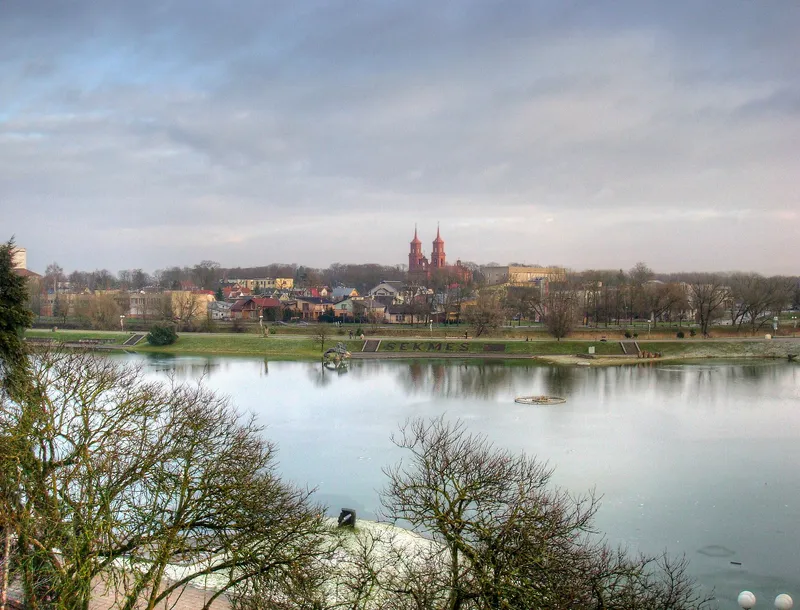
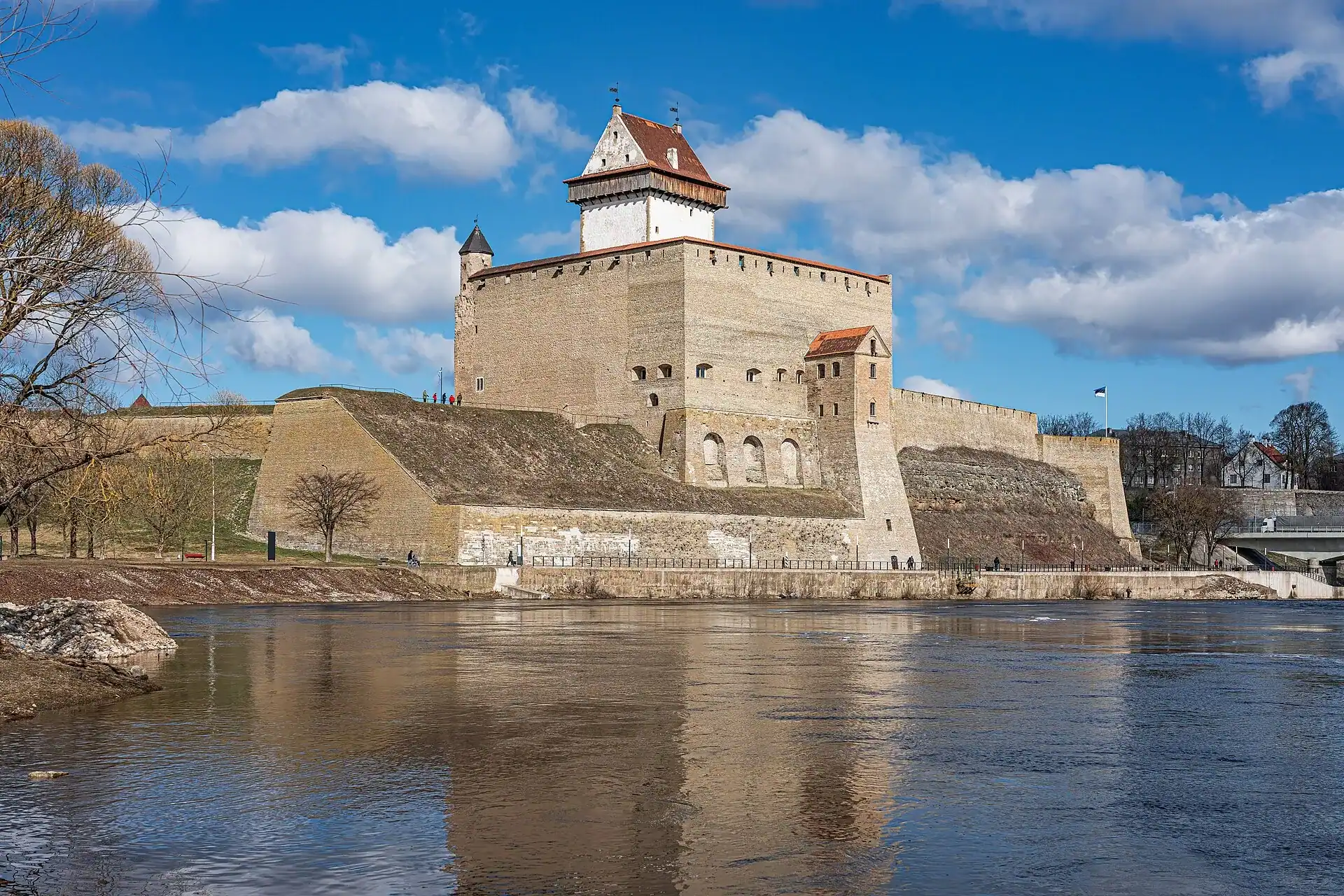 Photo: A.Savin / Wikimedia Commons (FAL)