Cost of Living in Malabo
Where this figure comes from. No cost survey covers Malabo, so the $2,000 a month above is our own estimate rather than a measurement. On 416 of our 999 city guides the figure is built from a published Numbeo basket, a one-bedroom rent in the centre plus one person's monthly costs without rent, converted to USD; this city is not one of them. How we source everything.
Budget around $2,000 a month, which is expensive for central Africa and reflects an oil economy with a small population importing almost everything. A one-bedroom runs roughly $700 to $1,200, with the areas near the embassies and the newer developments at the top. Groceries in the supermarkets serving the oil sector are very expensive; the local markets are far cheaper and the produce is good, since Bioko island is volcanic and fertile. Eating out ranges from cheap local canteens to expensive hotel restaurants with little in between. The CFA franc is pegged to the euro. The peg to the euro means no currency risk, which is unusual in the region, but it also means the country cannot devalue its way out of an oil price fall, so prices follow the oil cycle rather than local supply. Cash is the default and card acceptance is confined to a handful of hotels. The two-tier market is the thing to grasp about any price quoted: there is an expatriate rate and a local rate for the same goods and the same taxi, and which one you are offered depends on where you are standing and who introduced you.
Where to Work in Malabo
Connectivity is weak. Equatorial Guinea has a submarine cable connection and fibre reaches parts of Malabo, but the market is effectively a state monopoly, prices are high and reliability is poor. Mobile data is the usual fallback. Power cuts happen and generators are standard in anything serious. There is no coworking. Access to information is also restricted in ways that matter: internet shutdowns have occurred around elections. The time zone is one hour ahead of GMT, which makes European working hours straightforward. Anyone planning a stay should also arrange a local contact in advance, since almost everything here works through introduction rather than through published information. Spanish carries all official business, but French and Portuguese were both added as official languages later, French in 1998 for the regional trade bloc and Portuguese in 2010 as the price of joining the Lusophone community, and neither is spoken by many people. Bubi is the first language on Bioko and Fang on the mainland, and the distinction between those two is politically loaded rather than merely linguistic.
Getting Around Malabo
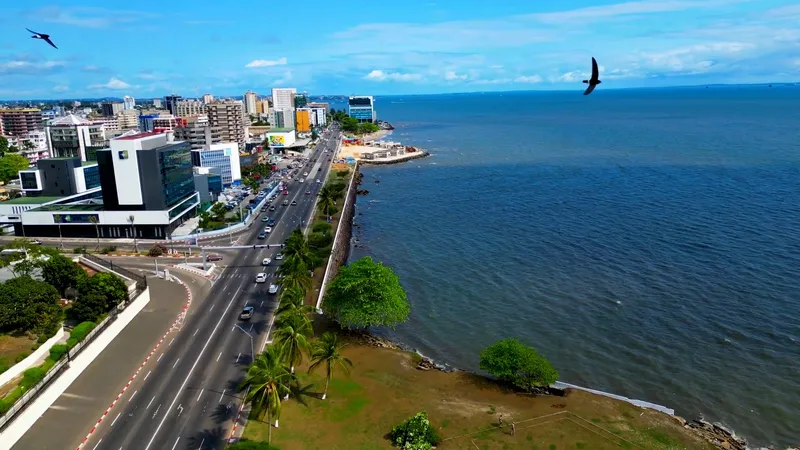
Shared taxis are the normal way to move around Malabo and are cheap, flagged down on the street and shared with whoever is going the same way. The city is small and the colonial centre is walkable. A car helps for reaching Pico Basile or the south of Bioko island, and the road up the volcano is spectacular. Malabo International Airport is about seven kilometres from the centre with connections to Madrid, Addis Ababa, Casablanca and regional West African cities, plus the domestic hop to Bata on the mainland. Anyone travelling to the mainland region of Rio Muni should note that Bata is a separate flight and that the new planned capital, Ciudad de la Paz, is being built inland from it. The city sits on the rim of a drowned volcanic crater, which is what gives the old harbour its shape and why the ground rises immediately behind the colonial centre. The airport road and the seafront were rebuilt during the oil years and are in better condition than almost anything else in the region, which can mislead a visitor about the state of the roads once the tarmac ends.
Sorting transport? Book an airport transfer, or compare car rental on Auto Europe and QEEQ.
Visas for Malabo
Equatorial Guinea has one of the most difficult visa regimes in Africa. Most nationalities need a visa applied for in advance at an embassy, with an invitation letter, proof of accommodation and often a yellow fever certificate, and the process is slow and inconsistent. United States citizens are a notable exception and may enter without a visa. There is no remote work visa. Photography is restricted around government and military installations and this is enforced seriously. Register your plans and confirm requirements well ahead. Anyone photographing anything at all should ask first, since cameras attract official attention here in a way that visitors from most countries find surprising and occasionally expensive. The American exemption dates from the oil investment of the 1990s and is the only significant one: no European nationality shares it, which reverses the usual pattern and surprises people who assume an EU passport travels further. Where a visa is needed the invitation letter is the binding document rather than the form itself, and obtaining one generally means having a contact in the country before you start.
Best Time to Visit Malabo
December to February is the driest window on Bioko and the most comfortable, warm at around thirty degrees. The rest of the year is wet, and the south of the island is extraordinarily so: Ureca receives among the highest rainfall in Africa. Temperatures barely move all year. Turtle nesting on the southern beaches runs roughly November to February and is the island's great natural event, though reaching those beaches requires a serious expedition in any season. Anyone climbing Pico Basile should arrange a permit and a guide in advance, since the road passes military installations and the summit is a restricted area. The rain gradient across Bioko is what protected it: the southern slope facing the ocean is too wet and too steep to have been cleared, so the forest there is primary and the seven primate species are still in it, while the north where the city sits was planted with cocoa a century ago. Forty kilometres separates the two, and almost no road crosses between them.
Pros and Cons of Malabo
Bioko has an active volcano rising three thousand metres straight out of the Gulf of Guinea, primary rainforest holding several endemic primates, nesting turtles, and Spanish colonial architecture in Malabo that survives better than most of the region's. Spanish is the working language, which is unusual in Africa. What stands against that is the state itself: Equatorial Guinea is among the most closed and most authoritarian countries in the world, the visa process is genuinely obstructive, and the oil wealth has not reached most of the population. The country is also the only Spanish-speaking state in Africa, a legacy of Spanish rule that ended in 1968 and is still visible in the architecture and the schooling. Cocoa was the entire economy before oil, worked on Bioko by contract labour brought from Nigeria and elsewhere, and the abandoned plantation houses along the northern road are the visible remains of it. The oil that replaced it gave the country one of the highest income figures per head on the continent alongside some of the region's worst health and schooling outcomes, and holding those two numbers together is the honest way to look at the place.
Who Malabo Is For
A working reason in oil, gas, diplomacy or conservation, and Spanish specifically, since Spanish opens everything here and English opens very little. It suits biologists working on Bioko's primates or turtles, which is real and ongoing research. It does not suit independent travellers, given the visa regime, and it does not suit anyone uncomfortable in a country where photography and movement are restricted and questions are unwelcome. Bioko's drill monkeys are among the most endangered primates in Africa, and the long-running conservation programme built around them is one of the few things on the island a visitor can genuinely take part in. It suits somebody who already has the introduction and almost nobody who does not. That is the plain summary of a country where the invitation letter, the contact and the stated reason for being present determine whether a stay works, and where turning up to see what happens is not a viable plan. Anyone considering it for the wildlife should approach through one of the established research programmes rather than independently, because the access, the permits and the logistics all run through them.
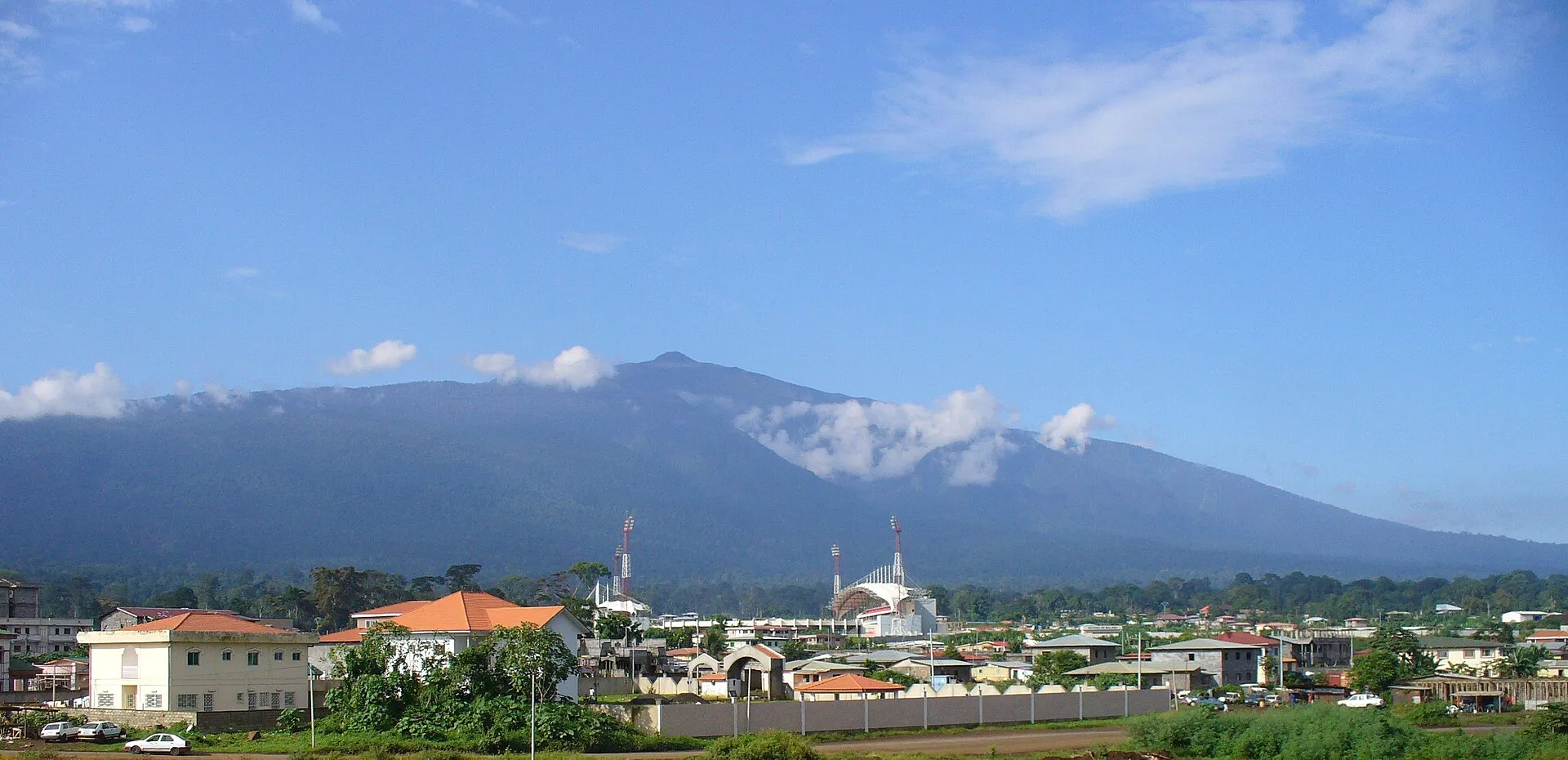 Photo: Jmhi / Wikimedia Commons (CC BY-SA 4.0)