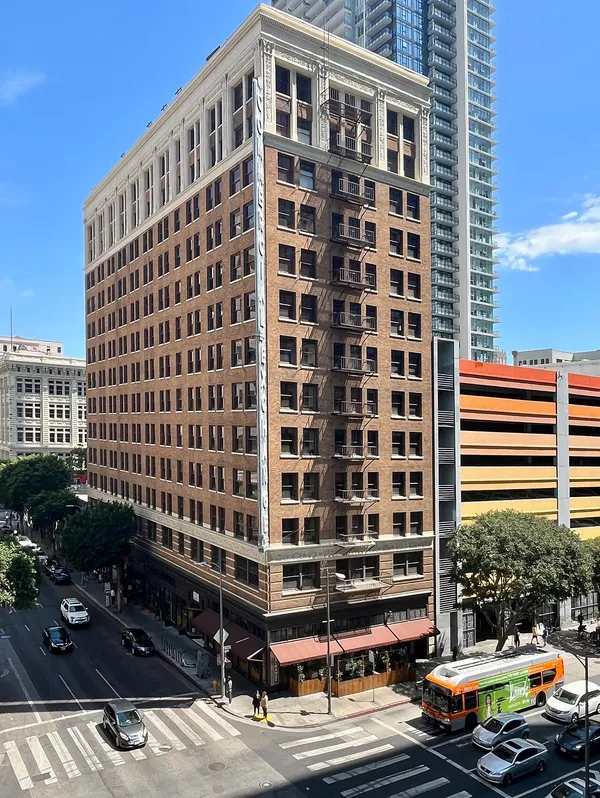
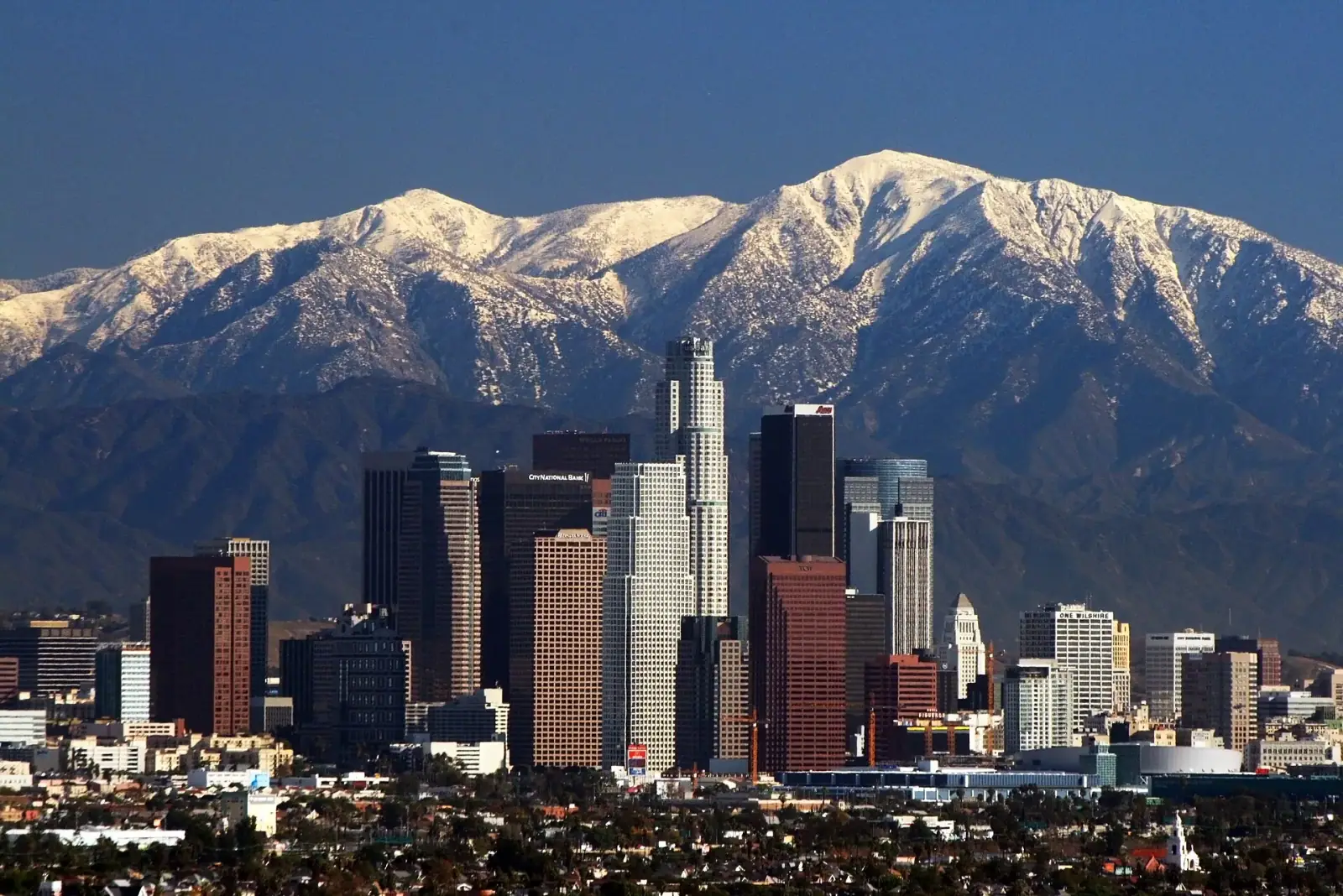
Downtown Los Angeles skyline with snow-capped San Gabriel Mountains in the background
Photo: Nserrano / Wikimedia Commons (CC BY-SA 3.0)
United States flag

Los Angeles

United States

Hollywood dreams and highway sprawl, taco trucks, canyon hikes, and eternal golden hour.

$5.000
Monthly Budget
--
Current Weather
Mediterranean
Climate Type
90 Mbps
Avg. WiFi Speed
5/10
Safety Score
5,000+
Active Nomads
--
Time Difference
Scroll
0
Nomad Score

A Remote Worker's Guide to Los Angeles

Hollywood dreams and highway sprawl, taco trucks, canyon hikes, and eternal golden hour. Plan on roughly $5,000 a month. Its strengths are English and climate, while cost is where it scores lower.

Compare Los Angeles vs San Diego →

Category Breakdown

How Los Angeles scores across all 13 factors

Weather in Los Angeles

Monthly averages from 2019-2023 (Open-Meteo), and the best time to visit

19°
Jan
20°
Feb
20°
Mar
24°
12°
Apr
25°
13°
May
28°
15°
Jun
31°
17°
Jul
32°
18°
Aug
31°
18°
Sep
28°
15°
Oct
24°
11°
Nov
19°
Dec
Daily high & low (°C)Rainfall (mm/month)Best months to visit

The best time to visit Los Angeles for comfortable weather is Jul, Aug, Sep. The warmest month is Aug (around 32°C by day), and the wettest is Dec (about 127mm of rain).

Chasing good weather? See other cities that are warm in Jul, or plan a multi-city route around the seasons. Staying a while in Los Angeles? Check visa options, your time-zone overlap and how far your budget stretches, or find it on the world map.

Historical monthly averages, not a forecast. Source: Open-Meteo.

Best Neighborhoods in Los Angeles

Where to base yourself for the perfect nomad experience

Silver Lake

$$$
Hipster & Creative

LA's hipster eastside heart

Silver Lake is LA's Brooklyn - hillside homes, indie coffee shops, and creative energy. It's where LA's alternative culture thrives away from Hollywood.

Best for: Creatives, musicians, and those seeking alternative LA
✓ Pros
  • Creative scene
  • Great coffee
  • Walkable areas
  • Sunset views
✗ Cons
  • Hilly
  • Limited parking
  • Expensive

Venice

$$$
Beach & Bohemian

LA's beach bohemian playground

Venice is LA's most eclectic beach community - boardwalk performers, Abbot Kinney boutiques, and canals. It's touristy but retains bohemian character.

Best for: Beach lovers, free spirits, and those seeking eclectic LA
✓ Pros
  • Beach access
  • Abbot Kinney
  • Canals
  • People watching
✗ Cons
  • Homeless issues
  • Touristy boardwalk
  • Parking nightmare

Downtown LA (DTLA)

$$$
Urban & Emerging

LA's urban renaissance hub

DTLA is LA's boldest transformation - Arts District warehouses, rooftop bars, and actual walkability. It's the new center of LA's urban culture.

Best for: Urban lovers, foodies, and those seeking walkable LA
✓ Pros
  • Arts District
  • Walkable
  • Great food scene
  • Rooftop bars
✗ Cons
  • Homeless crisis
  • Gritty areas
  • Hot summers

Los Feliz

$$$
Village & Creative

LA's laid-back creative village

Los Feliz is LA's most livable neighborhood - Griffith Park access, great restaurants, and relaxed vibe. It's where creative professionals settle down.

Best for: Long-term stayers, hikers, and those seeking neighborhood feel
✓ Pros
  • Griffith Park
  • Great restaurants
  • Village feel
  • Walkable
✗ Cons
  • Expensive
  • Limited nightlife
  • Parking

Santa Monica

$$$$
Beach & Upscale

LA's upscale beach perfection

Santa Monica is LA's polished beach city - famous pier, Third Street Promenade, and ocean air. It's touristy but offers the quintessential LA beach experience.

Best for: Beach lovers, families, and those seeking classic LA
✓ Pros
  • Beautiful beach
  • Great weather
  • Bike paths
  • Shopping
✗ Cons
  • Expensive
  • Touristy
  • Traffic to get there

Cost of Living in Los Angeles

Los Angeles is expensive, and there is no way to soften that. Housing is the single largest cost and it swallows most budgets. As of 2026, a one-bedroom apartment across the city averages roughly $2,500 a month, and in central, desirable areas like Downtown, Santa Monica, or the Westside you should plan on $2,700-3,200. Cheaper areas exist, but "cheaper" is relative here. Hollywood runs closer to $1,900-2,100, and further-out or inland neighborhoods can dip toward $1,500-1,800, though those savings usually cost you in commute time. Furnished short-term rentals and monthly Airbnbs command a premium on top of these figures.

Here is a realistic monthly breakdown for one person in USD:

  • Rent, central one-bedroom: $2,700-3,200
  • Rent, cheaper or further-out area: $1,500-2,000
  • Groceries: $400-600
  • Eating out: $300-600 (an inexpensive meal starts around $25, a mid-range dinner for two runs about $110)
  • Utilities and internet: $200-380 (electricity climbs in summer with air conditioning)
  • Coworking hot desk: $250-450, or roughly $29 a day drop-in
  • Transport: $100-150 on transit and ride-hailing if car-free, or $600-1,000 if you run a car (payment or rental, insurance, gas, and parking add up fast)

All in, expect $3,000-3,500 a month if you live lean, share housing, and skip the car, and $4,500-6,000 or more for a comfortable solo setup with your own place and a vehicle. LA rewards a real budget and punishes a casual one.

Where to Work

Coworking is plentiful and spread across the city, which matters because you will want a space near wherever you sleep. WeWork has more than twenty LA locations and sells day passes through its On Demand app for around $29, which is the easiest option if you move around. Industrious runs roughly nine locations with hot desks, dedicated desks, and private offices. Smaller independents worth knowing include Groundwork in the Arts District, which has a cafe feel with long communal tables and a quieter upper level for calls, and Studious in Chinatown, a calm, minimalist space built for focus.

Cafe-work culture is strong, especially on the Eastside (Silver Lake, Echo Park, Highland Park) and in Venice and Santa Monica. Independent coffee shops generally tolerate laptops outside peak hours, though the busiest spots discourage all-day squatting. WiFi in coworking spaces and most cafes is fast and reliable, and home fiber is widely available. If you take a lot of video calls, a coworking membership is worth it: cafe WiFi is fine for email but variable for meetings.

Getting Around

Los Angeles was built around the car, and that shapes daily life. Distances are large, neighborhoods are far apart, and traffic is genuinely bad at rush hour. Many nomads still rent or lease a car for the freedom, but be honest about the cost: payments or rental, insurance, gas, and parking easily run $600-1,000 a month.

Car-free is possible if you choose your base carefully. Metro rail and bus cover a growing share of the city, with a flat adult fare of $1.75 that includes two hours of transfers. The Metro network is best if you live and work near a rail line; it thins out fast in between. Buses fill the gaps but are slow. Ride-hailing through Uber and Lyft is everywhere and reliable, and it becomes the practical default for trips the rail does not serve, though the fares add up.

Getting to and from LAX got much easier in 2025 with the opening of the LAX/Metro Transit Center, which links the Metro C and K Lines to a free shuttle running to all terminals every ten minutes. An automated people mover connecting directly to the terminals is expected to further speed this up. If you are staying near a rail line, this makes an airport trip cheap and predictable. Otherwise, budget for a rideshare, which can be pricey during peak traffic.

Visas and Staying Long-Term

Citizens of the roughly forty countries in the US Visa Waiver Program, which includes most of Western Europe, the UK, Australia, New Zealand, Japan, and South Korea, can enter for tourism or business for up to 90 days without a visa. You must apply online for ESTA authorization before you travel (the filing fee rose to $40 as of late 2025) and hold an e-passport with a chip. The 90-day admission under the Visa Waiver Program cannot be extended, and it does not permit paid work for a US employer. If you are a US citizen or green card holder, none of this applies and you can stay indefinitely.

For longer stays, or if your country is not in the program, you will need a visa arranged in advance, and the categories that allow remote work are limited. Rules change and enforcement is strict, so confirm your exact situation with official US government sources (travel.state.gov and cbp.gov) before booking.

Best Time to Visit

LA has a mild Mediterranean climate with more than 280 sunny days a year and temperatures that rarely drop below 50F or climb above 95F. That makes almost any month workable, but some are clearly better. September and October are the sweet spot: warm days, clear skies, the warmest ocean of the year, and hotel prices below the summer peak. Late spring is also pleasant, with one caveat.

May and June bring the coastal marine layer that locals call "May Gray" and "June Gloom," gray overcast mornings that usually burn off to sun by early afternoon. It mostly affects the coast (Santa Monica, Venice), while inland areas stay sunny. July and August are hot, crowded, and the most expensive, and inland heat can be uncomfortable. For a productive remote-work stretch, September through November and March through May give you the best mix of weather, value, and calm.

Pros and Cons

  • Pro: Reliable sunshine and a mild climate almost year-round.
  • Pro: Deep coworking and cafe options with fast, dependable WiFi.
  • Pro: World-class food, beaches, hiking, and a huge creative and tech scene.
  • Pro: Easy 90-day entry for Visa Waiver Program travelers.
  • Con: High cost of living, driven by rent that starts around $2,000 even in cheaper areas.
  • Con: Sprawl and car dependence: without a car or a rail-adjacent base, life gets hard.
  • Con: Traffic at peak hours is genuinely time-consuming.
  • Con: Transit covers a growing but still incomplete share of the city.

Who Los Angeles Is Best For

LA suits nomads with a healthy budget who want sunshine, a serious creative or tech network, and a big-city lifestyle with beaches and mountains within reach. It works well if you settle into one walkable, rail-connected pocket (the Eastside, Santa Monica, or Downtown) rather than trying to do the whole sprawl, and it rewards longer stays where you build a routine over months.

Skip it if you are on a tight budget, want a compact walkable city, or dislike driving. Nomads chasing low costs or seamless public transit will be happier elsewhere. LA gives a lot, but it asks for money, a plan, and usually a set of car keys in return.

Where to Stay in Los Angeles

Top neighborhoods and accommodations for digital nomads

AKA West Hollywood

Serviced apartments
West Hollywood

Luxury furnished suites on the Sunset Strip with full kitchens, in-suite laundry, and fast WiFi for month-to-month stays.

Check availability →

Palihotel Melrose

Boutique hotel
Melrose

Intimate 33-room boutique hotel on walkable Melrose Ave with an on-site cafe, courtyard, and free WiFi in a creative neighborhood.

Check availability →

The LINE LA

Hotel
Koreatown

Mid-century boutique hotel in walkable Koreatown with an on-site coffee shop, pool, free WiFi, and city-view rooms for remote workers.

Check availability →

HI Los Angeles Santa Monica Hostel

Hostel
Santa Monica

Well-rated HI hostel steps from the beach with free WiFi, a quiet workspace, guest kitchen, and courtyard for solo nomads on a budget.

Check availability →

Browse apartments, aparthotels and hotels across Los Angeles. Compare prices and book a base that suits a remote-work stay.

See available stays in Los Angeles →

Affiliate link. See our disclosure.

Best Coworking Spaces

Where nomads get work done in Los Angeles

Cross Campus Santa Monica

Coworking space
Santa Monica

Tech-friendly coworking space near the beach with outdoor areas, meditation rooms, kombucha on tap, and a strong startup community.

Visit website →

Industrious Century City

Coworking space
Century City

Hospitality-grade coworking on the 17th floor with panoramic views, warm design, AV-equipped meeting rooms, and complimentary espresso.

Visit website →

WeWork 1150 S Olive St

Coworking space
Downtown LA

Three-floor WeWork in a 32-story Downtown tower with sunlit lounges, outdoor terrace, wellness room, private offices, and fast WiFi.

Visit website →

Alchemist Coffee Project

Laptop-friendly cafe
Koreatown

Specialty coffee shop with steampunk-inspired decor, reliable WiFi, ample power outlets, and a calm atmosphere popular with remote workers.

View on Maps →

Goodboybob Coffee Roasters

Laptop-friendly cafe
Santa Monica

In-house roaster cafe with an industrial coworking-hybrid vibe, strong WiFi, seasonal drinks, and a crowd of remote workers and freelancers.

Visit website →

Bricks and Scones

Laptop-friendly cafe
Larchmont Village

Two-story coffeehouse with a dedicated upstairs no-talking work room, individual desks, reading lamps, free WiFi, and a low-key daytime crowd.

View on Maps →

Where to Eat & Drink

Best food and drink spots in Los Angeles

Bestia

Italian
Arts District

Award-winning Arts District institution in a former warehouse serving house-made pastas, charcuterie, and wood-fired dishes by Chef Ori Menashe.

Visit website →
Mul naengmyeon (Korean cold noodle soup) with pajeon at Park's BBQ, Koreatown, Los Angeles

Photo: T.Tseng (CC BY 2.0)

Park's BBQ

Korean BBQ
Koreatown

Michelin-listed Koreatown institution serving USDA Prime and Kobe-style beef with attentive tableside service since 2003.

Visit website →
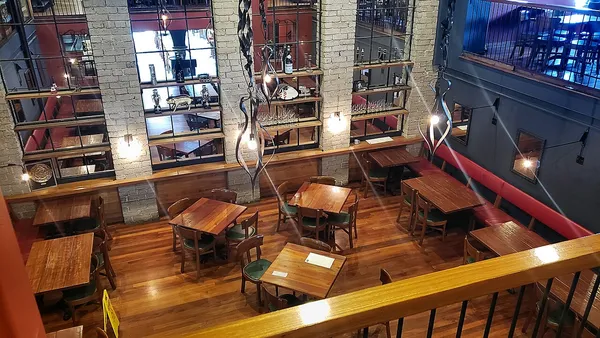
Interior dining room of République restaurant, Los Angeles, showing brick walls, mezzanine level, and warm industrial lighting

Photo: Eric Polk (Epolk) (CC BY-SA 4.0)

Republique

French-Californian
Miracle Mile

Michelin-recognized bistro in a 1929 Charlie Chaplin-built building, celebrated for all-day dining, James Beard-winning pastry, and soaring Gothic interiors.

Visit website →

Mirate

Mexican and bar
Los Feliz

Award-winning Mexican restaurant and mezcaleria named Best Bar in West USA 2025, with ingredient-driven food and a celebrated cocktail program.

Visit website →

Damian

Modern Mexican
Arts District

Enrique Olvera's Michelin-listed Arts District restaurant serving wood-fired seafood and seasonal Mexican dishes sourced from Baja California producers.

View on Maps →

The Roger Room

Cocktail bar
West Hollywood

Intimate West Hollywood cocktail bar from hospitality veterans Jared Meisler and Sean MacPherson, consistently rated among LA's best for craft drinks.

Visit website →

What Do Nomads Say?

Vote on how accurate these scores are based on your experience

Cities with a Similar Vibe to Los Angeles

Different places that score alike across our 13 categories, if you like Los Angeles, these tend to feel similar.

Frequently Asked Questions About Los Angeles

How much does it cost to live in Los Angeles as a digital nomad?

Budget roughly $5,000 a month in Los Angeles for a furnished place, food, coworking, and transport. The most popular central areas cost more; suburbs and local spots cost noticeably less.

Is the internet fast enough for remote work in Los Angeles?

Los Angeles rates 9 out of 10 for WiFi in our scoring, so it handles video calls and daily remote work excellent. Carry a local SIM with data as a backup for cafes and travel days.

Is Los Angeles safe for digital nomads?

Our safety score for Los Angeles is 5/10, workable for nomads. As anywhere, watch your belongings, favor busier streets after dark, and research neighborhoods before you book.

Is Los Angeles a good city for digital nomads overall?

Los Angeles stands out for English and climate among remote workers. With a typical budget near $5,000 a month and a growing nomad scene, it suits anyone whose priorities line up with those strengths.