Cost of Living in Erbil
Where this figure comes from. No cost survey covers Erbil, so the $900 a month above is our own estimate rather than a measurement. On 416 of our 999 city guides the figure is built from a published Numbeo basket, a one-bedroom rent in the centre plus one person's monthly costs without rent, converted to USD; this city is not one of them. How we source everything.
Budget around $900 a month. A one-bedroom runs roughly $250 to $500, with the areas near Empire World and the newer compounds considerably higher and aimed at the international sector. Market produce is cheap and Kurdish cooking makes good use of it. Imported goods are available and reasonably priced given the trade with Turkey. Eating out is inexpensive and the kebab and the breakfast culture are both excellent. Utilities cost more than the headline suggests because private generator subscriptions are normal alongside the grid. The Iraqi dinar is used and United States dollars circulate widely. Fibre runs about $50 to $100 a month. The generator subscription is the line nobody budgets for and it is not optional: households pay a neighbourhood operator by the ampere, typically $30 to $80 a month depending on how much you want to run during the daily grid outage, and air conditioning through an Erbil summer pushes that to the top of the range. International cards work in very little here, so the practical arrangement is dollars carried in and changed at a money exchange, which is normal, quick and gives a better rate than any bank counter.
Where to Work in Erbil
Connectivity is moderate. Erbil has fibre in the newer districts and the international compounds, with speeds workable for normal remote work, and mobile data covers the city. Power is the constraint rather than bandwidth: the grid does not supply full-time electricity and almost every building is also connected to a neighbourhood generator, which is billed separately and is simply how the city works. There is a small coworking scene. The time zone is three hours ahead of GMT, which gives a good European overlap. Anyone renting here should ask specifically about the generator subscription and its amperage, since that number determines what you can run during the daily grid outages. The Kurdistan Region has its own government, budget and security forces, and its relationship with Baghdad over oil revenue has repeatedly affected public salaries and services here, which is background worth understanding rather than an abstraction. Coworking is limited and clusters around the newer developments west of the citadel. English is more widely spoken here than anywhere else in Iraq, a consequence of two decades of international presence, and Kurdish rather than Arabic is the working language.
Getting Around Erbil
Erbil is built in concentric rings around the citadel mound, which makes the layout unusually easy to understand and the traffic unusually circular. Taxis are cheap and plentiful and are the normal way to move, with ride-hailing apps available. The bazaar and Shar Park at the foot of the citadel are walkable. Erbil International Airport is about five kilometres west with connections to Istanbul, Dubai, Doha, Frankfurt and much of the region, and it has been the Kurdistan Region's link to the world for two decades. Anyone driving to Sulaymaniyah or Duhok should expect checkpoints along the way, which are routine, orderly and require a passport rather than causing any difficulty. The citadel itself has been almost entirely emptied for restoration, with a single family maintained in residence so the claim of continuous habitation is not broken, which is a decision that tells you a good deal about how seriously the site is taken.
Sorting transport? Book an airport transfer, or compare car rental on Auto Europe and QEEQ.
Visas for Erbil
The Kurdistan Region issues its own entry permits separately from the federal Iraqi government, and they are considerably easier to obtain. Citizens of the European Union, the United Kingdom, the United States and a number of other countries receive a visa on arrival at Erbil or Sulaymaniyah, valid for thirty days and extendable. A Kurdistan Region permit does not automatically allow travel to federal Iraq, which requires a separate federal visa. There is no remote work visa. Both regimes have changed repeatedly. Anyone intending to continue to Baghdad or the south should arrange the federal visa separately and in advance, since the regional permit does not cover that travel. Extensions are handled at the residency office in Erbil and are routine for a further thirty days. The regional permit is issued on arrival for eligible nationalities and does not require anything in advance, which is the single biggest practical difference from federal Iraq.
Best Time to Visit Erbil
March to May and October to November are the best windows, warm at around twenty five degrees, with the spring bringing green hills across the region that surprise people who expect only desert. Summer from June to September is severe, regularly above forty five degrees, and the city largely moves indoors or to the mountains at Shaqlawa and Rawanduz. Winter is cool and wet at around ten degrees with snow in the mountains. Newroz, the Kurdish new year on the twenty first of March, is the biggest event of the year. Shaqlawa and Rawanduz in the mountains north are ten to fifteen degrees cooler than the city in summer, and a good part of Erbil relocates there for weekends through July and August rather than enduring the heat. Newroz is marked with fires on the hillsides and a public holiday that closes the region for several days, and Akre north of the city holds the largest celebration in Kurdistan.
Pros and Cons of Erbil
The citadel mound has been continuously occupied for perhaps six thousand years, which makes it one of the oldest inhabited sites on earth and UNESCO-listed on that basis, and it sits above a working bazaar in a city that is genuinely calm and, by regional standards, inexpensive. The mountains north are beautiful. This is still Iraq, and while the Kurdistan Region has been far more stable than the rest of the country, the security situation is regional and changeable. Erbil's bazaar at the foot of the citadel is a working market rather than a restored one, and the tea houses around it are where the city's social life actually happens, which is the thing most visitors remember. The region also runs its own visa regime, budget and peshmerga forces, which is why its stability has diverged so sharply from the rest of the country over twenty years.
Who Erbil Is For
Energy, reconstruction, diplomacy or humanitarian work, of which there is a considerable amount, and archaeology, since the region holds an extraordinary density of sites. It suits travellers drawn to Kurdish culture and hospitality, which is genuine and much remarked on. The security picture in this region changes and needs watching rather than assuming, uninterrupted mains power does not exist here, and high summer in the Kurdish plain is a season to leave rather than to work through. Mesopotamian archaeology is reopening here after a long closure. Nineveh, Nimrud and a dozen other sites sit within a few hours of the city and are slowly becoming accessible to researchers again. Oil and gas is the one sector with genuine depth. The region's fields and the international companies working them have made this city the industry's base for the whole of northern Iraq, and the professional network on the ground reflects that exactly. Set beside Sulaymaniyah, Erbil has the international flights and the business, while Sulaymaniyah has the reputation for culture and a more liberal feel.
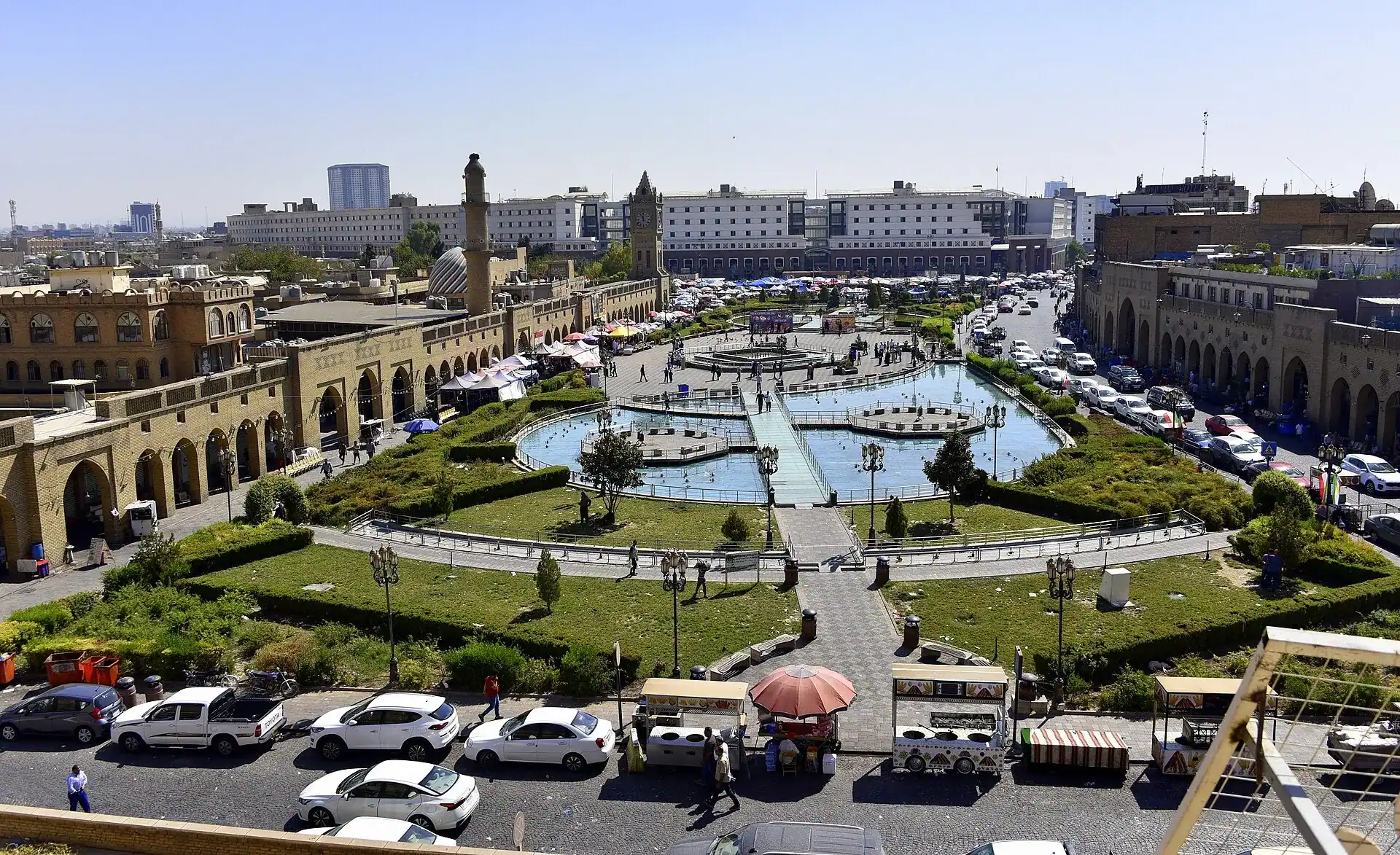 Photo: Osama Shukir Muhammed Amin FRCP(Glasg) / Wikimedia Commons (CC BY-SA 4.0)