Cost of Living in Sanliurfa
Where this figure comes from. No cost survey covers Sanliurfa, so the $600 a month above is our own estimate rather than a measurement. On 416 of our 999 city guides the figure is built from a published Numbeo basket, a one-bedroom rent in the centre plus one person's monthly costs without rent, converted to USD; this city is not one of them. How we source everything.
Budget around $600 a month as a solo remote worker in Sanliurfa, which is among the cheapest figures anywhere on this site and reflects a large southeastern Turkish city with almost no international demand on its housing. A one-bedroom flat runs roughly $150 to $300 depending on the district, and the newer developments away from the old centre are the better value. Food is remarkably cheap and remarkably good, built on the local kebab tradition and the isot pepper that defines it. Turkish inflation moves these numbers constantly, so treat the figure as a working budget. This is our own estimate rather than measured data. Fibre runs about $10 to $20 a month at good speeds, which is among the best value on this site. The lira's decline means rents quoted in it can be renegotiated upward mid-lease, a normal Turkish practice rather than a landlord acting badly, and anyone signing for a year should expect the conversation. Eating out is cheap enough that cooking for one rarely saves money here. Rents in Karakopru and the newer northern districts run below the old city and come with better wiring and cooling, which matters more here than character does.
Where to Work in Sanliurfa
Sanliurfa has no coworking scene aimed at foreigners, though the city is large enough to have business centres and university facilities serving its own economy. Fibre reaches most of the modern districts and Turkish mobile data is fast and cheap, which is the practical answer for most people. English is very limited outside the archaeological tourism around Gobekli Tepe, and Arabic is widely spoken given the city's large Syrian population. Anyone working here should expect to do daily business in Turkish. Power and water are reliable, though summer demand on air conditioning is heavy across the whole region. Turkey sits three hours ahead of GMT year-round since it abandoned daylight saving in 2016, which gives a full European overlap and an early-afternoon window with the American east coast. The city's large Syrian population also means Arabic is genuinely useful here in a way it is not elsewhere in Turkey. The university is large and its archaeology department is closely tied to the excavations, which is the one professional network here that a foreigner might plausibly join.
Getting Around Sanliurfa
Sanliurfa is a spread-out city of two million and the old centre around Balikligol is the only genuinely walkable part, which is where most visitors spend their time anyway. City buses and dolmus minibuses cover the rest cheaply, and taxis are inexpensive by any standard. Gobekli Tepe is about twenty minutes out by road and needs a taxi or a tour; Karahan Tepe, the newer excavation, is further out and harder to reach. Sanliurfa airport has domestic flights to Istanbul and Ankara. Summer heat makes walking anywhere in the middle of the day genuinely unpleasant from June onwards. Gobekli Tepe is covered by a permanent shelter and boardwalk and takes about ninety minutes to see properly. Harran, with its distinctive beehive mud-brick houses and the ruins of one of the oldest universities in the Islamic world, is an hour south and usually combined with it. Nemrut Dagi, with its giant stone heads on a mountain summit, is three hours north and is usually done as an overnight rather than a day trip.
Sorting transport? Book an airport transfer, or compare car rental on Auto Europe and QEEQ.
Visas for Sanliurfa
Turkey gives most Western nationals ninety days in any hundred and eighty, either visa-free or through a quick e-visa. The Digital Nomad Identification Certificate is the first step towards Turkey's Digital Nomad Visa: it is open to graduates aged 21 to 55 from a defined list of countries who earn $3,000 a month from a company outside Turkey, and with it in hand you apply for the visa itself at a Turkish consulate. Residence permits have become considerably harder to obtain, with many districts closed to new foreign registration once a quota is reached. Anyone planning to stay past the visa-free window should research the specific district rather than the country as a whole. Turkey issues a foreigner identity number alongside any residence permit, and it is what actually unlocks daily life, because banks, mobile operators, the health system and the tax office all key off that number rather than off a passport, so obtaining it is the milestone that matters rather than the permit card itself.
Best Time to Visit Sanliurfa
March to May and October to November are the only comfortable windows. Sanliurfa sits on the edge of the Mesopotamian plain and summer is severe, regularly above forty degrees through July and August with nights that stay warm, and it shapes everything about how the city runs in those months. Spring brings the plain briefly green and is the best time to see the archaeological sites without suffering for it. Winter is cool and can be wet, with daytime temperatures around ten degrees, and it is a perfectly workable season for anyone who does not mind grey. The isot pepper that defines the local cooking is sun-dried on rooftops through late summer, which is visible across the city in August and is the one thing worth being here in the heat for. Ramadan changes the rhythm of the whole city, with daytime eating restricted in public and the evenings coming alive after sunset, and it moves earlier each year.
Pros and Cons of Sanliurfa
Sanliurfa is next door to Gobekli Tepe, the eleven-thousand-year-old site that rewrote the timeline of monumental building, with Karahan Tepe and a dozen related excavations across the same plain. The old city around the Pool of Abraham is one of the most atmospheric places in Turkey, the food is exceptional and the cost of living is extraordinarily low. It is conservative, it is very hot, has essentially no international community, and English is rare. The Syrian border is around fifty kilometres away, which is worth understanding in context rather than as an alarm, and government travel advice for the region should be read directly. Gobekli Tepe predates pottery, metal and the wheel, and only a small fraction of the site has been excavated, which means the picture it gives of the Neolithic is still actively changing rather than settled. Balikligol, the pool of sacred carp beside the Halil-ur-Rahman mosque, is a genuine pilgrimage site rather than an attraction, and behaves like one.
Who Sanliurfa Is For
A serious interest in archaeology or the ancient Near East, a wish to be near the sites rather than visiting them on a tour, and the ability to operate in a city that has not adapted itself for outsiders. The cost of living makes a long research stay unusually affordable. No foreign community exists here, alcohol is effectively unavailable in a conservative province, and the social environment is one to adapt to rather than one that will adapt. Anyone sensitive to heat should not consider the summer months here at all, whatever else the trip has going for it. Humanitarian work is the profession this city genuinely accommodates. It hosts one of the largest displaced populations in Turkey, and the concentration of organisations working on the Syrian response is here because of that. Put it beside Gaziantep and Sanliurfa is cheaper, hotter, more conservative and considerably closer to the sites.
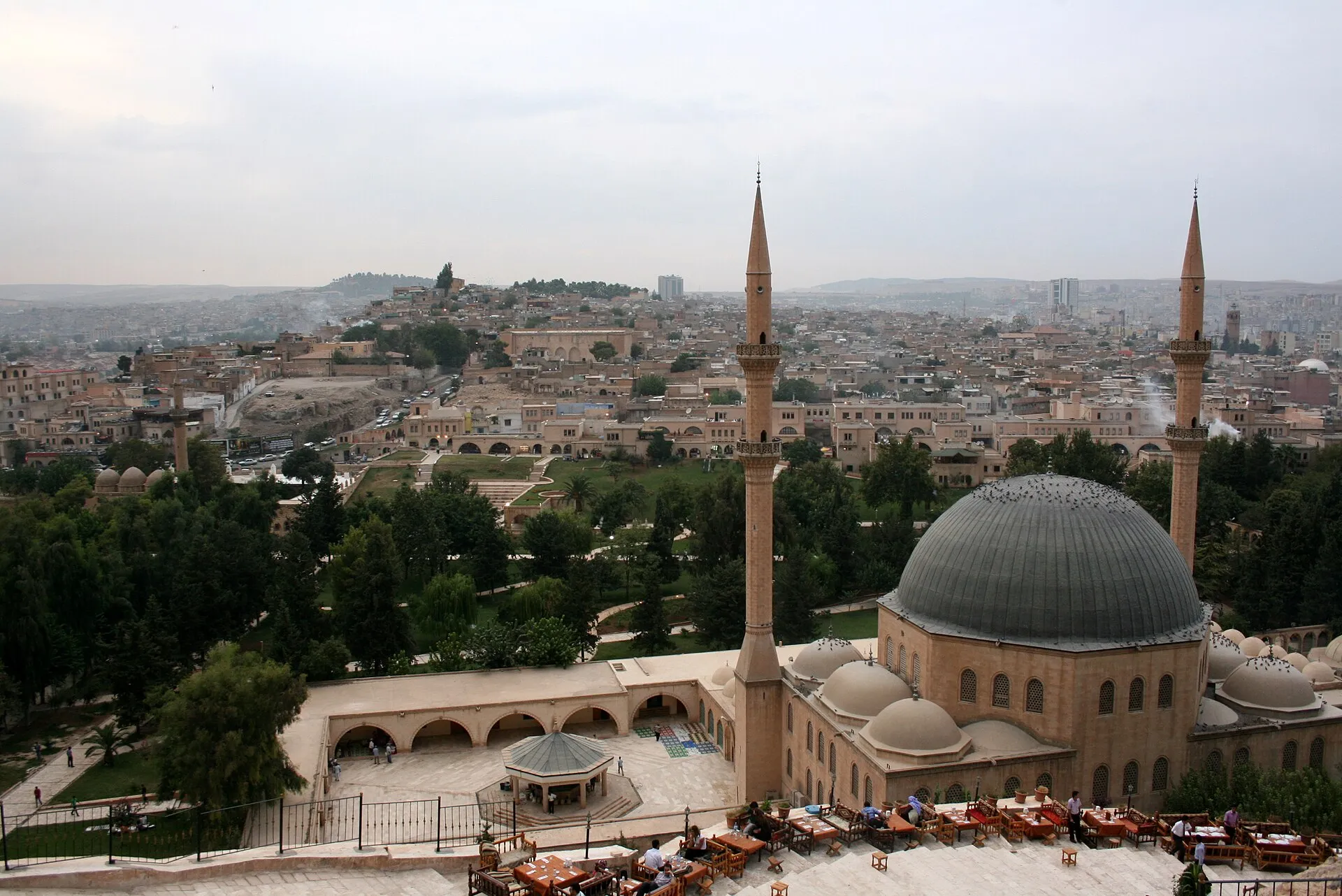 Photo: Damien Halleux Radermecker / Wikimedia Commons (CC BY-SA 2.0)