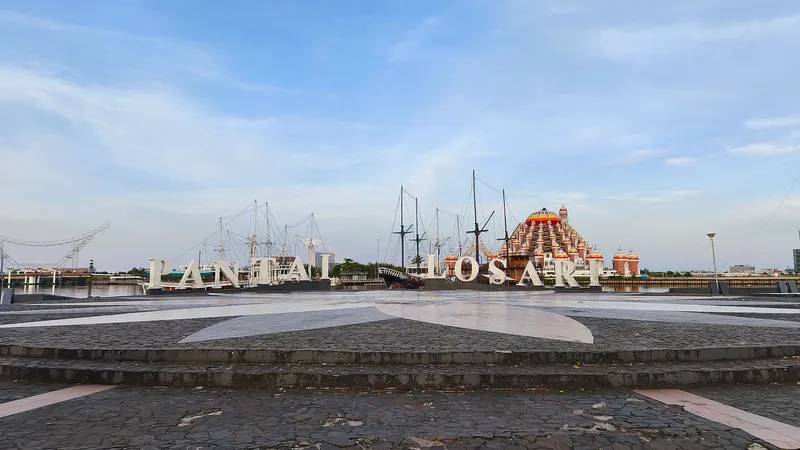
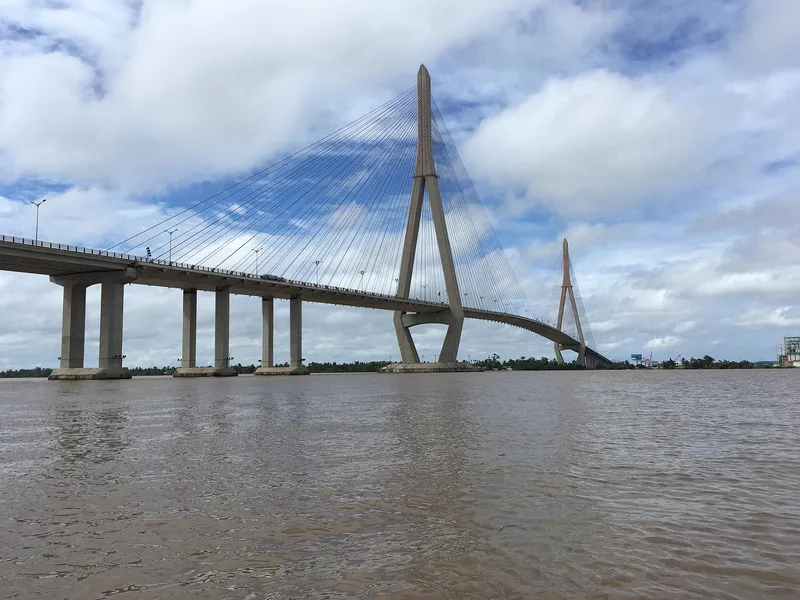
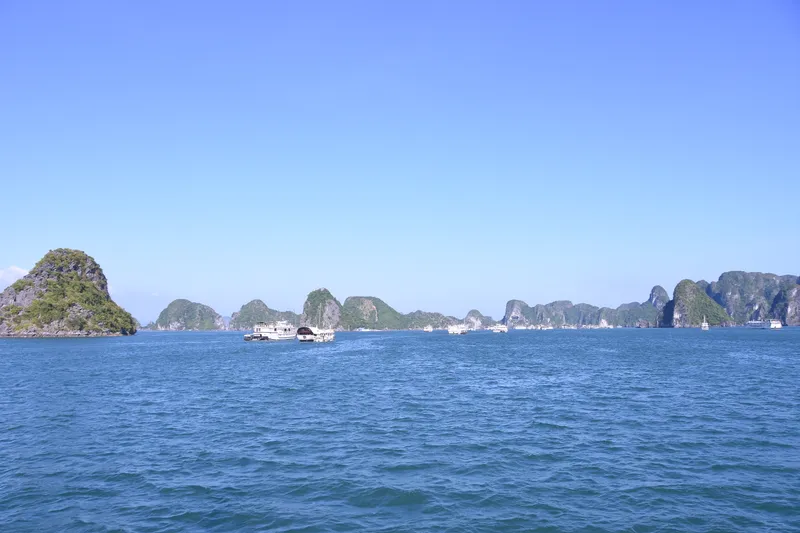
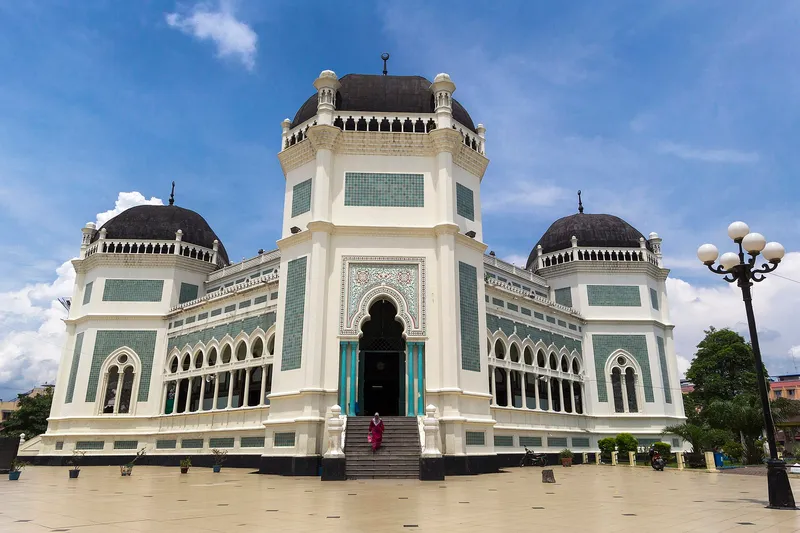
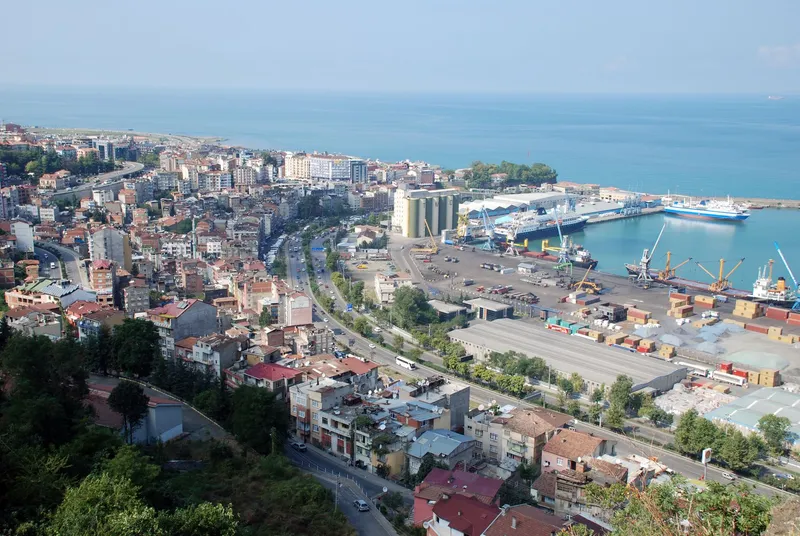
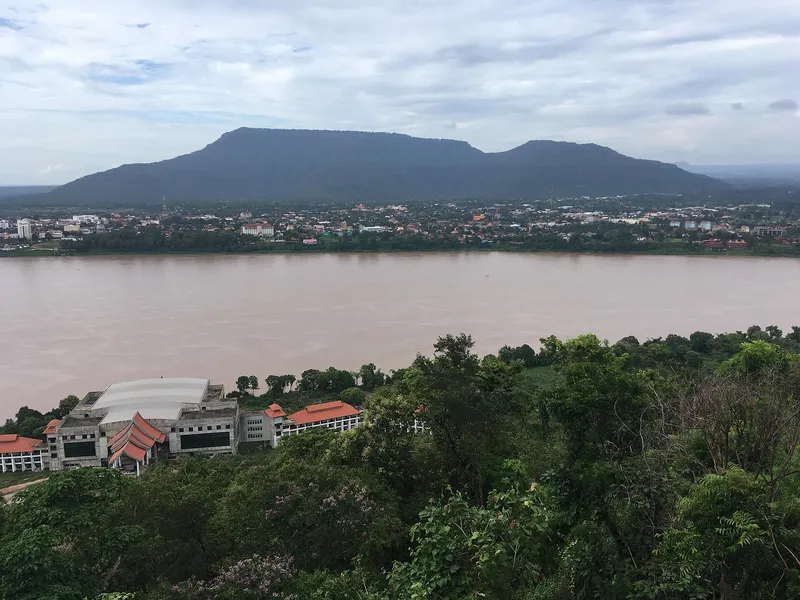
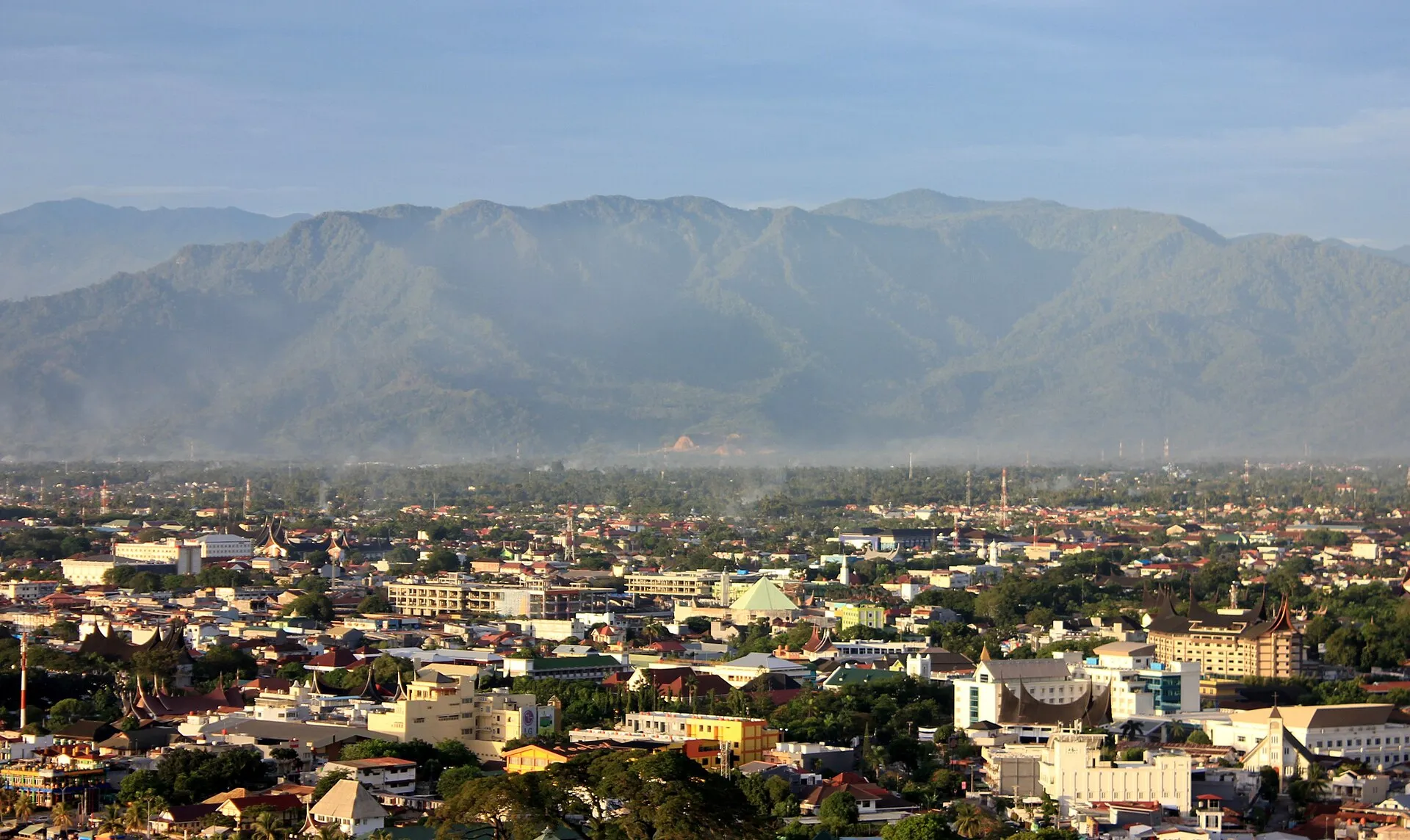
Padang with the hills of West Sumatra behind it
Photo: Zhilal Darma / Wikimedia Commons (CC BY-SA 4.0)
Indonesia flag

Padang

Indonesia

The home of Indonesia's most famous cooking, and the boat out to the Mentawai swell.

$600
Monthly Budget
--
Current Weather
Tropical Rainforest
Climate Type
6/10
WiFi Score
6/10
Safety Score
UTC+7
Timezone
0
Nomad Score

Setting Up as a Nomad in Padang

The home of Indonesia's most famous cooking, and the boat out to the Mentawai swell. Plan on roughly $600 a month. Its strengths are low costs and food, while the size of the nomad scene is where it scores lower.

Nomad Facts at a Glance

The practical basics for Padang, Indonesia

CurrencyRupiah (Rp, IDR)
LanguageIndonesian
Plugs & powerType C/F · 230V / 50Hz
Tap waterBottled or filtered
TippingNot expected; round up
Ride-hailingGojek, Grab
Emergency112
Mobile dataeSIM: Airalo / Holafly
Driving sideLeft
Dialling code+62
Time zoneUTC+7
Best time to visitFeb, May, Jun

Country-level guidance to get you oriented, not a substitute for checking locally. Numbers and norms can change; 112 reaches emergency services from most mobiles worldwide.

Category Breakdown

How Padang scores across all 13 factors

Padang's Nomad Score is 5.4 out of 10, from 13 category ratings (each out of 10): Climate 6, Cost of Living 9, WiFi 6, Nightlife 3, Nature 8, Safety 6, Food 9, Nomad Community 2, English 4, Visa Ease 6, Culture 7, Cleanliness 4, Air Quality 6.

Weather in Padang

30-year monthly averages (1991-2020) from a local weather station, and the best time to visit

31°
23°
Jan
31°
23°
Feb
32°
23°
Mar
31°
24°
Apr
32°
24°
May
31°
23°
Jun
31°
23°
Jul
31°
23°
Aug
30°
23°
Sep
30°
23°
Oct
30°
23°
Nov
31°
23°
Dec
Daily high & low (°C)Rainfall (mm/month)Best months to visit

The best time to visit Padang for comfortable weather is Feb, May, Jun. The warmest month is Mar (around 32°C by day), and the wettest is Nov (about 469mm of rain).

Chasing good weather? See other cities that are warm in Feb, or plan a multi-city route around the seasons, or search flights when you are ready to move. Staying a while in Padang? Check visa options, your time-zone overlap and how far your budget stretches, or find it on the world map.

Climate normals for 1991-2020 measured at the Padang / Tabing weather station, 10 km away. Historical averages, not a forecast. Source: Meteostat and its data providers (CC BY 4.0).

Best Neighborhoods in Padang

Where to base yourself for the perfect nomad experience

Kota Tua and Muaro

$
Historic & Riverside

The Dutch old town by the river mouth

Padang's historic quarter along the Batang Arau where the colonial trading houses and the Chinatown shophouses still stand, some restored and many not. The fishing harbour is at the end of it and the hill of Gunung Padang rises across the water. It is the most atmospheric part of the city.

Best for: Stays that want the old town and the harbour rather than a modern district
Pros
  • Colonial and Chinatown architecture along the river
  • Fishing harbour and boats to the Mentawais nearby
  • Cheap and central
Cons
  • Many buildings are in poor repair
  • Low-lying and prone to flooding in heavy rain
  • Limited modern services

Padang Barat and the City Centre

$$
Central & Practical

The commercial core, banks, markets and the mosque

The central business district around Pasar Raya market and the Grand Mosque of West Sumatra, holding the banks, the offices, the main shops and the transport connections. It is where practical business gets done and where most of the mid-range accommodation sits.

Best for: Anyone who needs banks, markets and transport within a short ride
Pros
  • All services, banks and the main market close by
  • Best internet connectivity in the city
  • Widest choice of rooms and apartments
Cons
  • Heavy traffic and noise
  • Very little green space
  • Flooding during the worst of the rain

Purus and the Beachfront

$$
Beachfront & Social

Along Padang beach, where the city watches the sunset

The strip along the city beach, with a wide promenade, food stalls and the sunset crowd that gathers every evening. The sea here is rough and not for swimming, but the walk is the city's main public space and there are guesthouses and small hotels along it.

Best for: Stays that want the promenade and the sunset as the daily routine
Pros
  • Long seafront promenade and evening food stalls
  • Sea breeze and more open air than the centre
  • Walking distance to the city centre
Cons
  • The sea here is unsafe for swimming
  • Directly exposed in a tsunami zone
  • Traffic on the coast road

Air Tawar and the University District

$
Student & Cheap

North of the centre, around Universitas Negeri Padang

The northern district built around the state university, with student boarding houses, cheap warungs and a young population. Rents are the lowest in the city and it sits on higher ground than the coastal strip, which locally is a consideration that matters.

Best for: Budget stays wanting student prices and higher ground
Pros
  • The cheapest rooms in Padang
  • Dense cheap eating around the campus
  • Higher ground than the seafront
Cons
  • Twenty minutes into the centre
  • Very little English
  • Basic accommodation standards

Bungus and the Southern Coast

$
Coastal & Quiet

A quiet bay south of the city, with boats to the islands

A sheltered bay about twenty kilometres south where the coast road runs between hills and sea, with fishing villages, calm water suitable for swimming and boats out to the small islands offshore. It is quiet, green and a long way from the city's traffic.

Best for: Stays that want calm water and hills, with the city at arm's length
Pros
  • Sheltered bay with water calm enough to swim
  • Boats to the offshore islands
  • Green hills and genuinely quiet
Cons
  • Thirty to forty minutes into Padang
  • Very limited services and connectivity
  • Transport depends on your own vehicle

Cost of Living in Padang

Where this figure comes from. No cost survey covers Padang, so the $600 a month above is our own estimate rather than a measurement. On 416 of our 999 city guides the figure is built from a published Numbeo basket, a one-bedroom rent in the centre plus one person's monthly costs without rent, converted to USD; this city is not one of them. How we source everything.

Budget roughly $600 a month as a solo remote worker in Padang, which makes it one of the cheapest cities in this index. A one-bedroom house or apartment near the centre runs about $180 to $300, and rooms in a kos boarding house go for $80 to $150. Groceries land around $130 to $180. A plate of nasi Padang, the food this city exported to the whole of Indonesia, is $2 to $4 and comes with as many dishes as you point at. A restaurant dinner is $6 to $10. A motorbike rental is $50 to $80 a month. Utilities add $40 to $90, mostly fans and refrigeration; few buildings have air conditioning throughout. The way nasi Padang is billed catches people out: in the hidang style the waiter covers the table with a dozen small plates and you pay only for what you touch, so the meal costs whatever your restraint allows. A kos room is quoted by the month and usually covers water and cleaning but not electricity, and a foreigner will usually be quoted for the full month rather than a week.

Where to Work in Padang

Padang has essentially no coworking infrastructure and remote workers here work from their accommodation. The practical question is the connection: Indonesian fixed-line fibre has reached the city and is workable in the better buildings, but quality varies sharply by address and testing before signing is essential rather than cautious. Mobile 4G coverage in Padang is reasonable and data is very cheap, so most people keep a large data package as a fallback. Power cuts happen. Andalas University keeps a student population and supports some cafes with wifi, though few are set up for all-day working, and English is limited outside the university and the surf trade. Merantau is the Minangkabau institution that explains why this city feels smaller than its population: young people are expected to leave and make their way elsewhere, which is how the cooking reached every Indonesian city and why the professional layer here is thinner than in a comparable town on Java. The people who stay are in government, the university and the trades, so a remote worker is not joining a local market so much as sitting beside one.

Getting Around Padang

Padang is flat along the coast with hills rising behind, and a motorbike is the standard way to move; the city is too spread out to walk between districts. Angkot minivans run fixed routes for well under a dollar and are loud, decorated and cheap. Ride-hailing apps, Gojek and Grab, are widely used and inexpensive, and are the easiest option for a newcomer. Minangkabau International Airport is about 45 minutes north with flights to Jakarta and Kuala Lumpur. The real reason many foreigners are here is the boat out to the Mentawai Islands, four to twelve hours depending on the vessel, for some of the most consistent surf in the world. The city is laid out with the sea on one side and evacuation in mind on the other: green and white route signs point inland at most junctions, and several public buildings are built as vertical shelters with open upper floors. Learning which way the arrows point is the first orientation exercise here rather than an afterthought. The road inland to Bukittinggi climbs through the Anai valley past a waterfall beside the carriageway and takes about two hours.

Sorting transport? Book an airport transfer, or compare car rental on Auto Europe and QEEQ.

Visas for Padang

Indonesia grants many Western passports a visa on arrival valid for 30 days and extendable once for a further 30, and also operates an e-VOA obtained online. For longer stays the B211A social or business visa, granting 60 days and extendable to 180, has long been the route remote workers use. Since 2024 Indonesia has also run a dedicated remote-worker visa, the E33G, for employees of foreign companies earning at least USD 60,000 a year. Working for foreign clients on a tourist or social visa sits in the usual grey area. Immigration procedure is bureaucratic and most long-stayers use an agent, which is normal practice and inexpensive. Indonesian immigration counts an extension in working days rather than calendar days, and the visa on arrival extension means three visits to the office across about a week, which is why an agent is standard practice. West Sumatra has far fewer agents used to handling foreigners than Bali does, so arranging one before arriving saves more time here than it would there. Overstay is charged by the day at a fixed rate and settled at the airport rather than argued.

Best Time to Visit Padang

Padang sits on the equator on Sumatra's west coast and is one of the wettest cities in Indonesia, with rain in every month and no true dry season. The relatively drier stretch is roughly May to September, which is also the main Mentawai surf season when the Indian Ocean swells arrive, and that is when most foreign visitors come. October to March is wetter, with heavy afternoon and evening downpours. Temperatures barely move, sitting around 31 degrees with high humidity all year. This coast is seismically very active, sitting on the Sunda megathrust, and both earthquakes and tsunami risk are real considerations that the city plans around openly. The seismic point is more specific than a general warning: the Mentawai segment of the fault is a recognised gap that has not ruptured fully since the nineteenth century, and both Indonesian and international agencies treat a large event there as a question of when rather than whether. That changes nothing about which season to choose, but it changes which floor you want to sleep on and whether you look at the way out of a building before unpacking in it.

Pros and Cons of Padang

Padang offers extraordinary value, the best-known regional cooking in Indonesia, and the gateway to the Mentawai Islands, which is the reason most foreigners come. The Minangkabau highlands around Bukittinggi are two hours inland and are among the most beautiful landscapes in Sumatra. Costs are very low and the airport connects to Jakarta and Kuala Lumpur. Infrastructure is basic, the connection is the thing to test before you commit to a month, and it rains hard all year round. There is no foreign or nomad community in the city itself. Seismic and tsunami risk is genuine here. West Sumatra is culturally conservative and alcohol is not readily available. Rendang comes from these highlands, and the dry-cooked version keeps for weeks without refrigeration, which is why it travelled with the merantau and became the dish Indonesia is best known for abroad. The counterweight nobody puts in a food paragraph is the alcohol position: the province applies regulations rooted in adat and Islamic law together, the local formula being that custom rests on scripture, and a visitor expecting the Bali arrangement will find a different country entirely.

Who Padang Is For

Surfers who want to be near the Mentawais without paying resort prices, and whose work tolerates a variable connection, are the audience. Minangkabau culture is matrilineal and quite unlike Java's, which is reason enough for a good many people to come. Sumatra's highlands start not far inland, and the city is the way into them. It works as a base for a surf season rather than as a year-round home for most people. Reliable internet is the standing problem, nothing that could be called a scene has formed among foreigners, West Sumatra is socially conservative in ways worth understanding beforehand, and the seismic risk is real rather than theoretical. Bali and Canggu have the community and the infrastructure at several times the price. It suits an anthropologist or anyone who reads about kinship, because the Minangkabau are the largest matrilineal society on earth and the arrangement is living practice rather than a survival: land and the clan name descend through women while men hold the public offices, and the tension between that and Islamic inheritance law is an argument the culture has been having for two centuries. It suits a photographer with time, since the highland villages and their horned rooflines are two hours away and largely unvisited.
Where to Stay in Padang

Top neighborhoods and accommodations for digital nomads

We have not yet verified specific places to stay in Padang. When we list one it will name the source we checked it against, the same as every other figure on this page, and until then we would rather show nothing than a name we have not confirmed. The neighbourhood guide above says which parts of the city to look in, which is the more useful half of the answer anyway.

Best Coworking Spaces

Where nomads get work done in Padang

We have not yet verified specific coworking spaces in Padang. When we list one it will name the source we checked it against, the same as every other figure on this page, and until then we would rather show nothing than a name we have not confirmed. The guide sections above cover what working from Padang is actually like, including connection speeds and cafe culture.

Where to Eat & Drink

Best food and drink spots in Padang

We have not yet verified specific places to eat in Padang. When we list one it will name the source we checked it against, the same as every other figure on this page, and until then we would rather show nothing than a name we have not confirmed. The guide sections above cover what eating in Padang costs and what the city is known for.

Cities with a Similar Vibe to Padang

Different places that score alike across our 13 categories, if you like Padang, these tend to feel similar.

In the rankings

Where Padang ranks

Padang features in 1 of our 32 city rankings.

  1. 14Best cities in Indonesia→
  2. Best cities in Asia→

A comfortable solo budget in Padang is about $600/mo, one of the more affordable bases for nomads.

Frequently Asked Questions About Padang

How much does it cost to live in Padang as a digital nomad?

A comfortable nomad budget in Padang is around $600 a month, covering a furnished rental, food, coworking, and getting around. You can spend less by living outside the center and eating local, or more in the most popular neighborhoods.

Is the internet fast enough for remote work in Padang?

Padang rates 6 out of 10 for WiFi in our scoring, so connectivity is average for video calls and everyday remote work. A local SIM with a data plan is a smart backup for cafes, coworking, and travel days.

Is Padang safe for digital nomads?

Padang scores 6 out of 10 for safety in our ratings, which is average for solo travelers and long stays. Use the usual precautions with valuables and at night, and favor well-reviewed neighborhoods when you choose where to stay.

Is Padang a good city for digital nomads overall?

Padang stands out for affordability and its food scene among remote workers. With a typical budget near $600 a month and a growing nomad scene, it is worth a look if those priorities match what you want from a base.