Cost of Living in Kilkenny
Real market data
Source: Numbeo · September 2026
$2,320/moSolo nomad1-bed centre + living costs
$2,940/moCoupleshared 1-bed + costs
$2,070/moLean / localcheaper area + costs
- 1-bed rent, city centre$1,550€1,350
- 1-bed rent, outside centre$1,300€1,133
- Monthly costs excl. rent (1 person)$770€667
- Meal, inexpensive restaurant$17€15
- Buy price, per m² (centre)$8,350€7,250
Prices are from Numbeo (September 2026), converted to USD at $1 = €0.87 (01 Aug 2026). The monthly living-costs figure is our transparent one-person basket, groceries, a few meals out, utilities, phone, internet, transport and essentials, priced from those figures. Solo adds central rent; couple and lean are estimates from the same numbers.
Budget around $2,320 a month. A one-bedroom runs roughly $800 to $1,200, and Ireland's housing shortage is the defining economic fact here as everywhere in the country, with supply tight and rents having risen sharply over the past decade. Groceries are expensive by European standards. Eating out is expensive, though Kilkenny has an unusually good restaurant scene for a town of its size. Utilities are moderate and heating runs through a mild damp winter. Local property charges apply to owners rather than renters, unlike the British system. Anyone comparing with Dublin should note that rents here run well under half the capital's, which is the main reason people have moved out along the railway line. Deposits are capped at one month and tenancies must be registered with the state board, which gives a tenant somewhere to go when a deposit is not returned. Many houses outside the town run on heating oil or solid fuel rather than gas, so heating means buying a delivery rather than paying a bill. Electricity here is among the dearer in Europe, and an old house with poor insulation turns that into a serious winter number.
Where to Work in Kilkenny
Connectivity is good. Fibre reaches most of Kilkenny at reasonable speeds and mobile coverage is comprehensive, with reliable power. Ireland's National Broadband Plan has extended fibre well into rural areas around the town. There is coworking, and the government has funded a network of remote working hubs across the country as a deliberate policy of moving jobs out of Dublin, several of which are within reach. The time zone is GMT with Irish standard time, which serves Europe in the afternoon and North America comfortably in the evening. Anyone considering one of the state-funded remote working hubs should look at the Connected Hubs network, which lists them nationally and is genuinely well organised. Employees working from home can claim relief on a share of heat, electricity and broadband, set out in the tax code rather than left to an employer's goodwill. The hubs the state funded came with a national booking system, so a desk in one town works exactly like a desk in another. The practical limit here is that the professional community is small enough that everyone in it already knows everyone else.
Getting Around Kilkenny
Kilkenny is small and entirely walkable, with the castle at one end of the Medieval Mile and St Canice's Cathedral at the other, and the whole route takes twenty minutes. Buses cover the town and the region. The railway runs to Dublin in about ninety minutes and to Waterford in forty. Dublin Airport is roughly two hours by road or by direct bus. A car helps for reaching the countryside, and the Nore valley, Jerpoint Abbey and the Wicklow mountains are all within reach. Anyone walking the Medieval Mile should pick up the trail map, since the route links the castle, the cathedral and a dozen buildings that are easy to walk past unnoticed.
Sorting transport? Book an airport transfer, or compare car rental on Auto Europe and QEEQ.
Visas for Kilkenny
Ireland is a member of the European Union but not of the Schengen area, so it operates its own visa system: European Union and EEA citizens may live and work here with no permit, and most Western nationalities enter visa-free for ninety days. Ireland is not in Schengen, so time here does not count against a Schengen allowance, which is a genuinely useful feature for anyone managing that limit. There is no digital nomad visa. Longer stays require an employment permit or one of the other immigration categories. Anyone using Ireland to pause a Schengen clock should keep the entry and exit evidence, since proving where you were is your responsibility rather than the border's. The travel area shared with Britain means an Irish stamp and a British one are separate things that happen to permit the same crossing, and the rules of each apply independently once you are inside. A PPS number is the identifier for tax, banking and health services, issued on proof of an address and a reason to need one. Anyone arriving to look for work rather than with it already arranged should check which stamp category permits that, since several do not.
Best Time to Visit Kilkenny
May to September is the season, with July around nineteen degrees and long evenings. Ireland's weather is unreliable in every month, so the difference is daylight and probability rather than certainty. The Cat Laughs comedy festival in June and the Kilkenny Arts Festival in August are the two events that fill the town and are both genuinely good. Winter from November to February is mild, wet and dark, rarely freezing but persistently grey. Spring comes early and the countryside is green in every month, which is the compensation. Anyone visiting during the arts festival in August should book early, since the town's accommodation fills and prices in that week bear no relation to the rest of the year. Hurling fills the summer here in a way that is difficult to convey to anyone who has not seen a championship crowd: the county colours go up in June and stay up until the team is beaten. The rivers run high after winter rain and the Nore path floods in places most years. Frost is rare enough that gardens keep something green through every month.
Pros and Cons of Kilkenny
Kilkenny is a medieval city that survived: black limestone buildings, a castle held by the Butler family for six centuries, a thirteenth century cathedral with a round tower you can still climb, and slipways and lanes that follow the lines they were first laid out on. It has a genuine arts and craft scene and better food and pubs than a town of twenty seven thousand should support. Irish costs apply in full, the housing market is under real strain, and the range of almost anything here is what a small town can carry. Alice Kyteler was tried here for witchcraft in 1324, the first such case recorded in the country, and escaped while her servant was burned in her place, which is the sort of local history the town tells without embarrassment. The black limestone that gives the buildings their colour was quarried a few miles away and polishes to something close to marble, which is why it was shipped as far as it was.
Who Kilkenny Is For
An Irish base outside Dublin with real character and good rail links, particularly for people working remotely for European or American employers. It suits craftspeople, since the Kilkenny design tradition is genuine and the workshops are working ones. It suits anyone who takes pubs seriously. Irish prices and a tight budget are simply incompatible, this is a medieval town rather than a city, and turning up with nowhere booked is the specific error to avoid here: the Irish rental market is difficult in a way that genuinely surprises people arriving from elsewhere in Europe. It also suits hurling supporters, since Kilkenny is the most successful county in the sport's history and Nowlan Park on a championship day is a genuine spectacle.
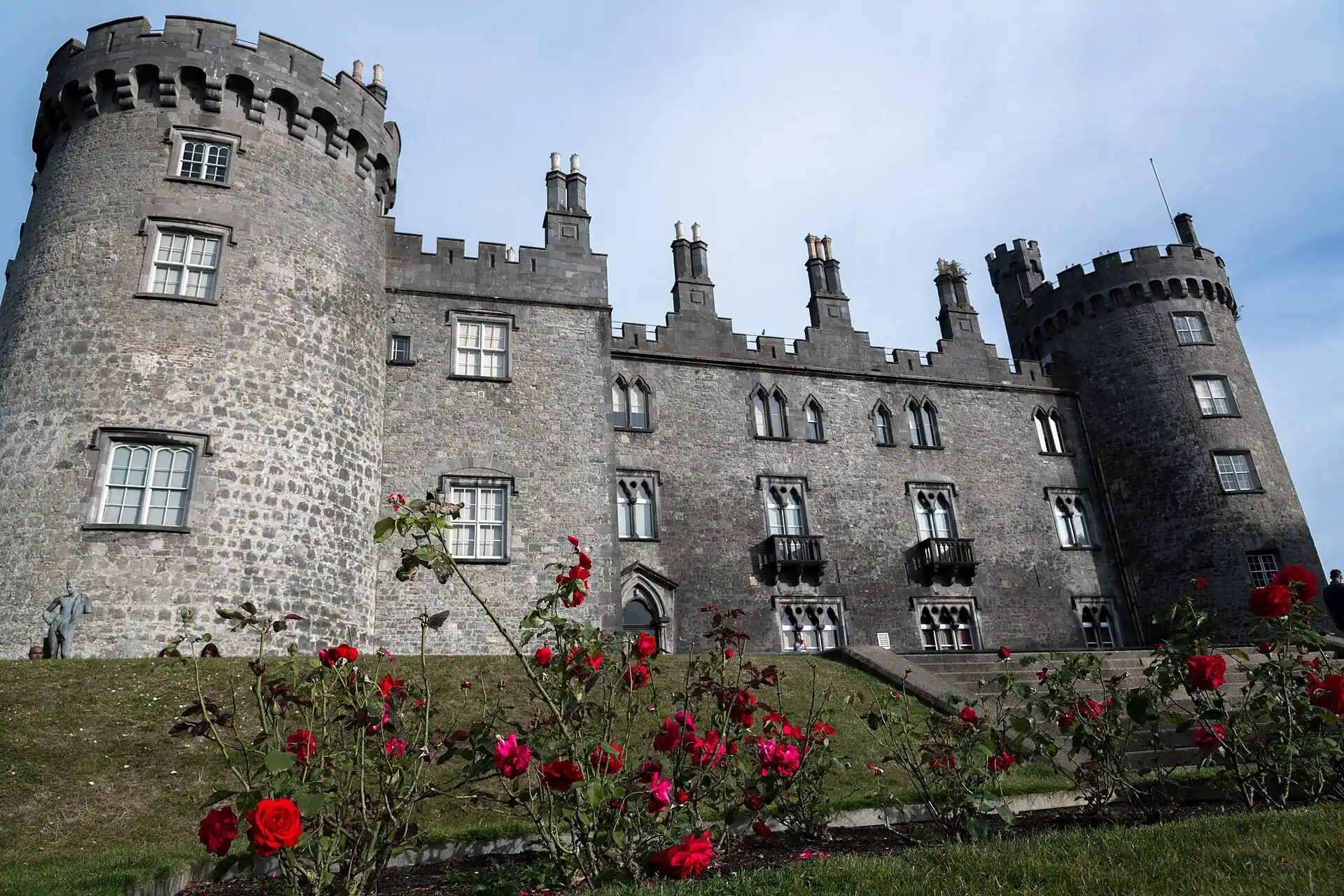 Photo: Jonjobaker / Wikimedia Commons (CC BY-SA 4.0)