Cost of Living in Derry
Real market data
Source: Numbeo · December 2025
$1,550/moSolo nomad1-bed centre + living costs
$2,110/moCoupleshared 1-bed + costs
$1,380/moLean / localcheaper area + costs
- 1-bed rent, city centre$840£625
- 1-bed rent, outside centre$670£500
- Monthly costs excl. rent (1 person)$710£526
- Meal, inexpensive restaurant$19£14
- Monthly transit pass$54£40
Prices are from Numbeo (December 2025), converted to USD at $1 = £0.74 (01 Aug 2026). The monthly living-costs figure is our transparent one-person basket, groceries, a few meals out, utilities, phone, internet, transport and essentials, priced from those figures. Solo adds central rent; couple and lean are estimates from the same numbers.
Budget around $1,550 a month, which makes Derry among the cheapest cities in the United Kingdom and Ireland. A one-bedroom runs roughly $550 to $850, well below Belfast and a fraction of Dublin two hours south. Groceries are ordinary British prices, and the border means many people shop on whichever side the exchange rate favours that month. Eating out is inexpensive. Utilities run through a wet rather than a cold winter. Rates, Northern Ireland's version of council tax, apply separately. The cost gap with the Republic across the border is a genuine and much-discussed local feature. Home heating oil rather than gas is what most houses here run on, which is unusual for this part of the world and means buying a tankful at a time at whatever the price happens to be that week rather than paying a smooth monthly bill. A tank lasts a few months through winter and the price moves with the oil market. Landlords sometimes include the rates in the rent and sometimes do not, and the difference runs to several hundred over a year, so the question belongs in the first conversation rather than the last.
Where to Work in Derry
Connectivity is good. Fibre reaches most of Derry at reasonable speeds and mobile coverage is comprehensive, with reliable power. There is a small coworking scene and a growing technology and business services presence, helped by Ulster University's Magee campus and by the city's push to attract investment. The time zone is GMT with British summer time, which serves Europe and North America equally well. One practical oddity: mobile phones near the border regularly roam onto Irish networks and back, which can produce unexpected charges if the plan does not cover it. The expansion of the university campus here has been argued over for decades and is the issue most likely to come up in any conversation about the city's economy, because the shortfall in student places is understood locally as the reason graduates leave. Financial services and contact centre operations are the largest private employers, drawn by costs well below the regional capital. Anyone working for a firm on the far side of the border should take advice on which tax system applies, since living on one side and working on the other has consequences that are not obvious.
Getting Around Derry
Derry is compact and the walled city is best covered on foot, with the mile-long circuit of the seventeenth century walls itself the obvious walk. Buses cover the city and Translink runs the regional network. The Peace Bridge and the Craigavon Bridge cross the Foyle. The railway to Belfast takes about two hours and is among the most scenic lines in Ireland, running along the coast at Castlerock and Downhill. City of Derry Airport has limited service. Donegal, in the Republic, begins about ten minutes away by road. Anyone crossing into Donegal should note that the Republic uses the euro and kilometres while the North uses sterling and miles, and the change happens without any sign to mark it. A ferry crosses the mouth of the lough in the summer months and turns a long drive around into a fifteen minute crossing, which is how most people reach the beaches on the far peninsula. Coaches run direct to Dublin airport several times a day and are how most people leave the island. The walls have seven gates, and directions here are given by them rather than by street name.
Sorting transport? Book an airport transfer, or compare car rental on Auto Europe and QEEQ.
Visas for Derry
Northern Ireland is part of the United Kingdom, so United Kingdom rules apply: most non-visa nationals need an Electronic Travel Authorisation, which costs $27, before arrival and visa nationals need a standard visitor visa. There is no digital nomad visa. The Common Travel Area means no routine passport control on the land border with the Republic of Ireland, but the immigration rules of each jurisdiction still apply, and crossing does not extend or reset either. Anyone planning to move between the two regularly should understand that distinction properly. Anyone driving across the border regularly should also check that their vehicle insurance covers both jurisdictions, since it does not always and the crossing is unmarked.
Best Time to Visit Derry
May to September is the best window, with July around eighteen degrees and long evenings. Derry is on the wet side of Ireland and rain is a constant possibility in every month, so the difference between the seasons is daylight rather than dryness. Winter from November to February is dark and damp rather than freezing. The Halloween festival at the end of October is the city's great event, among the largest in Europe, and fills every bed in the city and a good part of Donegal. Anyone coming for Halloween should book accommodation many months ahead, since the festival draws tens of thousands and the city has nowhere near enough beds for them. The other fixture is the maritime festival on the quays, held when the round-the-world race fleet calls in, which takes over the waterfront for a week. Daylight in June runs past ten in the evening at this latitude, which is the compensation for a December afternoon finished by four. Snow is rare enough that the few occasions it arrives are remembered by the year.
Pros and Cons of Derry
Derry is the last completely walled city built in Europe, with the seventeenth century circuit intact and walkable, and its recent history is presented with unusual honesty: the Bogside murals, the Museum of Free Derry and the Bloody Sunday memorial all stand within a few minutes' walk of the walls. Costs are low and Donegal's coast is on the doorstep. The city still carries real division, visible in flags, murals and the interfaces between neighbourhoods, along with high unemployment and flight connections that amount to very little at all. The name itself is contested, with Derry and Londonderry both in official use, and which one a person says is often read as a statement about something else entirely.
Who Derry Is For
Anyone interested in the Troubles and their aftermath, which this city addresses more directly than anywhere else in Northern Ireland. It suits walkers and surfers, given Donegal and the Causeway coast. A very low-cost British base that still has a genuine sense of place is a narrow category, and this town belongs squarely in it. Political identity is visible on the streets here in murals, flags and kerbstones, and somebody who would rather not live alongside that should say so to themselves early. Getting out by air means Belfast or Dublin, and both are a drive of substance rather than a quick hop to a terminal. Irish traditional music is played properly here. The pubs around Waterloo Street host sessions most nights of the week, and the standard is high without any of it being staged for an audience. A year is long enough to see the city through both its winter and its festival, and both matter to the decision. Anyone coming for the university or the services sector should line the work up first, because the private job market here is narrower than the population would suggest.
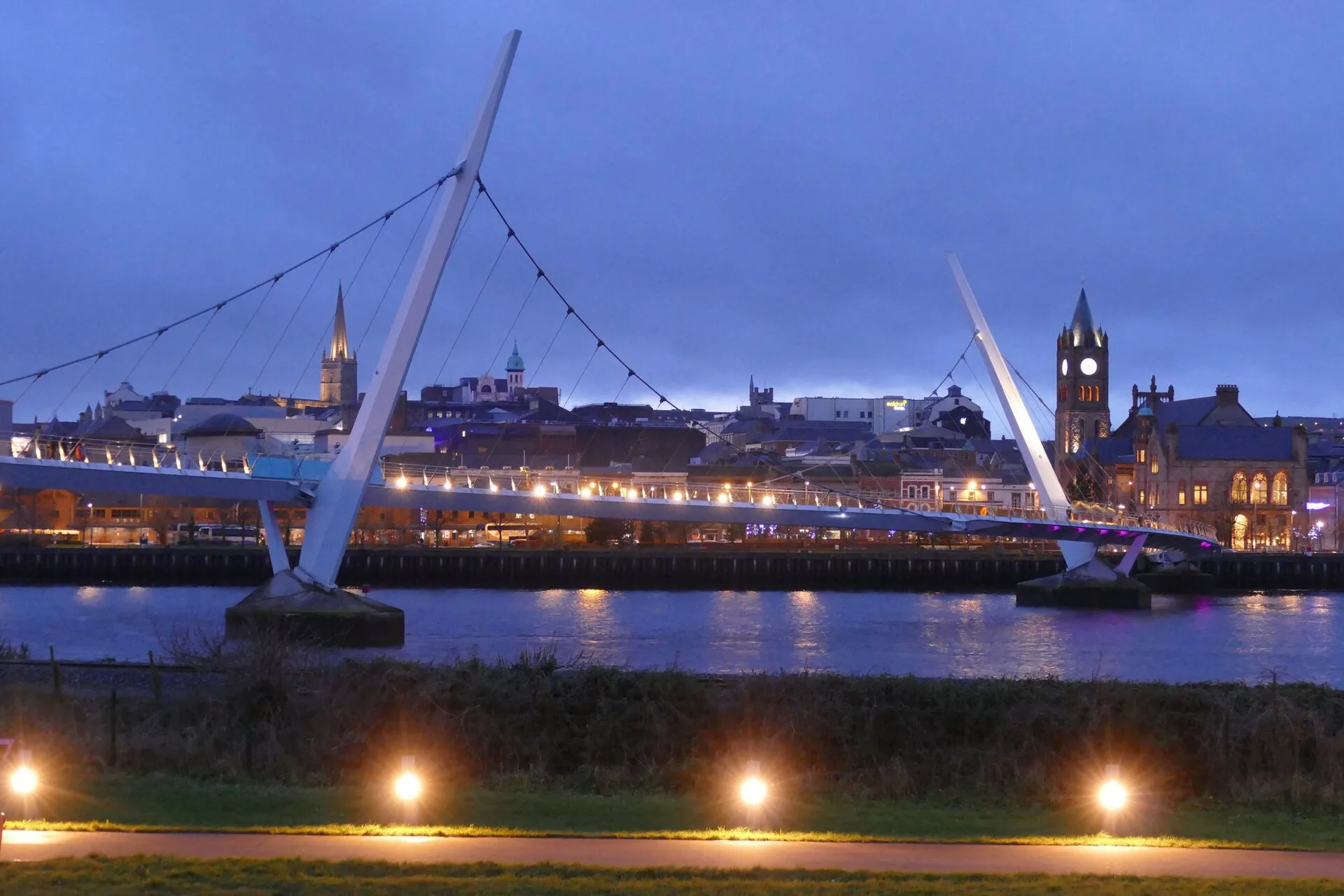 Photo: Aaronwarduk / Wikimedia Commons (CC BY-SA 4.0)