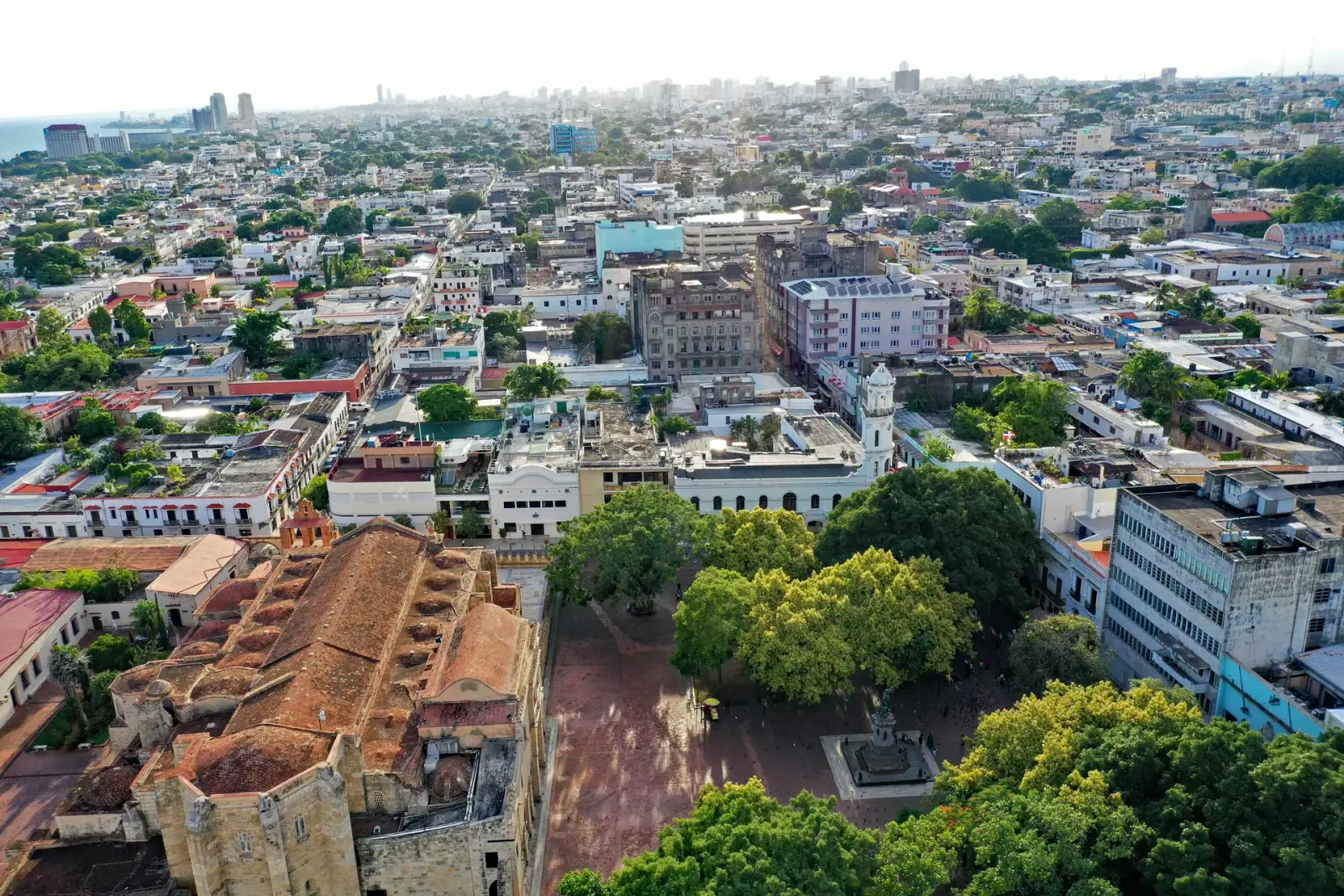
Cost of Living in Santo Domingo
Real market data
Source: Numbeo · August 2026
$1,250/moSolo nomad1-bed centre + living costs
$1,650/moCoupleshared 1-bed + costs
$870/moLean / localcheaper area + costs
- 1-bed rent, city centre$740DOP 43,066
- 1-bed rent, outside centre$360DOP 21,019
- Monthly costs excl. rent (1 person)$510DOP 29,339
- Meal, inexpensive restaurant$10DOP 600
- Monthly transit pass$19DOP 1,100
- Buy price, per m² (centre)$2,260DOP 130,985
Prices are from Numbeo (August 2026), converted to USD at $1 = 58.08 DOP (01 Aug 2026). The monthly living-costs figure is our transparent one-person basket, groceries, a few meals out, utilities, phone, internet, transport and essentials, priced from those figures. Solo adds central rent; couple and lean are estimates from the same numbers. The guide below quotes its own monthly range, which is a different measurement rather than a competing one: this table prices a defined basket at the figures above, while that range is a judgement about how somebody actually lives here.
Santo Domingo is genuinely affordable by Caribbean standards, though not as cheap as Southeast Asia. The Dominican peso (DOP) fluctuates around $1 to the US dollar, and you will find that pricing in the capital is split between peso-denominated local life and dollar-priced expat services.
- Rent, central neighborhoods (Piantini, Naco): $790-1,210 per month for a furnished 1BR apartment
- Rent, cheaper areas (Gazcue, parts of Ensanche La Fe): $500-790 per month for a 1BR
- Groceries (self-catering weekly): $29-50 at supermarkets like La Sirena or Nacional
- Eating out, local spots: $6-10 for a full meal at a comedor or mid-range Dominican restaurant
- Eating out, expat restaurants: $15-30 per person at places in Piantini or Zona Colonial
- Coworking hot desk: $120-295 per month depending on the space
- Local transport (Uber, short trip): $2.50-6 per ride
- Mobile data (10GB plan): around $31
Realistic total monthly range: $1,200-1,800 for a single nomad on a reasonable budget, or $2,000-2,500 if you are living in upscale areas and eating out frequently.
Where to Work
Santo Domingo has a functional but modest coworking scene concentrated in Piantini and Ensanche Naco. These are your most reliable bets.
Coworking Spaces
- Thrive Dominican Republic sits on the 23rd floor of Blue Mall tower in Piantini, offering high-speed fiber, meeting rooms, and city views. Hot desks run around $180-300 per month. It is professional and well-equipped, though hours can be limited.
- Spirit Coworking on Avenida Tiradentes in Naco is one of the more established options, open weekdays until 9pm. Monthly memberships start around $150.
- La Mochila Cowork & Cafe in Zona Colonial is a smaller, cafe-style workspace popular with freelancers. It is more affordable (around $120/month) and has a community feel, though WiFi speeds are modest.
- Kuarzo Coworking near downtown offers weekday access with fast fiber and is a practical option for those not based in the upscale north of the city.
Cafe Culture and WiFi
Cafe work culture exists, but it is not as developed as in cities like Medellin or Mexico City. Bake Inc. Meeting Cafe on Avenida Roberto Pastoriza is the standout laptop-friendly spot, purpose-built with power outlets, USB charging, and reliably fast WiFi, open Tuesday through Sunday 8am to 6pm. Affogato Cafe in Zona Colonial has a charming atmosphere and reasonable WiFi, though it can get noisy on weekends.
Across the city, connections in coworking spaces and cafes are sufficient for calls and uploads. Home fiber connections (Claro or Altice) in Piantini and Naco are generally reliable. Power cuts do occur; a coworking space with a generator is worth the premium if your work cannot tolerate downtime.
Getting Around
Santo Domingo is a large, traffic-heavy city and walking long distances is not practical outside of Zona Colonial.
- Uber is the go-to transport for nomads, widely available, priced fairly (around $3-9 for most intra-city trips), and much safer than hailing street taxis. InDriver is also popular and sometimes cheaper.
- Public buses (guaguas) and minivans (carros publicos) are extremely cheap at around $0.50 per ride but are crowded, have no fixed stops, and are difficult to navigate without local knowledge.
- Motoconchos (motorcycle taxis) are common for short hops in residential areas but carry obvious safety risks.
- Renting a car is possible, but city traffic is chaotic and parking in central areas is a headache. It makes more sense for day trips outside the capital.
- Las Americas International Airport (SDQ) is about 30 kilometers east of the city center. An Uber from Piantini to the airport takes 30-50 minutes depending on traffic and costs around $12-20.
Zona Colonial is the most walkable area, with the historic streets compact enough to explore on foot. Piantini and Naco are walkable within their own blocks but require transport to reach other parts of the city.
Sorting transport? Book an airport transfer, or compare car rental on Auto Europe and QEEQ.
Visas and Staying Long-Term
The Dominican Republic is notably relaxed for tourist entry. Citizens of over 100 countries, including the US, Canada, UK, EU member states, and most of Latin America, can enter without a pre-arranged visa and receive 30 days on arrival. The tourist card fee of $10 is included in most airline tickets, so you may not pay it separately.
There is no dedicated digital nomad visa for the Dominican Republic. Remote workers stay on tourist entry and extend as needed.
Extensions: You can extend your stay up to an additional 90-120 days by visiting the Migration Department (Direccion General de Migracion) in Santo Domingo and paying an extension fee. If you overstay without extending, you will pay a departure fine at the airport, starting around $56 for one month over and rising steeply with longer overstays.
For longer stays, the Rentista residency pathway requires proof of $2,000 per month in passive income, and the Pensionado route requires $1,500 per month in pension income. Both can lead to permanent residency.
Best Time to Visit
The Dominican Republic is a year-round destination, but the seasons matter for comfort.
December through April is the sweet spot for remote workers: lower humidity, less rain, temperatures in the 25-30C (77-86F) range, and the clearest skies. February is the driest month. This peak tourist season also means higher Airbnb prices and busier neighborhoods, but you will be far more productive when you are not sweating through your keyboard.
May through July is transitional, warmer and increasingly humid but still manageable. Rain tends to come in afternoon bursts rather than all-day downpours.
August through November is hurricane season. Direct hits on Santo Domingo are not guaranteed, but heavy rain, flooding, and power disruptions become more common. The city does not shut down, but you may find connectivity and logistics less reliable. Accommodation prices drop significantly, which attracts budget-focused nomads who can tolerate the trade-offs.
Pros and Cons
Pros
- Genuinely affordable rent and food for a capital city in the Caribbean
- No visa barrier for most Western passport holders, with easy extensions
- Rich culture, music, and food scene rooted in Afro-Caribbean and Spanish heritage
- Vibrant nightlife with bachata and merengue venues that are uniquely Dominican
- Improving coworking infrastructure, especially in Piantini and Naco
- Excellent base for day trips: beaches (Las Terrenas, Juan Dolio) are within 1-2 hours
- Strong Dominican coffee culture, local rum, and fresh tropical food
Cons
- Traffic is brutal and the city is not walkable at scale
- Petty crime and scams are real concerns outside tourist-heavy zones, especially after dark
- Air quality and urban noise levels are high; Zona Colonial can smell strongly of exhaust
- The nomad community is small compared to hubs like Medellin or Mexico City
- English is spoken in tourist areas but limited elsewhere; Spanish is essential for daily life
- Power cuts and water disruptions still occur, even in upscale neighborhoods
- Humidity in summer months can be oppressive without reliable air conditioning
Who Santo Domingo Is Best For
Santo Domingo suits nomads who are genuinely drawn to Latin culture and do not need a large English-speaking expat bubble. If you enjoy immersing yourself in a loud, energetic Caribbean city where the evenings come alive with music, street food, and warm locals, this place rewards you. It works well for Spanish speakers or those actively learning the language, since you will use it constantly outside Piantini.
It is also a solid pick for Caribbean-based nomads who want a proper city, with supermarkets, hospitals, coworking options, and reliable international flights, rather than a beach town with spotty internet. Budget-conscious nomads who can live like a local rather than an expat will find the value strong.
Skip Santo Domingo if you prioritize cleanliness, walkability, or a polished nomad infrastructure. Nomads who find traffic stressful, need consistently fast WiFi for large file transfers, or want to avoid navigating safety considerations on a daily basis will likely be happier in Bogota, Lisbon, or Chiang Mai. The city also requires more vigilance than most nomad hubs in Europe or Southeast Asia, particularly at night outside known safe zones.