Cost of Living in Puerto Viejo
Where this figure comes from. No cost survey covers Puerto Viejo, so the $1,700 a month above is our own estimate rather than a measurement. On 416 of our 999 city guides the figure is built from a published Numbeo basket, a one-bedroom rent in the centre plus one person's monthly costs without rent, converted to USD; this city is not one of them. How we source everything.
Budget roughly $1,700 a month as a solo remote worker in Puerto Viejo, which reflects the general truth that Costa Rica is not cheap by Central American standards. A one-bedroom place in town or in the surrounding jungle runs about $600 to $900 on a long lease, with beachfront and newer builds well above that, and short-term rates in high season considerably higher again. Groceries land around $350 to $450, with imported goods expensive and the local ferias good value for produce. A casado lunch at a soda is $6 to $9, a restaurant dinner $18 to $30, and a beer about $3. A scooter or bicycle is the standard local transport. Utilities add $80 to $150, largely fans and refrigeration.
Where to Work in Puerto Viejo
Puerto Viejo has no formal coworking space, and remote workers here work from their accommodation or from the town's cafes, several of which have grown up specifically around the surfing and long-stay crowd and are entirely comfortable with laptops. The constraint is connectivity: this is the Caribbean coast, infrastructure is thinner than in the Central Valley, and fixed-line speeds vary sharply by property. Anyone dependent on video calls should test the actual connection before committing to a lease, and should budget for a mobile data backup, as 4G coverage in town is reasonable. Power cuts happen, particularly in the wet season. Many long-stayers keep a small battery backup for the router as a matter of course. Inland from the coast the land belongs to indigenous territories, Bribri and Cabecar, governed by their own councils and open neither to casual visiting nor to purchase, and the cacao farms that welcome visitors do so on their own terms rather than as an attraction. The coastal economy is tourism, cacao and what is left of the banana trade. Nothing here is hiring a foreigner, and the work permit rules are strict enough that the question rarely comes up.
Getting Around Puerto Viejo
Puerto Viejo is a small town and the standard way to move is a bicycle: the coastal road running south through Playa Cocles, Chiquita and Punta Uva to Manzanillo is flat, shaded and lined with the beaches most people come for, and cycling it is a large part of the appeal. Scooters are common. Buses run along the coast and north to Limón and on to San José, a journey of about four and a half hours to the capital. There is no airport nearby; San José's Juan Santamaría is the international gateway, and the domestic strip at Limón has limited service. A car helps for supermarket runs to Limón but is not necessary for daily life. Panama is under an hour down the coast and the islands beyond that crossing are close enough that people go for a few days without much planning, which doubles as the standard way of resetting a stamp. The coastal road floods in the heavy months and the buses simply wait it out. Nothing along it is lit after dark, so a bicycle ridden home at night wants a lamp and a reflective strip rather than the optimism most people rely on.
Sorting transport? Book an airport transfer, or compare car rental on Auto Europe and QEEQ.
Visas for Puerto Viejo
Costa Rica grants most Western passports, including EU, UK, US, Canadian and Australian, up to 180 days visa-free on arrival, which is one of the most generous allowances anywhere and covers a long stay without any paperwork. Costa Rica also introduced a digital nomad visa in 2022 for remote workers earning above a monthly threshold from foreign sources, granting one year with a one-year extension, exemption from income tax on that foreign income, and the ability to use a foreign driving licence for the duration. It is a well-designed scheme and one of the more attractive in the region. Longer-term residency routes include the pensionado, rentista and inversionista categories, all long established. Airlines check for onward travel before boarding and will refuse to carry somebody without it, which is a real problem for anyone intending an open-ended stay and the reason cheap throwaway bus tickets to the next country are sold specifically for the purpose. A departure tax is charged on the way out and is usually bundled into the fare, though not always. Anyone bringing a vehicle in on a tourist entry has to take it out again on the same timetable, and the two clocks are not linked.
Best Time to Visit Puerto Viejo
The Caribbean coast runs on a different calendar from the rest of Costa Rica, which catches people out. The driest and most reliable months here are September and October, precisely when the Pacific side is at its wettest, and February and March are the other dry window. The heaviest rain falls in November, December, July and August. Temperatures barely move: it is around 30 degrees and humid all year. High season for visitors runs roughly December to April and again in July, when prices rise and the town is busy. Surf is best from December to March. Anyone planning around weather should ignore national dry-season advice and use the Caribbean pattern instead. Leatherback turtles come ashore to nest along this stretch of coast through the first half of the year, and the local project that patrols them takes volunteers on night walks, which is the best reason to be here outside the surf calendar. The reef break in front of town only works on a serious north swell and is heavy enough that most visitors watch rather than paddle out. Sandflies are worst on the sand at dawn and dusk, which nobody mentions until the first week is over.
Pros and Cons of Puerto Viejo
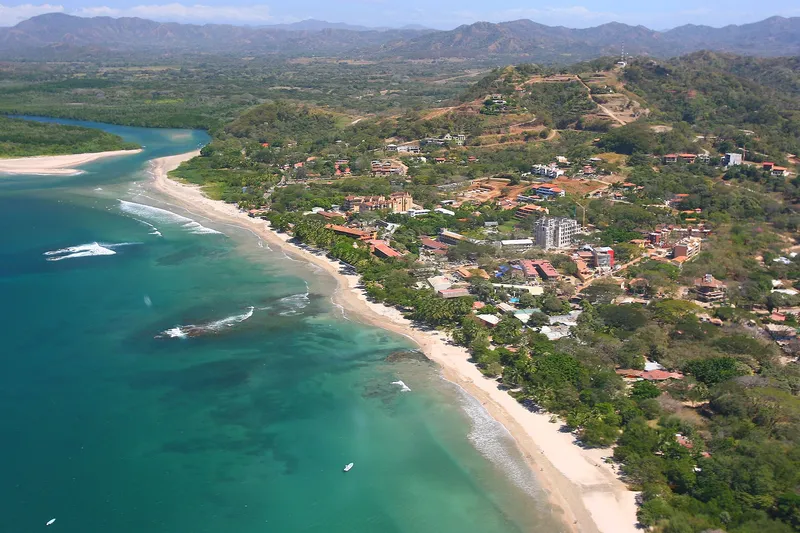
Puerto Viejo is Afro-Caribbean Costa Rica: Creole cooking, calypso, English widely spoken alongside Spanish, and a stretch of coast where rainforest reaches the sand. The beaches south of town at Punta Uva and Manzanillo are among the best in the country, sloths and howler monkeys are ordinary daily sights, and Costa Rica's 180-day visa-free allowance and nomad visa make staying easy. It is expensive for the region, infrastructure is thin and the internet unreliable enough to matter, and the humidity never lets up at all. Petty theft is a known problem and requires ordinary care. The town has a party reputation that suits some and not others, and healthcare beyond a clinic means Limón or San José.
Who Puerto Viejo Is For
Jungle and Caribbean beach in one place, for anyone who can work around variable internet and whose budget absorbs Costa Rican prices. Surfers come first, and after them people who want wildlife within walking distance of where they sleep. The Costa Rican digital nomad visa and the long visa-free allowance both make the stay straightforward to arrange. The town is small, sociable and carries a long-stay foreign population that settled here years ago, not one that turns over every season. Guaranteed connectivity is not available, the heat is wet rather than dry, the costs are Costa Rican rather than cheap, and neither a coworking space nor a serious hospital is within easy reach. The Central Valley around San José and Atenas has the infrastructure; Tamarindo and Santa Teresa have the Pacific and more remote workers.
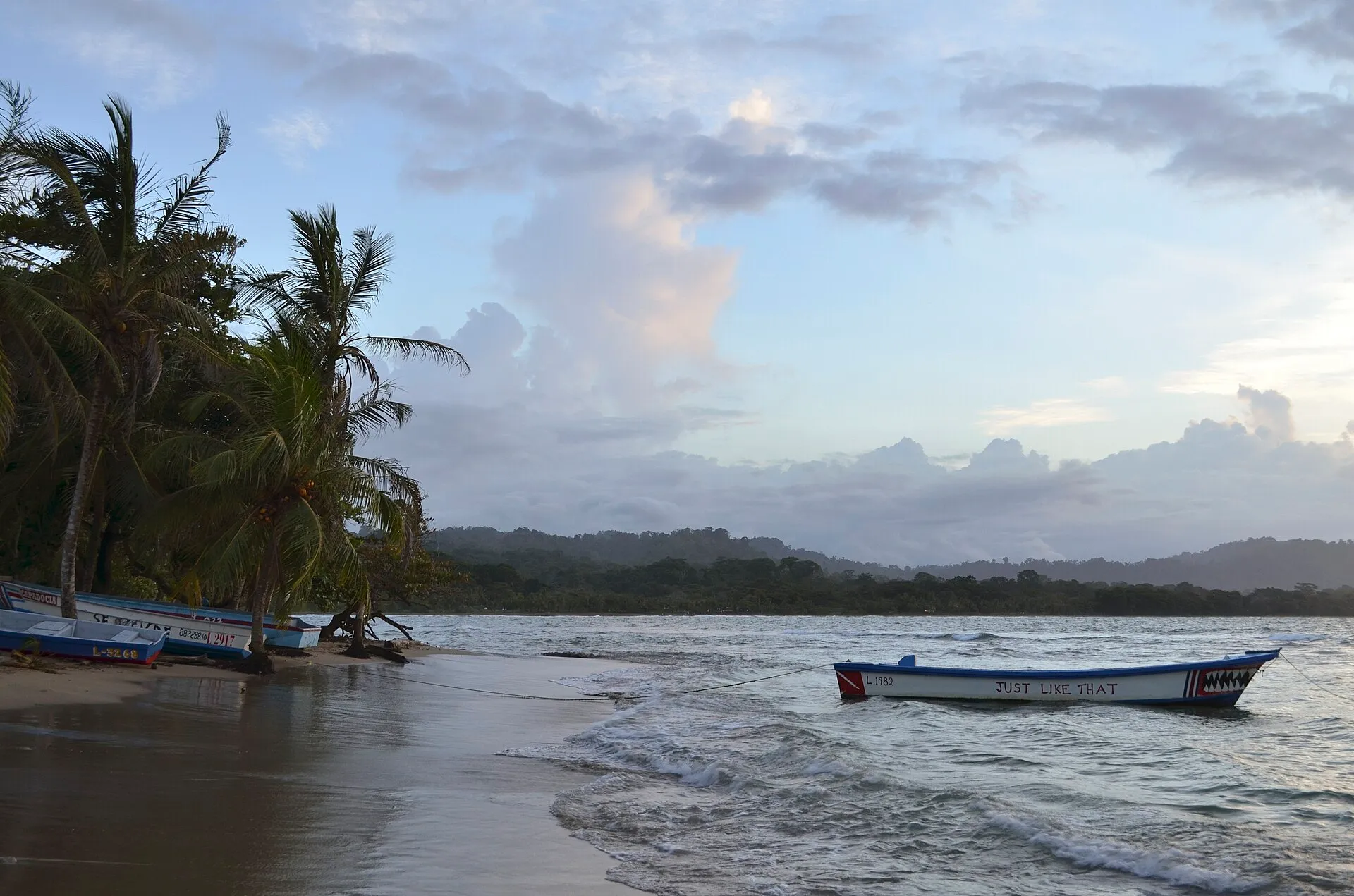 Photo: Letartean / Wikimedia Commons (CC BY 3.0)