Cost of Living in Phan Thiet
Where this figure comes from. No cost survey covers Phan Thiet, so the $700 a month above is our own estimate rather than a measurement. On 416 of our 999 city guides the figure is built from a published Numbeo basket, a one-bedroom rent in the centre plus one person's monthly costs without rent, converted to USD; this city is not one of them. How we source everything.
Budget around $700 a month as a solo remote worker in Phan Thiet, which is cheaper than Da Nang or Ho Chi Minh City and among the better value coastal bases in Vietnam. A one-bedroom apartment or a long-stay room runs roughly $200 to $400, with the Mui Ne beach strip at the upper end and the town itself much cheaper. Street food costs very little and the seafood is excellent value given the fishing fleet. Imported goods carry a premium. A motorbike rental is a few dollars a day and is how everyone moves. Fibre runs about $8 to $12 a month for a fast connection, which is among the best value anywhere, and a long-stay room with air conditioning included is often the simpler arrangement than renting an unfurnished flat. Kitesurfing is the budget line that separates Mui Ne from anywhere else: gear storage and a board rental run $150 to $250 a month, lessons $50 to $70 an hour, and anyone here for the season should price that alongside the rent rather than after it.
Where to Work in Phan Thiet
Vietnamese fixed broadband is cheap and reasonably fast, and Phan Thiet and the Mui Ne strip both have usable fibre, with reliable mobile data along the coast. There is no real coworking; remote work happens from accommodation and from the cafes along the beach road, several of which cater to the kitesurfing crowd and are set up for it. Connections are adequate for ordinary work but less consistent than in Da Nang or the big cities, and typhoon season can disrupt service. Test a specific connection before a long lease. Vietnam sits seven hours ahead of GMT, which gives a European afternoon overlap and puts American clients out of reach, and it is the same offset the rest of the country works on. The kitesurfing season also shapes the working day here more than the time zone does, since the wind builds through the afternoon and most people front-load their work into the morning to be on the water by two. The province grows most of the country's dragon fruit, and the farms light the fields at night with thousands of bulbs to force the plants into flower out of season, which turns the whole hinterland into a glow visible from the coast road.
Getting Around Phan Thiet
Phan Thiet town and the Mui Ne strip are about twenty kilometres apart and a motorbike is the standard way to cover that and everything else. Local buses run along the coast road and taxis and Grab are available and cheap. A new expressway has cut the drive from Ho Chi Minh City to around three hours, and the railway station at Phan Thiet has services on the north-south line. The sand dunes, the fishing harbour and the Cham towers are all short rides. Traffic and road safety are the main daily hazard. The Phan Thiet expressway opened in 2023 and cut what had been a five-hour drive from Ho Chi Minh City to around three, which has changed the town's weekend economy noticeably. The railway also runs a dedicated tourist service from Saigon at weekends, which is slower than the road but a considerably more pleasant way to arrive. The overnight train from the south arrives before dawn and the station sits well outside town, so the taxi meeting it is part of the plan rather than an afterthought. Sand tracks run inland towards the dunes, and the drifting sand crosses the coast road in places after a windy night.
Sorting transport? Book an airport transfer, or compare car rental on Auto Europe and QEEQ.
Visas for Phan Thiet
Vietnam grants ninety-day e-visas to citizens of most countries, single or multiple entry, applied for online before travel, which is a considerable improvement on the old thirty-day position. Some nationalities also get shorter visa-free entry. There is no Vietnamese digital nomad visa, and longer stays are usually managed through repeated e-visas or a business or work permit tied to a Vietnamese entity. Cambodia and Laos are both close for a reset. Vietnam has changed its e-visa rules several times in recent years. Anyone planning repeated e-visa entries should note that Vietnam has occasionally tightened the practice of back-to-back visas without formally changing the rules. Every foreigner in Vietnam has to be registered with the local police by whoever owns the accommodation. Hotels do it automatically and private landlords frequently do not, and an unregistered address is the usual reason a long stay comes apart at the point of renewal.
Best Time to Visit Phan Thiet
November to April is the dry season and the kitesurfing season, with reliable northeast wind, warm water and daytime temperatures around thirty. This is the reason the town has an international presence at all, and December to March is the peak. The wet season from May to October brings afternoon downpours, calmer wind and much lower prices, though Phan Thiet is drier than most of Vietnam thanks to its position in a rain shadow. Typhoons rarely hit this far south but the season runs from roughly July to November. The wind also has a daily rhythm, building through the afternoon, which shapes how people here structure a working day around it. Mui Ne's wind is generated by the northeast monsoon funnelling along the coast, which is why the season is so sharply defined here compared with anywhere else in Vietnam, and why the town genuinely empties between May and October rather than merely quietening.
Pros and Cons of Phan Thiet
Phan Thiet and Mui Ne offer the most reliable kitesurfing wind in Vietnam, red and white sand dunes that look like nowhere else in the country, an enormous working fishing fleet, and coastal living at prices well below Da Nang. The expressway has made Ho Chi Minh City a manageable trip. The strip is strung out and nothing works without a motorbike, the handful of remote workers here come and go with the wind season, English thins out away from the beach road, and cleanliness scores a 5 honestly, with plastic on some beaches after rain. The white sand dunes at Bau Trang sit beside a lotus lake and are large enough to be genuinely disorienting, and the red dunes closer to Mui Ne are the ones most visitors see and the less impressive of the two by a distance.
Who Phan Thiet Is For
Kitesurfers and windsurfers above all, since the season and the wind organise the whole place, and then anyone after cheap Vietnamese coast without the growing crowds of Da Nang. It works for those comfortable on a motorbike. The town is strung along a road rather than built to be walked, the nomad scene is a fraction of what the kitesurfing suggests, and the nightlife is thin. Arriving between May and October in expectation of wind is the specific mistake to avoid, because it will not be there in any useful form. Proximity without immersion is the practical argument. Ho Chi Minh City is a three-hour drive away, close enough to reach when needed and far enough to avoid its rents and its traffic entirely. Beginners are better served here than experts. Shallow water, a steady cross-shore wind and a concentration of schools in one bay make Mui Ne one of the better places in Asia to learn to kitesurf from nothing.
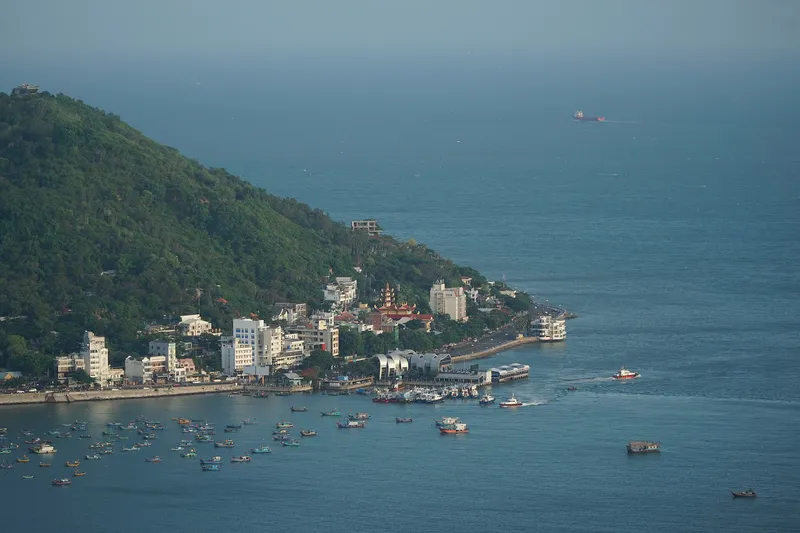
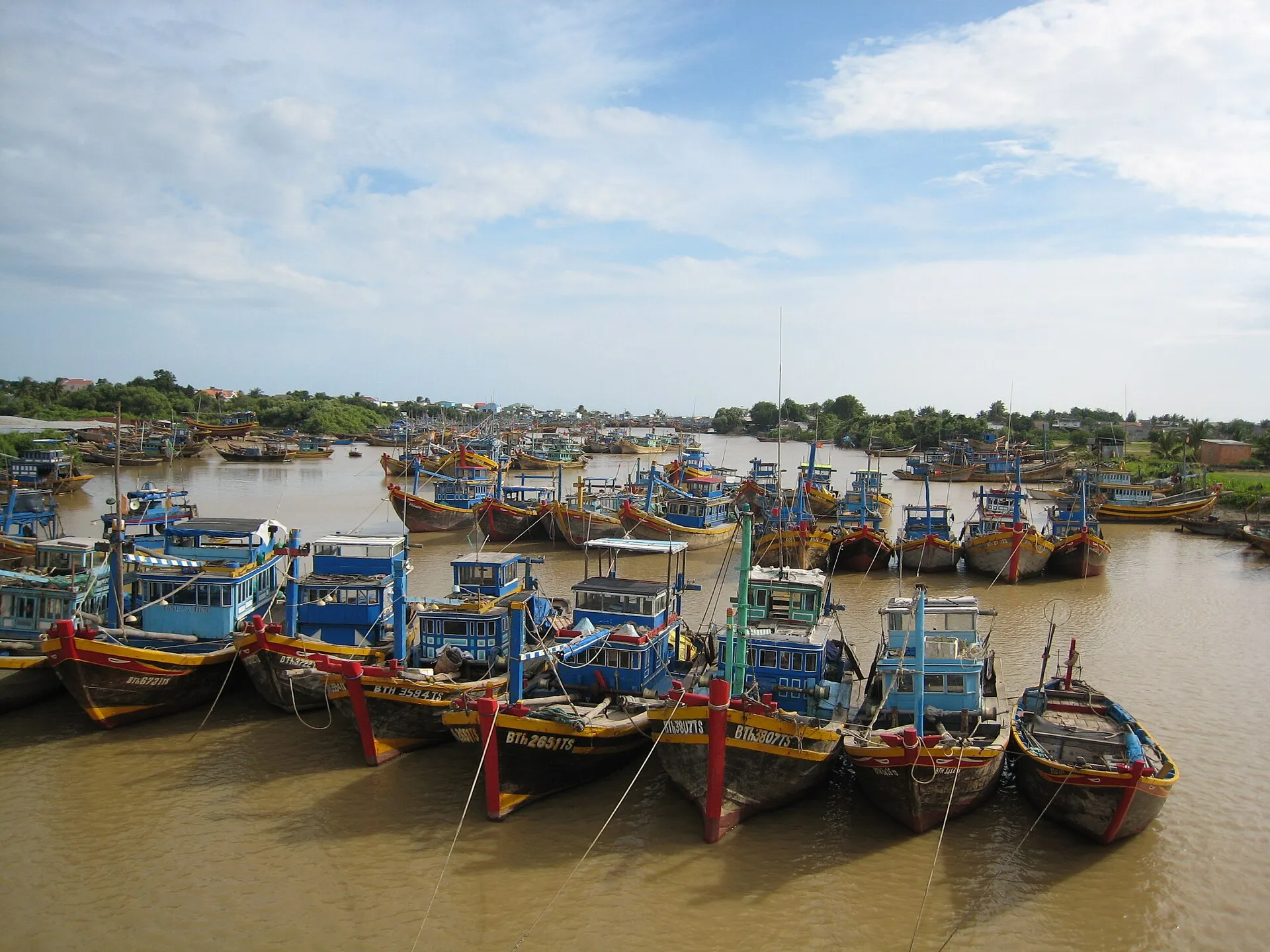 Photo: zabaluev / Wikimedia Commons (CC BY 3.0)