Cost of Living in Da Lat
Real market data
Source: Numbeo · August 2026
$490/moSolo nomad1-bed centre + living costs
$660/moCoupleshared 1-bed + costs
$480/moLean / localcheaper area + costs
- 1-bed rent, city centre$280₫7,401,491
- 1-bed rent, outside centre$270₫7,129,849
- Monthly costs excl. rent (1 person)$210₫5,512,384
- Meal, inexpensive restaurant$2₫57,500
Prices are from Numbeo (August 2026), converted to USD at $1 = ₫26167.86 (01 Aug 2026). The monthly living-costs figure is our transparent one-person basket, groceries, a few meals out, utilities, phone, internet, transport and essentials, priced from those figures. Solo adds central rent; couple and lean are estimates from the same numbers. The guide below quotes its own monthly range, which is a different measurement rather than a competing one: this table prices a defined basket at the figures above, while that range is a judgement about how somebody actually lives here.
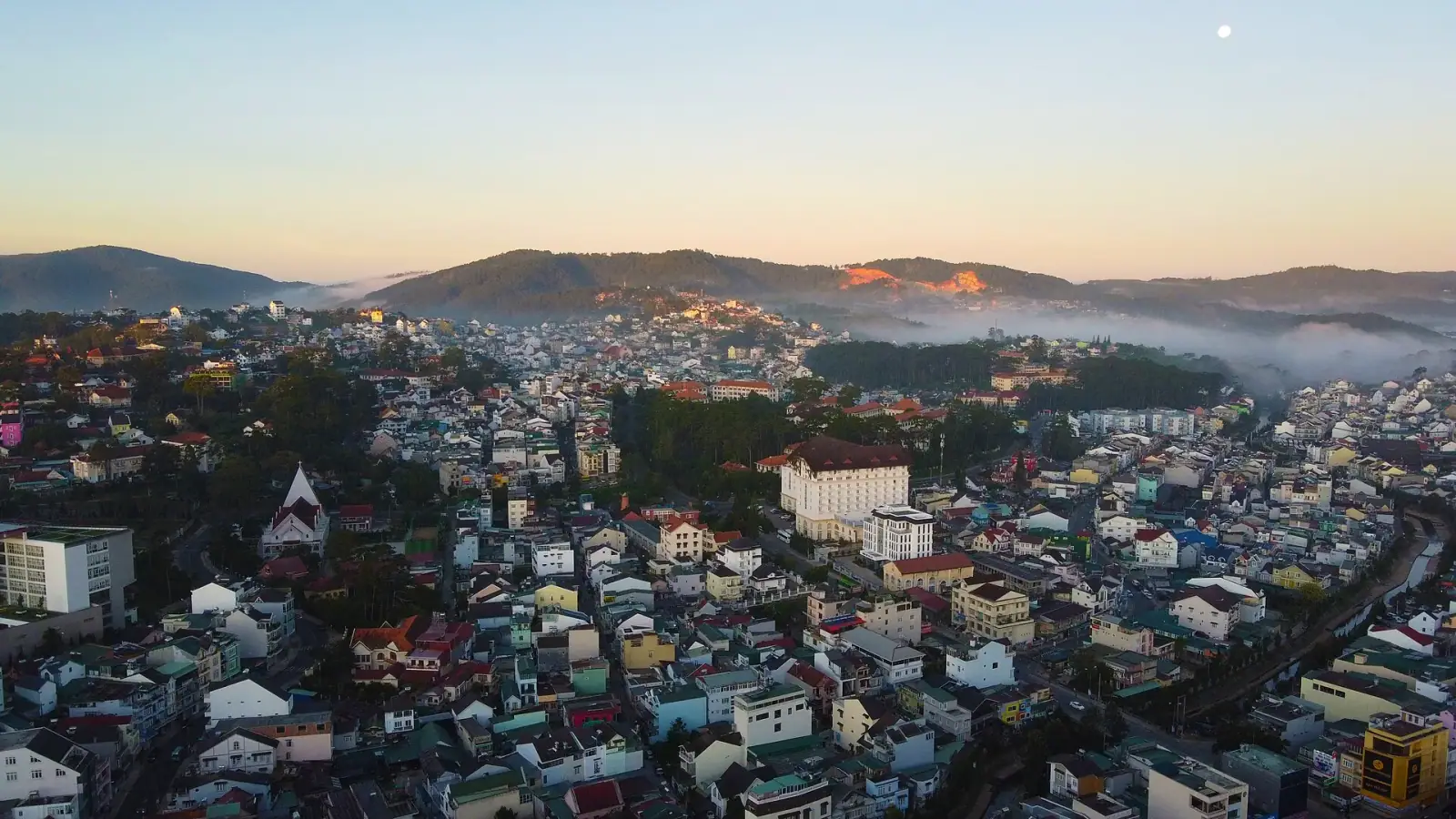
Da Lat is one of the most affordable places in Vietnam for remote workers, with a monthly budget of roughly $345-690 covering a comfortable lifestyle.
- Rent, central (Phuong 1/Phuong 6): $305-380/month for a furnished studio or one-bedroom
- Rent, quieter outer areas (10-15 min from center): $170-230/month for equivalent space
- Groceries: $57-96/month; Da Lat's farms mean fresh produce is extremely cheap
- Eating out: A local pho or banh mi costs $1-2.50; a full sit-down meal at a mid-range restaurant runs $4-7.50
- Coworking hot-desk: $3-5/day; monthly passes where available are around $46-76
- Local transport (Grab/taxi): Around $21/month if you rely on Grab rides; motorbike rental cuts this to $46-69/month
- Utilities: Often included in rent; if not, expect $19-29/month. You almost never need air conditioning.
Total realistic range: $345-690/month depending on accommodation choice, dining habits, and transport. Budget travelers can dip below $400; those wanting a private apartment and coworking access land comfortably around $550-650.
Where to Work
Da Lat has a small but genuinely useful remote-work infrastructure for its size. The city is not a major nomad hub, so you will not find the density of coworking options you get in Ho Chi Minh City or Chiang Mai, but what exists works well.
Coworking spaces: ThomWork (above NGU Cafe) offers 200+ Mbps speeds and is one of the most dedicated setups in the city, open 8am-11pm at $3-5 per day. One More Coworking on Hai Ba Trung Street (Phuong 6) sits above a popular cafe, offers open desks and a small conference room, and bundles access with cafe purchases. Midway Tea and Coffee (292A Hai Ba Trung) is a large, ergonomically-furnished space with abundant power and a quieter atmosphere.
Cafe-work culture: Da Lat's cafe scene is exceptional. The city is a major coffee-growing region, so cafes are everywhere, taken seriously, and generally fast-WiFi-friendly. Goc Nho Cafe and Maze Cafe offer fast WiFi and good seating. Highland Coffee provides reliable WiFi across five or more locations. La Viet Coffee (near Nguyen Cong Tru) is a quality roastery that draws laptop workers. Most cafes are tolerant of long sessions as long as you keep ordering.
WiFi reality: Cafe connections are usually good, and ThomWork coworking is faster still. Connections are generally stable, though heavy rain occasionally causes brief drops. Home fiber packages run about $15/month and are often pre-installed in apartments.
Getting Around
Da Lat's city center is compact but hilly, which makes walking workable for errands near the central market but tiring for anything further afield. The terrain means you feel the incline quickly on foot.
Grab: The most practical option for most days. A typical in-city ride costs $1-2.50. Grab cars and bikes are readily available during daylight hours.
Motorbike rental: Renting a semi-automatic motorbike for $46-69/month unlocks the full region, including waterfalls, flower farms, and the Lang Biang plateau. Roads are scenic but can be wet and slippery during the rainy season, so ride cautiously.
Airport transfers: Lien Khuong Airport (DLI) sits about 30 km south of the city center. A Grab or metered taxi costs $11-15 and takes roughly 40 minutes. An airport shuttle bus runs for $1.50 but takes longer and has fixed schedules.
There is no city bus network worth relying on for daily commuting. For longer trips to Ho Chi Minh City (roughly 300 km), sleeper buses run nightly and cost about $7.50-13.
Sorting transport? Book an airport transfer, or compare car rental on Auto Europe and QEEQ.
Visas and Staying Long-Term
Vietnam's e-visa covers citizens of all nationalities, costs $25 for a single entry or $50 for multiple entries, and allows stays of up to 90 days. Processing takes three working days through the official portal at evisa.gov.vn.
Citizens of certain countries enjoy visa-free entry: UK, France, Germany, Italy, Spain, Sweden, Norway, Denmark, Finland, Russia, Japan, and South Korea get 45 days without a visa. From August 2025, Belgium, Netherlands, Switzerland, Poland, Czech Republic, and several other European countries joined this list for 45-day stays, valid through August 2028.
Vietnam does not currently offer a formal digital nomad visa. To extend your stay beyond your initial entry period, most nomads exit to a neighboring country (Thailand, Cambodia, or Laos) and re-enter on a fresh e-visa. This visa run approach is common and well-established, though Vietnam's government has periodically signaled interest in longer-stay options.
Best Time to Visit
Da Lat sits at roughly 1,500 meters elevation, which buffers it from the lowland heat year-round. Temperatures typically stay between 14 and 23 degrees Celsius regardless of season, which is one of the city's biggest draws for remote workers.
Dry season (December to March) is the most productive window for nomads. Clear skies, low humidity, cooler nights, and easy road conditions make this the peak period. December and January can get quite cool in the evenings (14-16C), so pack layers.
April and November are transitional months, generally pleasant with occasional showers and fewer crowds than December-January peak.
Rainy season (May to October) brings frequent afternoon and evening downpours, especially July through September. The city stays green and beautiful, and showers are usually short-lived, but road flooding and reduced visibility on motorbikes are real concerns. WiFi can dip briefly during heavy storms. Prices are lower and the city is quieter, which suits some nomads well.
Pros and Cons
- Pro: Year-round spring climate with no need for air conditioning
- Pro: Very low cost of living compared to Southeast Asian cities with similar connectivity
- Pro: Exceptional fresh produce, specialty coffee, and a genuinely interesting food scene
- Pro: Low noise and congestion relative to Vietnamese coastal cities
- Pro: Beautiful highland scenery within easy riding distance
- Pro: Safe, relaxed atmosphere with a small but growing creative expat community
- Con: Coworking options are limited; you may spend most of your time in cafes
- Con: No direct international flights; you transit through Ho Chi Minh City or Hanoi
- Con: English is not widely spoken outside tourist businesses and some cafes
- Con: Hilly terrain makes walkability limited without a motorbike
- Con: Rainy season (May-October) can disrupt outdoor plans and occasionally connectivity
- Con: Slower-paced; not suitable if you need a large professional network or frequent in-person meetings
Who Da Lat Is Best For
Da Lat suits remote workers who want a genuinely low-cost, high-comfort base in Southeast Asia without the chaos of a major city. If you value cool weather, good coffee, fresh food, quiet streets, and natural surroundings, this city delivers at a price that is hard to beat. Freelancers, writers, designers, and solo nomads who work mostly in cafes will find it particularly rewarding. It is also a strong choice for long-term travelers using the 90-day e-visa who want somewhere peaceful to hunker down and work without spending much.
Skip Da Lat if you need a large coworking community, frequent networking events, reliable same-day international parcels, or direct flights abroad. It is also a poor fit if you want an active nightlife or a place where English is the default at every turn. Nomads who thrive here tend to be self-sufficient, comfortable on a motorbike, and happy with a slower social pace in exchange for a beautiful and affordable setting.