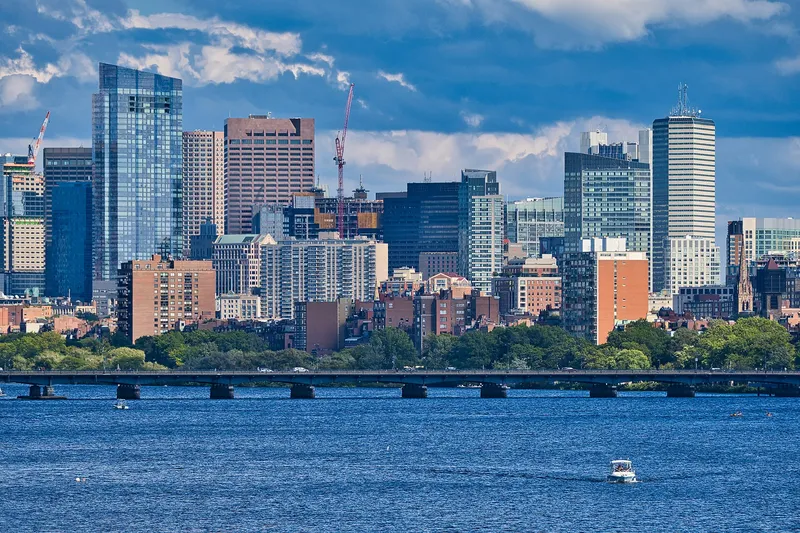
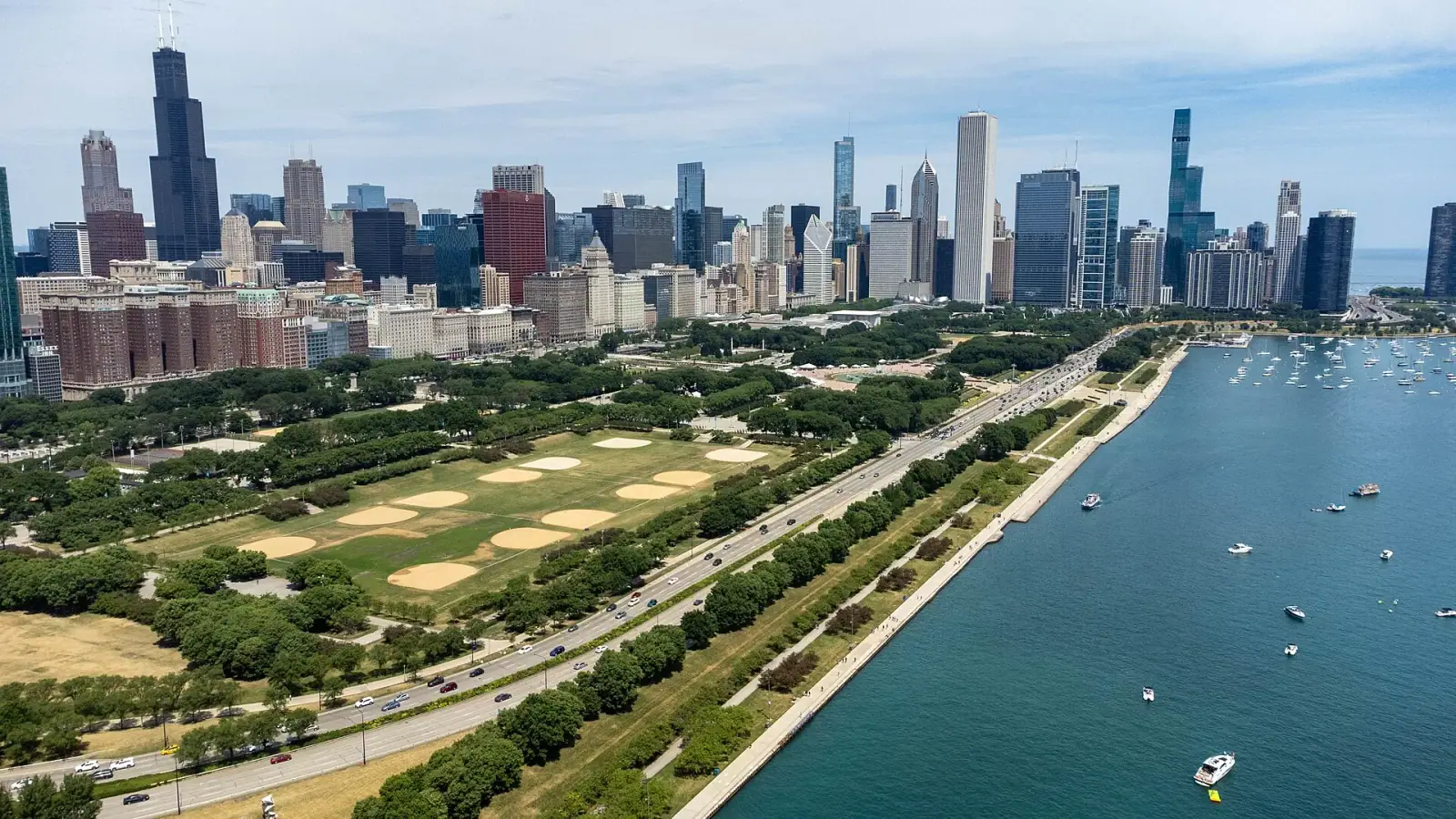
Aerial view of the Chicago skyline with Willis Tower, Grant Park, and Lake Michigan
Photo: Sea Cow / Wikimedia Commons (CC BY-SA 4.0)
United States flag

Chicago

United States

Deep-dish pizza and lakefront skyline, brutal winters, world-class architecture, and blues bars.

$4.200
Monthly Budget
--
Current Weather
Humid Continental
Climate Type
90 Mbps
Avg. WiFi Speed
5/10
Safety Score
5,000+
Active Nomads
--
Time Difference
Scroll
0
Nomad Score

Chicago for Digital Nomads: The Honest Take

Deep-dish pizza and lakefront skyline, brutal winters, world-class architecture, and blues bars. Chicago pairs English with fast WiFi and a humid continental climate, all for about $4,200 a month. If anything, cost lags.

Compare Chicago vs Nashville →

Category Breakdown

How Chicago scores across all 13 factors

Weather in Chicago

Monthly averages from 2019-2023 (Open-Meteo), and the best time to visit

-6°
Jan
-7°
Feb
-1°
Mar
13°
Apr
19°
10°
May
25°
16°
Jun
27°
19°
Jul
27°
19°
Aug
24°
16°
Sep
16°
Oct
Nov
-2°
Dec
Daily high & low (°C)Rainfall (mm/month)Best months to visit

The best time to visit Chicago for comfortable weather is Jun, Jul, Aug. The warmest month is Jul (around 27°C by day), and the wettest is Jul (about 156mm of rain).

Chasing good weather? See other cities that are warm in Jun, or plan a multi-city route around the seasons. Staying a while in Chicago? Check visa options, your time-zone overlap and how far your budget stretches, or find it on the world map.

Historical monthly averages, not a forecast. Source: Open-Meteo.

Best Neighborhoods in Chicago

Where to base yourself for the perfect nomad experience

Wicker Park/Bucktown

$$$
Hipster & Creative

Chicago's hipster heartland

Wicker Park and Bucktown are Chicago's creative center - indie shops, great restaurants, and vibrant nightlife. The six corners intersection is Chicago's coolest crossroads.

Best for: Creatives, young professionals, and those seeking trendy Chicago
✓ Pros
  • Best nightlife
  • Great restaurants
  • Indie shops
  • Creative scene
✗ Cons
  • Gentrified
  • Expensive
  • Crowded weekends

Lincoln Park

$$$$
Affluent & Green

Chicago's classic affluent neighborhood

Lincoln Park is Chicago's most desirable neighborhood - beautiful park, zoo, and tree-lined streets. It's where Chicago's young professionals aspire to live.

Best for: Families, professionals, and those seeking classic Chicago living
✓ Pros
  • Beautiful park
  • Free zoo
  • Great dining
  • Safe
✗ Cons
  • Expensive
  • Fratty bars
  • Less diverse

Logan Square

$$
Creative & Emerging

Chicago's emerging creative hub

Logan Square is Chicago's current it-neighborhood - historic boulevards, craft cocktail bars, and creative energy. It's more affordable than Wicker Park with similar vibes.

Best for: Young creatives, foodies, and those seeking emerging Chicago
✓ Pros
  • Great bars
  • Historic architecture
  • Creative scene
  • More affordable
✗ Cons
  • Gentrifying
  • Far from Loop
  • Limited transit

West Loop

$$$$
Foodie & Industrial

Chicago's restaurant row powerhouse

West Loop is Chicago's culinary capital - Randolph Street's restaurant row, Google's office, and industrial-chic vibes. It's where Chicago's food scene happens.

Best for: Foodies, professionals, and those seeking Chicago's culinary best
✓ Pros
  • Best restaurants
  • Foodie heaven
  • Industrial cool
  • Near downtown
✗ Cons
  • Very expensive
  • Limited residential
  • Crowded weekends

Pilsen

$
Mexican & Artistic

Chicago's Mexican-American cultural heart

Pilsen is Chicago's Mexican soul - murals, taquerias, and cultural institutions. It's authentic, affordable, and home to the National Museum of Mexican Art.

Best for: Culture seekers, foodies, and those seeking authentic Chicago
✓ Pros
  • Amazing murals
  • Authentic Mexican food
  • Cultural museums
  • Affordable
✗ Cons
  • Gentrifying
  • Limited transit
  • Some safety concerns

Cost of Living in Chicago

Chicago sits firmly in the expensive tier of American cities. Rent is the biggest line item: a one-bedroom in central neighborhoods like the West Loop, Lincoln Park, or Lakeview runs $1,800 to $2,400 per month. If you push out to Logan Square, Pilsen, or Avondale, you can find solid apartments for $1,200 to $1,600. Utilities and internet add roughly $150 to $200 on top.

  • Rent (central, 1-bed): $1,800 to $2,400/month
  • Rent (outer neighborhoods, 1-bed): $1,200 to $1,600/month
  • Groceries (cooking most meals): $300 to $450/month
  • Eating out (casual, 2 to 3 times a week): $200 to $350/month
  • Coworking hot desk: $350 to $450/month
  • CTA unlimited monthly transit pass: $105/month
  • Mobile data (~10 GB plan): $30 to $40/month

Realistic monthly total range: $2,100 to $3,200 depending on whether you cook most meals, choose a cheaper neighborhood, and skip coworking in favor of cafes. All costs are in USD. There is no separate local currency.

Dining out adds up fast. A casual sit-down dinner runs $20 to $35 per person, and a craft beer or coffee will each cost $6 to $7. If you eat out more than a few times a week, your food budget climbs quickly.

Where to Work

Chicago has a strong coworking infrastructure. Workbox operates several locations including Fulton Market and River North, with hot desks starting around $350/month and a more premium floating membership near $800. Industrious has eight Chicago locations with coworking access from roughly $315/month, including daily coffee and snacks. WeWork has a presence downtown and in the West Loop, with hot desks from $350 to $450/month.

Cafe work culture is alive and well here. The Wormhole Coffee in Wicker Park is a long-standing remote worker favorite with free wifi, ample outlets, and relaxed attitudes toward laptop users. Intelligentsia Coffee on N Broadway in Lakeview is more polished and works fine for focused mornings. Many cafes on the North and Northwest sides welcome laptop workers during off-peak hours.

WiFi speeds at dedicated coworking spaces are reliable, typically 90 Mbps or better. Cafe wifi is more variable: fine for calls and file uploads, but you should not rely on a coffee shop connection for anything mission-critical without a backup. Mobile data coverage across Chicago's dense neighborhoods is solid on all major US carriers.

Getting Around

The CTA runs eight color-coded elevated train lines (the "L") plus more than 120 bus routes. A 30-day unlimited pass costs $105 and covers both trains and buses. This is the practical choice for most daily movement. The L connects key neighborhoods directly to the Loop and runs late into the night, with some lines running 24 hours on weekends.

Chicago's grid layout makes it genuinely walkable in central and North Side neighborhoods. Lakeview, Lincoln Park, Wicker Park, and the West Loop all score high for walkability. Logan Square and Pilsen are more spread out but still bike-friendly.

For airports: O'Hare (ORD) is about 45 minutes from downtown on the Blue Line for a flat $5 fare. Midway (MDW) is only 20 to 25 minutes on the Orange Line for around $2.50. Both connections are unusually convenient for a major American city, and you should almost never need a rideshare unless you have heavy luggage. Rideshares from O'Hare to downtown run $50 to $70 in traffic.

Biking works well in summer and fall. The city has a Divvy bike-share network across hundreds of stations. Winter biking is possible but requires commitment.

Visas and Staying Long-Term

The US does not offer a digital nomad visa. Citizens of 42 countries can enter visa-free under the Visa Waiver Program (ESTA), including the UK, Germany, France, Japan, South Korea, Australia, New Zealand, and most of Western Europe. ESTA allows stays of up to 90 days and cannot be extended from within the US. You must leave before applying again.

Citizens of countries not covered by the VWP need a B-2 tourist visa, which can grant up to six months but requires an embassy appointment, a $185 to $435 application fee (including a new Visa Integrity Fee added in 2026), and approval is not guaranteed. Working for a US employer on any of these visitor statuses is not permitted. Working remotely for a non-US employer sits in a legal grey area that is not formally authorized.

For longer-term stays, your options are limited: O-1 visas for people with extraordinary abilities, E-2 investor visas, or employer sponsorship. None of these are quick or simple. Always confirm current rules with the U.S. Department of State before traveling.

Best Time to Visit

Chicago has a genuinely dramatic climate. Winters are brutal: January averages around 25F (-4C), with wind chill making it feel colder. Blizzards are possible from December through March, and outdoor work breaks are not appealing.

The best windows for remote workers are late April through June and September through mid-October. Temperatures in these windows range from 55F to 75F (13C to 24C), the city is vibrant without peak summer crowds, and accommodation rates are slightly lower than July and August. Summer (July and August) is great for lakefront life but brings heat, humidity, festival crowds, and peak prices.

If you can only visit once, aim for September: warm days, crisp evenings, cultural events, and a city that feels electric before winter locks in.

Pros and Cons

Pros

  • World-class food scene spanning deep dish, fine dining, and every global cuisine
  • Excellent public transit for a US city, including direct airport train links
  • Strong coworking infrastructure and a large remote-work community
  • Rich cultural life: museums, live music, comedy, architecture, and the lakefront
  • Cheaper than New York or San Francisco for comparable central locations
  • Diverse, walkable neighborhoods each with their own character

Cons

  • Winters are harsh and long, making outdoor lifestyle effectively unavailable for 4 to 5 months
  • No digital nomad visa and strict 90-day ESTA limit makes extended stays difficult
  • Crime is unevenly distributed: certain South and West Side areas see high rates of violent crime
  • High overall cost of living compared to most international nomad destinations
  • Sales tax in Chicago is among the highest in the US, adding to everyday costs

Who Chicago Is Best For

Chicago suits remote workers who want a genuine big-city experience without New York prices, especially if they value food culture, live music, architecture, and access to a diverse and creative urban environment. It works particularly well for US-based nomads who can stay longer than 90 days, people doing a multi-week stay in the warmer months, or those on a client visit who want to extend their trip.

It is less ideal for long-term nomads on tight budgets who rely on ESTA, travelers expecting year-round outdoor lifestyle, or anyone wanting to base themselves in the US for six months or more without a visa pathway. If you prioritize low cost, warm winters, or easy long-term stays, cities in Southeast Asia, Latin America, or Southern Europe will serve you far better.
Where to Stay in Chicago

Top neighborhoods and accommodations for digital nomads

Sentral Michigan Avenue

Serviced apartments
South Loop

Furnished suites with coworking space, infinity pool, and 24-hour concierge steps from Grant Park and the lakefront.

Check availability →

Sonder at Grant Park

Aparthotel
Grant Park

Smartly designed apartments near the Loop with full kitchens, fast Wi-Fi, and a pool for longer nomad stays.

Check availability →

The Hoxton, Chicago

Boutique hotel
West Loop

Trendy Fulton Market hotel with dedicated coworking lounges, lightning-fast Wi-Fi, and walkable access to top restaurants.

Check availability →

Kimpton Gray Hotel

Hotel
The Loop

Four-diamond hotel in a 1894 landmark building with free Wi-Fi, an in-house cafe, and Millennium Park a short walk away.

Check availability →

Stay 424

Hostel
Wicker Park

Nomad-focused hostel with a free coworking space, podcast room, photo studio, and rooftop deck in one of Chicago's coolest neighborhoods.

Check availability →

Browse apartments, aparthotels and hotels across Chicago. Compare prices and book a base that suits a remote-work stay.

See available stays in Chicago →

Affiliate link. See our disclosure.

Best Coworking Spaces

Where nomads get work done in Chicago

Workbox Fulton Market

Coworking space
Fulton Market

Six-floor renovated industrial space with hot desks, private offices, and direct access to Blue, Pink, and Green line CTA trains.

Visit website →

Industrious River North

Coworking space
River North

Premium coworking with daily coffee, breakfast snacks, phone booths, and fast internet in a professionally managed shared office environment.

Visit website →

WeWork West Loop

Coworking space
West Loop

Flexible hot desks and dedicated desks with 24/7 access, fast wifi, craft beer on draft, and a large professional community in the West Loop.

Visit website →

The Wormhole Coffee

Laptop-friendly cafe
Wicker Park

Beloved Wicker Park cafe with free wifi, plentiful outlets, and a DeLorean hanging from the ceiling; open until 11pm daily.

View on Maps →

Intelligentsia Coffee Broadway Coffeebar

Specialty coffee
Lakeview

Intelligentsia's flagship location where the company was founded in 1995, known for exceptional espresso and a focused work-friendly atmosphere on weekday mornings.

Visit website →

Lost Larson Bakery

Bakery cafe
Andersonville

Beloved neighborhood bakery and cafe with excellent pastries, strong coffee, and a relaxed atmosphere suitable for morning remote work sessions.

View on Maps →

Where to Eat & Drink

Best food and drink spots in Chicago

Girl and the Goat

New American
West Loop

Chef Stephanie Izard's inventive shared-plate restaurant with a Michelin Bib Gourmand recognition and a devoted local following since 2010.

Visit website →

Au Cheval

Diner bar
West Loop

A West Loop institution famous for its double cheeseburger, local craft beers on tap, and elevated diner fare in a lively late-night atmosphere.

Visit website →

avec

Mediterranean
West Loop

Chicago staple for over 20 years serving rustic Mediterranean small plates and natural wines in a cozy communal setting on Randolph Street.

Visit website →

Boka Restaurant

Modern American
Lincoln Park

Michelin-starred Lincoln Park restaurant from the Boka Restaurant Group, offering a refined seasonal menu in an elegant but approachable setting.

Visit website →

Cariño

Latin American
Uptown

New York Times Best Restaurants 2025 pick blending modern Latin American technique with Chicago's diverse culinary identity under Chef Norman Fenton.

View on Maps →

Intelligentsia Coffee Randolph

Specialty coffee bar
The Loop

Convenient Loop location of Chicago's iconic specialty coffee roaster, popular with downtown workers for quality espresso and a calm daytime environment.

Visit website →

What Do Nomads Say?

Vote on how accurate these scores are based on your experience

Cities with a Similar Vibe to Chicago

Different places that score alike across our 13 categories, if you like Chicago, these tend to feel similar.

Frequently Asked Questions About Chicago

How much does it cost to live in Chicago as a digital nomad?

A comfortable nomad budget in Chicago is around $4,200 a month: a furnished rental, food, coworking, and getting around. Live a little outside the center or eat local to spend less.

Is the internet fast enough for remote work in Chicago?

With a WiFi score of 9/10, connectivity in Chicago is excellent for calls and focused work. A prepaid local SIM keeps you online when you are away from the apartment.

Is Chicago safe for digital nomads?

Chicago scores 5 out of 10 for safety in our ratings, which is workable for solo travel and long stays. Use normal precautions at night and with valuables, and choose well-reviewed areas.

Is Chicago a good city for digital nomads overall?

For nomads, Chicago is worth a look if you value English and fast WiFi. Costs sit near $4,200 a month and the community keeps growing, though, like anywhere, it will not match every checklist.