Cost of Living in Gold Coast
Real market data
Source: Numbeo · August 2026
$3,360/moSolo nomad1-bed centre + living costs
$4,110/moCoupleshared 1-bed + costs
$2,410/moLean / localcheaper area + costs
- 1-bed rent, city centre$2,410A$3,438
- 1-bed rent, outside centre$1,470A$2,090
- Monthly costs excl. rent (1 person)$940A$1,340
- Meal, inexpensive restaurant$21A$30
- Monthly transit pass$56A$80
- Buy price, per m² (centre)$9,520A$13,553
Prices are from Numbeo (August 2026), converted to USD at $1 = A$1.42 (01 Aug 2026). The monthly living-costs figure is our transparent one-person basket, groceries, a few meals out, utilities, phone, internet, transport and essentials, priced from those figures. Solo adds central rent; couple and lean are estimates from the same numbers.
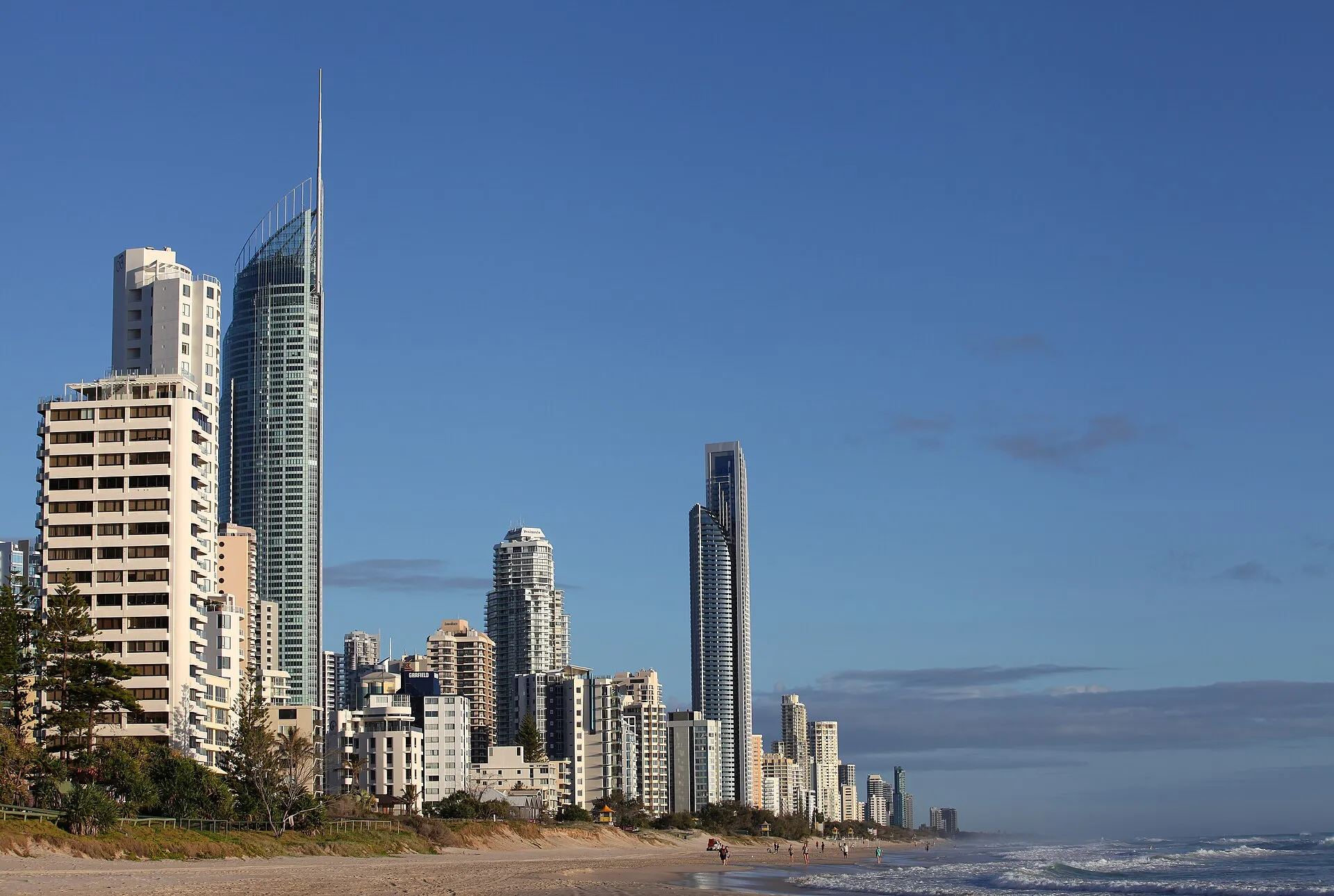
The Gold Coast is not a budget destination. It sits in Australia, so prices are high by global standards, and the beachfront suburbs carry a premium. Here is a realistic monthly picture for one person. Prices are in Australian dollars with rough USD conversions at about $0.50 to 0.66.
- Rent, central beachfront (a one-bedroom in Surfers Paradise, Broadbeach, or Main Beach): roughly $1,800 to $2,100 per month. Weekly rents of $420 to $490 are normal here.
- Rent, cheaper inland (Southport, Nerang, Robina, or further from the sand): roughly $1,350 to $1,650 per month.
- Groceries: $280 to $420 per month, shopping at Coles, Woolworths, or Aldi.
- Eating out: a casual meal runs $14 to $21. A mid-range dinner for two lands near $70. Coffee is $3.50 to $4.
- Coworking hot desk: $28 to $35 per day, or roughly $210 to $360 per month for a monthly membership.
- Local transport: Queensland runs a flat 50 cent fare per trip on trams, buses, and trains, so a month of daily travel can cost under $21. This is unusually cheap and worth planning around.
Expect a total in the range of $2,100 to $3,150 per month, depending mostly on rent and how often you eat out. The single largest swing is location: moving a few kilometres inland can cut your rent by hundreds a week. Note that the rental market is tight, with vacancy rates near 1 percent, so short-term and furnished options often carry a markup over the figures above.
Where to Work
The Gold Coast has a steady coworking scene, clustered in Burleigh Heads and Southport. In Burleigh, Flockd is a well-regarded space with hot desks around $31 per day, and there are smaller community-focused spots like Burleigh Space and GROspace in nearby Burleigh Waters. In Southport, Cohort Innovation Space, Gold Coast Business Hub, and Old Station offer day desks and monthly memberships, with some providing 24/7 access. Booking a hot desk usually means turning up, plugging in, and joining the community for the day.
Cafe-work culture is strong, especially in Burleigh, Palm Beach, and Nobby Beach, where independent cafes are used to laptops during off-peak hours. Read the room: mornings and lunch rushes are busy, so buy something and do not camp on a single flat white for four hours. Home internet is generally solid, with the national broadband network delivering reliable fixed-line speeds in most apartments, and mobile coverage is good along the coast. Confirm the internet setup before signing any lease, since older buildings can vary.
Getting Around
The spine of local transport is the G:link tram, which runs from Helensvale in the north down through Southport, Main Beach, Surfers Paradise, and Broadbeach South. If you live and work along that corridor, the tram covers most of your daily needs, and at 50 cents a trip it is close to free. Beyond the tram line, Surfside buses fill in the rest of the coast, and a heavy-rail line connects Helensvale toward Brisbane. A tram extension south toward Burleigh Heads is under construction, which will eventually widen the walkable-plus-transit zone.
Here is the honest catch: the Gold Coast is long and spread out. If you settle in Burleigh or Palm Beach rather than the tram corridor, you will lean on buses, which are slower, or you will want a car. A car is genuinely useful for the southern beaches, the hinterland, and grocery runs, though it is not essential if you base yourself on the tram line. For the airport, Gold Coast Airport (OOL) at Coolangatta sits at the southern end with no tram station. The route 777 bus connects the airport to Broadbeach South tram station roughly every 15 minutes during the day, and rideshare and taxis are readily available.
Sorting transport? Book an airport transfer, or compare car rental on Auto Europe and QEEQ.
Visas and Staying Long-Term
Most short-stay visitors use one of two electronic visas, both allowing stays of up to three months per visit within a 12-month validity. US, Canadian, and several Asian passport holders apply for the ETA (Electronic Travel Authority, subclass 601) through the Australian ETA mobile app, which carries a small service fee. UK, Irish, and most EU passport holders use the free eVisitor (subclass 651), applied for online. Both permit multiple entries during the validity period, so you can leave and return.
Neither is a long-stay or work visa, and there is no simple extension of the three-month limit. If you want to stay longer, you are looking at applying for a longer Visitor visa or a different visa class entirely, and remote work rules can be nuanced.
Best Time to Visit
The Gold Coast has a warm, subtropical climate with roughly 300 days of sunshine a year, so there is no truly bad season. That said, summer (December to February) is hot and humid, with highs near 30C and humidity often above 70 percent, plus the heaviest rain and the holiday crowds. For remote work, the sweet spot is the shoulder seasons: autumn (March to May) and spring (September to November). You get warm days around 24C to 26C, lower humidity, less rain, and the ocean is still warm enough to swim. April in particular is often the most comfortable month. Winter (June to August) is mild, sunny, and dry, cooler for swimming but pleasant for working and getting outside.
Pros and Cons
The upside:
- Genuinely excellent beaches and an outdoor, active lifestyle right on your doorstep.
- Warm, sunny weather most of the year.
- Cheap public transport at 50 cents a trip, plus a real coworking and cafe scene.
- Reliable internet and easy access to nature, from surf breaks to the hinterland.
The downside:
- It is an expensive place to live, especially near the beach, with a tight rental market.
- The city is spread out, so getting around without a car can be slow if you live off the tram line.
- It has a strong tourist-town feel, busiest around Surfers Paradise, which can feel transient rather than a settled local community.
- Summer humidity is a real factor if you dislike sticky heat.
Who Gold Coast Is Best For
The Gold Coast suits remote workers who want a beach-first, outdoor lifestyle and have the budget to pay for it. If you surf, swim, run, or simply want to end the workday in the ocean, few places make that as easy. It works well for those who base themselves along the tram corridor or in a walkable beach suburb like Burleigh, and who value sunshine and space over dense urban buzz.
Skip it if you are on a tight budget, since Australian prices and beachfront rents add up fast. It is also a weaker fit if you want a compact, walkable city with deep culture and nightlife, or if you dislike a touristy atmosphere and humid summers. In those cases, a more urban or more affordable base will serve you better.