Cost of Living in Lucerne
There is no gentle way to say it: Lucerne (Luzern) is expensive, because Switzerland is one of the priciest countries on earth. A realistic solo-nomad budget runs from about $2,200 a month at the very lean end to $3,800 or more for anything comfortable, and it is easy to exceed that. Rent is the biggest line: a small furnished apartment or studio near the centre commands a premium, and short-term or serviced flats cost more again. Groceries, restaurants, transport and a coffee all sit well above European norms. The upside is that you get what you pay for, with immaculate infrastructure, superb public services and a high quality of life. Budget carefully, cook at home often, and treat Lucerne as a splurge base rather than a cheap long stay.
- Furnished studio or one-bed near the centre: roughly $1,500 to $2,600 per month.
- Restaurant main course: often $25 to $40; a casual coffee $5 or more.
- Monthly local transport pass: around $70 to $90.
- Groceries for one: budget $450 to $650 a month if you cook.
Where to Work in Lucerne
For getting work done, Lucerne delivers. Internet and wifi are fast and reliable, mobile coverage is excellent, and power is rock solid, so video calls and heavy uploads are never a worry. The catch, as everywhere here, is cost. There are laptop-friendly cafes around the old town and lakefront and a handful of coworking spaces, though the scene is smaller than in Zurich or a large hub city. A lakeside or old-town apartment with a desk and a mountain view makes a genuinely superb, if pricey, base to work from. If you value focus, safety and a calm, orderly environment over a buzzing startup scene, this suits you well. Just factor day passes and coffees into an already steep budget, and consider a monthly flat with good wifi as your primary workspace.
- Excellent, fast, reliable internet and near-total mobile coverage.
- Laptop-friendly cafes in the Altstadt and along the lakefront.
- A small number of coworking spaces, more limited than in bigger cities.
- A furnished lakeside flat makes a superb but expensive home office.
Getting Around Lucerne
Lucerne is a joy to get around and a car is genuinely unnecessary. The compact old town and the lakefront are very walkable, and you can cross the historic core on foot in minutes over the Chapel Bridge (Kapellbrucke). Public transport is superb: a dense city bus network, and a major railway station that puts you roughly an hour from Zurich and well connected across Switzerland. On the water, lake steamers glide across Lake Lucerne (Vierwaldstattersee) to lakeside villages, and classic cogwheel and cable railways climb Mount Pilatus and Mount Rigi for the big alpine views. Everything runs frequently and on time, tickets integrate cleanly, and the whole system is clean and easy to navigate. Between walking, buses, trains and boats you have all you need, without ever needing to drive or park.
- A very walkable old town and lakefront core.
- Frequent city buses and a major rail hub (about an hour to Zurich).
- Lake steamers across Lake Lucerne to villages and trailheads.
- Cogwheel and cable railways up Pilatus and Rigi.
Visas for Lucerne
Switzerland is not in the European Union, but it is part of the Schengen Area, so for most short stays the familiar rule applies: many nationalities, including US and UK citizens, can visit for up to 90 days within any rolling 180-day period without a visa. That window is shared across the whole Schengen zone, so time spent in other Schengen countries counts too. Switzerland does not offer a dedicated digital-nomad visa, and staying longer or working locally means engaging with Swiss cantonal permit and residence rules, which are strict and vary by nationality and situation. That is a serious step with income, insurance and registration requirements. This is general editorial guidance, not legal advice, so always confirm current requirements with official Swiss and Schengen sources or an immigration professional before you plan a longer stay.
- Schengen 90/180 rule covers most short visits; Switzerland is in Schengen but not the EU.
- No dedicated Swiss digital-nomad visa exists.
- Longer stays require cantonal residence and work permits, which are strict.
- Confirm details with official sources; this is not legal advice.
Best Time to Visit Lucerne
The sweet spot is late spring to early autumn, roughly May to September, when the lake sparkles, the mountains are open, and the days are long and warm enough for boat trips and hikes. Summer is the peak season, bringing the best weather but also the biggest crowds and the highest prices, so book accommodation early. Late spring and early autumn offer a lovely balance of good weather and slightly thinner crowds, and autumn adds golden colour around the lake and hillsides. Winter is cold and can be grey and foggy over the lake, though it brings a cosy old-town atmosphere and easy access to skiing in the nearby Alps. For classic lake-and-mountain Lucerne at its best, aim for the warmer months and enjoy the long alpine evenings.
- May to September: best weather, open mountains, long days.
- Summer is peak: gorgeous but busy and pricey; book ahead.
- Autumn brings colour and slightly calmer crowds.
- Winter is cold and can be foggy, with skiing close by.
Pros and Cons of Lucerne
Lucerne is one of the most beautiful and well-run cities you can base yourself in, and that is both the pitch and the caveat. On the plus side you get world-class lake-and-mountain scenery, outstanding safety, cleanliness and public services, excellent internet, and effortless transport, all wrapped in a picture-perfect painted old town. It is calm, orderly and easy to live in. The obvious downside is cost: everything from rent to a coffee is expensive, and long stays add up fast. The international and nomad community is real but small, and nightlife is quiet by big-city standards. If your priorities are beauty, safety and quality of life, Lucerne is hard to beat; if you want a cheap, buzzing hub, look elsewhere.
- Pro: stunning scenery, top-tier safety, cleanliness and infrastructure.
- Pro: excellent internet and seamless, car-free transport.
- Con: very high cost of living across the board.
- Con: small nomad community and low-key nightlife.
Who Lucerne Is For
Lucerne suits the nomad who values a calm, safe, gorgeous base over a cheap or high-energy one, and who has the budget to match. It is ideal if you are drawn to lakes and mountains, want reliable internet and flawless transport, and enjoy walkable old-town living with hiking, boating and alpine day trips on your doorstep. It works well for a shorter, higher-quality stay, a well-funded remote worker, or someone pairing work with serious outdoor time. It is a weaker fit if you are watching every dollar, crave a big international nomad scene, or want lively nightlife and constant novelty. Come to Lucerne for beauty, order and nature, plan your budget honestly, and it will reward you with one of the finest settings in Europe.
- Great for: well-funded remote workers who prize safety and scenery.
- Great for: lake and mountain lovers who want walkable, car-free living.
- Less ideal for: tight budgets and big-scene, nightlife-seeking nomads.
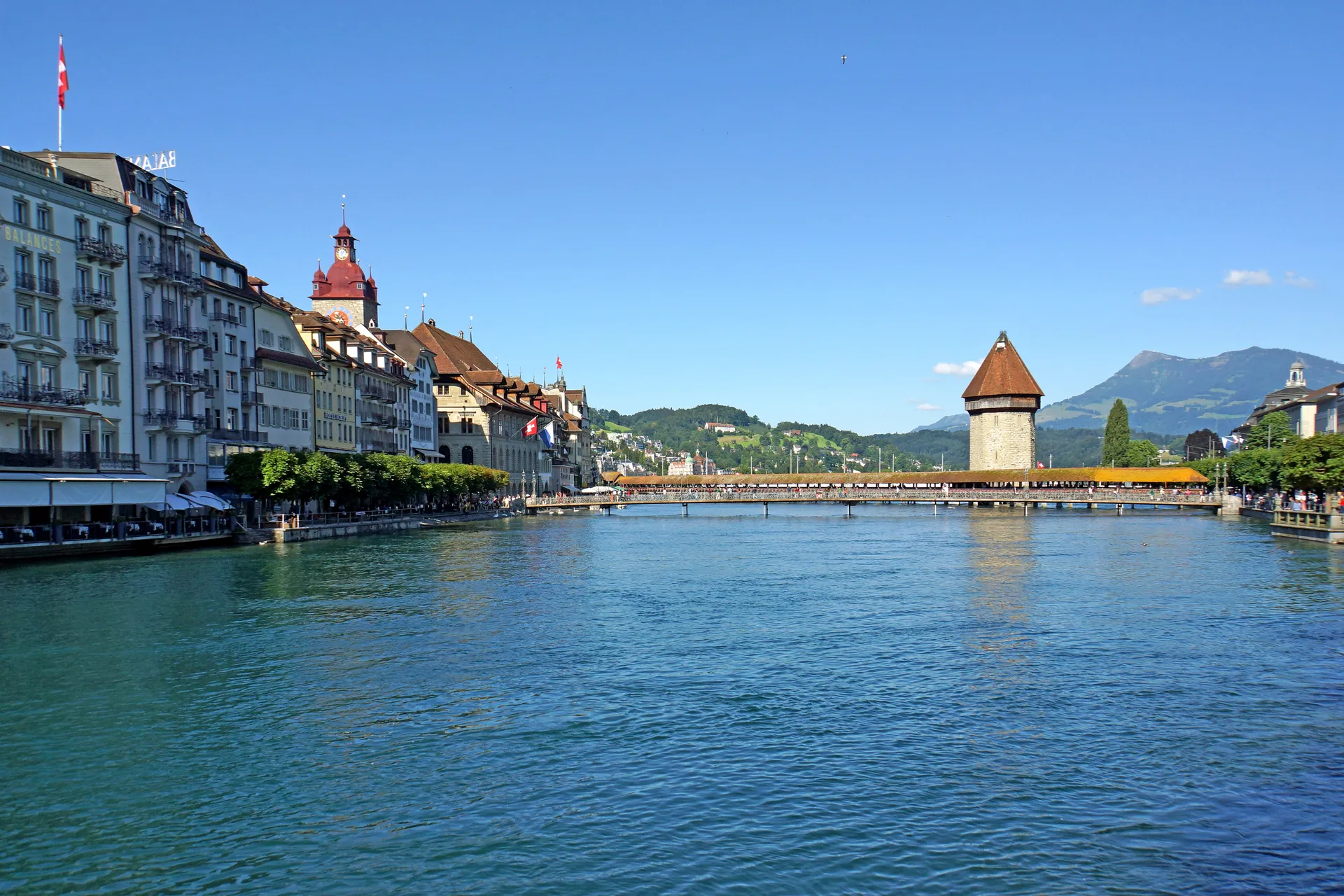 Photo: Dennis G. Jarvis / Wikimedia Commons (CC BY-SA 2.0)