Cost of Living in Huanchaco
Where this figure comes from. No cost survey covers Huanchaco, so the $1,000 a month above is our own estimate rather than a measurement. On 416 of our 999 city guides the figure is built from a published Numbeo basket, a one-bedroom rent in the centre plus one person's monthly costs without rent, converted to USD; this city is not one of them. How we source everything.
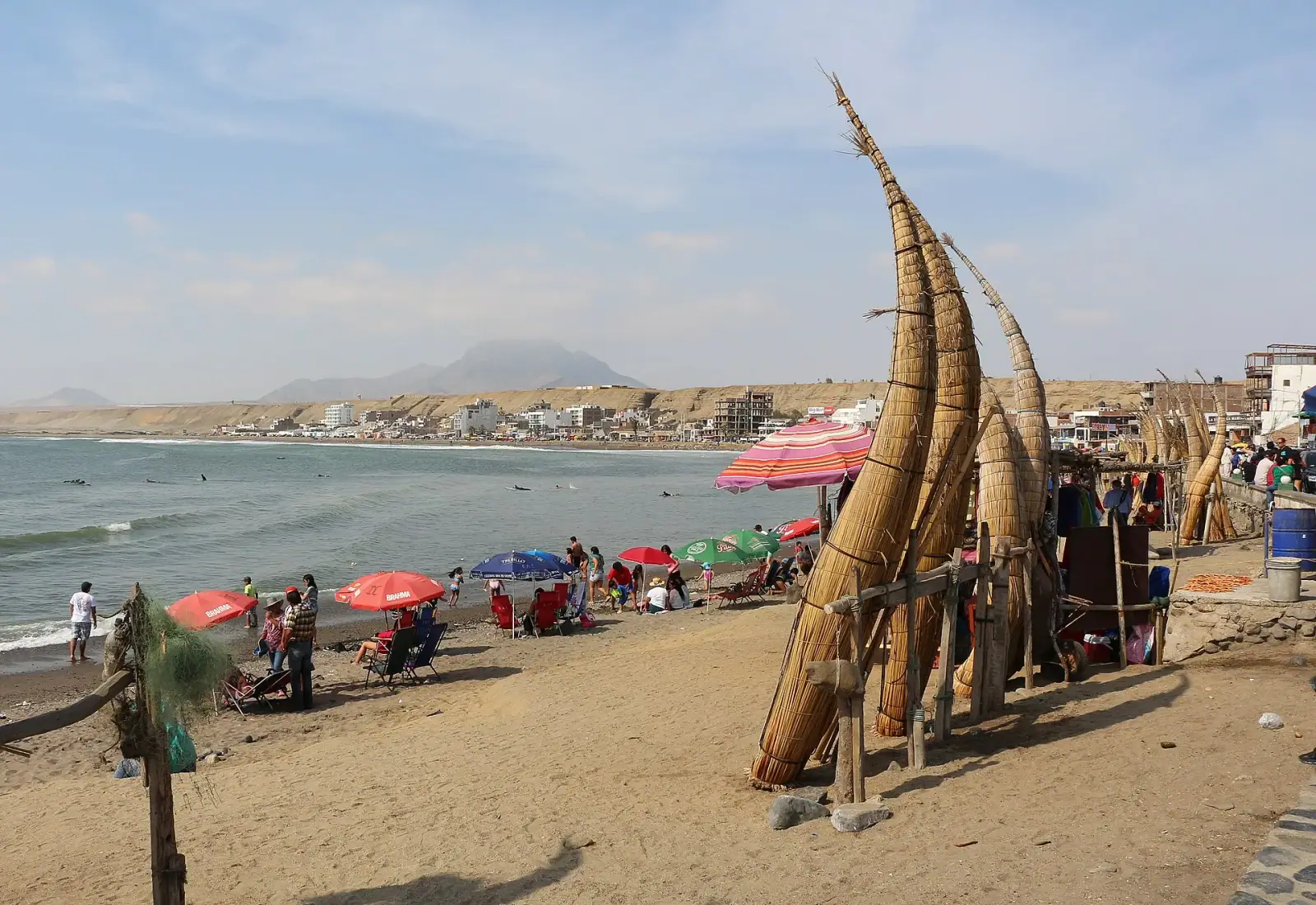
Huanchaco is one of the more affordable coastal towns in Latin America. Your main expense is rent: a furnished one-bedroom apartment in the tourist strip along Victor Larco avenue runs roughly $350-530 per month, while a room in a quieter residential block a few streets back from the beach can go as low as $180-260. Many nomads rent rooms in guesthouses or surf hostels for $240-350 per month and get a social environment included.
Groceries are cheap if you shop at local markets: rice, eggs, fruit, vegetables, and some chicken for a week costs around $24-35. A set lunch at a local menu restaurant (usually soup, main, and a drink) runs $2-3.50. A sit-down meal at a nicer seafood spot lands you $10-21. Coffee at a cafe costs $2.50-4.
There are no dedicated coworking spaces in Huanchaco itself. Working from a cafe or hostel is free with a purchase. Internet SIM cards from Claro or Movistar run around $10-15 per month for a data plan.
Local transport is almost free: a colectivo minibus between Huanchaco and Trujillo costs $0.59-0.74 (under $1), and a short mototaxi hop around town is $0.88-1.50. A taxi from the Trujillo airport (CAP FAP Carlos Martinez de Pinillos, TRU) to Huanchaco has a fixed rate of around $7.50.
- Rent (1-bed, tourist zone): $350-530
- Rent (room in guesthouse/residential): $180-260
- Groceries: $88-130
- Eating out (mix budget/mid-range): $120-210
- Coworking hot-desk: $0 (no formal spaces; cafes are free with purchase)
- Local transport: $18-29
- Total budget: about $1,000/month for a comfortable solo nomad lifestyle
Where to Work
Huanchaco has no dedicated coworking spaces. Your real options are cafe tables and hostel common rooms. Chocolate Cafe on the main strip is the go-to for laptop work: it has strong WiFi, communal tables, good coffee, and a steady stream of other travelers working. The breakfast menu runs $4.50-6.
Mandala hostel and Moksha Yoga and Surf Hostel both have common areas with WiFi that paying guests can use during daytime hours. Naylamp hostel, one of the oldest in town, offers WiFi throughout the property and a garden area popular for working outdoors.
WiFi quality varies. Fiber connections are not widespread in this part of Peru; most establishments are on DSL or a mobile broadband relay. Speeds are modest but generally enough for video calls, though expect occasional drops during peak evening hours. Buying a Claro or Movistar SIM with a data package gives you a reliable backup for critical calls.
The working culture is casual and unhurried. Nobody will rush you out of a cafe. However, the town is small enough that you will exhaust the novelty of every spot within a week. Nomads who need deep-focus days or consistent high-speed internet often make day trips to Trujillo, the regional capital 20 minutes away, where proper coworking spaces like Estacion Coworking exist.
Getting Around
Huanchaco is very walkable within the tourist zone. The main strip along the beachfront and Victor Larco avenue contains nearly every restaurant, cafe, hostel, and surf school, all within about a 15-minute walk end to end. You rarely need transport to get around town itself.
Mototaxis (three-wheeled motorbike taxis) are available for short hops and charge $0.88-1.50 per ride. For trips to Trujillo, colectivo minibuses leave frequently from the main road and cost $0.59-0.74; the ride takes 20-30 minutes depending on traffic. Taxis to Trujillo run $3.50-4.50.
Getting to the airport is straightforward. The Trujillo airport (TRU) is about 15 km from Huanchaco. A taxi with a fixed price of $7.50 takes roughly 20-25 minutes. From Lima by air takes about 1 hour 20 minutes; by long-distance bus the journey is 8-9 hours and costs $12-26 depending on the operator and comfort class. Ittsa Bus, Cruz del Sur, and Oltursa are the reliable options.
Sorting transport? Book an airport transfer, or compare car rental on Auto Europe and QEEQ.
Visas and Staying Long-Term
Citizens of the US, UK, Canada, Australia, EU countries, and most of Latin America enter Peru visa-free. You receive a tourist stamp on arrival allowing up to 90 days, though immigration officers have discretion and some travelers report receiving fewer days. The theoretical maximum is 183 days per year but in practice since 2021 it is almost always 90 days.
Tourist visa extensions are not available for most foreign nationals. The extension pathway, briefly reopened in 2023, applies only to nationals of Andean Community member states. Your practical option to stay longer is to cross a border and re-enter, but Peru immigration is tightening monitoring of this practice.
A digital nomad visa was announced in late 2023 via Decreto Legislativo 1582 but as of September 2026 it has not been added to the official immigration procedures (TUPA) and cannot be applied for. There is no active remote-worker-specific visa route in Peru at this time.
Best Time to Visit
Huanchaco has a mild, desert-influenced coastal climate year-round. Daytime highs run from about 20 to 26 degrees Celsius (68-79 F) through the year, with almost no rain at any time. Annual rainfall totals only around 20 mm, most of it falling in sporadic drizzle during the Andean wet season (December through March).
The trade-off is persistent cloud cover known locally as the garua. From May through October, a low marine layer sits over the coast for much of the morning, burning off by midday or not at all. That leaves Huanchaco greyer for much of the year than Mancora to the north, which gets brighter skies.
For remote work purposes, any time of year is viable climatically. December through March brings the warmest temperatures, the clearest beach days, the biggest surf swells, and the most other travelers including Peruvian domestic tourists. If you prefer fewer crowds and want a quieter daily routine, April through June hits a nice balance of reasonable warmth and low tourism pressure. July through October is the cooler, cloudier season but also the cheapest for accommodation and the least congested.
Pros and Cons
- Very low cost of living relative to most digital nomad destinations
- Safe and relaxed with a low crime rate by regional standards
- Year-round mild climate with no extreme heat or cold
- Excellent seafood and ceviche at local prices
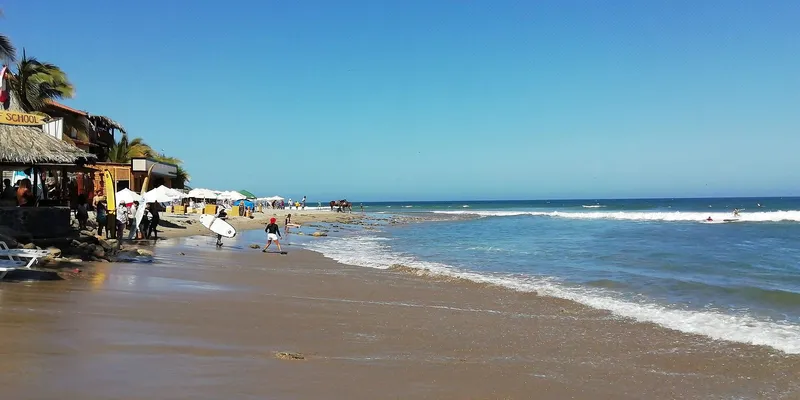
- Surfing and outdoor life right at your doorstep
- Close to Chan Chan, the largest pre-Columbian city in the Americas
- Strong small-town community feel with a growing nomad presence
- No dedicated coworking spaces in town; serious focus work requires trips to Trujillo
- WiFi is mediocre in most venues; fiber is not common here
- Very limited nightlife and entertainment beyond the beach and surf scene
- Small social pool: if you are not a surfer, your social circle may thin quickly
- Persistent cloud cover during the May-October winter; not the sunniest coast
- Tourist visa cannot be extended for most nationalities; long-term legal stays require planning
- Not well-suited for team calls or high-bandwidth work without a solid backup SIM strategy
Who Huanchaco Is Best For
Huanchaco works best for nomads who genuinely want to surf or spend significant time at the beach, and for whom low cost of living is the top priority. If your work is asynchronous (writing, design, content, coding on projects that do not require constant video calls), you can make the WiFi situation work. The town suits people who appreciate quiet, slow-paced living over city energy, and who find the combination of fresh ceviche, world-class surf breaks, and an easy-going social scene genuinely appealing rather than just tolerable.
History and archaeology enthusiasts will also find Huanchaco a great base: Chan Chan, Huaca del Sol, and Huaca de la Luna are all within easy reach of Trujillo.
You should skip Huanchaco if you depend on fast, reliable fiber internet for your work, if you need a robust professional networking scene, or if you want active nightlife and a diverse city experience. Longer stays beyond 90 days also require careful visa planning since extensions are effectively closed to most nationalities. If you fall into any of these categories, you would be better served by Lima, Cusco, or Medellin in the broader region.