Cost of Living in Gili Islands
Where this figure comes from. The $1,200 monthly budget above is our own estimate rather than a measurement. How we source everything.
A realistic month on the Gili Islands comes to $1,200, and it holds only if you rent by the month rather than the night. A simple bungalow with a fan and a bathroom runs about $450 monthly off season, more with air conditioning or a pool. Food is the easy part: a plate at a warung such as Warung Dewi on Gili Trawangan costs $2 to $4, while a western dinner at the beach clubs is $10 to $18, so cooking half your meals keeps food near $300. Transport is a bicycle rental at roughly $25 a month, and horse carts are for luggage. A desk at a coworking space or a cafe subscription adds $60 to $120. Everything arrives by boat, so beer, cheese and anything imported carry a steep island markup.
Where to Work in Gili Islands
There is no polished coworking scene here, so you work from cafes and from your accommodation. On Gili Trawangan, Coffee & Thyme and The Roast House are the places people open laptops, and Gili Air has a coworking space that sells day passes with air conditioning and a generator. The real constraint is power and signal. Outages are common, usually when a storm hits the Lombok cable or when the island generators strain at peak evening hours, and wifi is shared across many guests. Fibre has reached some resorts but gets patchy elsewhere. Carry a local SIM from Telkomsel as a backup, schedule important calls in the morning, and choose a place with a battery inverter if your income depends on being online.
Getting Around Gili Islands
Motor vehicles are banned on all three islands, so you walk, cycle, or ride a cidomo, the horse cart that works as the local taxi. A lap around Gili Trawangan by bicycle takes about an hour, and the sandy inland tracks are rougher than the beach road. Most nomads arrive by fast boat from Bangsal harbour in Lombok, a ten to twenty minute crossing, or from Padang Bai in Bali, which takes about two hours and costs around $25 to $35. The public boat from Bangsal is cheaper but waits until it fills. Lombok International Airport at Praya is the nearest airport, roughly ninety minutes by road to Bangsal. Between the three islands, small public boats run through the day, and weather can cancel crossings.
Visas for Gili Islands
Citizens of most Western countries, including the US, UK, Canada, Australia and all EU states, can get an Indonesian visa on arrival valid for 30 days, extendable once for another 30 days at an immigration office, according to the Wikipedia visa policy page as updated in November 2024. It can also be bought online through the eVisa portal before you fly. Beyond two months you either leave and return or switch to a longer permit. Indonesia has also introduced a remote worker visa, which is aimed at nomads who earn their income from outside the country; it asks for proof of about $60,000 a year in income. Immigration offices are in Mataram on Lombok, not on the Gilis, so plan extensions around a ferry day.
Best Time to Visit Gili Islands
The dry season, running from May to September, is when the Gilis are at their best, with sunny days, calm seas for snorkelling and clear air. July and August are the busiest and most expensive months, with boats packed and rooms booked weeks ahead. October and November are a quieter shoulder period that still has plenty of sun and better prices. The wet season from December to March brings heavy afternoon rain, occasional rough water that cancels boats, and more mosquitoes, although it is the cheapest time to rent. Visibility for diving is best when the seas are flat, and turtles are around all year. For a first month, aim for late May, June or September, when you get dry weather without the crowds.
Pros and Cons of Gili Islands
The Gili Islands give you water so clear you can see turtles from the jetty, no traffic noise, and a daily routine built around cycling to a beach for sunset. Snorkelling and freediving are on your doorstep, the diving community is large, and you can reach the Rinjani region on Lombok for a weekend. The cons are practical. Wifi and power are unreliable, imported goods are expensive, the water is not safe to drink, and garbage on the islands is a visible problem. Gili Trawangan gets loud at night, and few people stay longer than a month, so friendships turn over quickly. Health care is limited to small clinics, and serious cases go to Lombok or Bali. Rent is the easy saving.
Who Gili Islands Is For
The Gilis suit a nomad whose work is flexible, mostly asynchronous, and who wants the ocean as the main attraction. Divers, freedivers, yoga people and writers do well, particularly on quieter Gili Air or Gili Meno, where evenings are calm and the pace is slow. Gili Trawangan fits someone who also wants a social life and does not mind music from the beach bars. It is a poor match for anyone who needs dependable video calls every day, who relies on fast food delivery and shops, or who gets restless without a city around them. Treat the islands as a one or two month reset between longer stays in Bali or Lombok, not as a permanent office.
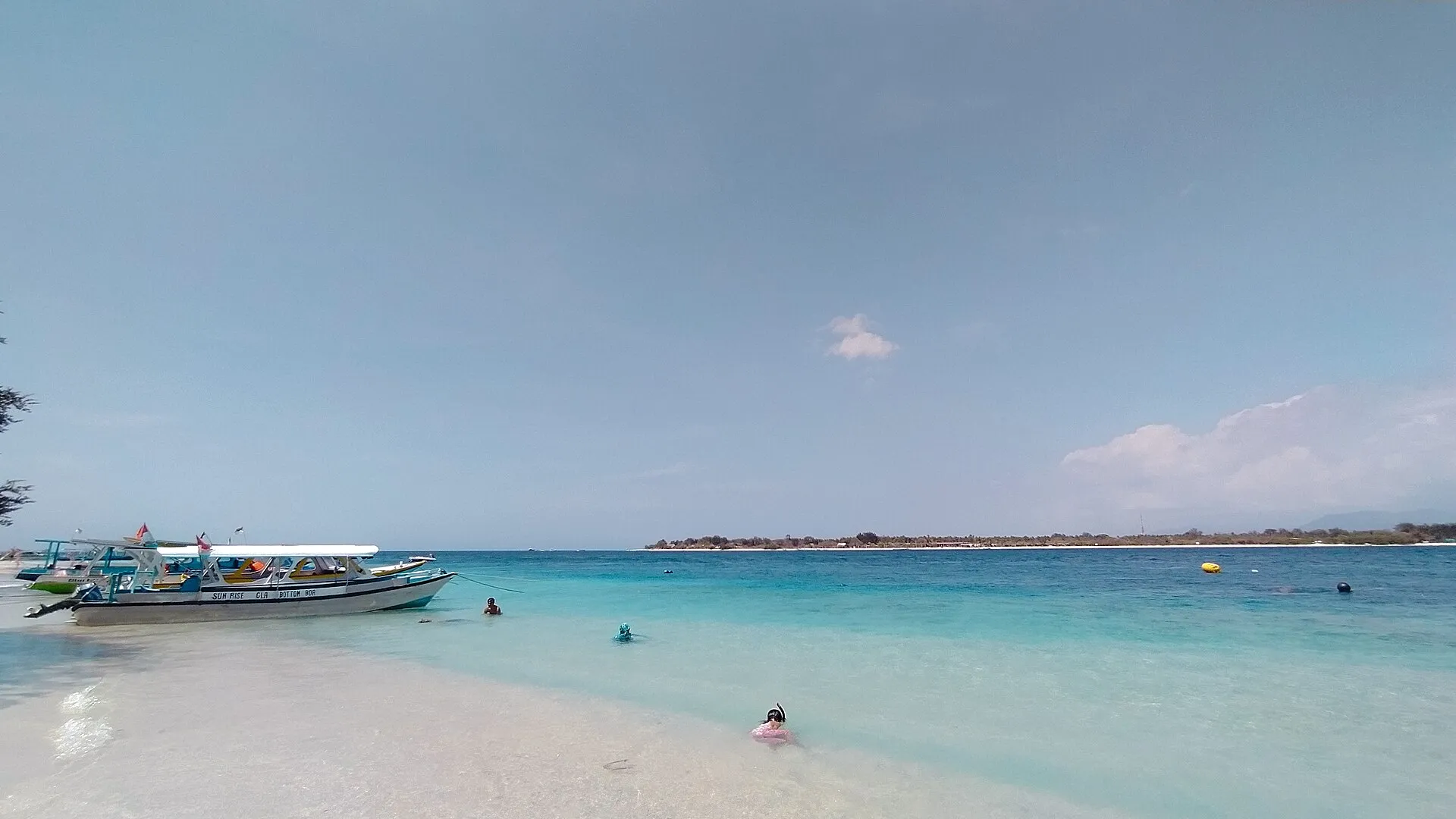 Photo: NFarras / Wikimedia Commons (CC BY-SA 4.0)