Cost of Living in Alanya
Where this figure comes from. No cost survey covers Alanya, so the $950 a month above is our own estimate rather than a measurement. On 416 of our 999 city guides the figure is built from a published Numbeo basket, a one-bedroom rent in the centre plus one person's monthly costs without rent, converted to USD; this city is not one of them. How we source everything.
Budget roughly $950 a month as a solo remote worker in Alanya, which buys a Mediterranean seafront life at a fraction of the Spanish or Italian equivalent. A one-bedroom apartment a few streets back from the beach runs about $300 to $450 on a long lease, with sea-view and newer complexes reaching $600 or more. Alanya has a large foreign resident population and a correspondingly organised rental market, much of it conducted in English, Russian and German. Groceries land around $200 to $260, with the weekly pazar market far cheaper than supermarkets. A lokanta lunch is $4 to $6, a restaurant dinner with drinks $15 to $25, and a monthly transit pass about $20. Utilities add $60 to $130, with summer air conditioning the main variable.
Where to Work in Alanya
Alanya's working infrastructure is built around its resident foreign population rather than around a nomad scene. There are a couple of small coworking spaces and a number of cafes, particularly in the Oba and Cikcilli districts where many foreign residents live, that are entirely used to laptops. Rates where coworking exists run about $80 to $140 a month. Turkish fixed-line internet is fast and inexpensive, and this is a well-connected town rather than a remote resort. The one recurring problem for foreigners is Turkey's handset registration rule: a foreign phone stops working on Turkish networks after 120 days unless registered and taxed, which is expensive, so most long-stayers buy a cheap local handset or plan around it. Property sales to foreigners are an industry in their own right here, and the offices advertising them line the main roads in four languages, which tells you what the local white-collar economy actually does. Russian has become a working language since the arrivals of recent years, alongside German. Behind the town the slopes are covered in banana greenhouses, which is the agriculture nobody associates with this coast and the reason the fruit in the market is grown within sight of it.
Getting Around Alanya
Alanya is strung out along the coast, with the castle headland at the centre and residential districts running several kilometres either side, so walking works within a district and not between them. Dolmus minibuses run constantly along the coastal road, cost under a dollar and are the way almost everyone moves; they stop wherever you flag them. Taxis are metered and cheap. Many foreign residents keep a scooter or a small car, which is genuinely useful for the Taurus mountains behind the town. Antalya airport is about two hours west by bus, and the newer Gazipasa airport is 40 minutes east with a growing list of European routes. Long-distance buses from the otogar reach most of Turkey overnight and comfortably. A cable car climbs from the seafront to the castle on the headland and saves a long hot walk, which is worth the fare once even if you never use it again. The coastal highway carries everything and is the one road in or out, so an accident on it is felt for hours in both directions. Minibus frequency drops noticeably out of season, and a district with a service every few minutes in July can mean a twenty minute wait in January.
Sorting transport? Book an airport transfer, or compare car rental on Auto Europe and QEEQ.
Visas for Alanya
Turkey grants most Western passports 90 days in any 180, with EU, UK and Canadian citizens entering visa-free. Turkey has a Digital Nomad Visa for graduates aged 21 to 55 earning $3,000 a month. The standard route for longer stays is the short-term residence permit, the kisa donem ikamet, applied for online through the e-ikamet system with proof of address, health insurance and funds. Alanya has a very large foreign resident community and a corresponding industry of agents who handle these applications, which makes the process considerably less painful here than doing it alone. Note that Turkey has restricted new residence permit registrations in some neighbourhoods where the foreign population exceeds a threshold, and Alanya has been affected, so check the current status of a specific address before signing a lease. Health cover is a condition of every permit, and a private policy written for the purpose is cheap at the outset, while after a year of residence most people move onto the state scheme, which is better cover for much the same money. The card itself arrives by post to the registered address and has to be signed for, so somebody needs to be in. Renewals open a couple of months before expiry and are best lodged the day that window does.
Best Time to Visit Alanya
April, May, September and October are the best months in Alanya: sea warm enough to swim, air in the mid twenties, and the resort machinery running without the July crush. Summer is hot and humid, regularly into the mid thirties with high humidity off the sea, and the town fills with package holidaymakers. Winter is the quiet secret: mild at 15 to 18 degrees in the day, sunny more often than not, cheap, and with a substantial population of northern Europeans who overwinter here precisely for that. Some restaurants and hotels close from November to March but far from all, because the resident foreign community keeps enough of the town open. The sea is swimmable from roughly May to November. The religious holidays move through the calendar, and when one lands in high summer the whole coast fills with families from the interior, a different crowd from the package flights, booking out every road and restaurant for a week. Citrus is picked through the cold months and the smell of it carries along the roads behind the town. The sea is at its warmest weeks after the air has started to cool.
Pros and Cons of Alanya
Alanya offers a genuinely warm Mediterranean coast, a long swimming season, low prices and an established international community, which makes the practical business of settling in far easier than in most Turkish towns. Healthcare is good and cheap, food is excellent, the Taurus mountains are twenty minutes inland, and Gazipasa airport is close. It is a resort, and in summer it behaves like one: crowded, loud in places, and oriented squarely towards package tourism and priced for it. Much of the architecture is undistinguished concrete. The foreign community is more retiree and property-buyer than remote worker, so the nomad scene is thin. Turkish inflation makes budgeting in lira unpredictable, residence permit rules have tightened, and summer humidity is genuinely uncomfortable.
Who Alanya Is For
Warm sea, low costs and an easy landing, with no nomad community waiting on arrival, which suits some people exactly. Overwintering somewhere sunny is the main use anybody puts the place to. Families find an established foreign infrastructure of schools, doctors and English-speaking agents already in position, and the water sports and the hiking are there for whoever wants them. It is a reasonable base for exploring the Turkish coast and Cappadocia. A young remote-work scene, an unspoilt town and the cultural depth of a real city are none of them here, and the first is unlikely ever to arrive. Antalya an hour and a half west is larger and more varied, and Izmir is the better choice for anyone who wants a real Turkish city on the sea.
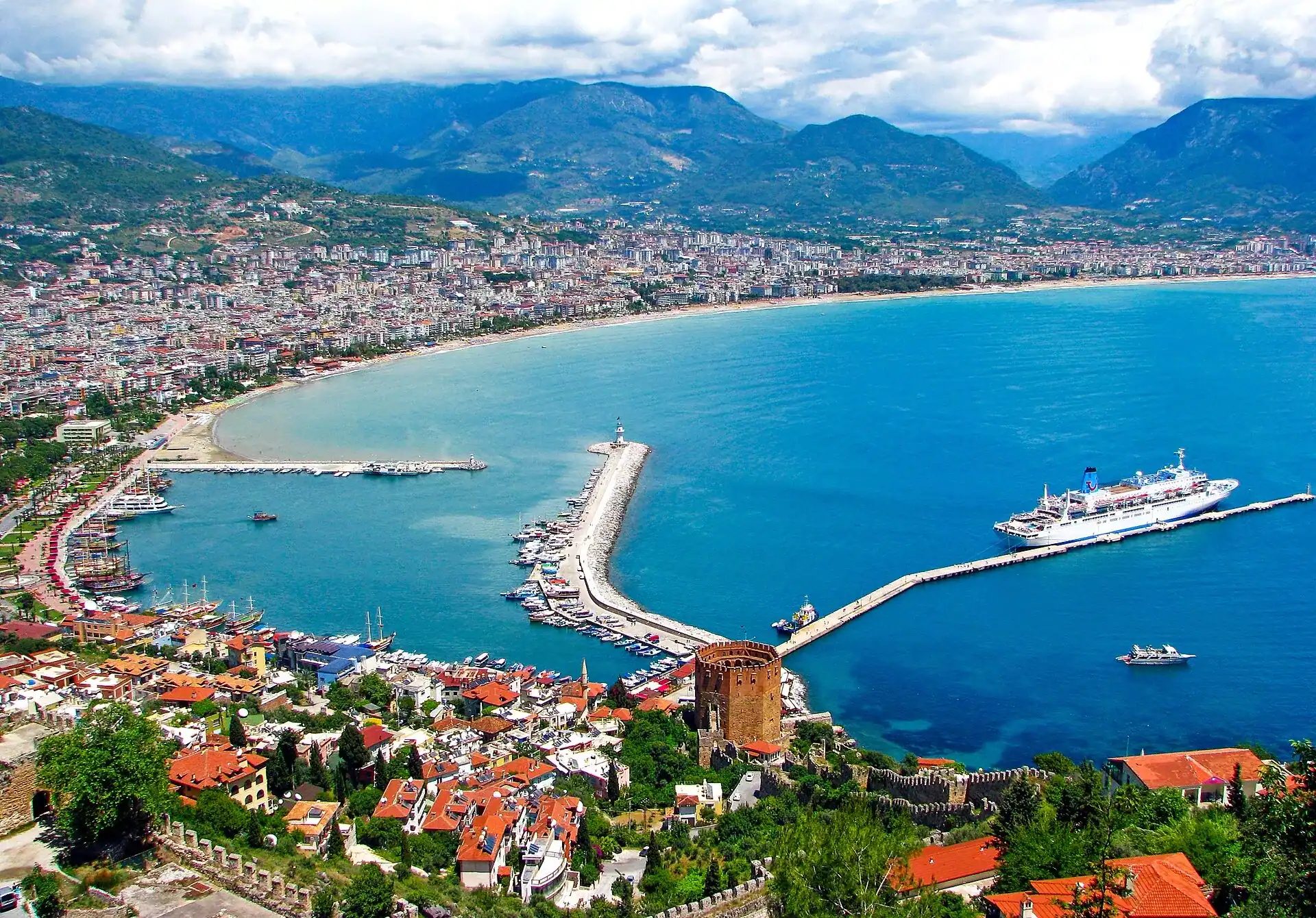 Photo: Ozgurmulazimoglu / Wikimedia Commons (CC BY-SA 3.0)