Cost of Living in Cape Coast
Where this figure comes from. No cost survey covers Cape Coast, so the $700 a month above is our own estimate rather than a measurement. On 416 of our 999 city guides the figure is built from a published Numbeo basket, a one-bedroom rent in the centre plus one person's monthly costs without rent, converted to USD; this city is not one of them. How we source everything.
Budget around $700 a month as a solo remote worker in Cape Coast, which is inexpensive though Ghana is not the cheapest country in the region. A one-bedroom apartment runs roughly $200 to $400, with the university area and the areas near the castle at the higher end. Local food from the chop bars and markets costs very little, while anything imported or Western-facing carries a heavy premium, as Ghana imports a great deal. The cedi has depreciated sharply in recent years, which helps foreign earners and makes any quoted figure worth rechecking close to travel. Fibre where it reaches runs $40 to $80 a month and a mobile data bundle rather less, which is what most people here actually use. A tro tro ride to Elmina is well under a dollar and a shared taxi across town about the same. The premium on anything imported is the line that catches people out: a jar of something familiar can cost several times what the equivalent does in Europe. Rents inland from the coast road drop by a third and the trade is a walk rather than a worse neighbourhood.
Where to Work in Cape Coast
There is no real coworking in Cape Coast and remote work happens from accommodation or from a small number of cafes. Ghanaian fixed broadband reaches the town but speeds are modest and reliability inconsistent, and power cuts, known locally as dumsor, remain a recurring problem that takes connectivity with them. Mobile data is the more dependable option, is inexpensive, and most people work off it with a second network as backup. The University of Cape Coast anchors what professional infrastructure exists. Plan for interruptions rather than around them. Accra, three hours east, has the coworking spaces and the business-grade connections if a week of reliable work is needed. Ghana runs on GMT with no offset at all, which makes it one of the easiest time zones on this site for anyone working with London and comfortable for continental Europe. MTN Mobile Money handles most everyday payment and a local SIM registered on arrival is the first practical step rather than an afterthought.
Getting Around Cape Coast
Cape Coast is small and the castle, the market, the fishing harbour and the town centre are all walkable, though the heat and the hills make it warm work. Shared taxis and tro tro minibuses cover the surrounding area and run along the coast road to Elmina, twenty minutes west, and Accra, about three hours east. Kakum National Park and its canopy walkway are half an hour inland. Kotoka International Airport in Accra is the only realistic air link. A car is not necessary and the tro tro network, while chaotic, works. Elmina Castle, twenty minutes west, is the older of the two forts and was built by the Portuguese in 1482, making it the oldest European building south of the Sahara. Most visitors see both, and the two together tell the story more completely than either does alone. Tro tros leave when full rather than to a timetable, so an early departure matters more than a booking for the run to Accra.
Sorting transport? Book an airport transfer, or compare car rental on Auto Europe and QEEQ.
Visas for Cape Coast
Ghana requires a visa in advance from most nationalities, obtained through an embassy or, increasingly, online, typically for thirty to ninety days and extendable in country. Ghana has promoted itself to the African diaspora and offers longer-stay and citizenship routes for people of African descent, which is a genuinely distinctive policy. There is no conventional digital nomad visa. Yellow fever vaccination is a mandatory entry requirement and malaria prophylaxis is strongly advised. Togo and Cote d'Ivoire are reachable overland if a reset is needed. Ghana has periodically changed its visa-on-arrival policy for some nationalities. Ghana's Year of Return in 2019 and the Beyond the Return programme that followed created specific routes to residence and citizenship for people of African descent, and those remain in place and are administered separately from the ordinary visa system. Yellow fever certificates are checked properly on arrival rather than waved through.
Best Time to Visit Cape Coast
November to March is the drier and more comfortable half of the year, with hot days, lower humidity and reliable sun, though the harmattan wind from the Sahara can bring dust and haze in December and January. The main rains fall from April to July, with a shorter wet spell in September and October, and the humidity through those months is heavy. Temperatures barely move across the year, sitting in the low thirties by day and low twenties at night. The sea is warm year-round but the currents along this coast are strong. Kakum's canopy walkway runs 350 metres across seven rope bridges at up to forty metres above the forest floor, and it is best walked early when the mist is still in the canopy and the crowds have not arrived from Accra. The harmattan months are also the coolest and driest, which makes them the best weeks for walking the castles and the forest despite the haze.
Pros and Cons of Cape Coast
Cape Coast holds one of the most significant historical sites in West Africa: the castle where enslaved people were held before the Atlantic crossing, preserved, UNESCO-listed and genuinely confronting. English is an official language, the university gives the town a young population, Kakum's canopy walk is half an hour away and the coast is largely undeveloped. The infrastructure is weak, with power and internet both failing regularly, healthcare is limited in scope, and the humidity through the rains is hard work. There is no foreign community beyond students and researchers. The castle is also an emotionally heavy place to live beside, which is worth considering rather than dismissing. Panafest and Emancipation Day, held in Cape Coast and Elmina in July and August of alternate years, draw the diaspora back in numbers and are the one time the town's historical weight becomes a public gathering rather than a private one. Fort William above the town still works as a lighthouse.
Who Cape Coast Is For
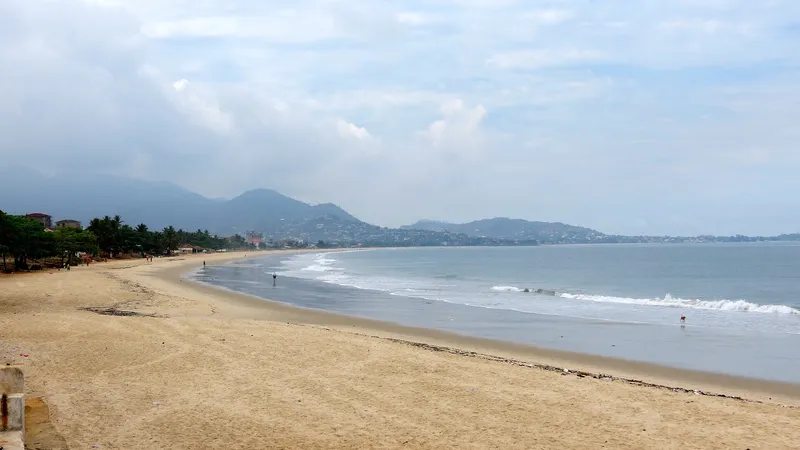
A serious interest in West African history brings people here, along with diaspora travellers using the Ghanaian programmes and researchers or students attached to the university. A small coastal town at low cost is what is here, on the condition that the work can be arranged around an unreliable connection. A demanding remote schedule will find the infrastructure against it, good healthcare is not close by, and the international community amounts to whoever is currently attached to the university, which is not the same thing as a community somebody can join. The undeveloped coastline is its own argument, and a diminishing one. Stretches of West African shore that have not been built on are getting rarer every year, and this is one of the last accessible ones. The university changes what this town is. Cape Coast has one of Ghana's largest, and its research population gives a place this size an intellectual layer it would not otherwise carry, which matters for anybody arriving with an academic reason. Next to Accra, Cape Coast costs half as much and offers a fraction of the infrastructure and considerably closer to what people come to Ghana for.
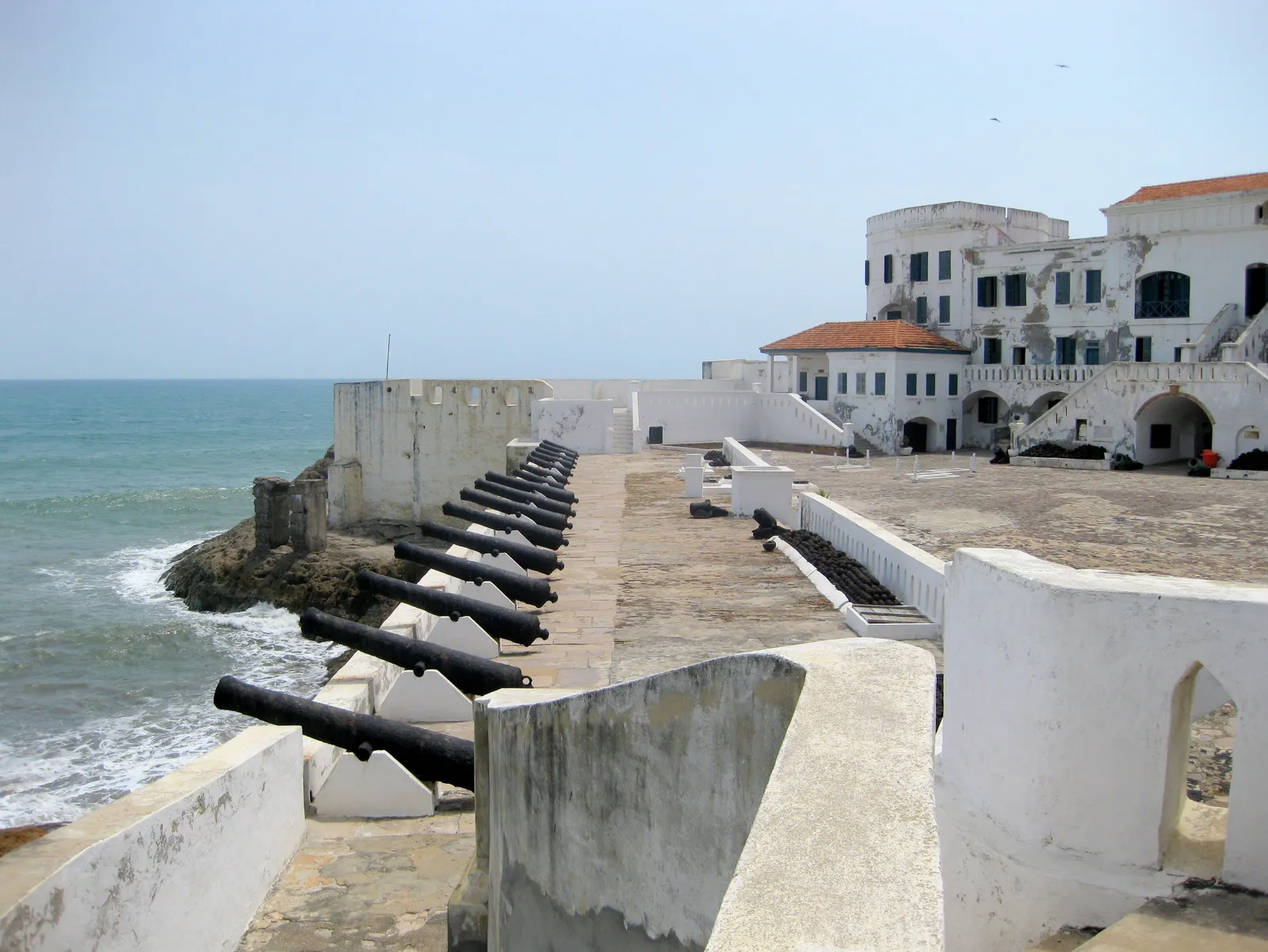 Photo: Rjruiziii / Wikimedia Commons (CC BY-SA 3.0)