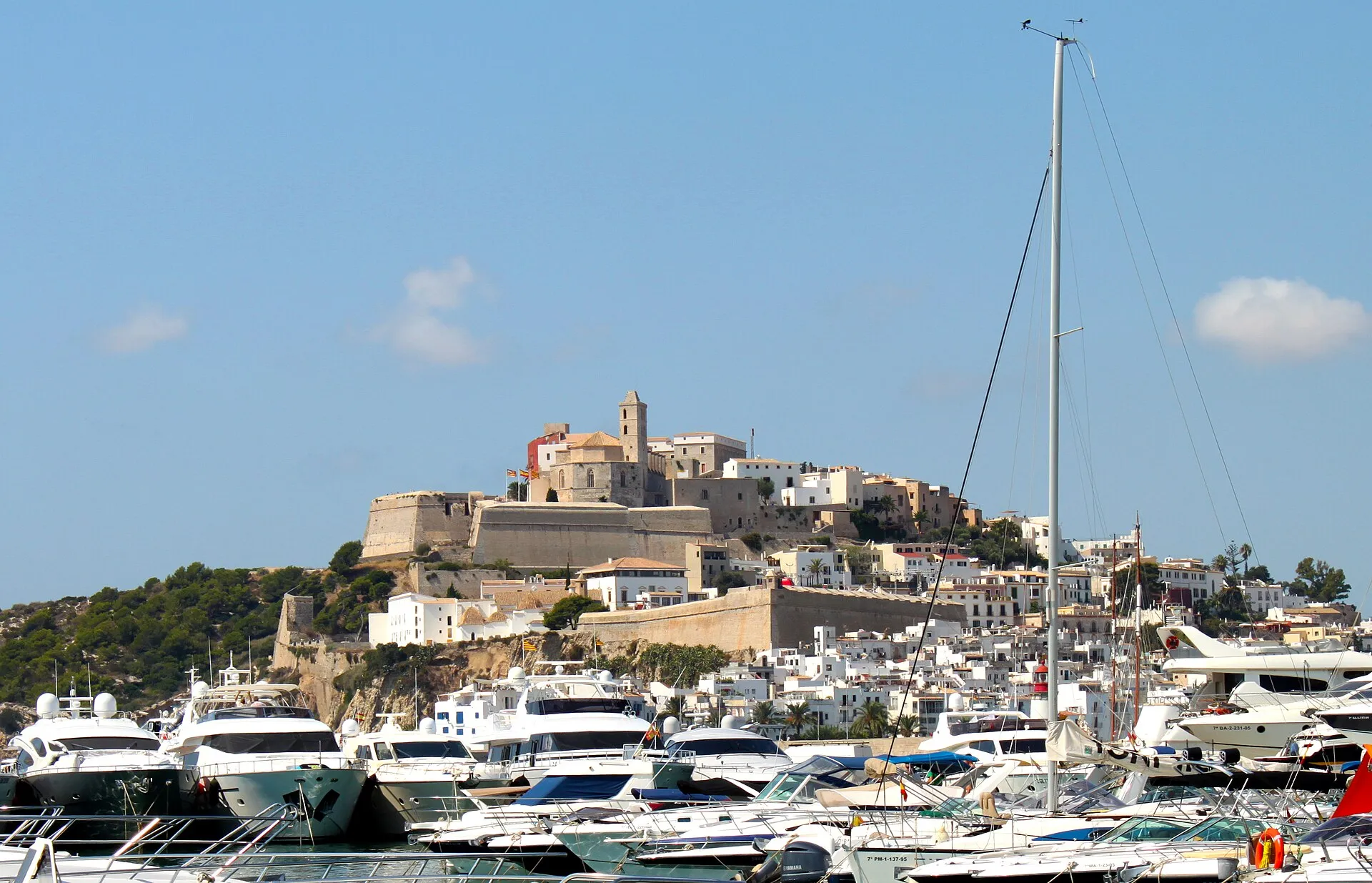

Ibiza is famous for what happens after dark. Pacha opened in 1973, the superclubs followed, and every year from late April to mid-October the island runs on opening parties, residencies and closing weeks. The airport tells the story in one line: in August 2025 it handled 1,481,444 passengers, and in January just 210,850, a ratio of seven to one.
Here is the paradox for anyone who works on a laptop. Almost everything that makes Ibiza worth a remote stay happens in daylight, and much of it in the months when the clubs are shut. It is the clear water over the seagrass, the sixteenth-century walls of the old town, the rock of Es Vedrà rising out of the sea at sunset, the almond trees flowering in the north in January.
The nights are what the island sells; the days, and the winter, are what a working visitor can actually use.
So the verdict depends on your calendar and your income. Ibiza works for a well-paid remote worker who comes between October and May, wants nature and quiet more than a nomad scene, and can pay around $4,000 a month, our own estimate since no cost survey covers the island. It does not work on a tight budget, and it barely works in July and August, when rents climb two to three times and the island is built for a different kind of visitor.
| Monthly budget, one person (our estimate) | about $4,000 |
|---|---|
| Low-season range, October to May | $2,530 to $4,030 a month |
| Same lifestyle in peak summer | $4,600 to $6,910+ a month |
| One-bedroom, Ibiza Town or Santa Eulària | $1,610 to $2,530 a month |
| Small scooter rental | $230 to $405 a month |
| Airport passengers, August / January 2025 | 1.48 million / 210,850 |
| Average high, January / August | 15.7°C / 30.3°C |
| Sunshine, January / July | 162 / 334 hours |
| Spain's nomad visa, income floor | about $3,280 a month |
Budget, ranges, rent and scooter: our Ibiza page, which is our own estimate, not a measured survey. Airport: Aena figures reported by La Voz de Ibiza. Weather: AEMET normals for Ibiza airport, 1981 to 2010. Visa: Spanish consulate requirements. Every price here is in US dollars at the 1 August 2026 exchange rate.
The island you came for is the daytime one
In 1999 UNESCO listed Ibiza's biodiversity and culture as World Heritage, and almost nothing on that list has to do with clubs. Offshore, meadows of Posidonia seagrass cover the seabed, keep the water clear and oxygenated, and shelter a wide range of marine life. That is why the coves look the way they do in photographs.
On land, Dalt Vila, the old town on the hill above the port, is ringed by walls built in the sixteenth century by Italian engineers, among the few Renaissance walls in the world that were never demolished. Below them sit the Phoenician settlement of Sa Caleta and the Puig des Molins necropolis, where the island buried its dead for centuries, and the old market gardens of Ses Feixes at the edge of town.
Then there is the light. Off the southwest coast, Es Vedrà rises 413 metres straight out of the sea, about two and a half kilometres off Cala d'Hort, a protected islet where Eleonora's falcons nest. In January and February the countryside around Santa Agnès de Corona, in the quiet north, flowers with almond blossom. None of it needs a ticket, and in winter you will share it with very few people.
Which months actually work?
Think of the year in three parts. From late April to mid-October the clubs are open, the island fills and the prices follow. In July and August highs average about 30°C, rain almost never falls, and our city page reckons the same lifestyle costs close to twice what it does in winter, because holiday lets outbid anyone looking for a month.
The second part is autumn, the sweet spot. The closing parties happen in the first half of October, and October highs still average about 24°C. It is also when the rain comes back: September to December are the wettest months, though even then only four to six days a month see rain.
The third part is winter and early spring, from November to March. Highs sit between about 16°C and 20°C, the sun is lower, with about half the sunshine hours of July, and many beach restaurants close until spring. This is the cheapest and quietest Ibiza, and the best one for focused work, as long as you like quiet. For a first stay, arrive in late September or October and stay through the winter; leave before the season opens again in late April.
Where should you base yourself?
The island is small, at about 570 square kilometres, but where you sleep still changes your days. Our city page puts a one-bedroom in Ibiza Town or Santa Eulària at $1,610 to $2,530 a month in low season, and noticeably less in cheaper areas such as Es Canar or Portinatx.
Ibiza Town: the walls and the port
With about 55,000 residents, Ibiza Town is the island's capital, with Dalt Vila above it, the port and the marina below, and most of the shops and coworking. Living here means you can do without a car for most of the week. The walk up through the old gates to the cathedral at the top is a fair substitute for a gym.
Santa Eulària: the calm east
Santa Eulària des Riu, on the east coast, is the island's other sensible base: a quieter town and the home of theHUB, the largest purpose-built coworking space on the island. It suits a stay built around work and the sea rather than the nightlife.
The inland villages, Sant Antoni and Playa d'en Bossa
Santa Gertrudis, a quiet village in the middle of the island, is where many long stayers end up, with the trade-off that you will need a car or a scooter. Sant Antoni is the sunset strip on the west coast, and Playa d'en Bossa, south of Ibiza Town, is where the big clubs stand. Both are lively in summer and, for a remote worker with morning calls, best avoided in season.
What working from Ibiza is like
Connections split along the same lines as the island. Our city page finds fibre in Ibiza Town, Santa Eulària and Sant Antoni, and slower lines or 4G in the rural north. Short-term flats are the weak point: ask the host for a screenshot of a recent speed test before you book, not after.
The coworking set is small but real. Beyond theHUB, Origen offers coworking, private offices and meeting rooms, The Business Space sells day passes in Ibiza Town, and Cowork Group runs a space in the centre. Our city page puts a hot desk at about $175 to $335 a month.
Picture a weekday in November. You could work at a coworking desk in the morning, eat lunch in the sun by the port, and at five drive out to Cala d'Hort to watch the sun go down behind Es Vedrà. Getting there is the catch. Buses are cheap but sparse for a working schedule, so most long stayers rent a scooter, at $230 to $405 a month on our figures.
Need a lawyer or a doctor on the island?
Our Ibiza directory lists providers by the language they actually work in, each with the source for that claim.
Browse the Ibiza directory →Can you stay through the winter?
With an EU or EEA passport, yes, as long as you like. On an American, British, Canadian or Australian passport you get 90 days in any 180 across the whole Schengen area, which is a single autumn, not the October-to-May stay this article recommends.
For the whole winter you need Spain's digital nomad visa. It asks for an income of twice Spain's minimum wage, about $3,280 a month when the 2026 wage is spread over twelve months, though some consulates count it over fourteen payments and state about $2,810. You also need a degree or three years of experience, health insurance without co-payments, and, if self-employed, no more than 20 percent of your work for Spanish clients.
The visa runs for up to a year, and a residence permit applied for inside Spain for up to three. On Ibiza's prices, the floor is the easy part: the budget above is well over it. Our comparison of digital nomad visas sets Spain against the other countries that offer one, and our directory lists lawyers in Ibiza by the language they work in.
What the nights still mean for you
Even if you never set foot in a club, the season shapes your stay. It sets the rents, it decides which restaurants are open, and in Sant Antoni and Playa d'en Bossa it sets the noise level. If the nights are part of your plan, our ranking of the best cities for nightlife sets Ibiza against the other contenders.
If you want both, there is a compromise: arrive in mid-September, catch the closing parties in early October, and work through the quiet months that follow. You get the island's two sides in one stay, and pay summer prices for only a few weeks.
Ibiza, Mallorca or the mainland?
If the island is the point, Ibiza in winter is a rare thing: a world-famous place with the crowds gone. If it is not, there are easier choices. On our Numbeo-based budgets, Palma de Mallorca costs about $2,370 a month, with a real city around it, and our ranking of the best Spanish cities for remote workers has cheaper bases still. For winter sun with a large nomad community, our Las Palmas guide is the obvious comparison.
If you do choose Ibiza: book October to May, base yourself in Ibiza Town or Santa Eulària, rent a scooter from the first week, test the connection before you sign anything, and keep one late afternoon a week for Cala d'Hort.
See the whole picture for Ibiza
The full cost estimate, neighbourhood notes, coworking spaces and all 13 of our category ratings, on one page.
Open the Ibiza city guide →Frequently Asked Questions
Can you work remotely from Ibiza?
Yes, best from October to May. Fibre reaches Ibiza Town, Santa Eulària and Sant Antoni, and there are several coworking spaces. July and August are the hard months for both cost and noise.
How much does a month in Ibiza cost a digital nomad?
About $4,000 a month on our own estimate, with a low-season range of $2,530 to $4,030. In peak summer the same lifestyle can cost close to twice as much.
When is the cheapest time to stay in Ibiza?
From November to March. Highs sit between about 16°C and 20°C, rents are at their lowest and the island is quiet, though many beach restaurants close until spring.
When does the Ibiza club season end?
The big clubs hold their closing parties in the first half of October, and the season opens again in late April or May.
Do you need a car in Ibiza?
Not in Ibiza Town, but for the rest of the island you need something. Buses are cheap but infrequent, so long stayers usually rent a scooter at $230 to $405 a month.
Can you spend a whole winter in Ibiza on a non-EU passport?
Not on Schengen's 90 days in any 180. For longer you need Spain's digital nomad visa, which asks for an income of about $3,280 a month, a degree or three years' experience, and health insurance.


