Cost of Living in Muscat
Real market data
Source: Numbeo · August 2026
$1,360/moSolo nomad1-bed centre + living costs
$1,910/moCoupleshared 1-bed + costs
$1,140/moLean / localcheaper area + costs
- 1-bed rent, city centre$680OMR 262
- 1-bed rent, outside centre$450OMR 175
- Monthly costs excl. rent (1 person)$680OMR 262
- Meal, inexpensive restaurant$5OMR 2
- Monthly transit pass$78OMR 30
- Buy price, per m² (centre)$2,840OMR 1,092
Prices are from Numbeo (August 2026), converted to USD at $1 = 0.38 OMR (01 Aug 2026). The monthly living-costs figure is our transparent one-person basket, groceries, a few meals out, utilities, phone, internet, transport and essentials, priced from those figures. Solo adds central rent; couple and lean are estimates from the same numbers. The guide below quotes its own monthly range, which is a different measurement rather than a competing one: this table prices a defined basket at the figures above, while that range is a judgement about how somebody actually lives here.
Muscat sits in the mid-range for Gulf cities: meaningfully cheaper than Dubai but pricier than Southeast Asian nomad hubs. The Omani Rial (OMR) is pegged at roughly 1 OMR = 2.60 USD.
- Rent, central areas (Al Qurum, Shatti Al Qurum, MQ): $650-1,040/month for a one-bedroom
- Rent, cheaper areas (Al Khuwair, Al Mawaleh, Bawshar): $390-570/month
- Groceries: $210-310/month shopping at Lulu or Carrefour hypermarkets
- Eating out: $5-10 at a local Omani or South Asian spot; $31-52 for two at a mid-range restaurant
- Coworking hot desk: $195-340/month at Regus; smaller indie spaces from around $130
- Local transport: $1.50 per bus trip; ride-hailing apps (Yango, OTaxi) cost $2.50-8 per journey
- Utilities and internet: $155-180/month combined for a furnished apartment
Realistic monthly total: $2,340-3,640 depending on lifestyle. Budget travelers sharing a flat can do it closer to the low end; those renting a solo place in a central area and eating out regularly will hit the upper range or beyond.
Where to Work
Muscat has a real coworking scene, with around 25 spaces active in the capital.
Coworking Spaces
Al Rud'ha in Madinat As Sultan Qaboos (MQ) is the pioneer, launched in 2015. It offers dedicated desks, private offices, a cafe, an outdoor terrace, and 24/7 access. The crowd leans startup and creative. Regus has six Muscat locations including Shatti Al Qurum and Al Khuwair, suitable for those who want a corporate feel and reliable air conditioning. New Work Business Center operates out of The Wave and SQUare mall, convenient if you live on the north side of the city.
Cafe Culture and WiFi Reality
Cafe work is possible but uneven. Kargeen Caffe in Al Qurum has WiFi but is better as an evening hangout than a daytime work spot. International chain cafes in malls (Costa, Starbucks) offer reliable WiFi and power outlets. Home fibre coverage now reaches roughly 90% of residential units, served by providers like Awasr, Omantel, and OmanTel Fiber. Mobile internet works well as a backup. Public cafe WiFi is inconsistent, so treat a SIM with a data plan as your safety net rather than relying on venue WiFi alone.
Getting Around
You will find Muscat genuinely difficult without a car or ride-hailing app. The city sprawls 60+ km along the coast with no metro and limited bus frequency.
Apps and Taxis
Yango and OTaxi are the main ride-hailing apps. Fares are reasonable: most cross-city trips cost $5-13. Metered taxis are available but less predictable. Download OTaxi before you arrive.
Buses
Mwasalat runs the public bus network. Fares run 200-500 baisa ($0.50-1.30) per trip. The A1 airport bus runs 24 hours and reaches Ruwi Bus Station in around 45 minutes for $2.50. The main limitation is frequency: buses come every 30 minutes or less, which makes spontaneous movement impractical.
Walkability
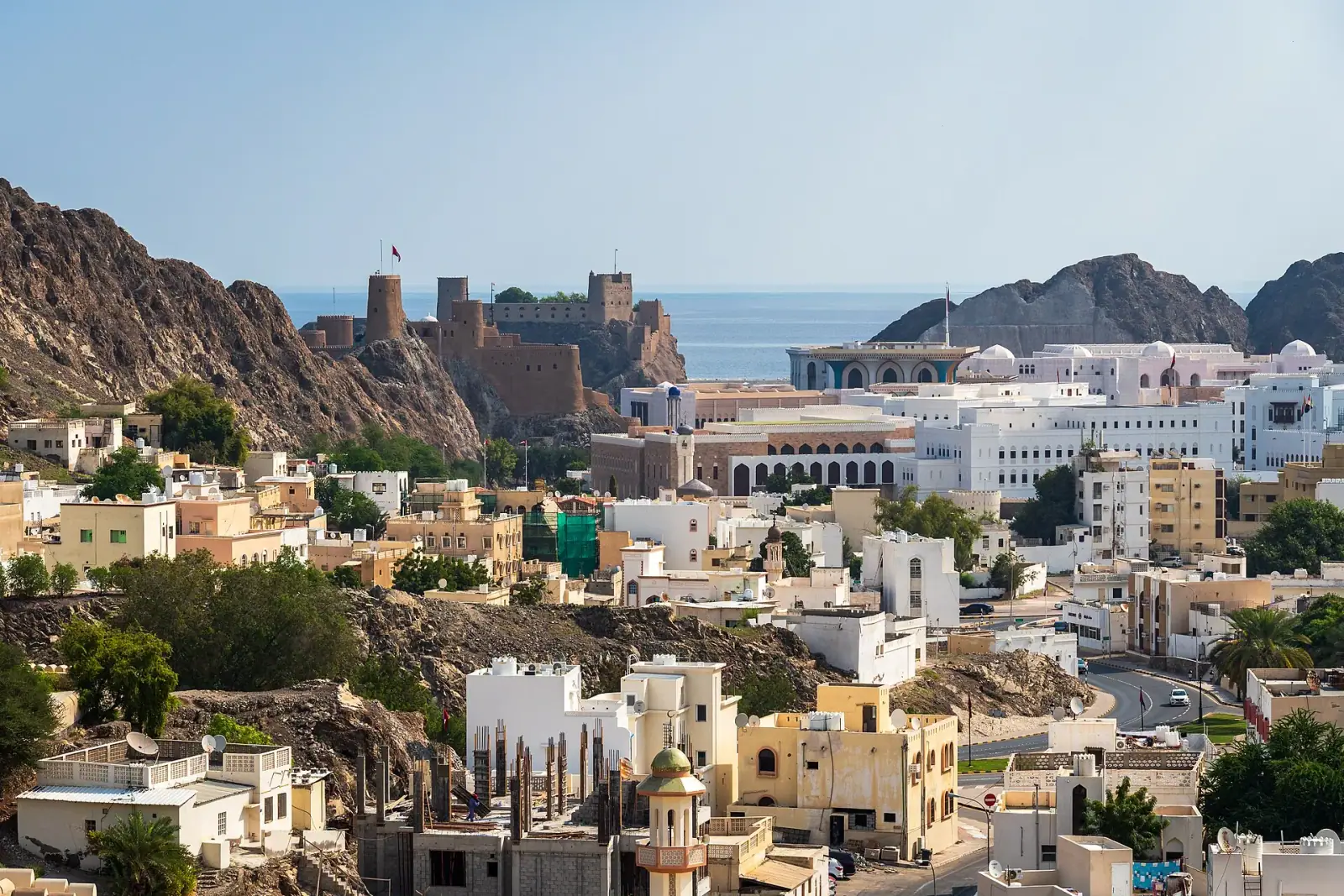
Most of Muscat is not walkable. Pavements are incomplete, summer heat makes outdoor walking dangerous for months, and attractions are far apart. You can walk within specific pockets such as Muttrah Corniche or along the Shatti Al Qurum beachfront strip, but those are the exceptions.
Airport
Muscat International Airport sits about 31 km west of the city center. An OTaxi or Yango ride to the center costs $21-31 and takes 25-40 minutes depending on traffic. The A1 bus is the budget option at $2.50.
Sorting transport? Book an airport transfer, or compare car rental on Auto Europe and QEEQ.
Visas and Staying Long-Term
Oman is relatively accessible for short stays.
Visa-Free and Tourist Entry
Citizens of over 100 countries, including the US, UK, EU states, Canada, and Australia, receive visa-free entry or visa on arrival for 14 days. A standard tourist e-visa (applied online via the Royal Oman Police portal) covers 30 days for around $13-52. Multiple-entry visas valid for one year with 30-day stays per visit cost $130. Extensions can be requested through the same portal.
Longer Stays
Staying beyond a tourist visa means a residence visa, which runs through an employer or a business registered in Oman.
Best Time to Visit
The best window for remote work in Muscat is November through March. Daytime temperatures sit at 20-28 degrees Celsius, humidity is low, and the city is genuinely pleasant to explore. Rain is rare year-round.
April and October are transition months: warmer but manageable. May through September is brutal, with temperatures regularly exceeding 40 degrees Celsius and high humidity in July and August. If you visit in summer, you spend almost all your time indoors in air conditioning. Hotel prices drop significantly in summer, so budget travelers sometimes choose it for that reason, but productivity and comfort suffer.
For nomads prioritizing work output alongside some outdoor life, December through February is the sweet spot.
Pros and Cons
Pros
- Safe city with very low crime: you can walk Muttrah Corniche alone at night without concern
- No personal income tax
- Fast home internet and a growing coworking scene
- Stunning natural surroundings: Wadi Shab, Jebel Akhdar, and desert camping within day-trip range
- World-class architecture at Sultan Qaboos Grand Mosque and the Royal Opera House
- Omanis are genuinely warm and welcoming toward foreigners
- 25-35% cheaper than Dubai for equivalent housing and lifestyle
Cons
- Not walkable: a car or constant ride-hailing is necessary for daily life
- Alcohol is restricted to licensed hotel venues; a beer costs $5-8 minimum
- Limited nomad community compared to Southeast Asia, Lisbon, or Medellin
- Summers (June-September) are extreme and make the city feel claustrophobic
- Coworking prices are higher than comparable Asian or Eastern European cities
- Social scene is quiet: nightlife is hotel-centric and modest by most global standards
Who Muscat Is Best For
Muscat works well for nomads who value safety, calm, and access to dramatic nature. If you want a base from which to explore Oman's wadis, mountains, and desert, the city makes logistical sense. It also suits anyone who wants a Gulf base without Dubai's expense or congestion. Families and couples tend to find Muscat more comfortable than solo nomads, given the quieter social environment.
It is a strong choice for anyone who finds loud party scenes and tourist chaos counterproductive. The city rewards those who rent a flat with good internet, set a routine, and explore on weekends.
Muscat is a harder sell for nomads who rely on a dense co-working community, budget tightly under 1,500 USD/month, prioritize vibrant nightlife, or plan to stay through the summer. Solo nomads who thrive on spontaneous social connection may find the scene thin. If Southeast Asia price points or Latin American energy are what you need, Muscat will feel expensive and quiet by comparison.