
The test that matters comes at the end of an ordinary day: the last stretch from the tram stop or the coworking space to your own front door, alone, after dark. It is also, almost word for word, the question Gallup asks in its world poll: do you feel safe walking alone at night in the city or area where you live?
The answers do not follow the rankings. New Zealand is the second most peaceful country on earth on the Global Peace Index, yet only 47 percent of its women say yes, fewer than the global 66 percent. Norway sits 33rd on the same index, and 86 percent of its women feel safe on that walk. The peace data and the feeling measure different things, and you need to know both.
That gap is the way into this article. Our ranking of the best cities for female digital nomads puts Oulu first, then Queenstown, Wellington and Dunedin, but its safety scores are editorial judgement, not measurement. So each city here meets the numbers that do exist. The short verdict: Oulu and Trondheim pass every test, the New Zealand cities pass on peace and fall short on how women feel, and in Turku and St John's the police figures argue with our own scores.
| City | Our safety score | Our monthly cost | Women safe walking alone at night (country) | City police data against the national rate | Emergency |
|---|---|---|---|---|---|
| Oulu, Finland | 10 | $1,550 | 78% | Below: 7.24 assaults per 1,000, Finland 8.00 | 112 |
| Turku, Finland | 9 | $1,660 | 78% | Above: 9.97 per 1,000 | 112 |
| Tampere, Finland | 9 | $1,780 | 78% | Above: 8.94 per 1,000 | 112 |
| Trondheim, Norway | 9 | $2,610 | 86% | Level: 8.4 violence offences per 1,000, Norway 8.2 | 112 police, 113 medical |
| Torshavn, Faroe Islands | 10 | $2,400 | not scored | no comparable data | 112 |
| Queenstown, New Zealand | 9 | $2,390 | 47% | no comparable data | 111 |
| Wellington, New Zealand | 9 | $2,140 | 47% | no comparable data | 111 |
| St John's, Canada | 8 | $1,700 | 63% | Above: violent crime index 104.32, Canada 97.19 | 911 |
| Calgary, Canada | 9 | $2,250 | 63% | Below: violent crime index 68.49 | 911 |
| Rarotonga, Cook Islands | 9 | $1,800 | not scored | no comparable data | 999 |
Scores and costs: our city pages (Torshavn, St John's and Rarotonga costs are our estimates, the rest built from Numbeo prices). Women safe at night: WPS Index 2025/26. Police data: Statistics Finland 2025, Statistics Norway 2024 to 2025, Statistics Canada 2025.
What women say about the walk home
The survey that captures that walk sits inside the Women, Peace and Security Index, which scores 181 countries on 13 indicators, built by Georgetown University with the Peace Research Institute Oslo. One indicator, community safety, is simply the share of women aged 15 and over who answer yes to the night-time question. Singapore tops it at 97 percent. Among our countries, Norway reaches 86, Finland 78, Canada 63 and New Zealand 47, below even the United States at 58.
Now look at the overall ranks. Denmark is first, Norway shares third with Sweden, Finland is fifth, New Zealand ninth and Canada 16th. New Zealand ranks that high despite its women's answer, because the composite also counts things like parliamentary seats and maternal mortality. Hence the rule for everything that follows: read the indicator, not the rank. A country can score well for reasons that have nothing to do with your street after dark.
When a peaceful country does not feel safe
The Global Peace Index 2026 ranks 163 countries, and its headline order answers a different question from yours. Norway falls to 33rd because of the militarisation domain, which counts military spending and weapons exports. That says nothing about a walk from the bus stop.
The part to read is the Societal Safety and Security domain. There Norway ranks first in the world and Finland second, New Zealand 14th and Canada joint 16th. Its perception indicator asks the same Gallup question but counts everyone who answers no, men included, so the women-only figure is the sharper of the two.
So which do you trust when they split, as they do for New Zealand? The survey is residents describing their own neighbourhoods: a feeling, not a crime count. But when fewer than half of a country's women say yes, the feeling deserves weight. Treat a low figure as a reason to plan your evenings: where you live, how you get home, and who knows where you are.
What the police count, city by city
Both indices are national: they cannot tell Oulu from Helsinki. Finland, Norway and Canada publish police data by city. None of it is split by the victim's sex, and none compares across borders, but within one country it shows which cities sit above or below the national line. Finland counts assaults per 1,000 residents where they happened, Norway reported violence, and Canada a Crime Severity Index that weights each offence by how serious it is.
One caution. Recorded crime counts what people report and police record. A city where more women report sexual offences can show a higher rate without being more dangerous, so compare assaults and violent crime, and treat sexual-offence counts with care.
The risk the street numbers miss
Every figure so far describes public space, and the larger danger to women is often private. The UN count of femicides in 2024 finds that of 83,000 women and girls killed intentionally that year, 60 percent were killed by a partner or family member: 137 a day.
For a woman who arrives alone, that risk begins if a relationship starts abroad. The women's index measures it too, as partner violence in the past year, and it reorders the list: Finland has the highest rate of our countries at 8.1 percent, Canada the lowest at 2.6. If you travel to meet someone from an app, Australia's Smartraveller says meet in public, tell someone you trust where and with whom, and never hand over your passport or bank details.
Weighing two of these cities?
Put them side by side: monthly cost and all 13 of our category scores in one view, then bring this article's outside figures to the result.
Compare cities →Six cities, from the riverbank to the front door
Oulu: the river, the bike paths and a bronze policeman
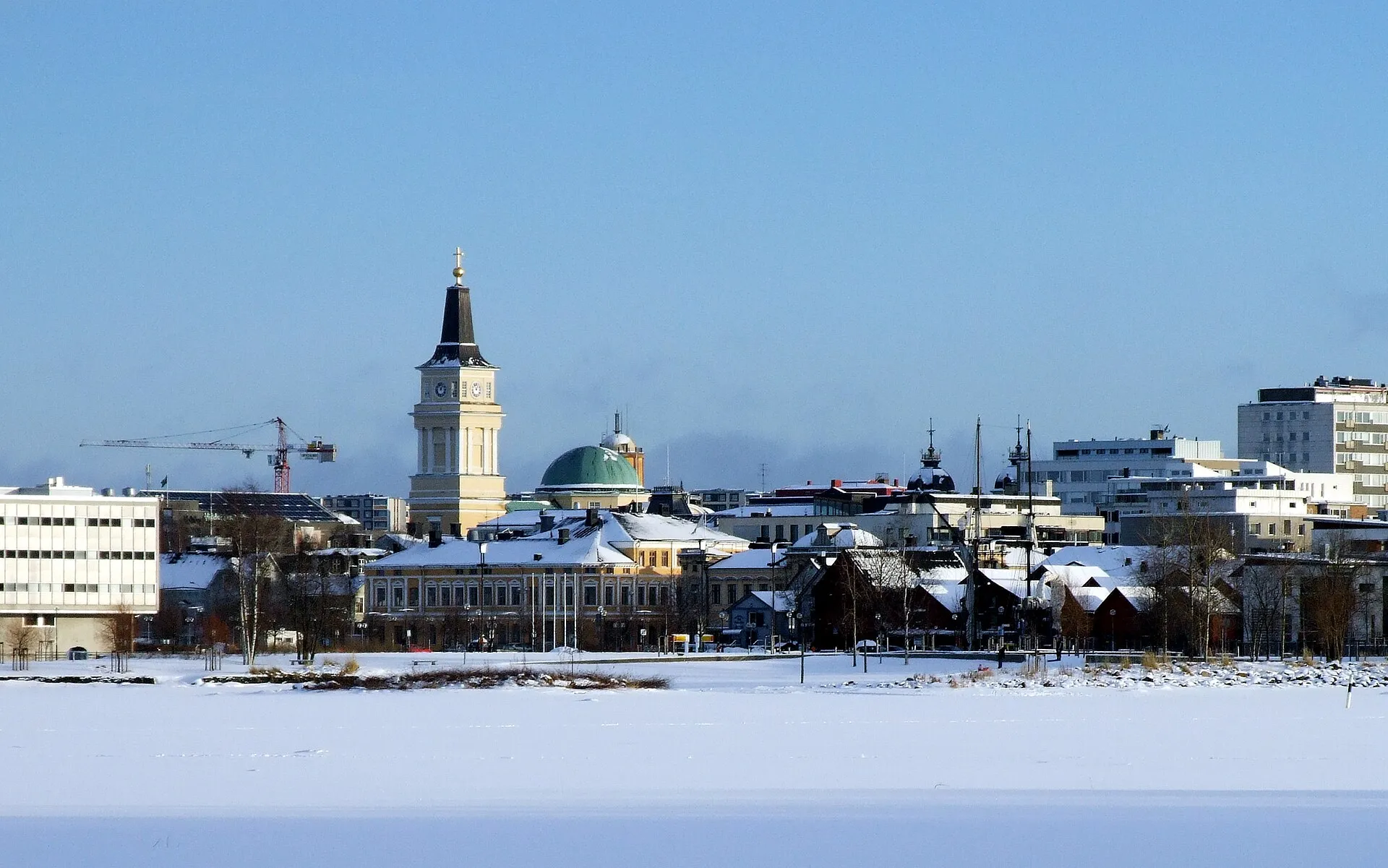
Oulu sits where the Oulujoki river meets the Gulf of Bothnia, and its centre gathers around the Market Square on the water. A market hall has stood there since 1901, old red storehouses now hold bars and restaurants, and a bronze statue, the Toripolliisi, honours the policemen who once patrolled the market. In 2026 the city is a European Capital of Culture.
Oulu moves by bike: more than 950 km of paths, about a fifth of all trips cycled, and on some routes lane signs projected onto the snow. That matters for the walk home, because the light swings harder here than anywhere else on this list, from about three and a half hours of daylight at the winter solstice to 22 at midsummer. A December commute is in darkness; a June one never is.
Oulu is also where our score and the police agree most clearly. It recorded 7.24 assaults per 1,000 residents in 2025, below Finland's 8.00, and fewer assaults in public places than the national rate. It passes every test in this article.
Turku: two riverbanks and a free ferry
Turku is Finland's oldest city, and the Aura river splits it in two: the cathedral side, which the local dialect calls "this side of the river", and "the other side", with the castle and the modern centre. Besides the bridges, the Föri, a small ferry, has carried walkers and cyclists across since 1904, free, in about a minute and a half. The cathedral, consecrated in 1300, rings noon on national radio; its interior is closed for renovation until December 2028.
Here our score runs ahead of the evidence. We give Turku a 9 for safety, one below Oulu, yet it recorded 9.97 assaults per 1,000 residents in 2025 against Finland's 8.00, and more in public places than the national rate, though fewer than Helsinki. Read it as a safe Finnish city with an ordinary urban centre, not the safest on the list, and keep the evening habits you would use in any mid-sized European city.
Trondheim: wharves on the Nidelva
Trondheim was founded in 997 where the Nidelva meets the fjord. Its postcard is the row of old wooden warehouses along both banks, seen from the Old Town Bridge of 1681, whose red gates are known as the Portal of Happiness. Across it, Bakklandet is cobbled lanes of wooden houses, cafés and bars, and Trampe, the world's first bicycle lift, pushes cyclists up the steep Brubakken hill for free. Above the river stands Nidaros, the northernmost medieval cathedral in the world.
Trondheim has the strongest outside record here: 86 percent of Norwegian women feel safe at night, and Norway is first in the world on the peace index's societal safety domain. The city's 8.4 violence offences per 1,000 residents sit level with the national 8.2 and far below Oslo's 12.8. The catch is price: at $2,610 a month it is the dearest city in this article.
Wellington: a waterfront made for walking
Wellington is the world's southernmost capital and, by average wind speed, its windiest city. Its waterfront follows the harbour from the centre, past Whairepo Lagoon, where eagle rays are sometimes seen, and the Taranaki Street Wharf platform where people jump into the sea, to Te Papa, the national museum, and on to Oriental Bay, the beach closest to the centre, lined with Norfolk pines. A cable car climbs to Kelburn, and Cuba Street holds the cafés and bars.
Here the gap this article opened with is at its widest. New Zealand is second on the peace index, yet only 47 percent of its women feel safe walking alone at night, and no city-level police figures are published in a form that tests our score of 9 for Wellington. That national figure is not a verdict on the waterfront. It is a reason to know your route home from Cuba Street before the evening starts.
Queenstown: the lake below the Remarkables
Queenstown, a town of about 29,000, sits on Lake Wakatipu, a long S-shaped lake carved by glaciers, facing the Remarkables range. The TSS Earnslaw, the last coal-fired passenger steamer in commercial service in the Southern Hemisphere, has crossed the lake since 1912, and the Skyline gondola climbs Bob's Peak above town. Four ski fields surround it in winter; the rest of the year belongs to bungy, jet boats and paragliders.
The same national figure applies, and the risk the UK Foreign Office names for tourist areas like this is theft from hire cars and camper vans. In a town built around visitors, the precautions for Queenstown are those for any resort: keep valuables out of the car, and know how you are getting home.
St John's: coloured houses and the other side of the data
St John's climbs steep hills from a harbour whose only entrance is the Narrows, and its wooden row houses wear the bright colours that earned them the name Jellybean Row, a look that only arrived in the 1970s. Above town, Signal Hill carries Cabot Tower, where Marconi received the first transatlantic wireless signal in 1901. Below it the houses of the Battery cling to the cliffs, and every evening George Street fills with pubs and live music. It is also Canada's foggiest major city.
St John's is the one city where the police figures clearly point the other way from our score of 8. Its 2025 violent Crime Severity Index was 104.32, above Canada's 97.19. None of that is specific to women, but it is the city-level evidence that exists. At an estimated $1,700 a month it is still a small, walkable base; plan the late walk home from George Street as you would in any nightlife district.
Four more on the list
Tampere sits between two lakes, split by the Tammerkoski rapids and the red-brick mills along them, and calls itself the sauna capital of the world. Its assault rate sits between Oulu's and Turku's, above the national line. Calgary, where the Bow and Elbow rivers meet 80 km east of the Rockies, is the Canadian city where the police agree with us: a violent crime index about 30 percent below the national figure.
Torshavn, capital of the Faroe Islands, keeps its turf-roofed old quarter on Tinganes, where a Norse parliament met from around 850. No index scores the Faroes, so our safety score stands untested, and living and working there needs a work and residence permit. Rarotonga is an island 32 km round, circled by one road and two bus routes, clockwise and anticlockwise. Its deciding fact is medical: facilities are limited and evacuation to New Zealand is likely the only option in an emergency, so budget for insurance that covers it.
Making the walk home routine
Most of what keeps a walk home safe is settled before it starts. Take the ride first. App-based rides, in the US State Department's words, "offer a record of your ride. This is unlike hailing a ride on the street", and some let you require a driver PIN and share the trip live. Our city pages list Bolt and Uber in Finland and Trondheim, Uber and Ola in New Zealand, and Uber and Lyft in Canada. For taxis, Smartraveller says book the airport transfer before you land, use licensed cabs, and sit in the back behind the driver.
Then the flat. Check in with your initial and surname only, without Ms or Mrs. Avoid ground-floor rooms and entrances on back streets, and check for a peephole, deadbolt or chain. One Australian line cuts against how many nomads find housing: avoid sharing with people you have just met, "including renting a spare room or couch". For a first month, a self-contained flat is the safer default.
And the evening itself. The UK Foreign Office's advice for women travelling abroad warns that spiking drugs also work in coffee and tea and are normally colourless and tasteless; if you feel strange or drunk after a small amount, tell a friend or call the local police. None of its country pages for the places here carries a women-specific warning of its own.
If something does go wrong
Save the emergency number from the table before you land. Finland and Norway each run a free medical line on 116117 around the clock; New Zealand's is Healthline, 0800 611 116. Paying for care differs: Norway treats anyone urgently but does not reimburse visitors from outside the EU, EEA and Switzerland, New Zealand's accident scheme helps pay after an injury, and in Canada treatment is expensive. On most passports, travel insurance is the real plan.
After a sexual assault, get medical care within 72 hours, the window the US State Department gives for HIV prevention and emergency contraception. The morning-after pill is sold without prescription in New Zealand, at any age, and in Norway, with no age limit in pharmacies. New Zealand's Safe to talk line answers 24 hours a day on 0800 044 334, or by text to 4334. In northern Finland, our Oulu services directory lists Oulu University Hospital, taken from the UK government's list of medical facilities.
How to judge any city before you book
Our own safety scores are a starting point, not an answer: our methodology page lists them as editorial, and we hold no gender-specific data. These steps work anywhere.
- Find the country's night-time figure in the WPS Index and set it against the global 66 percent.
- Read the peace index's Societal Safety and Security domain, not the headline rank.
- If you might date while abroad, check the partner-violence indicator.
- Compare your city with the national rate in the statistics office's crime table, on assaults or violent crime.
- Read the UK, US and Australian advice for the country.
- Book the first month in a self-contained flat, with the airport ride arranged.
Run them on our full list of fifteen cities for female digital nomads and most pass. Oulu clears everything; the New Zealand cities are peaceful by every count except the one that asks women directly; Turku needs its police data read beside our score.
Then do the last test yourself, in your first week: walk the route home from wherever you will spend your evenings once in daylight, so that the first time you walk it after dark it is already familiar. For the working side, see our guide to staying productive while working remotely abroad.
See all fifteen cities
All fifteen cities with their safety, cost and community scores, each linked to its full guide.
Open the ranking →Frequently Asked Questions
What is the safest city for female digital nomads?
On our ranking, Oulu in Finland, and the outside data supports it: its 2025 assault rate of 7.24 per 1,000 residents is below Finland's 8.00, and 78 percent of Finnish women feel safe walking alone at night. Trondheim passes the same tests at a higher cost.
Is New Zealand safe for female digital nomads?
It depends on the measure. New Zealand ranks second on the Global Peace Index 2026, yet only 47 percent of its women feel safe walking alone at night, below the global 66 percent. Plan your evenings and your route home with that in mind.
Which country is safest for women on the Women, Peace and Security Index?
Denmark ranks first on the 2025/26 index, with Norway and Sweden joint third and Finland fifth. On feeling safe walking alone at night, Singapore leads at 97 percent; Norway reaches 86 and Finland 78.
Are ride-hailing apps safer than taxis for women travelling alone?
The US State Department suggests app-based rides because they keep a record of the trip, and some let you require a driver PIN and share the ride live. For taxis, Smartraveller advises licensed cabs, a pre-booked airport transfer and sitting in the back.
How can female digital nomads check whether accommodation is safe?
Check in with your initial and surname only, avoid ground-floor rooms and back-street entrances, and confirm a peephole, deadbolt or chain. Avoid sharing with people you have just met, including renting a spare room or couch.
What emergency number should I call in Finland, Norway, New Zealand or Canada?
Finland uses 112 for everything. Norway uses 112 for police and 113 for a medical emergency. New Zealand uses 111 and Canada 911; the Faroe Islands use 112 and the Cook Islands 999.
Can women get emergency contraception without a prescription in these countries?
Yes in New Zealand, where it is sold without prescription at any age, and in Norway, where every type is non-prescription and pharmacies set no age limit.


