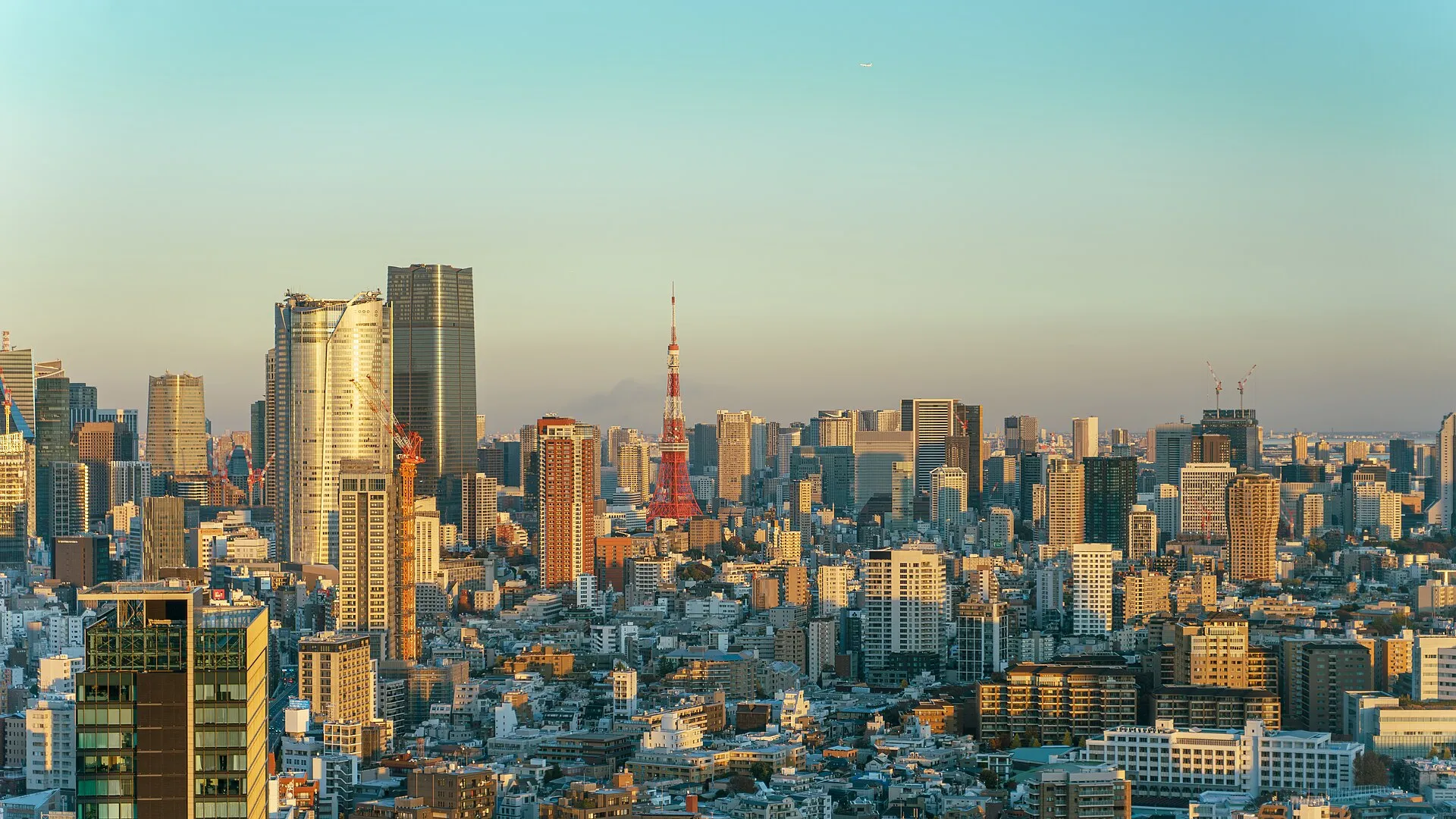
Step out of a busy Tokyo station and look up. The streets around the exits are lined with narrow buildings of up to eight floors, each with a single lift and a backlit sign by the door that lists its tenants floor by floor: a restaurant, a karaoke room, a language school, and somewhere among them a clinic, its name and floor readable from the pavement. What the sign cannot tell you is whether anyone up on the fourth floor will understand you when you describe a fever in English.
The answer exists, and the clinic wrote it down itself. Every hospital, clinic and dental clinic in Japan must report its services to its prefecture, including the foreign languages it treats patients in, and since April 2024 the health ministry publishes all of those reports in one national search tool. That is where the clinic above the station keeps its language flag, and it is where 1,966 of the English-speaking doctors on our Tokyo list come from.
So finding a doctor in Tokyo who speaks English is the easy half. The hard half is the bill. Live here inside National Health Insurance and you pay 30% at the counter, under a monthly cap. Come on the digital nomad visa or as a visitor and you are outside that system: each clinic or hospital sets its own price, and the private policy you bought before you flew decides how much of it you carry.
| English-speaking doctors on our Tokyo list | 1,966 of 2,111 |
|---|---|
| Tokyo institutions on the foreign-patient hospital list | 505, over 450 naming English |
| National Health Insurance co-payment, school age to 69 | 30% |
| Monthly cap, middle income band | $541 + 1% above $1,804 |
| Large-hospital surcharge without a referral | from $44 first visit, $19 return |
| Hospitals charging uninsured patients above the insured rate | about 15%; 72% of accredited ones |
| Nomad visa: income and medical cover, each at least | $63,080 |
| Medicine you may bring without paperwork | 1 month prescription, 2 months other |
| A prescription stays valid for | 4 days, day of issue included |
Doctor counts: our directory, from the health ministry's register. Hospital list: MHLW and Japan Tourism Agency, 2026 edition. Uninsured pricing: MHLW's 2023 survey of hospitals. Amounts Japan sets in yen are converted at an exchange rate of $1 = ¥158.54, the rate of 1 August 2026.
Where the clinic has already answered your question
The register is called Iryō Jōhō Netto (医療情報ネット, "Medical Information Net"), nicknamed Navii. It rests on a duty created in 2006: hospitals, clinics and dental clinics must report their services to the prefectural governor, who publishes them. Each prefecture used to run its own site until the Ministry of Health, Labour and Welfare merged them into one national system in April 2024. Pharmacies report into it too.
It is built for exactly the question the sign on the street leaves open. The detailed search has a foreign-language filter, beside filters for clinics open right now and for night and holiday care, and you can centre a search on a station, draw a circle of 1 km or 5 km around it and set the hour you want to walk in. In a city organised around its stations, search around the one you live by, then the one you work by.
Tokyo makes that geography dense. The Yamanote Line alone loops through 30 stations in about an hour, from Shinjuku and Shibuya to Ikebukuro, Ueno and Tokyo Station, and in October 2023 Japan had 104,894 clinics against 8,122 hospitals. Most of the doctors you will ever need work in the first group, in rooms like the one on the fourth floor.
Start at the Medical Information Net search page and choose 外国語 (foreign language) in the detailed search. The English interface is machine-translated, so names can come out garbled; the Japanese pages under your browser's own translation keep the clinic's name as the sign by the lift shows it.
What the English flag promises, and what it does not
On a clinic's page, the language claim sits under 対応することができる外国語の種類, "foreign languages that can be handled". For each language a facility can state its days and hours, the departments it covers, a phone number, and a level from native-like to none. A separate field says whether it relies on a voice-translation device, and a free-text box holds the rest.
Tokyo's form adds the field that matters most, 対応可否区分: whether patients in that language are accepted outright (受入可能, ukeire kanō) or only after consultation (要相談, yō sōdan). None of the other seven prefectures we read for our directory fill it in. A clinic marked 要相談 for English is asking you to phone first, and that is the hardest call to make without Japanese. Prefer the ones marked 受入可能.
Then read the flag for what it is: the facility's own report, not a test anyone sat. It does not promise that every doctor speaks English, or that the receptionist does. On the thousands of pages we read, the level fields were blank; the hours field sometimes confines English to one doctor's sessions; and a listed language can rest on a translation app mentioned only in the notes, in Japanese. Two minutes with those notes tell you more than the sign on the street ever could.
The register, read for you
Our directory takes the register as its source and turns those doubts into rules. A language is dropped when the facility's own notes say it depends on a device or an interpreter, asks patients to call first, or offers only a few words; in Tokyo, only languages marked 受入可能 survive. Facilities claiming more than six languages are left out, since a dozen is likelier an optimistic form than a multilingual staff, and so are company clinics that treat one employer's workers.
What remains is 2,111 doctors in Tokyo whose working language traces to a published source, 2,101 of them from the register, the rest from UK Foreign Office and Korean consulate lists. English covers 1,966, Chinese 293 and Korean 111, last checked between 15 August and 24 September 2026, and every card links to the facility's page on the register. The national list of doctors by language holds 5,915 in 15 cities, and Osaka's English-speaking doctors number 962 of the city's 1,014.
Find the clinic near your station
Our Tokyo list sorts the register's doctors by ward and language, drops the hedged entries, and links every card to the ministry page it came from.
Browse English-speaking doctors in Tokyo →When the clinic is not enough
Japan runs on free access: the ministry names the patient's freedom to choose any medical institution as a founding feature of the system, so nothing stops you walking into a university hospital first. For a cold, a rash or a repeat prescription, though, the small clinic (クリニック, or 医院, iin) is the right door, and large hospitals are built to push you back towards it.
They do it with a surcharge. Since October 2022, university-level hospitals and certain hospitals with 200 or more beds must charge patients who arrive without a referral letter at least $44 on a first visit and $19 on a return, on top of the bill; emergencies are exempt. The floor is not the price: the Japanese Red Cross Medical Center in Hiroo, Shibuya ward, charges $69.
A referral letter (紹介状, shōkaijō) from the doctor upstairs avoids the fee and tells the specialist what the clinic already found, which spares you telling your history twice across a language gap.
For hospitals, a second official list helps. The ministry and the Japan Tourism Agency publish the institutions that accept foreign patients, and here the prefecture decides who is on it. Tokyo's sheet in the current edition names 505, more than 450 of them naming English, and records which cards each takes, whether it runs 24-hour care, and JMIP accreditation. The JNTO medical institution search shows it in English, though its copy can lag the ministry's. Use that list for a hospital, and the register for the doctor around the corner.
Inside the system: National Health Insurance
Everyone living in Japan is expected to belong to a public health scheme. Employees join their employer's; everyone else with an address in a municipality joins National Health Insurance (kokumin kenkō hoken), run by the ward, on the same terms for foreigners. Tokyo's rules exclude stays of three months or less, designated activities for medical treatment or sightseeing, diplomats and people staying illegally.
You enrol at the ward office within 14 days of moving in, and the ward quotes your premium. From school age to 69 you then pay 30% of the bill, less for small children and most people over 70. Insured prices come from a national fee schedule counted in points, each worth about 6 US cents, so the clinic on the fourth floor does not set its own.
The monthly cap is what makes the system safe. In the ministry's own worked example, a $6,308 hospital bill means $1,892 at the counter, and the high-cost medical expense benefit (kōgaku ryōyōhi) returns everything above the cap. For the middle income band the cap, raised in August 2026, is $541 plus 1% of costs above $1,804, bringing that bill to about $586, with a new annual limit of $3,343. If you have a residence card and an address, join.
Outside it: what uninsured patients pay
Outside a Japanese scheme you pay the whole bill, and the price is not fixed. Treating an uninsured patient is free-practice medicine (自由診療, jiyū shinryō), and more than nine in ten hospitals in the ministry's 2023 survey price it off the national fee schedule, multiplied by a rate of their own choosing.
Most choose mildly: 85.4% of the 5,424 hospitals that used the schedule charged the insured rate of about 6 cents a point, or less, and only 2.5% charged more than double. The pattern flips at the hospitals most set up for foreigners. Among the 81 accredited under JMIP or the Japan International Hospitals scheme, 71.6% charged above the insured rate and 39.5% more than double, so the $6,308 stay above could pass $12,615 there.
Interpreters can be a separate line: 23.5% of the accredited hospitals charged for one, against 2.2% overall, and the MHLW survey of hospitals treating foreign patients notes the fee can reach insured patients too. And an unpaid bill follows you: since 2021 hospitals report visitors who leave bills unpaid above a set amount, the ministry passes them to the Immigration Services Agency for later entry checks, and since October 2022 no consent is needed. The ministry's advice to visitors is plain: buy private insurance with enough cover before you arrive.
On the nomad visa, the private policy is your insurance
Japan's route for remote workers is a designated activities status for nationals of 51 countries and regions with both a visa exemption and a tax treaty with Japan. It lasts six months, cannot be extended, and then you wait six months before applying again. You need an annual income of at least $63,080, a threshold Japan sets in yen, and a spouse or child can join you.
The insurance clause is exact. The Immigration Services Agency requires private medical travel insurance covering death, injury and illness for the whole stay, with at least $63,080 of cover for treatment. A credit card's travel cover counts if its terms meet that standard and you can document them, and a spouse or child needs the same cover.
The status comes with no residence card, and National Health Insurance enrols people registered at an address in a municipality. In practice, then, every visit to the clinic above the station is billed as an uninsured patient's. Ask your insurer before you fly whether it pays Japanese hospitals directly; if not, the bill goes on your card first. Our digital nomad visa comparison sets Japan's income bar beside every other country that runs one.
The pharmacy counter
In Japan the doctor who writes the prescription usually does not hand over the medicine. Most clinics give you a paper prescription for a dispensing pharmacy (調剤薬局, chōzai yakkyoku), and the ministry itself notes that many patients collect their medicines at a monzen pharmacy, literally "in front of the gate": the one beside the clinic or hospital they have just left.
Two habits save trouble. A prescription is valid for four days, the day of issue included, so fill it the same day. And at the counter you will be asked for your insurance card and your okusuri techō (お薬手帳), a small medication record book in which the pharmacist sticks a label for each medicine, so the next doctor sees what you already take; it also comes as a phone app.
Pharmacies report languages to the register too. Our English-speaking pharmacies in Tokyo list holds 175, 155 of them in English, counting a language only where the pharmacy serves customers in it without being contacted first. For teeth, our English-speaking dentists in Tokyo page lists 999 of the city's 1,084.
Before you fly: the medicine in your bag
Japan limits medicine by quantity. Without paperwork you may bring up to a month's supply of prescription medicine, two months of other medicines, and 24 units per item of topical products such as creams. Above that you need an import confirmation certificate, the Yunyu Kakunin-sho (輸入確認証), obtained before you leave, partly online.
Controlled drugs are stricter. Narcotics such as morphine, and stimulant raw materials such as lisdexamfetamine (Vyvanse), need prior permission from a Regional Bureau of Health and Welfare; amphetamine, the active ingredient of Adderall, is banned outright.
The UK Foreign Office adds Vicks inhalers, cold medicines with pseudoephedrine and painkillers with codeine to what you may not carry. The MHLW page for travellers bringing medicines has the full limits in English. Six months on a nomad visa is well past a month's allowance, so a regular prescription needs the certificate or a Japanese prescription, and the register will find you a doctor who can write one in a language you share.
At night, and in an emergency
Clinic hours vary by the day of the week, and illness keeps none, so save the numbers before you need them. For an ambulance anywhere in Japan, dial 119, say it is a medical emergency (救急, kyūkyū) and give the address; in Tokyo the dispatcher can bring in an interpreter in English, Mandarin, Korean, Portuguese or Spanish.
For the grey zone before an ambulance, Tokyo has #7119, the Fire Department's consultation line, staffed around the clock by doctors, nurses and former ambulance crews (03-3212-2323 in the 23 wards if your phone cannot dial it). Its page lists no foreign-language option, so it works best with a Japanese speaker beside you.
Three lines answer in English by design. Himawari, the Tokyo government's medical information service, on 03-5285-8181, finds clinics in your language every day from 9 a.m. to 8 p.m. The Japan Visitor Hotline, 050-3816-2787, answers around the clock. The AMDA International Medical Information Center, a non-profit founded in 1991, gives free phone advice on 03-6233-9266, weekdays 10 a.m. to 4 p.m. Older guides send you to amda-imic.com, a domain that has changed hands; the centre now lives at amdamedicalcenter.com.
Your first week, and the sign by the lift
Settle the insurance first, because it sets every price that follows: with a residence card and an address, enrol in National Health Insurance within 14 days; on the nomad visa, keep your policy's claims number on your phone. Carry more than a month of any prescription and you sort the certificate before you fly.
Then pick a doctor while you are well. Search the register around your station, keep the English entries marked 受入可能, read the notes, and save the clinic's number beside 119 and Himawari. The next time you pass that backlit sign outside the station, you will know whether the clinic on the fourth floor is one you could walk into, and what it would cost you.
For rent, internet and the rest of life in the capital, see our Tokyo city guide for remote workers; if Tokyo's prices push you south, the Fukuoka digital nomad guide covers a cheaper city where the same register gives us 745 doctors working in a foreign language.
Doctors by language, city by city
Every doctor we list in 15 Japanese cities, each traced to the register page that states the language.
See doctors across Japan →Frequently Asked Questions
How do I find an English-speaking doctor in Japan?
Search the health ministry's Medical Information Net by foreign language, centred on your station. In Tokyo, prefer entries marked 受入可能, meaning English patients are accepted without phoning first. Our directory lists 1,966 English-speaking doctors in Tokyo from that register.
How much does a doctor visit in Japan cost without insurance?
The full bill, at a rate the hospital chooses. In the ministry's 2023 survey, 85.4% of hospitals charged the insured rate or less, but among 81 accredited for international patients, 71.6% charged more and 39.5% over double.
Can foreigners join National Health Insurance in Japan?
Yes, if you live in Japan with an address and no employer's scheme; stays of three months or less are excluded. You enrol at the ward office within 14 days and pay 30% of the bill from school age to 69, under a monthly cap.
Does Japan's digital nomad visa require health insurance?
Yes: private insurance covering death, injury and illness for the whole stay, with at least $63,080 for medical treatment. The status gives no residence card, so that policy is the insurance you will use.
Do I need a referral to see a doctor at a hospital in Japan?
No, but large hospitals charge at least $44 on a first visit without one, and the Japanese Red Cross Medical Center in Tokyo charges $69. A clinic's referral letter avoids the fee; emergencies are exempt.
Will the ambulance number in Japan answer in English?
Dial 119 and say it is a medical emergency; Tokyo's dispatchers can add an English interpreter. For advice, Himawari on 03-5285-8181 answers in English daily from 9 a.m. to 8 p.m., and the Japan Visitor Hotline runs 24 hours.
Can I bring my prescription medication into Japan?
Up to a month's supply of prescription medicine without paperwork, and two months of other medicines. Above that you need a Yunyu Kakunin-sho before you travel. Amphetamine, the active ingredient of Adderall, is banned.


