 Madrid
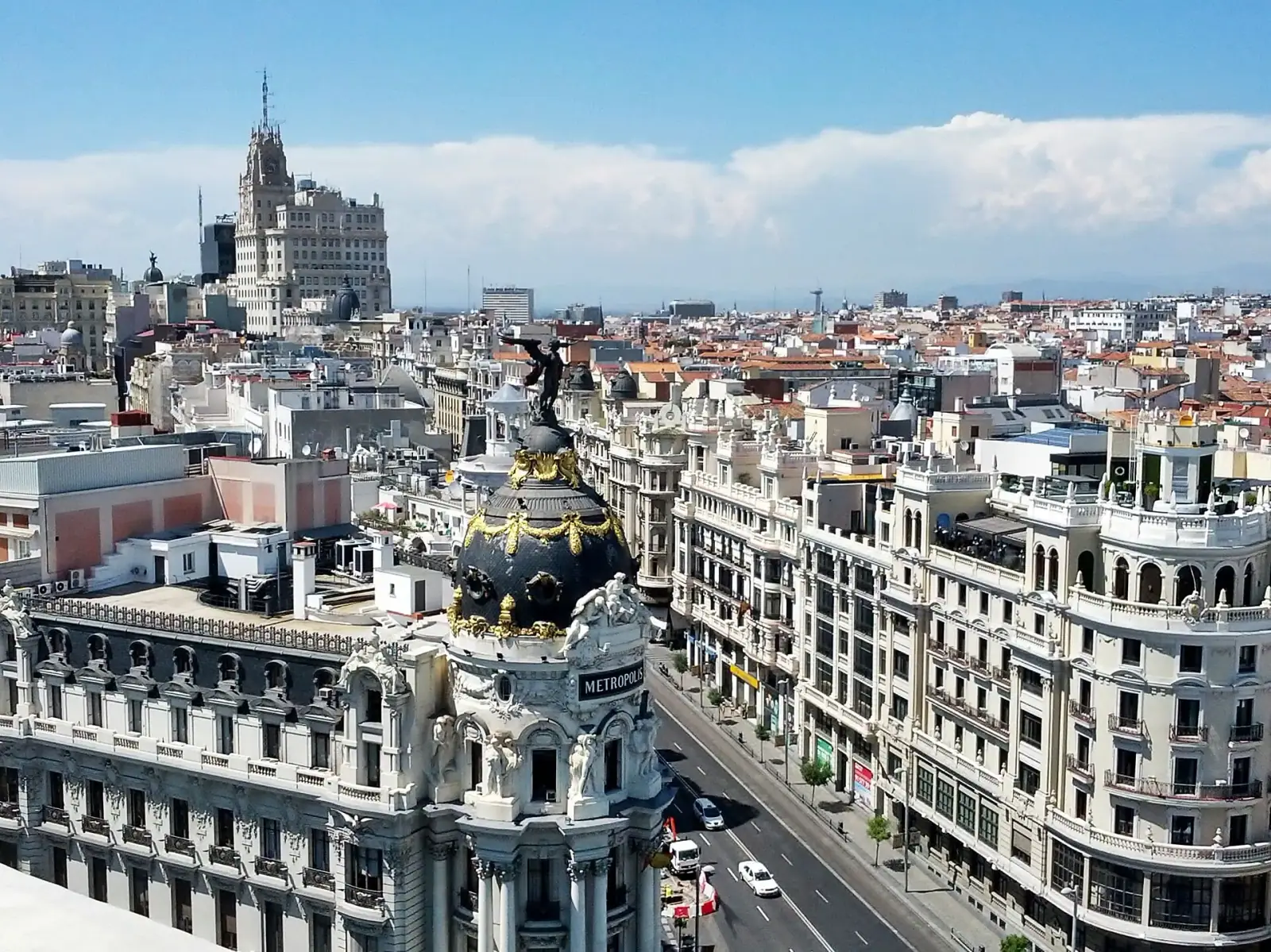
In June 1561, Philip II set up his court in a town on the Manzanares, a small river in the dry middle of Castile. He made no announcement, and the town probably held no more than 20,000 people. Around the same time, a Valencian silk merchant could look back on a century in which his city had been among the largest in Europe, rich enough to raise the Llotja de la Seda with its twisted stone columns, and a blue band around the trading hall promising prosperity to those who deal honestly. Nobody at the Llotja could have guessed which of these two places would end up with the planes.
What 1561 still decides
Stand in the Puerta del Sol, by the bear and the strawberry tree, and look down. The plaque on the pavement in front of the old post office is Kilometre Zero, where Spain's road distances begin. Six national roads fan out from here, and the one to Valencia leaves along the Carrera de San Jerónimo. The railways followed the same logic, and then the airlines.
So the king's decision is sitting in your calendar today. Barajas handled about 68 million passengers in 2025, the fifth most in Europe, and is the main bridge between Europe and Latin America. Valencia's airport handled under 12 million, and its leading destinations outside Europe are Marrakech, Tangier and Fez. For a client in Bogotá, or a flight every other week, Madrid saves you real time. The city of nearly 3.5 million that grew around that court also gives you the Prado, the jobs and the crowds in Malasaña bars at an hour other cities reserve for sleep. All of it comes at about 650 metres, Europe's second-highest capital, with January days of 10°C and July days of 33°C, and no sea at all.
What 1707 took away
Valencia's own turn came in the War of the Spanish Succession, when it backed the losing claimant. On 29 June 1707, the Nueva Planta decree abolished its laws and institutions in one stroke, and Castilian became the language of government. The city that had once governed itself became a provincial capital of a kingdom run from that town on the Manzanares. It got one brief reversal: from November 1936 to October 1937, the Spanish Republic moved its government here while Madrid was under siege.
You can hear the result on the street, or rather you mostly cannot. Valencian remains co-official, and everyday use in the city itself is down in single digits, among the lowest in the region. A move here without children can ignore this. With children it needs thought, since Valencian is compulsory for schoolchildren here, and that is worth asking about before you choose a school.
What being passed over left behind
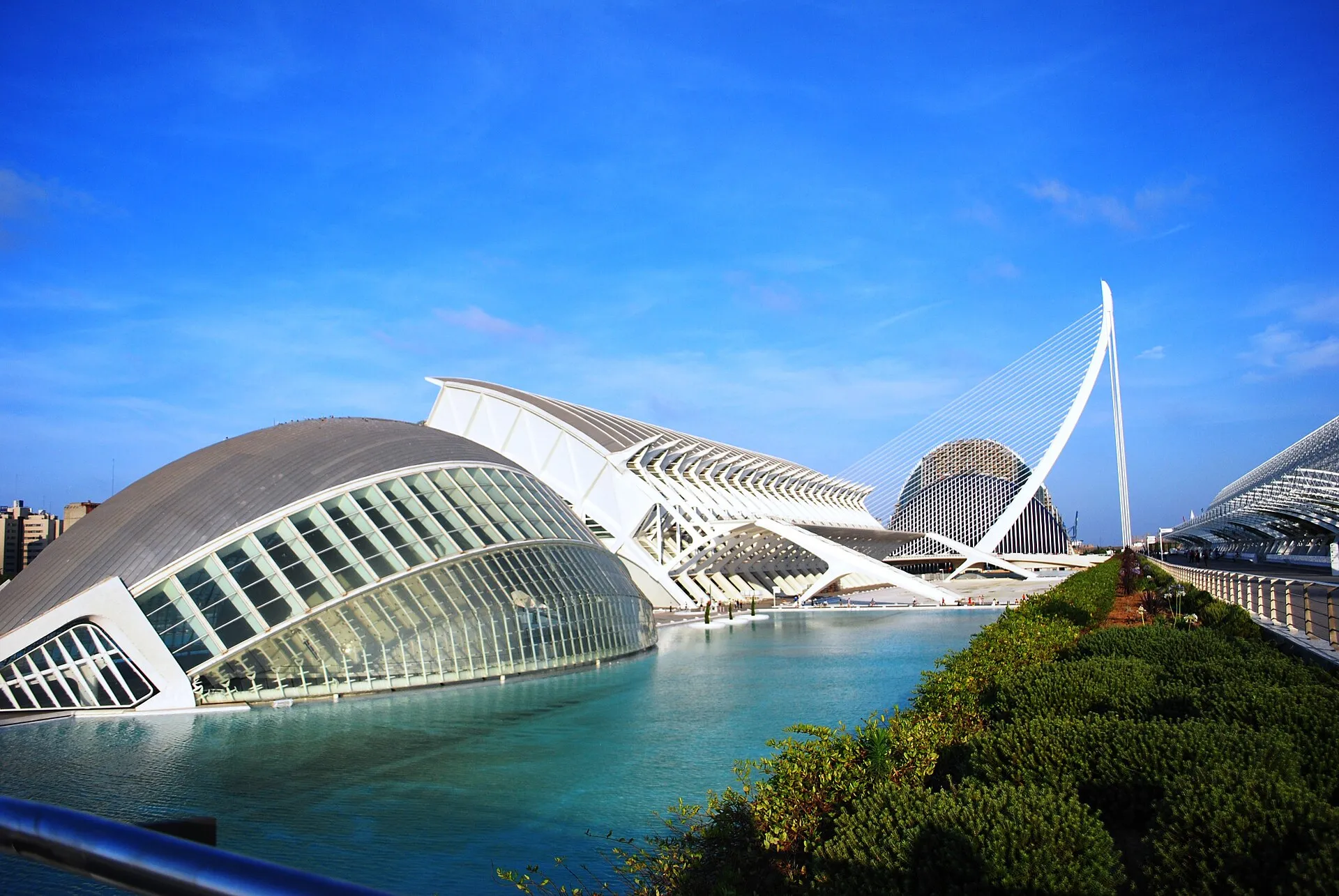
Losing has been good for the quality of daily life. Valencia has about 840,000 people, and it was never rebuilt to run a country. One of its great civic projects was turning the old bed of the Turia into a park after the flood of 1957. So you can cycle from El Carmen through those gardens, have lunch in Ruzafa, and reach the beach at Cabanyal by evening, without once needing a car. January highs are 17°C. We look at the flood's other legacy in our page on Valencia and Alicante.
Then came a historical correction. On 18 December 2010, the high-speed line opened, and Madrid came within two hours of the coast. It did not move the capital, though it did cancel most of the penalty for not living there: you could take the first train for a Thursday meeting and be home in time for dinner.
Paperwork does not separate them. Spain's digital nomad visa, at about $3,280 a month, applies the same in both, and you can read more on our Spain page. The bill does. On our estimate a month runs to about $3,200 in Madrid and about $2,500 in Valencia.
We would pay the smaller figure, live by the sea, and keep a train ticket in mind. Madrid is the right call for people who fly constantly or whose work happens in rooms with other people. For anyone else, Philip II settled the capital question over 450 years ago, and he took most of the traffic with him when he did.
 United States
 United Kingdom
 Germany
 Canada
 Australia
 India