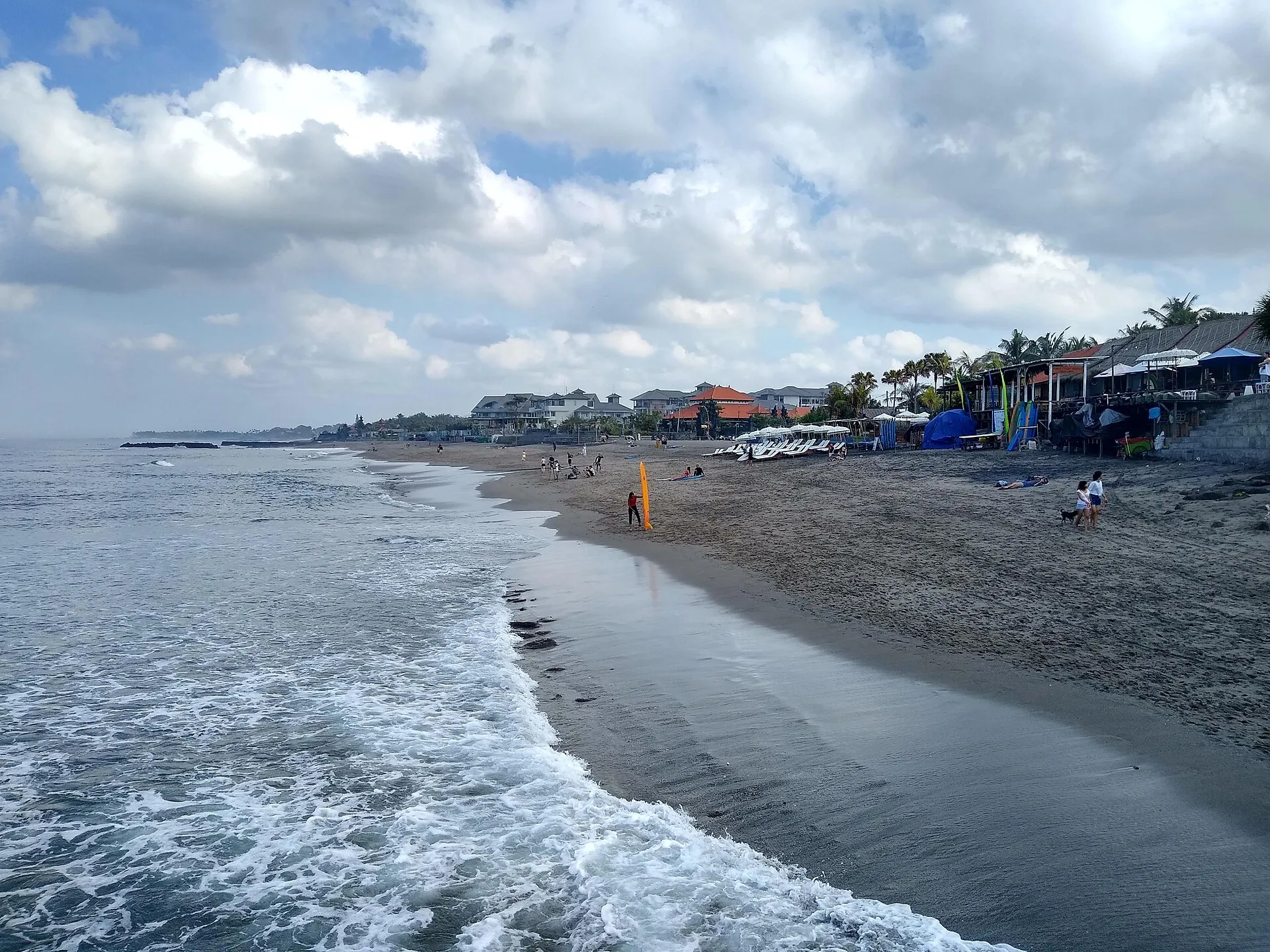

The Canggu in most people's heads is a set of pictures: a villa with a pool between rice fields, an açaí bowl on a café table, a beach club on the black sand. One of those clubs, Finns on Berawa beach, describes itself as 19 pools, 14 bars and the most famous 170 metres of beachfront in Canggu. The pictures promise one of two things, depending on who is telling the story: paradise on a few dollars a day, or a place that has priced itself out of reach.
The receipts tell a more useful story. An açaí bowl at Milk & Madu costs $6.37 on the menu, and the small print adds 10 percent tax and 7 percent service, so you pay about $7.50. A meal at an ordinary Balinese restaurant costs about $2.77. And the minimum wage in Badung, the regency Canggu belongs to, is about $210 a month, or roughly $7 a day: less than that bowl.
That is the real shape of Canggu's cost of living. There are two price lists on the same street, one for visitors and one for the people who live here, and your month costs whatever share of each you buy. Live in the pictures, with a private pool villa, café meals and a beach club at the weekend, and Canggu costs what southern Europe does. Eat at warungs, share a villa and ride a scooter, and it costs well under half as much.
| One-bedroom, central Bali (measured average) | $972 a month |
|---|---|
| One-bedroom, outside the centre (measured) | $589 a month |
| Private one-bedroom villa with pool, central Canggu | $665 to $1,000 |
| Meal at an inexpensive restaurant | $2.77 |
| Açaí bowl at a Canggu café, before tax and service | $4.99 to $6.37 |
| Cappuccino | $2.24 |
| Mobile plan, calls and 10 GB or more | $6.44 a month |
| Petrol, Pertalite, per litre | $0.55 |
| Coworking at BWork, day / unlimited month | $16.57 / $213 |
| Badung minimum wage, 2026 | $210 a month |
| Our Canggu monthly budget (an estimate) | about $2,200 |
Measured rents, meal, cappuccino and mobile plan: Numbeo's island-wide Bali page, updated 5 September 2026 from 38 contributors. Villa range and budget: our Canggu city guide. Café prices: the cafés' own menus. Petrol: Pertamina's Bali price as reported in September 2026. Minimum wage: the Bali governor's 2026 decree. Prices are in US dollars at the site's exchange rate of 18,040 rupiah per dollar on 1 August 2026.
Where the $2,200 comes from, and what it is not
Start with an admission. No cost survey covers Canggu itself, and Numbeo, the crowd-sourced database most cost comparisons lean on, has no Canggu page at all. So the $2,200 a month on our Canggu city guide is our own estimate, not a measurement.
The nearest measured numbers come from Numbeo's island-wide Bali page, which in practice reflects the tourist coast. It puts a central one-bedroom at about $972 a month, with reported rents running from $554 to $1,521, and one person's other monthly costs at about $579. Add those together and a solo month comes to about $1,550; with a one-bedroom outside the centre, about $1,170.
Our city guide's own ranges sit around those numbers. It puts a budget month, with a shared room and mostly local food, at $665 to $1,000; a comfortable month with a private villa, regular eating out and occasional coworking at $1,330 to $2,220; and a pool villa with restaurant dining at $3,000 or more. Our $2,200 sits at the top of that comfortable band: it prices the Canggu of the pictures, not the only way to live here.
For scale, the same island looks very different twelve kilometres away. Numbeo's page for Denpasar, the provincial capital, puts a central one-bedroom at about $376, and a cheap meal at $1.80. Prices in Canggu are set by who it was built for.
The villa in the photo: rent
Rent decides whether Canggu fits your number, and the villa in the photo is the expensive end of it. Our city guide puts a private one-bedroom villa with a pool in central Canggu, around Batu Bolong and Echo Beach, at $665 to $1,000 a month; a comparable private room in Pererenan or outer Berawa at $390 to $610, with a 20 to 30 minute scooter ride into the busier parts; and a shared coliving room from about $275.
You will read that Canggu rents rise by a fixed percentage every year, or that every landlord wants months in advance. We could not find a source for either claim, so we do not repeat them.
What is measured is that house rents were among the items pushing Bali's inflation up over the year to August 2026, when prices on the island rose 3.45 percent; in Badung, Canggu's regency, they rose 2.86 percent, the least in the province. Negotiate a longer let once you know the area, and get the terms in writing.
Batu Bolong and Echo Beach: the centre of the picture
Batu Bolong is the original strip, the road down to a beach with a temple beside it, lined with cafés, surf shops and restaurants. Echo Beach, the westernmost beach before Pererenan, is the surf and sunset end. Both are where the photographs are taken, and both carry the highest rents.
Berawa: beach clubs
Berawa, to the south, is the polished side: beach clubs, boutique hotels and newer villas, at the top of the price range. It is pleasant to visit and expensive to live in.
Pererenan and Nelayan: the cheaper edges
Pererenan, just beyond Echo Beach and administratively in a different district, Mengwi, is where people move when Batu Bolong gets loud, with rice-field views and yoga studios. Nelayan, by the quiet beach of the same name before Berawa, keeps a fishing-village edge. Both are the places to look for a longer let once you know the area.
The açaí bowl and the warung: food
Food is where the two price lists sit closest together, sometimes a few doors apart. A café açaí bowl costs $4.99 at The Avocado Factory and $6.37 at Milk & Madu, a flat white about $2.22 at both, all before the 10 percent tax and 7 percent service charge that many tourist cafés add at the bottom of the bill. A Bintang costs $2.49 at Milk & Madu and $3.33 at Old Man's on Batu Bolong, against about $2.20 from a shop.
At a warung, a small family-run eatery, a plate of rice with the day's dishes is the $2 to $3 meal that Numbeo's figure describes, and our city guide puts groceries for someone who cooks some meals at $67 to $110 a month.
The difference across a month is large: our guide budgets $140 to $275 a month for eating out most meals, while three café meals a day at $7 to $8 each would cost several times that. Where you eat moves your total more than any other choice after rent.
Scooters, traffic and the cost of getting around
Canggu is not walkable beyond a few hundred metres, so transport is a fixed cost. A scooter rented by the month costs $28 to $39 on our figures, petrol is cheap at about $0.55 a litre, and Grab and Gojek rides cost a dollar or two for short trips. A private transfer from the airport is about $10 to $14.
The licence is not optional. Bali's 2025 rules for foreign tourists require an international or national driving licence and a helmet, and the UK government's advice is that a foreign licence alone is not enough without an International Driving Permit. Check what your travel insurance covers before you ride.
Time is the hidden cost. The road corridor between the airport and Canggu carries about 150,000 people and 80,000 vehicles a day, and the tram planned to relieve it is not due to reach Canggu until 2031. The famous shortcut between Berawa and Batu Bolong is a lane too narrow for two cars to pass. Live within walking or a short ride of your desk and your favourite café, and you will save more hours than dollars.
Pricing a desk in Canggu?
Our guide to Bali's coworking spaces compares what each day pass actually includes, from call rooms to backup power.
Compare Bali coworking spaces →What working here costs
BWork, on the road down to Nelayan beach, charges $16.57 for a day pass and $213 for an unlimited month. Its own price list makes the two-tier economy visible: Indonesian ID holders pay $11.03 for the same day.
Connectivity is cheap but not fast by global standards. Across Indonesia, the median home broadband line downloads about 51 Mbps and the median mobile connection about 66 Mbps, and Numbeo prices a mobile plan with 10 GB or more at about $6.44 a month. Buy the SIM on day one. Bali's power can fail too: on 2 May 2025 the whole island went dark for hours.
The costs no one photographs
Some costs never make it into the pictures. Every foreign visitor pays Bali's tourist levy of about $8.31.
The visa on arrival costs about $27.72 for 30 days and can be extended once for 30 more, with an in-person photo and interview at an immigration office for every extension since May 2025, and Indonesia announced in August 2026 that the fee will rise. For a stay of a year, the E33G remote worker visa costs about $388 and asks for proof of $60,000 a year in income from abroad. Our comparison of digital nomad visas sets it beside the region's other options.
Then there is the beach itself. Rubbish washes up on Badung's shore, mostly in the wet season but not only then, in quantities the regency measures in tonnes: 9,028 tonnes between October 2025 and July 2026, with Batu Bolong one of the collection points. The September 2025 floods killed 16 people in Bali. And a stomach bug is common enough among visitors to have its own nickname, Bali belly; our list of doctors in Bali shows which clinics work in English.
Is Canggu still worth it?
Yes, if you know which Canggu you are paying for. The one in the pictures, a private pool villa, café breakfasts and beach-club weekends, costs around our $2,200 estimate, close to the $2,400 we price for Lisbon. What that buys is the setting, the surf and a remote-work crowd large enough that nobody stays alone for long. The one the measured numbers describe, a central one-bedroom and ordinary island prices, costs about $1,550, and a shared villa with warung lunches can come in under $1,000.
If the number is the problem, look inland or east. Ubud, where we price a month at about $880 from Numbeo's data, is greener and quieter, and Sanur, at about $870 on our estimate, is calmer and older. Our cost of living index ranks all three against the rest of the world.
Whichever you choose, budget from receipts, not pictures. Ask the price of the villa per month for the length you will actually stay, check the bottom line of the café bill for tax and service, and eat at the warung down the road at least once a day. Canggu is a different place at those prices.
Every cost line for Canggu
Rent by area, food, transport, coworking, the five neighbourhoods and all 13 of our category ratings.
Open the Canggu city guide →Frequently Asked Questions
How much does it cost to live in Canggu per month?
It depends which Canggu you buy. Measured island prices put a solo month with a central one-bedroom at about $1,550. Our city guide estimates $2,200 for a comfortable month with a private villa and regular eating out, and $665 to $1,000 for a budget month in a shared room.
Is Canggu still cheap in 2026?
Not at café and villa prices: an açaí bowl with tax and service costs about $7.50, more than a day's minimum wage in Badung. At local prices it is still cheap, with a restaurant meal at about $2.77 and petrol at $0.55 a litre.
How much is rent in Canggu?
A private one-bedroom villa with a pool in central Canggu runs about $665 to $1,000 a month on our figures, a private room in Pererenan or outer Berawa $390 to $610, and a shared coliving room from about $275. Numbeo's island-wide average for a central one-bedroom is about $972.
How much do food and coffee cost in Canggu?
A meal at an inexpensive restaurant costs about $2.77 and a cappuccino about $2.24. Tourist cafés charge $4.99 to $6.37 for an açaí bowl and about $2.22 for a flat white, plus 10 percent tax and 7 percent service.
What does a visa cost for a stay in Canggu?
The visa on arrival costs about $27.72 for 30 days, extendable once in person, plus Bali's tourist levy of about $8.31. The E33G remote worker visa costs about $388 for a year and requires $60,000 a year in income from abroad.
Is there a cheaper alternative to Canggu in Bali?
Ubud, where we price a month at about $880 from Numbeo's data, and Sanur, at about $870 on our estimate. Both are quieter, with smaller remote-work scenes.


