
 Barcelona
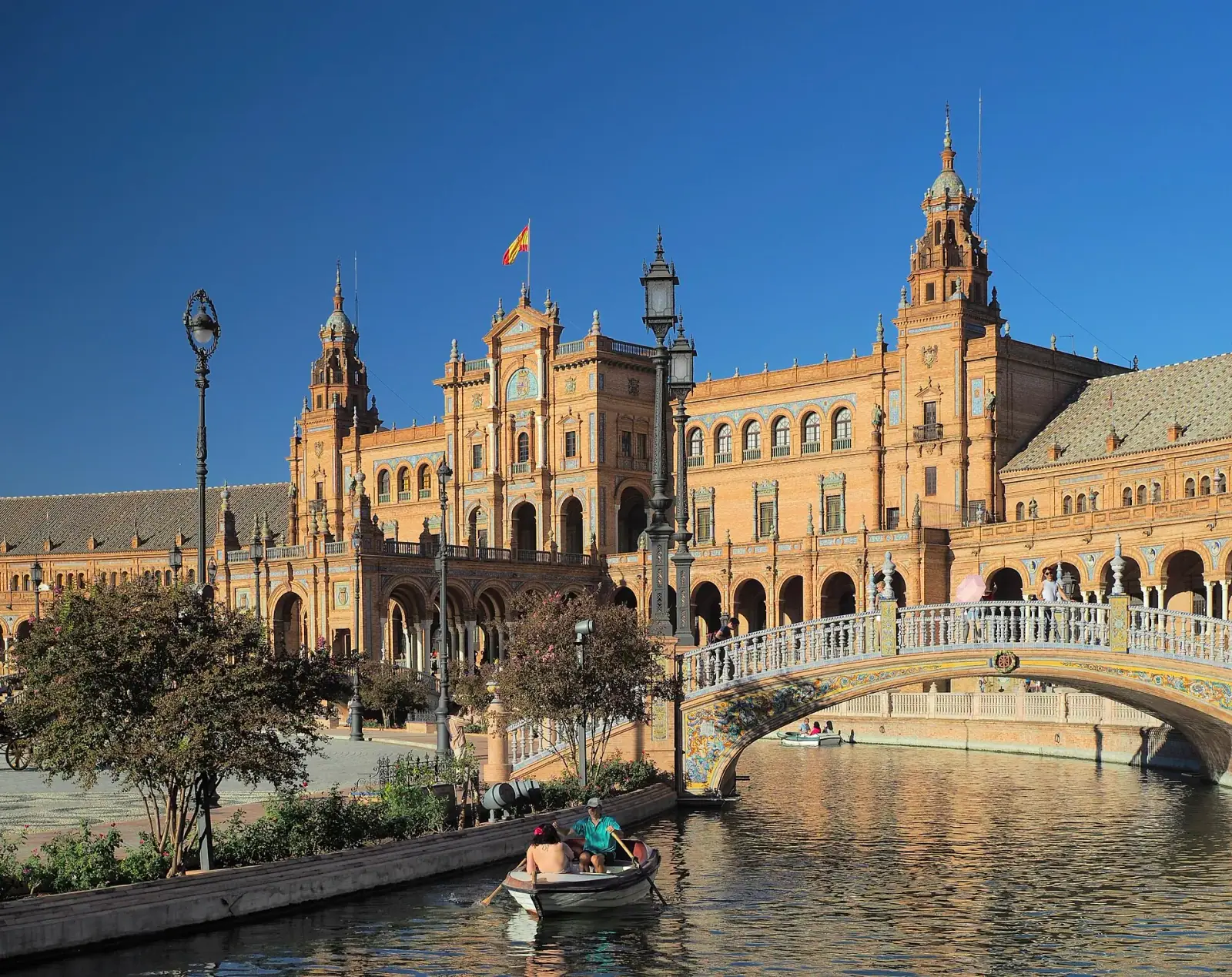
Go to Seville. For most people paid from abroad, it is the better answer, and the reason is money that you can actually feel. We estimate $3,800 for a month in Barcelona and $2,400 in Seville. That is $16,800 a year, and it does not buy you a lesser city: it buys you bitter orange trees along the streets, Triana across the Guadalquivir, the huge timber canopy of Las Setas over Plaza de la Encarnación, and a Holy Week carried through town by 54 brotherhoods, followed two weeks later by a fair on a permanent ground whose streets are named after bullfighters.
The visa sharpens the point. Spain's digital nomad route asks for about $3,280 a month, as set out in our Spain guide. Someone earning right at that line can live comfortably in Seville and falls short of a normal month in Barcelona.
That is the verdict. Here is everything that can be said against it, and some of it is serious.
The heat
July and August average highs of about 36°C, and the airport has recorded 46.6°C. Barcelona's August sits around 28°C with the sea beside it. You cannot really work around this: an afternoon in Seville in those months is something you wait out behind closed shutters, and you will notice that the city has no beach. The Atlantic is about 80 kilometres away, and day trips towards Cádiz or Huelva need a car or a bus.
The trade comes back in winter, when Seville's January highs of 16 to 18°C beat Barcelona's 14. For anyone who minds cold more than heat, this objection partly cancels itself. Anyone who needs to swim before work should take it at face value.
Flights and trains
This is the strongest objection, and it got stronger in late October. On the 28th, a Renfe AVE ran into a stopped Iryo train near Urda, on the high-speed line from Madrid, killing more than 60 people. The line was suspended with no reopening date, and Renfe blocked ticket sales on the corridor until December. That line is the fast link from Seville to Madrid and on to Barcelona, so plan on flying until it is running again.
Flying from Seville means Vueling, Ryanair and a European map: about 9 million passengers in 2024, with nothing nonstop to the United States. Barcelona handled 57.5 million in 2025, with routes to New York, Los Angeles, Seoul, Singapore and São Paulo. Monthly trips to clients in America or Asia would make every one of them a connection from Seville, and a good part of that $16,800 would start leaking away in time and fares.
Language and getting about
Barcelona has two official languages and a very large foreign population, and it is easy to live there in English. In Seville you will need Spanish for your landlord, your bank and most of your friendships. We count that as a benefit if you came to Spain to live in Spain, and a real obstacle if you did not.
Seville has just one metro line, with 21 stations, and a short tram. A third line is being built. This matters less than it sounds. The city is flat, with green raised bike lanes on most main roads and Sevici hire bikes, so most of what you need is a short ride away, at least until June.
What is left standing
The case against Seville wins outright for two kinds of people: those who fly long-haul most months, and those who would be lonely without a big English-speaking crowd and a beach to meet it on. For them Barcelona is worth its price, and we would not argue.
Everyone else should go south, and set aside a few thousand of those dollars to rent something on the coast in July and August. You will still finish the year far ahead.
 United States
 United Kingdom
 Germany
 Canada
 Australia
 India