 Barcelona
Spain's two great cities each owe their main selling point to one decision, and neither decision was geographic destiny. In June 1561 Philip II settled his court in Madrid, a town on a high plain with no port and no sea. In the run-up to the 1992 Olympics, Barcelona knocked down its waterfront factories and opened five beaches. If you are choosing between them, you are really choosing which of those two acts you want to live inside.
What the court built
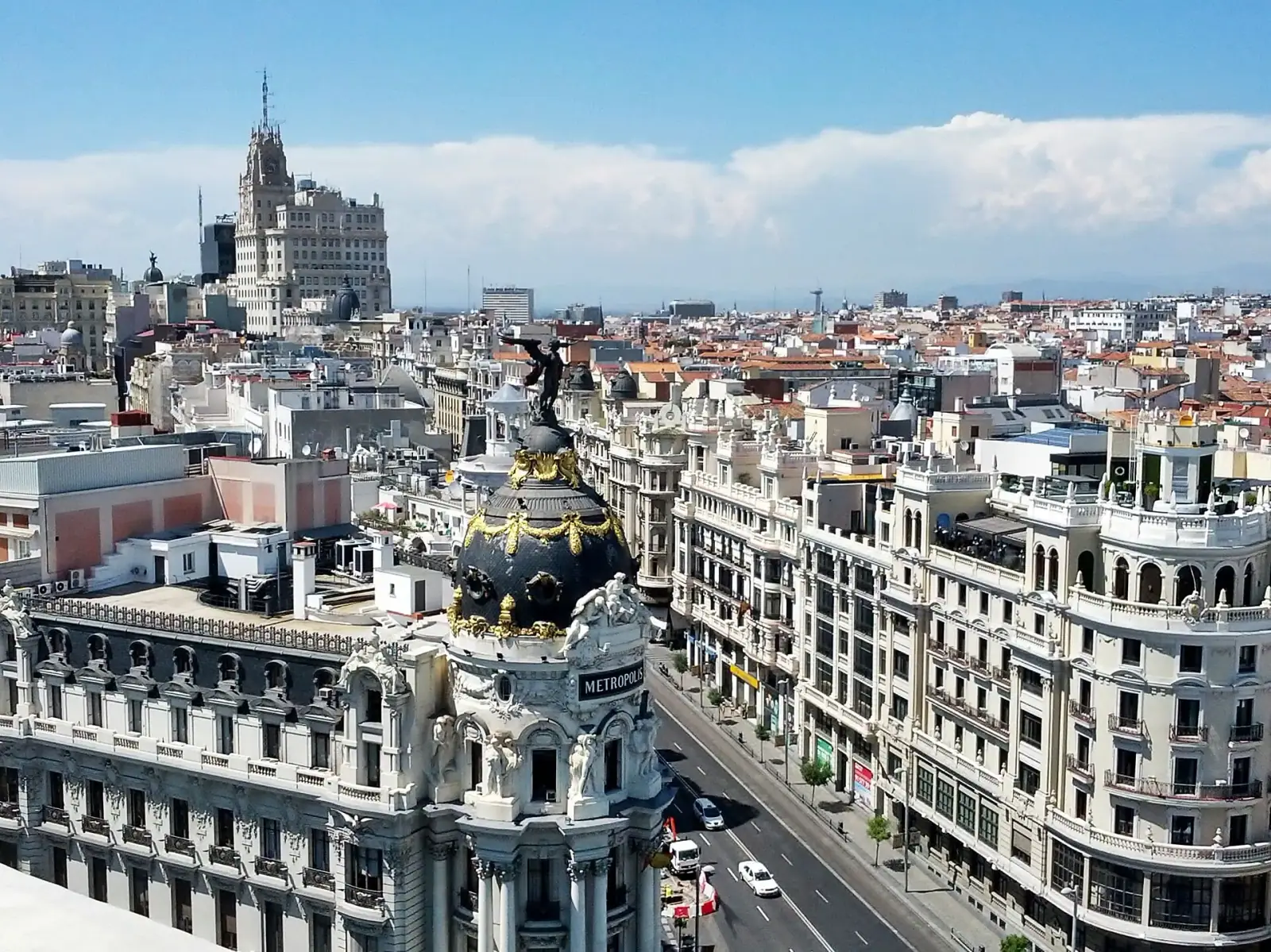
Once the crown had arrived, Spain began arranging itself around it. In the 18th century the country built a radial system of roads and communications centred on the capital, and a plaque in the Puerta del Sol still marks kilometre zero. The royal painting collection, gathered since Charles V, went on public view in the Prado in 1819.
The same logic explains why Madrid works so well for a person with a laptop and a flight to catch. Barajas handled about 68 million passengers in 2025 and is Iberia's hub, a key link between Europe and Latin America. Clients in Bogotá or Mexico City are a direct flight away, and much of the country's corporate and government life is a metro ride from your flat.
Philip's choice has a price, and you pay it in July. At about 660 metres in the middle of the Meseta, the city sees daytime averages of 32 to 34°C, and frosts are normal in winter. Its river is small, too. The nearest thing to a waterfront is Madrid Río, a park created by burying the M-30 ring road beside the Manzanares, which reunited districts the motorway had split. It is a lovely place to walk at dusk, and it does not replace a swim.
A radial country also has a weak spot. When the Urda crash of 28 October stopped high-speed trains between Madrid and Andalusia, a whole region lost its fast line to the capital at a stroke.
What the Olympics built
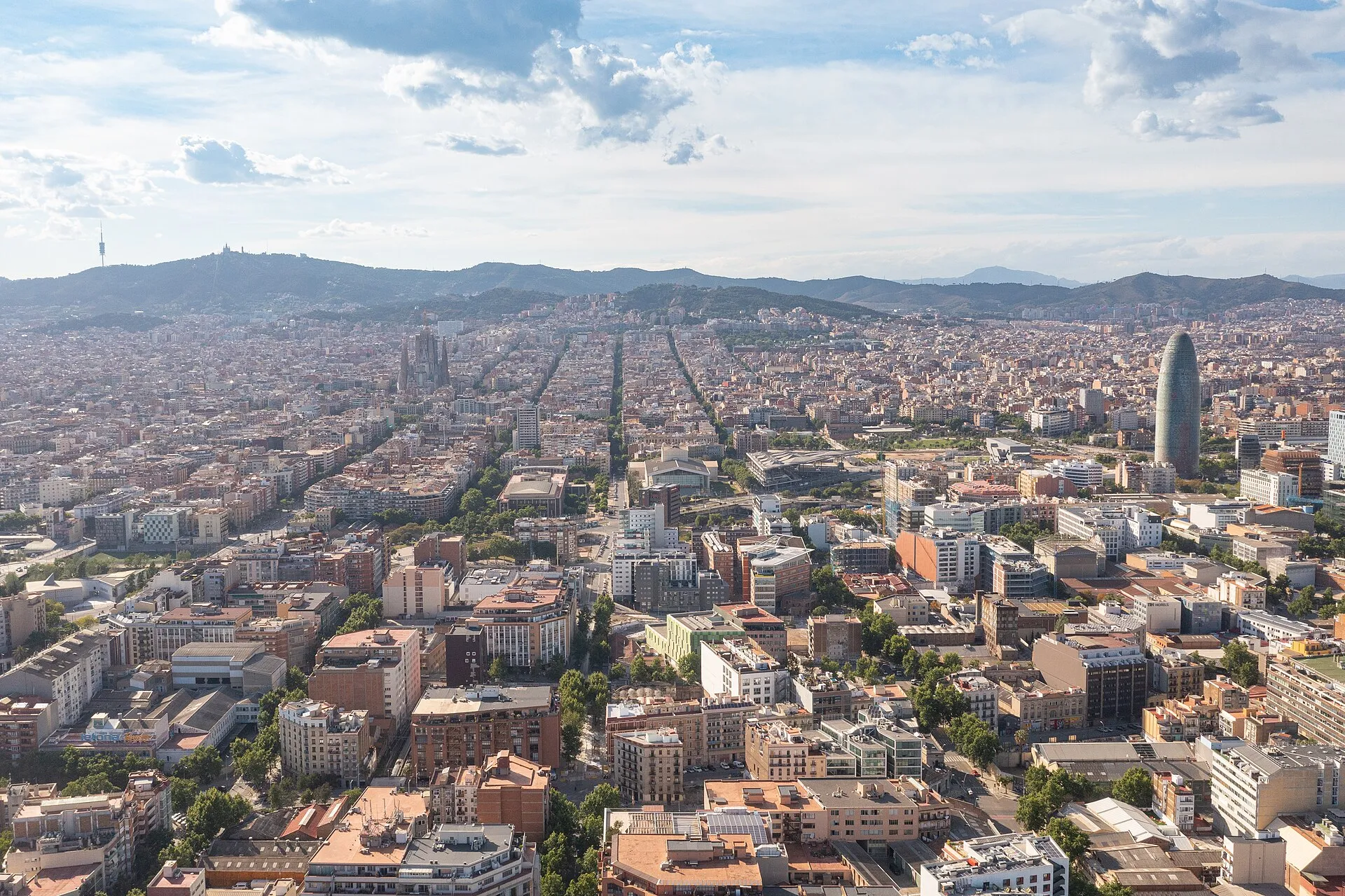
Barcelona had spent the 19th century as Catalonia's factory floor, and Poblenou was known as the Catalan Manchester. Before the Games, industrial buildings came down, and Nova Icària, Bogatell, Mar Bella, Nova Mar Bella and Llevant opened. Today seven beaches line 4.5 kilometres of shore. The sand you are paying for is younger than many of the people lying on it.
That redevelopment set off the rest. Poblenou's former warehouses are now lofts and studios, and the 22@ plan has been turning the area into a technology district, so you could work near the Rambla del Poblenou and walk to the water at five. More than a century earlier, Ildefons Cerdà's Eixample had set the city's other great asset: a grid of chamfered blocks that lets in light and air, even though builders closed the courtyards he meant to leave open. January days here reach 12 to 18°C, which Madrid cannot offer.
And the success has come back to bite. Barcelona will not renew its roughly 10,000 tourist flat licences when they lapse in November 2028, a plan the Constitutional Court upheld in 2025. That may free up homes in time, but do not expect the furnished short lets most arrivals start in to get easier soon.
The city also has a language of its own, restored to public life after Franco. Metro stops are named only in Catalan, and it is the language of instruction in public schools. A family with children should take that seriously.
What the gap pays for
Here is the oddest number in this comparison. Local tenants pay nearly the same on a new one-bedroom lease: about $820 a month in Barcelona and $830 in Madrid. Yet our estimate of what a remote worker's month comes to is $3,800 in Barcelona against $3,200 in Madrid. The difference does not come from what the cities cost their residents. It comes from the competition for central, furnished flats among people like you.
The visa will not separate them, since Spain's digital nomad route asks for the same $3,280 a month wherever you land, and neither will the train. The Madrid to Barcelona AVE, once 2 hours 37 minutes, takes at least three hours until the end of 2026 under speed limits brought in after January's Adamuz disaster.
We lean Madrid. You get a working capital, the better airport and the Prado for $7,200 a year less, and if your heart is set on the Mediterranean, Valencia offers it for less than Barcelona does. So here is the whole decision in one line: is a beach made in 1992 worth $600 a month to you?
 United States
 United Kingdom
 Germany
 Canada
 Australia
 India