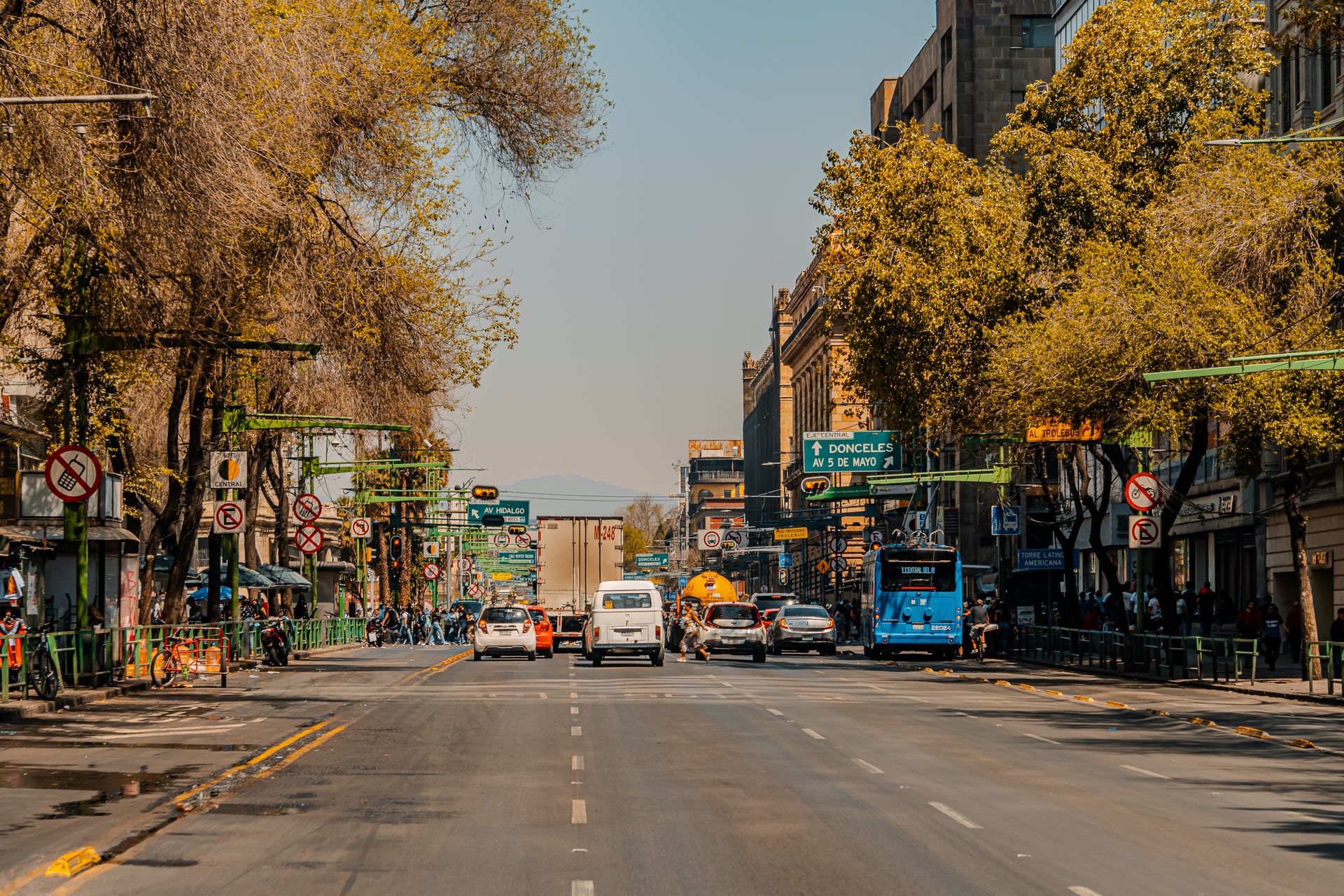
Mexico City's main square was once an island. Around 1325 the Mexica founded Tenochtitlan on it, in the middle of Lake Texcoco, and tied it to the shore with causeways that doubled as dikes, holding the fresh water apart from the salt. By the Spanish siege of 1521 their capital had spread over more than 13 square kilometres, much of it on chinampas, artificial islands raised above the waterline.
The Spanish built their city on the ruins and spent the next three centuries trying to get rid of the lake, with canals and tunnels dug from the 1600s onwards; the last of Lake Texcoco was drained in the 1960s. The Aztec city did not quite disappear. In 1978 electricity workers digging a trench behind the cathedral struck a carved stone disc more than three metres across, the Coyolxauhqui stone, and the excavated Templo Mayor now sits a few steps from the Zócalo.
What the lake left behind is clay, and as the water beneath it is pumped out, the clay compacts. Radar from the NISAR satellite shows the worst-hit parts of the city sinking by more than 2 centimetres a month, and the Angel of Independence on Paseo de la Reforma has needed 14 extra steps at its base as the street around it dropped. That old lakebed, 2,240 metres up in a basin ringed by volcanoes, decides more of your daily life here than any guidebook admits: what comes out of the tap, what the air is like in April, how a building behaves in an earthquake, and which neighbourhoods feel like home.
None of it should keep you away. Mexico City is the easiest big city in Latin America to work from on North American hours, it is one of the great food cities anywhere, and our one-person budget with a central flat comes to about $1,680 a month. Come if you want a vast, cultured capital and can live with some friction. Skip it if you need clean air every day, want a beach on your doorstep, or cannot stand crowds.
| Our monthly budget, one person, central one-bedroom | about $1,680 |
|---|---|
| One-bedroom rent, city centre | $1,110 a month |
| One-bedroom rent, outside the centre | $700 a month |
| Living costs without rent, one person | $570 a month |
| Metro ride / Metrobús ride | $0.29 / $0.35 |
| Temporary residency, income test | about $4,600 a month |
| Temporary residency, savings test | about $77,500 |
| Altitude | 2,240 m |
| Time zone | UTC-6 all year |
| Average high, April / July | 27.5°C / 24.7°C |
Rents, living costs and budget: our figures, priced from Numbeo (August 2026). Fares: Mexico City government, 2026. Residency: 680 and 11,460 times the daily UMA, as consulates apply them. Climate: Tacubaya station normals, 1991 to 2020. Prices are in US dollars at the exchange rate of 17.34 pesos to the dollar on 1 August 2026.
How long can you stay?
Most Western passports enter Mexico visa-free as visitors, and the officer at the airport decides how long you get. The ceiling is 180 days, but officers now often match the stay to the plans you describe, so a return ticket and an address help. The number of days written on your entry is final: a visitor permit cannot be extended or renewed from inside the country.
Visitor status also carries no permission to earn money in Mexico. Answering a foreign employer's emails from a flat in Roma is the grey zone most remote workers here live in, and Mexico has no digital nomad visa to take them out of it. If you want to stay longer, or properly, the route is temporary residency.
You apply for it at a Mexican consulate before you travel, and the test is money: a monthly income above 680 times the daily UMA, Mexico's official unit of account, over the last six months, or an average balance of 11,460 times the UMA over twelve. At this year's UMA that works out to about $4,600 a month or $77,500 in savings. The UMA resets every February and each consulate converts at its own rate, so check the one you will use.
Within 30 days of landing, you swap the visa for a residence card. The first card runs a year, and renewals take you to four in total. Our comparison of digital nomad visas sets Mexico's bar against the countries that do run a dedicated scheme.
When does Mexico start taxing you?
Mexico does not count days. You become tax resident once you set up your home here, and if you keep a home abroad as well, once your centre of vital interests moves to Mexico, for instance when more than half your income comes from Mexican sources or your main professional activity is based here.
So a visitor renting month to month while keeping a home elsewhere usually stays outside the net, and a temporary resident who gives up the flat back home may not, whatever the calendar says. Our guide to how digital nomads are taxed explains how treaties settle a claim from two countries at once.
Water, air and earthquakes: living on the lakebed
What comes out of the tap
The city drinks mostly from the aquifer beneath it, the same pumping that makes it sink, topped up by reservoirs piped in from the west. Few people drink from the tap: drinking water comes in garrafones, the big five-gallon jugs you swap at the corner shop or have delivered, for under $6 each.
The tap feeds a tank on the roof, the tinaco, sometimes with an underground cistern pumping up to it, and that tank is what runs your shower for a couple of days when the supply stops. Ask about both before you sign. In a dry year some districts get water only at set hours, and a building with a cistern barely notices.
What the air is like
At this altitude the first few days leave many people short of breath, and the same strong sun over a windless basin turns traffic fumes into ozone. The bad spells cluster from February to June, before the rains, when the authorities can declare an environmental contingency and take more cars off the road. If you run or cycle, go early in those months. Once the rains start in May, the afternoon storms rinse the air.
How the ground shakes
The clay that sinks also amplifies earthquakes. Soft lake sediment slows seismic waves and makes them slosh, which is why quakes centred far away did their worst damage here in 1985 and again in 2017. The city's answer is warning: more than 28,000 loudspeakers wired to the SASMEX alert system sound when a large quake is detected, often close to a minute before the shaking arrives.
The 911 CDMX app carries the same alert to your phone; install it on day one. Then, before you sign a lease, look the address up on the city's Atlas de Riesgos, which shows whether a street stands on hill, transition or lakebed ground. Damage in 2017 was heaviest on the last two, so on lakebed ground a newer building and a solid inspection matter more.
Where to live, from the old lakeshore to the south
The lake sorted the city socially too. When the wealthy left the old centre around 1900, they went west, to new districts such as Roma and Polanco near the old shore and the wooded hill of Chapultepec, while working-class districts spread east across the drained lakebed. That west-east line still shows in the streets and in the rents.
Roma Norte: the Porfirian mansions
Before the drainage, Roma was a shallow corner of the lake dotted with tiny islands. It was laid out in the early 1900s as an upper-class suburb, and its Art Nouveau and Neoclassical houses now hold restaurants, galleries, bars and coworking spaces. It is the densest nomad district in the city, and our city guide puts a furnished one-bedroom here or in Condesa at $1,040 to $2,020 a month.
Condesa: the racetrack and the parks
Condesa is Roma's greener neighbour. Avenida Ámsterdam still follows the oval of a racetrack that closed in the 1920s, with a shaded promenade and jacarandas down its middle, and at the centre of the oval sits Parque México, with its Art Deco clock and fountains. Rents sit in the same band as Roma's.
Roma and Condesa are also where resentment runs hottest. In July 2025 hundreds marched through both districts against rising rents, mass tourism and the arrival of remote workers, and some of the march turned to vandalism. Sign a proper lease rather than rolling through short lets, speak some Spanish, and spend locally.
Del Valle and Narvarte: the quieter grid
South of Roma, Del Valle began as a Porfirian district of mansions and was rebuilt around apartment blocks after the wide one-way ejes cut through it in 1978. It keeps its tree-lined side streets and Parque Hundido, a sunken park laid out in an old sand mine. With neighbouring Narvarte, a furnished one-bedroom here runs about $690 to $1,150 a month.
Coyoacán: the village on the southern shore
Coyoacán was a village on the southern shore of the lake long before it was a borough. Its old centre, 10 kilometres south of the Zócalo, keeps narrow cobbled streets, twin plazas and Frida Kahlo's Blue House. It is calm on weekdays and packed on weekends. Choose it for a slower life and accept a longer ride to the coworking districts.
Polanco: the expensive west
Polanco, beside Chapultepec, has the city's luxury shopping on Avenida Presidente Masaryk, embassies and some of its most expensive restaurants, and it is among the priciest property markets in Latin America. On a nomad budget it mostly defeats the point of being here.
Visa paperwork or a lease to check?
Our Mexico City directory lists lawyers and translators by the languages they work in, each with the source that shows it.
Browse lawyers in Mexico City →What a working day looks like
The clock is the city's biggest gift to remote workers. Mexico stopped changing its clocks in 2022, so the capital stays on UTC-6 all year. In the northern winter you sit one hour behind New York, and in the northern summer two; Los Angeles is two hours behind you in winter and one in summer.
Picture a weekday in November, in the dry season. The morning is cool and bright, and in the central districts the connection is rarely the problem, though flats vary, so test the speed before you sign. WeWork and several local chains run desks across Roma, Condesa, Juárez and Polanco, and our city guide puts a hot desk at $145 to $290 a month.
For lunch, every major neighbourhood has its own market hall, with stalls cooking home-style food beside the fruit and the tortillerías, and a simple restaurant meal averages about $12. On the way home, the Metro and the Metrobús, which runs in its own lanes, cost about 30 cents a ride. Both are packed at rush hour, and pickpocketing on public transport is common, so keep the phone in a front pocket.
After dark, take Uber or DiDi, or a taxi from an authorised sitio rank. On most Sunday mornings, Paseo de la Reforma closes to cars for the Muévete en Bici ride, and the city's cyclists, runners and dog walkers take the avenue past the Angel towards the old centre.
When should you go?
The calendar here runs on rain, not heat. The dry season, November to April, brings cool, clear mornings, highs of about 22°C in December and 27°C by April, and almost no rain in December or February. It is the best time for working outside, with one catch: from February the ozone season begins.
February to April is also when the jacarandas flower, and whole avenues, Ámsterdam among them, turn violet. Many were planted on the advice of Tatsugoro Matsumoto, a Japanese gardener who had brought the tree from Brazil and warned that cherry trees would not flower in a city without a real winter.
From May to October most days start sunny and end in a heavy afternoon or evening storm. July and August, the wettest months, bring about 175 millimetres each. It is a fine time to live here if you plan your walks for the morning and keep an umbrella by the door. The Day of the Dead opens November, and the dry, bright weeks after it are the best time to arrive.
If you get sick
As a visitor you pay for your own care, so bring health insurance that covers Mexico for the whole stay. Our list of doctors in Mexico City by the language they speak shows the source for each one.
For the first days at altitude, drink plenty of water, go easy on alcohol and hard exercise, and let your body adjust.
Mexico City or somewhere else in Mexico?
Among Mexico's nomad cities, the capital is neither the cheapest nor the calmest. On our one-person budgets, Guadalajara costs about $230 a month less, with a smaller, easier city around it and the same time zone. For surf instead of smog, Puerto Escondido is the other end of the country's range. If you are weighing Latin America more widely, our Medellín and Chiang Mai comparison covers the region's other long-stay favourite.
What the capital offers instead is scale: a megacity over an Aztec lake, with a temple beside its main square and a market in every neighbourhood. If you want that, come in the dry season, rent in Roma, Condesa or Del Valle on a proper lease, check the address on the risk atlas, and install the quake alert before you unpack. If you want to stay past your visitor days, start the residency application at a consulate before you fly.
Every figure for Mexico City in one place
The full cost table, neighbourhood notes, weather by month and all 13 of our category ratings, before you choose a colonia.
Open the Mexico City city guide →Frequently Asked Questions
Does Mexico have a digital nomad visa?
No. The route for a long stay is the temporary resident visa, applied for at a Mexican consulate before you travel. It needs a monthly income above 680 times the daily UMA, about $4,600, or savings of 11,460 times the UMA, about $77,500.
How long can I stay in Mexico City as a tourist?
Up to 180 days, but the immigration officer decides how many you get and may grant fewer to match your plans. The permit cannot be extended from inside Mexico, and visitor status does not allow paid work in Mexico.
How much does it cost to live in Mexico City as a digital nomad?
About $1,680 a month for one person with a central one-bedroom, on our Numbeo-based budget. A central one-bedroom averages $1,110, one outside the centre $700, and other living costs about $570.
Is Mexico City really sinking?
Yes. It stands on the clay bed of the drained Lake Texcoco, which compacts as groundwater is pumped out. Satellite radar shows the worst-hit areas sinking by more than 2 centimetres a month, and the Angel of Independence has had 14 steps added to its base.
Can you drink the tap water in Mexico City?
It is not the custom. Drinking water comes in five-gallon garrafones, delivered or swapped at shops for under $6, while tap water fills the rooftop tinaco used for showers and washing.
What is the best time of year to work from Mexico City?
November to April, the dry season, has clear mornings and highs of about 22°C to 27°C. February to June is also the ozone season, and from May to October most afternoons end in a heavy storm.
Which Mexico City neighbourhood is best for digital nomads?
Roma Norte and Condesa have the most coworking and cafés, at $1,040 to $2,020 for a furnished one-bedroom. Del Valle and Narvarte are quieter at about $690 to $1,150, and Coyoacán suits a slower life further south.


