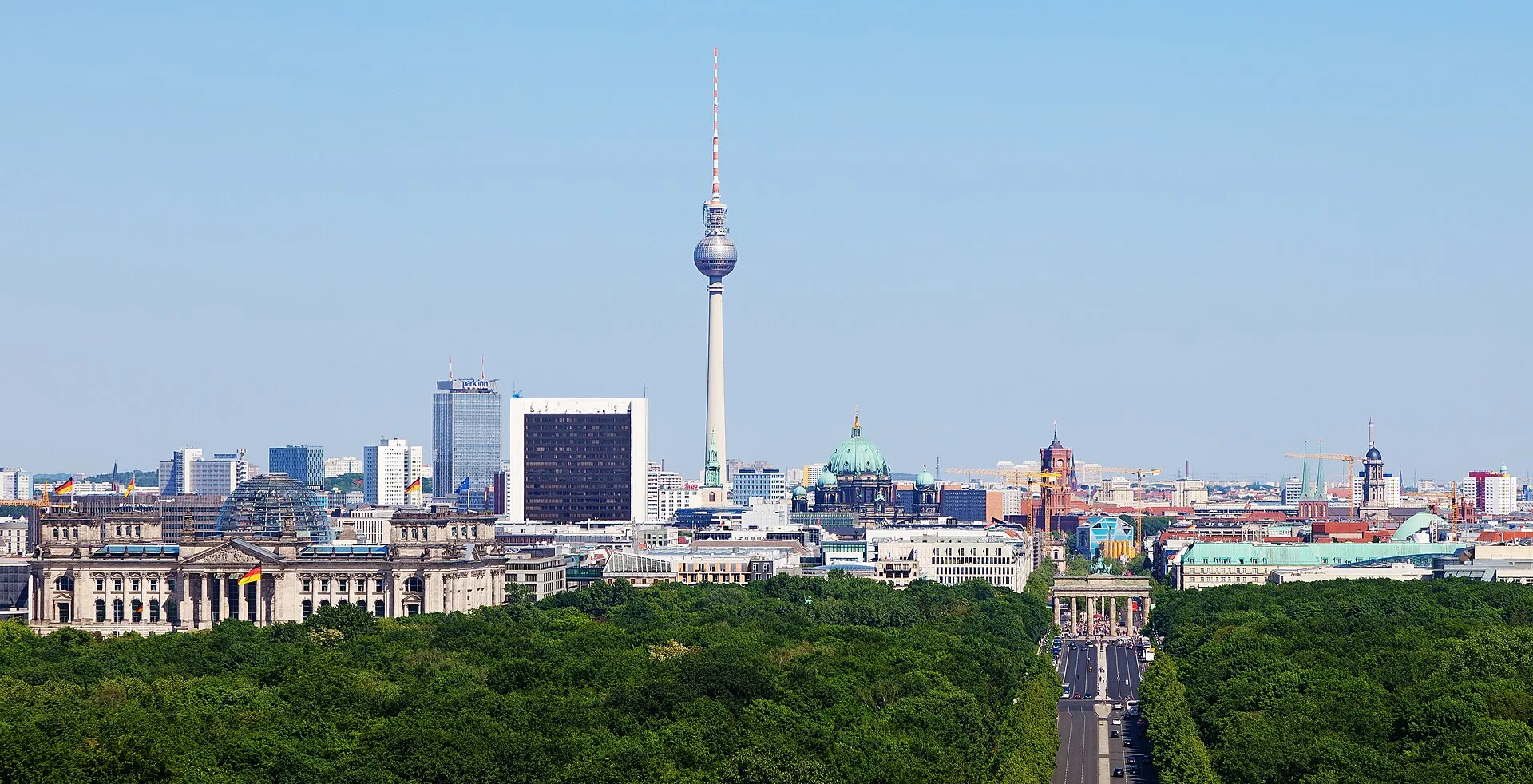
 Berlin
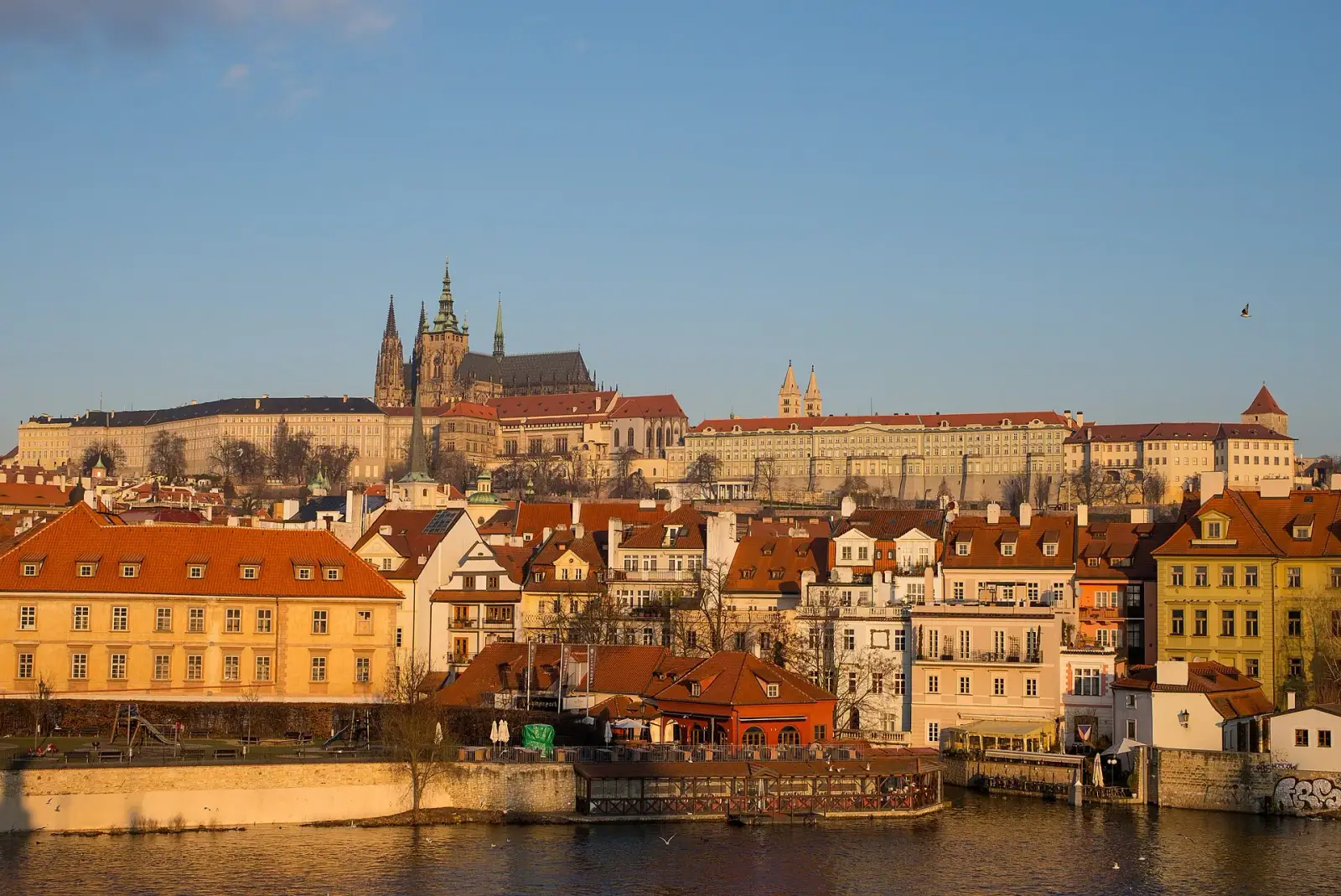
 Prague
In August 2002, a sea lion called Gaston left Prague Zoo when the flood reached his pool. He turned up in Germany and was captured at Dresden, where he died. It is a sad little story, and a useful one, because water is a surprisingly good way to compare these two cities. It explains why Prague's most fashionable district looks so new, and it explains what a Berlin summer is actually for.
The Vltava in Prague
That flood crested at 5,300 cubic metres a second, a fifth above the great flood of 1845, and some 40,000 people left the city. Karlín, Kampa, Holešovice and Libeň took the worst of it. Water filled 19 metro stations, and the last of them, Křižíkova, did not reopen until March 2003.
Now look at where a remote worker gets sent in Prague today. Karlín is the unofficial headquarters of the tech crowd, with renovated streets, modern flats and craft breweries. Holešovice has the galleries, the DOX art centre and the weekend markets at Pražská tržnice. Two of the districts that came closest to ruin are now among the most wanted, partly because so much had to be rebuilt. Think twice about a ground-floor flat in either.
The rest of the time, the river is the thing you cross and admire. Ferries on the Vltava run on the same fares as the trams, covered by a monthly pass of about $26. Down on the Náplavka quay, with the castle in view across the water, the cruise boats tie up and cultural events come and go. It is a lovely river to live beside, and not one that shapes your summer evenings.
The lakes in Berlin
Berlin's water works the other way round. The Spree through the centre is for barges and tour boats. If you want a swim there, your options are the Badeschiff, a pool floating in the river since 2004, or joining the Fluss Bad campaigners, who hold swimming demonstrations on the 20th of the month through the summer to press for a clean channel.
But the city has 39 monitored bathing sites, from small lakes like Plötzensee and Weißensee out to the Müggelsee and the Havel. About a third of Berlin is forest, park or water. The U3 ends at a station named after one of those lakes, the Krumme Lanke, a walk of about a kilometre away through the edge of the Grunewald. Strandbad Wannsee has 1,275 metres of sand and room for some 12,000 bathers, and people have been coming since 1907.
So picture a Tuesday in July. You close the laptop in Neukölln at five, you take a train with a towel in your bag, and you are in a lake by six. Nothing in Prague's daily life quite matches that, and for four months of the year, it goes some way to justifying the rent.
The other eight months
The rent still has to be justified. Our estimate is about $3,400 a month in Berlin and about $2,600 in Prague, and a Berlin flat is harder to find as well as dearer. In return, you get a city of 3.7 million against 1.4 million, with a far larger range of startups, people and things going on, and English that will carry you a long way. Winter does not separate them much. Berlin's January averages a high of 4 degrees, Prague's a high of 2, and both will send you indoors, where Prague's beer and Berlin's clubs do what they can.
Staying longer is its own question. Germany's freelance permit has no fixed income figure, and an office decides whether yours will cover your costs. The Czech Republic's digital nomad programme asks for about $3,510 a month and is open only to 13 nationalities in IT or marketing, though its trade licence route is wider. Our visa page has the current terms of both.
For a first year in Central Europe, our pick is Prague. It is the easier city to live in, and it saves you about $9,600 over twelve months. Spend a little of that on a July week in Berlin, because the direct train takes under four hours, and the lakes will still be there.
 United States
 United Kingdom
 Canada
 Australia
 India