
Oslo is a capital you can leave on the metro. Line 1 climbs out of the centre past detached houses to Holmenkollen, the hill with the ski jump on the north-western skyline, in 20 to 30 minutes. At the end of the line, Frognerseteren, the trails of the Nordmarka forest start beside the platform. About two-thirds of the city's land is protected forest, hills and lakes, and its 720,000 people live in the arc between those hills and the head of the Oslofjord.
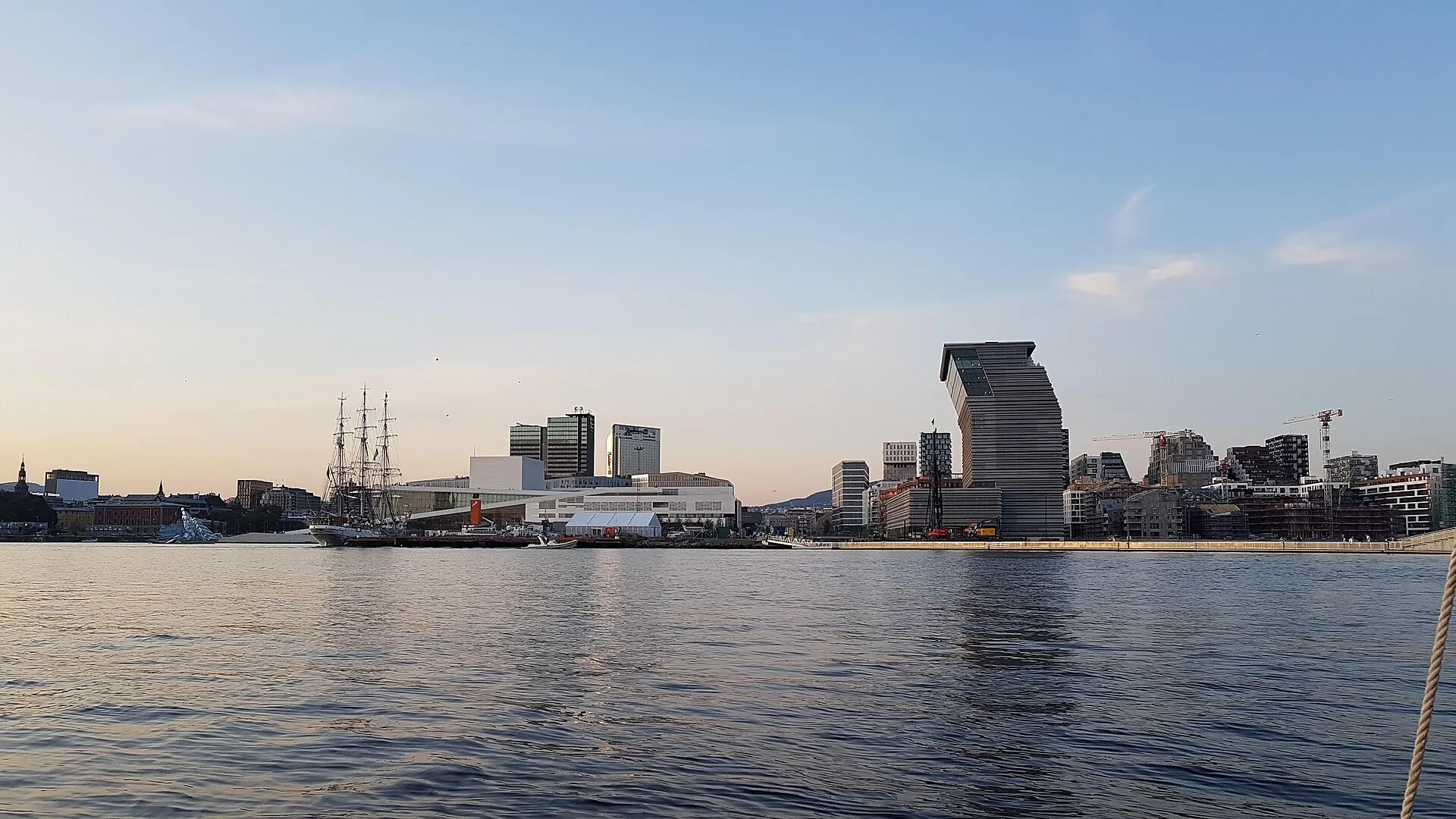
Down at sea level, the harbour belongs to walkers. Where Bjørvika had a container port and a motorway junction, the Opera House now rises from the water in white marble, its roof angled down to the quay so that anyone can stroll up it for the view. Sauna rafts float below, one with a hatch in the floor that drops straight into the fjord, and a promenade follows the water past Akershus Fortress and City Hall, whose bells play a tune every hour, to the galleries and city beach of Tjuvholmen.
That is what sets Oslo apart: city, fjord and forest share one transit ticket, and a working week can end in a sauna, on an island or on a ski trail. It is an easy city to work from, with fibre past nine in ten homes and, in late June, sunlight until quarter to eleven at night. It is a much harder city to afford, and without an EU or EEA passport, a harder city to stay in with the laptop open.
So the answer depends on who you are. With an EU or EEA passport and a good income, Oslo works as a proper base: you can register, sign a real lease and stay as long as you keep working or supporting yourself. From the US, the UK, Canada or Australia, treat it as a summer city, because Norway has no digital nomad visa and a visit is meant to be a visit. Either way, skip Oslo if you are counting every dollar or can only come between November and January.
Money shapes everything else. The average one-bedroom in Oslo and neighbouring Bærum rents for about $1,605 a month, and that figure flatters the city: it averages every sitting tenant, old leases included, in a market where rents rose 6 percent in a single year. A flat you find this month will usually cost more, which is why the budget below assumes a central one-bedroom closer to $2,000.
| Studio, average rent | $1,061 a month |
|---|---|
| One-bedroom, average rent | $1,605 a month |
| Two-bedroom, average rent | $2,002 a month |
| Central one-bedroom, user-reported | $1,990 a month |
| 30-day transit pass, zone 1 | $69 |
| Coworking lounge membership | from $188 a month |
| Coworking desk | $367 to $546 a month |
| Monthly budget, one person, central one-bedroom | about $3,250 |
| Daylight on 21 June | 18 h 50 min |
| Daylight on 21 December | 5 h 53 min |
Average rents: Statistics Norway's 2025 survey of sitting tenants. Central one-bedroom: Numbeo, user-reported. Budget: our one-person basket, priced from Numbeo. Coworking: Mesh's published rates. Prices are in US dollars at Norges Bank's exchange rate of NOK 9.51 to the dollar on 25 September 2026.
Can you work from Oslo on a visit?
Norway sits outside the EU but inside Schengen. On an American, British, Canadian or Australian passport you get 90 days in any 180, shared with every Schengen country, so a fortnight in Lisbon comes out of the same allowance as your summer in Oslo. Since 10 April 2026 the EU's Entry/Exit System logs your fingerprints, a photo and every crossing in place of passport stamps.
The harder question is what you may do. Norway treats remote work as work: outside the EU and EEA, it needs a residence permit even when your employer and every client are abroad. A visitor may keep up, answering emails, taking calls and joining digital meetings for an employer or business back home, if the work is not the main purpose of the stay and creates no value in Norway.
Read plainly, that permits a holiday with a laptop, not a three-month work stint. If you are here for the swims at Sørenga and the long evenings on the islands, and your inbox follows you, the rule was written for you. If the honest reason is the job, it was not.
Is there a permit that fits a remote worker?
No. The independent contractor permit is for a self-employed person based abroad with a contract to deliver a time-limited job for a client, plus skilled-worker qualifications and pay. It is tied to that contract, runs six years at most and never leads to permanent residence: it fits a consultant on a defined project, not a freelancer whose clients change every month.
The self-employed permit is narrower still: it is for someone who must live in Norway to run a lasting business that essentially provides their income, and they may work in that business only. Nordic citizens need no permit at all. For a long, legal working stay, our comparison of digital nomad visas covers the countries that do offer one.
If you hold an EU or EEA passport
This is where a summer in Oslo can turn into a year. You can stay three months without formalities, then register with the police for a registration certificate, as long as you are using an EEA right: working, self-employed, providing services, studying, living on your own funds or looking for work.
The certificate is a receipt, not proof of your right to live here, so keep the contract, payslips or bank statements that do. You can book an appointment with the Tax Administration to report your move before the certificate arrives. If an office asks for a certified translation, our Oslo services directory lists translators and interpreters by the language they work in.
How long before Norway taxes you?
Not on a normal visit, but the count has a trap. You become tax resident in Norway after more than 183 days in any twelve months, or more than 270 days in any 36, part days included. The second line catches people who come back every summer: three summers of just over 90 days will cross it. Average 90 days a year and you stay under both.
Salaried pay has its own test: Norway can tax it after 183 days here in twelve months, or sooner if your employer has a permanent establishment in Norway or you are hired out to or working for a Norwegian business. A tax treaty can limit that claim; our guide to how digital nomads are taxed explains how.
Permit or tax question in Oslo?
If your case does not fit these rules neatly, our Oslo directory lists 48 English-speaking lawyers, each with the source for their languages.
Browse lawyers in Oslo →Where should you live, and how do you rent?
Start with the lease. A fixed-term lease on a home in Norway cannot be shorter than three years, bar narrow exceptions, so one to three months means furnished short lets and aparthotels, priced above the table. Stay a year and you can sign a normal lease, with a deposit of at most six months' rent, about $9,600 on an average one-bedroom, held in an account in your name.
The neighbourhood changes your days far more than your rent: in the official rent model, the same 50 m² one-bedroom costs only a couple of hundred dollars less in the outer suburbs than in the centre. So pick the street you want to walk out onto in the morning.
Sentrum and Bjørvika: the harbour on your doorstep
The old centre, Kvadraturen, keeps the rectangular street grid laid out in 1624, between Akershus Fortress and Karl Johans gate, the avenue that runs up to the Royal Palace. East of it, Bjørvika is the newest Oslo: the Opera, the MUNCH museum with its leaning top, the narrow towers of Barcode, and canal-side flats nicknamed "Little Venice". The modelled one-bedroom costs about $1,757 a month here.
Frogner and St. Hanshaugen: the leafy west
West of the palace, Frogner is ornate apartment houses, galleries and antiques dealers. Its back garden is Frogner Park, where more than 200 of Gustav Vigeland's bronze and granite figures lead up to the Monolith, and the park never closes or charges. St. Hanshaugen, to the east, is quieter and grows around a hilltop park with a view over the city. Both sit in the centre's price band.
Grünerløkka: the river and the cafés
A working-class district in the 1800s, Grünerløkka is now where Oslo goes for vintage shops, independent cafés and nightlife, with skateboards and prams sharing the pavement. On Sundays a second-hand market fills Birkelunden park. Its western edge is the Akerselva, whose riverside path passes old factories that now hold an art academy, the national stage for dance and the Mathallen food hall. Rent is within about $40 of the centre.
Grønland and Tøyen: the markets east of the station
A few minutes' walk east of Oslo Central Station, Grønland is one of the city's most diverse districts, with restaurants from all over the world, vegetable stalls selling good-value produce and cheap fabric shops. Tøyen, just north, has the Botanical Garden, and the wooden houses of Kampen are a short walk away. Rents match Grünerløkka's, so the saving here is in the shopping bag.
Even in the cheapest band, the outer east around Grorud and Stovner, the same flat is only about $230 a month below the centre, with a longer metro ride attached. The real saving comes from size: a studio averages about $540 a month less than a one-bedroom, the trade worth making if you work from a coworking desk.
What a working day in Oslo is like
Picture a weekday in June. The connection will rarely worry you: almost every household in Oslo can order a gigabit line, with 5G as a backup. But fibre past a building is not fibre in the flat, and across Norway far fewer homes are connected than passed, so ask whether it runs into the unit before you sign.
When the flat feels small, Mesh runs coworking houses at Nationaltheatret and Youngstorget in the centre, with a lounge membership from $188 a month and a desk at two to three times that. For a change of scene a few days a week, the lounge is the sensible buy.
Lunch could be a walk up the river to Mathallen, a former factory at Vulkan with around 30 specialist food shops, cafés and eateries. Or head down to Vippa, a food court at the fjord's edge with a patio under strings of lights.
Five o'clock is when Oslo earns its prices. You could walk to Sørenga, where a seawater bath has a 50-metre lane pool, a diving tower and a sandy beach, facing the Opera and the island of Hovedøya. You could book a sauna raft and climb down into the harbour between rounds. Or take line 1 up to Frognerseteren and walk into the forest with hours of light still ahead.
Ruter covers the metro, trams, buses and the island ferries, and its tickets work on Vy trains inside Oslo and Akershus. The whole metro network, forest stations included, sits in zone 1, and the 30-day pass for zone 1 pays for itself at 30 trips a month. Tickets are anonymous, so you need no Norwegian ID number; buy in the app before you board. Skis ride free.
What do you do at the weekend?
Weekends pull in two directions. On the water, public ferries from Aker Brygge work their way round the islands of the inner fjord all year. Hovedøya has medieval monastery ruins, old cannon positions and a beach with the city in view; Langøyene has a long sandy beach and is the one island where you may pitch a tent. Miss the last boat back and there is no water taxi.
The other direction is Marka, the forest that wraps around the city. Norway's right to roam lets anyone walk, ski, swim and camp in open country whoever owns it. In winter more than 2,600 km of cross-country tracks are prepared, some lit for skiing after dark, with cabins selling refreshments and homemade pastries. The Korketrekkeren toboggan run twists down from Frognerseteren to Midtstuen, a metro stop, so you ride back up and go again.
Stockholm and Copenhagen do museums and bars for less. Oslo's weekends are the forest and the fjord, with no car needed.
When should you go?
In Oslo the calendar matters more than the thermometer. Say you land in late November. The sun comes up at half past eight and is gone before twenty to four, and if your clients are in the Americas, your working afternoon starts after dark. December is darker still, with under six hours of daylight and average highs below freezing.
The city answers with light and snow. Before Christmas you can skate at Spikersuppa, a rink beside the National Theatre, and walk on through the Jul i Vinterland market. Once the snow is deep enough the lit trails and the toboggan run open, and in March Holmenkollen hosts World Cup ski jumping and biathlon.
Then the light comes back fast. On 17 May, Constitution Day, around 60,000 children parade with bands up Karl Johans gate towards the palace. In June the sun rises before four and sets at quarter to eleven, with average highs of 21°C, so a full working day still leaves an evening of light on the water or in the forest, and on Midsummer Eve, 23 June, Norway lights its bonfires.
July is the wettest month. September, with about twelve hours of light and highs around 16°C, is the last comfortable month, and ends with Elvelangs, when thousands of torches line the Akerselva for one evening. For a first stay, aim for May, June or late August; come in winter only if you already know you work well through long dark afternoons.
What happens if you get sick?
Anyone staying in Norway is entitled to urgent care; the question is who pays. With a European Health Insurance Card, you are treated in the public system on the same terms as Norwegians and pay only the user fee; the UK GHIC works the same way. Bring the physical card, as a digital one is refused. Non-EU citizens living in the EU usually cannot use an EU-issued card here, and private doctors, most prescriptions and most dental work are paid in full whatever you carry.
From outside the EU, the EEA and Switzerland you get nothing back, Australian residents apart, so travel insurance carries the cost. The legevakt, Oslo's emergency clinic, is open around the clock at Aker hospital, Trondheimsveien 233: call 116 117 if you are ill, walk in with an injury, dial 113 if a life is at risk. For routine care, see our list of doctors in Oslo by the language they speak.
Oslo, Stockholm or Copenhagen?
Among the Scandinavian capitals, Oslo is the dearest. On our one-person budgets it costs about $430 a month more than Stockholm and $290 more than Copenhagen, and on a non-EU passport you cannot stretch a stay by hopping between them, because all three draw on the same Schengen allowance.
What the extra money buys is the setting: a forest at the end of the metro line, islands on the pass that gets you to your desk, a sauna in the harbour after work and summer light until nearly eleven. If that is what you want, Oslo is worth the premium for a summer. For a cheaper Nordic base over a longer stay, start with the other two.
If you do choose Oslo: on a non-EU passport, come for a summer well under 90 days, in a furnished let, with the work in the background. On an EU or EEA passport, register after three months and book the tax appointment at once. Either way, check the fibre, carry a physical EHIC or proper insurance, and buy the 30-day pass on day one. Then use it to get to the water.
See the whole picture for Oslo
The full cost table, the neighbourhood notes and all 13 of our category ratings, on one page, before you book a flat.
Open the Oslo city guide →Frequently Asked Questions
Does Norway have a digital nomad visa for Oslo?
No. The independent contractor permit needs a contract for a time-limited job, and the self-employed permit covers only a business you run from Norway. EU, EEA and Nordic citizens need no permit.
Can I work remotely in Oslo during a Schengen visit?
Only around the edges of the trip. Visitors may answer emails, take calls and join digital meetings for an employer or business abroad, as long as work is not the main reason for the stay and creates no value in Norway.
How much does it cost to live in Oslo as a digital nomad?
About $3,250 a month for one person with a central one-bedroom. The average one-bedroom rents for about $1,605, but a central flat found today is closer to $2,000.
Which Oslo neighbourhood is best for digital nomads?
Choose by how you want to live, since rents barely differ. The centre puts the harbour and coworking on your doorstep, Frogner is close to Vigeland Park, Grünerløkka has the cafés and the river path, and Grønland has the markets.
When does a digital nomad in Oslo become tax resident in Norway?
After more than 183 days in any twelve months, or more than 270 days in any 36, with part days counted. An average of 90 days a year keeps you under both.
What is the best time of year to work from Oslo?
May to August, with June the brightest at close to 19 hours of daylight. December has under six hours and highs below freezing, though snow brings lit ski trails reached by metro.


