 Zagreb
Meet a hypothetical applicant: an American designer, paid $5,000 a month by clients at home, who wants a year and a half in Croatia. Follow her through the digital nomad permit and you find that it treats Zagreb and Split identically, and that the trouble starts with a question on the form.
The money
The rule is 2.5 times the Croatian average net salary, which currently means about $4,170 a month, shown through bank statements or six months of payslips. Our designer clears it by $830. Someone with irregular income can instead show savings: about $50,000 for 12 months or $75,000 for the full 18. Fees come to around $100 if she applies inside the country, as an American may.
She also needs health insurance covering Croatia for the whole stay, a legalised criminal record certificate, proof of remote work for a foreign employer or her own company, and a passport valid for three months beyond the end date. None of that cares which city she chooses.
The address
This is where the two cities part. The application asks for a Croatian address and goes to the police station that covers it. A hotel booking will do as a temporary one. Once she has arrived she has three days to register at her local police station, and failing to do so can cost her the permit.
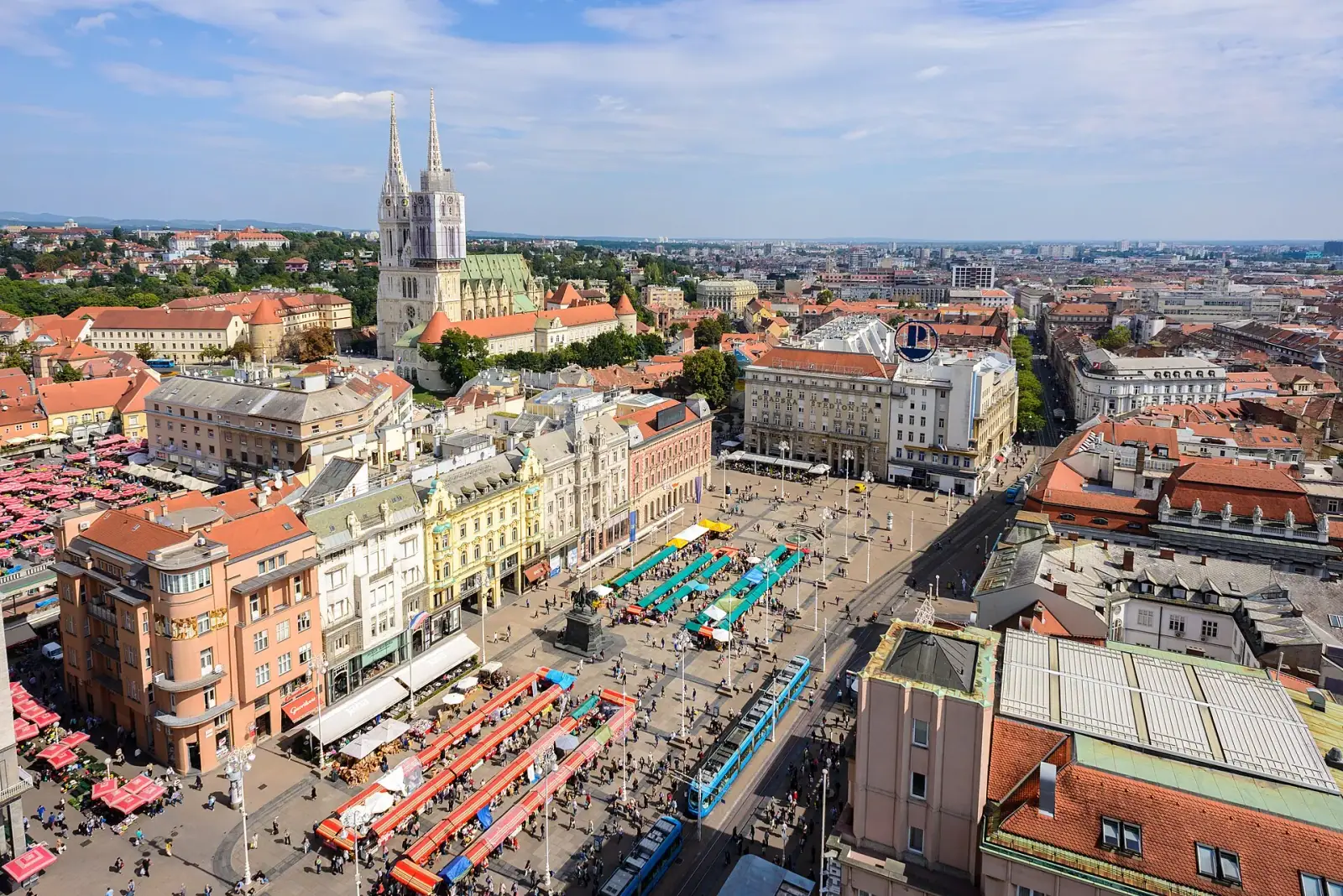
In Zagreb, finding that address is ordinary. It is a capital of 767,000 people where tenants stay all year, and a one-bedroom in Donji Grad or around Tkalčićeva runs roughly $690 to $1,040.
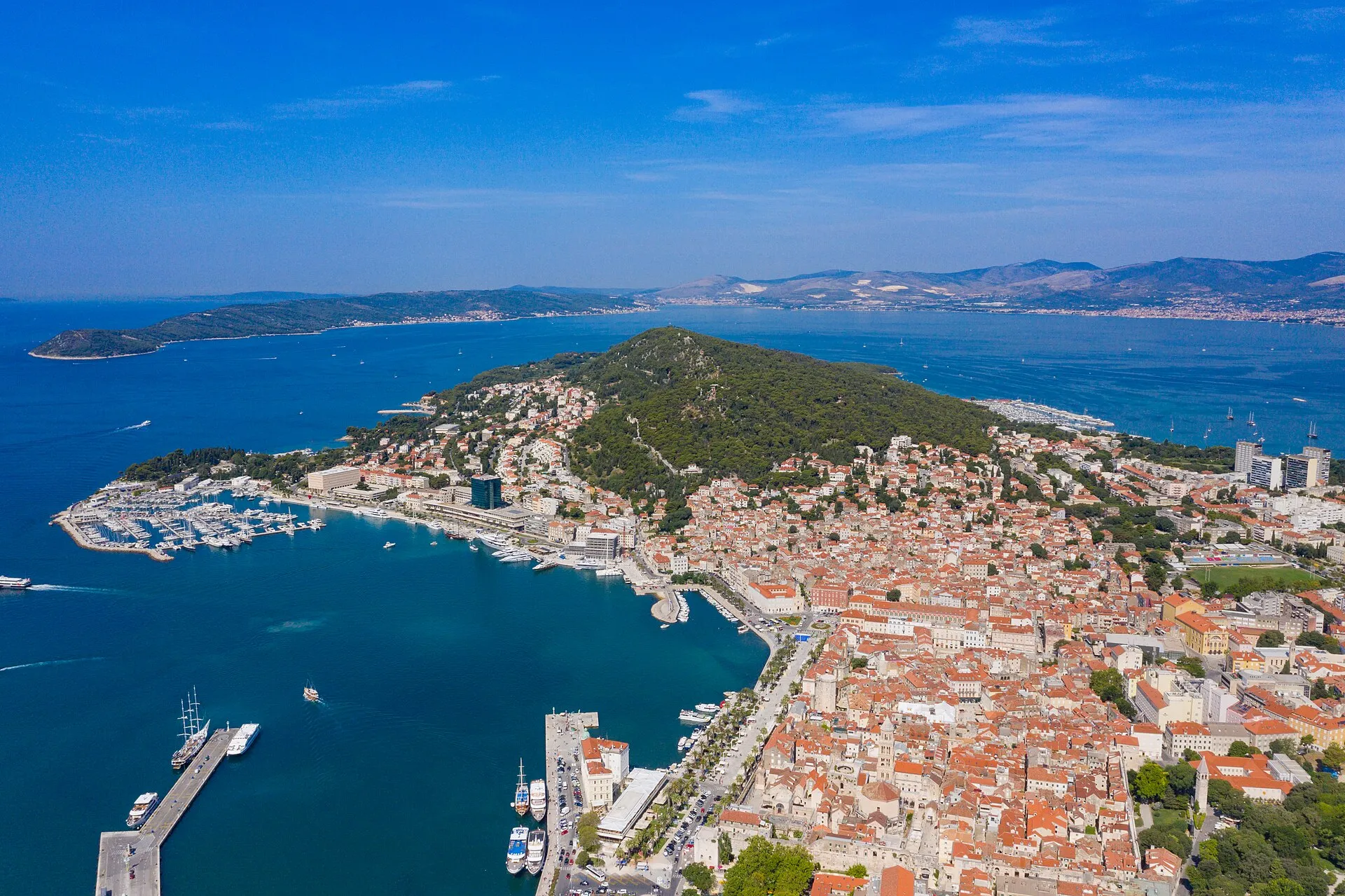
Split has a calendar problem. Landlords earn far more from summer visitors, so long leases grow scarce and expensive from about May to September, and many owners refuse year-round tenants. A winter lease from October to April is cheap and easy to get, and it may end with a request to leave or to pay a summer premium. Now look at the permit again. Eighteen months always contains at least one complete summer, and often two. A designer who lands in Split in October on a winter lease will be hunting for a flat in the worst possible month, partway through her permit.
What she gets for the trouble
Split would be worth some of that. January there runs from about 6°C to 11°C, against about minus 2°C to 5°C in Zagreb, with 69 hours of sun for the whole month and more than eight days of lying snow. Split gets some 2,700 sunshine hours a year, the 347 hectares of pines on Marjan hill at the end of the Riva, and a beach at Bačvice where people play picigin in ankle-deep water, even on New Year's Day. Ferries leave from the centre of town.
Zagreb's pleasures need more looking for. There are the red umbrellas of Dolac, trading since 1930, and a 66-metre funicular that takes 64 seconds to save you the walk to the Upper Town. In winter you have Sljeme at 1,035 metres for snow, and a real city running in all seasons, while much of the seaside closes up in Split. The 2020 earthquake, which damaged more than 26,000 buildings, is still part of the centre's story, so ask about any older building you are shown.
Zagreb is also the better-connected base, with 4.7 million airport passengers in 2025 against 3.9 million at Split, and without Split's seasonal swing. Our estimates are $2,000 a month for Zagreb and $2,300 for Split, or $5,400 across the permit, though that gap will not capture a forced move in June.
What happens at the end
A shorter permit can be extended by up to six months, as long as you apply at least 60 days before it expires. After the full term she must wait six months before applying again. So this is one chance at a long stay, and it pays to spend it in the right place.
We would send our designer to Zagreb with a 12-month lease, and on the A1 to the coast in May and late September, avoiding high summer, when traffic on that motorway more than doubles. She should choose Split only with a written 12-month contract in hand before she applies. A landlord who will not sign one has told her what will happen next June.
 United States
 United Kingdom
 Germany
 Canada
 Australia
 India